Chintu aur Magarmachh ki kahani — the Monkey and Crocodile story for kids, in Hindi
A Panchatantra story that shows your child what to do with fear: breathe once, then think.
चिंटू और मगरमच्छ — जामुन के पेड़ वाले नन्हे बंदर और नदी के मगर की कहानी
Hear Naani tell it
Watch a glimpse
The story
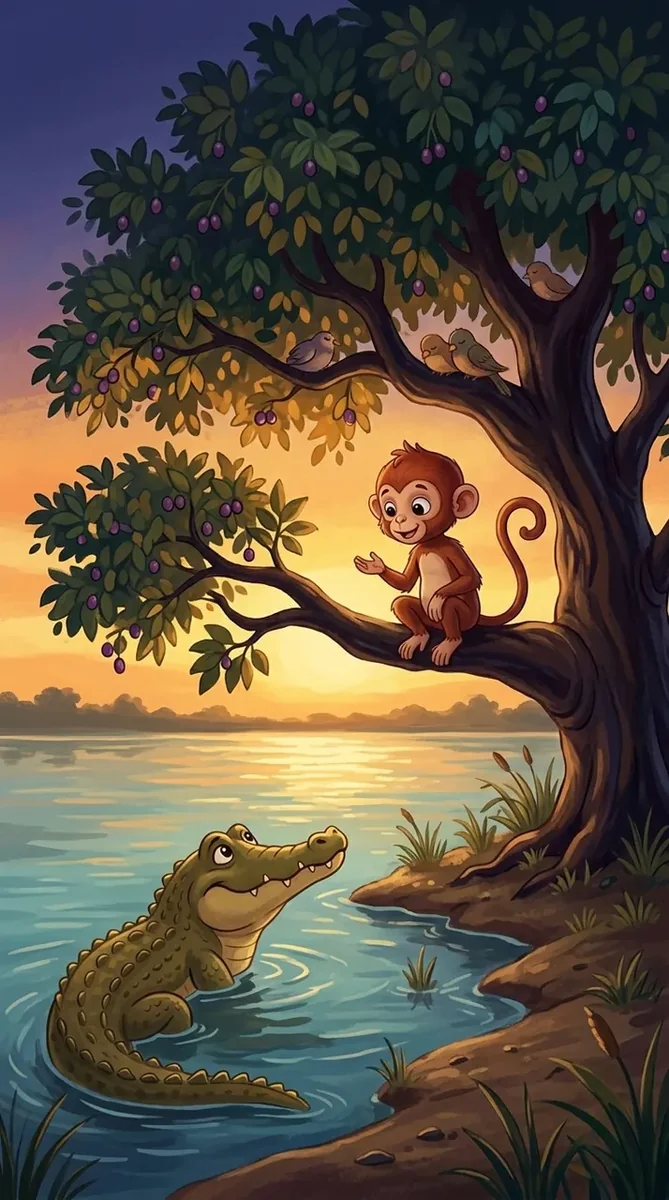
If your child is in a fearful phase, this is the story to reach for: a small monkey, frightened out of his wits, discovers that even inside fear there is a little room to think. It begins on a jamun tree leaning over a river, heavy with purple fruit so sweet it stains your fingers. On its strongest branch lives Chintu, a little monkey who has never wanted to be anywhere else — eating ripe jamun and swinging until the light fades. It is his home, and home, as Naani says, is where everything feels right.
Naani saysउसे अपने पेड़ से बहुत प्यार था — यह उसका घर था, और घर में सब अच्छा लगता है।He loved his tree very much — it was his home, and at home everything feels good.
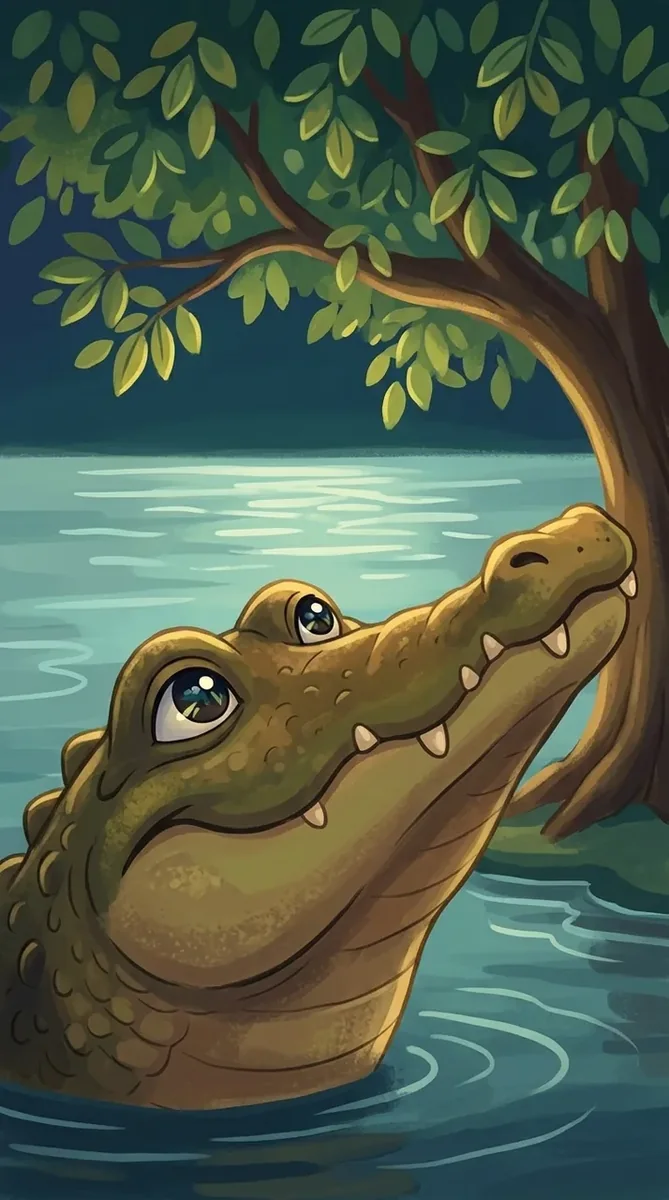
One afternoon a long snout rises out of the river. A magarmachh — a crocodile — and a hungry, rather sad one. Chintu hesitates, then picks a jamun and drops it down. The crocodile has never tasted anything so sweet. From that day the two meet every afternoon, until a small monkey and a large crocodile are the firmest of friends. Naani stops here to ask your child whether a monkey and a crocodile can really be friends — haan ya na? — and listens to the answer.
Naani saysनन्हा बंदर और बड़ा मगरमच्छ — पक्के दोस्त बन गए।A little monkey and a big crocodile — they became the firmest of friends.
The story in pictures
Frames from Naani’s telling, in story order — the pictures your child sees while she speaks.
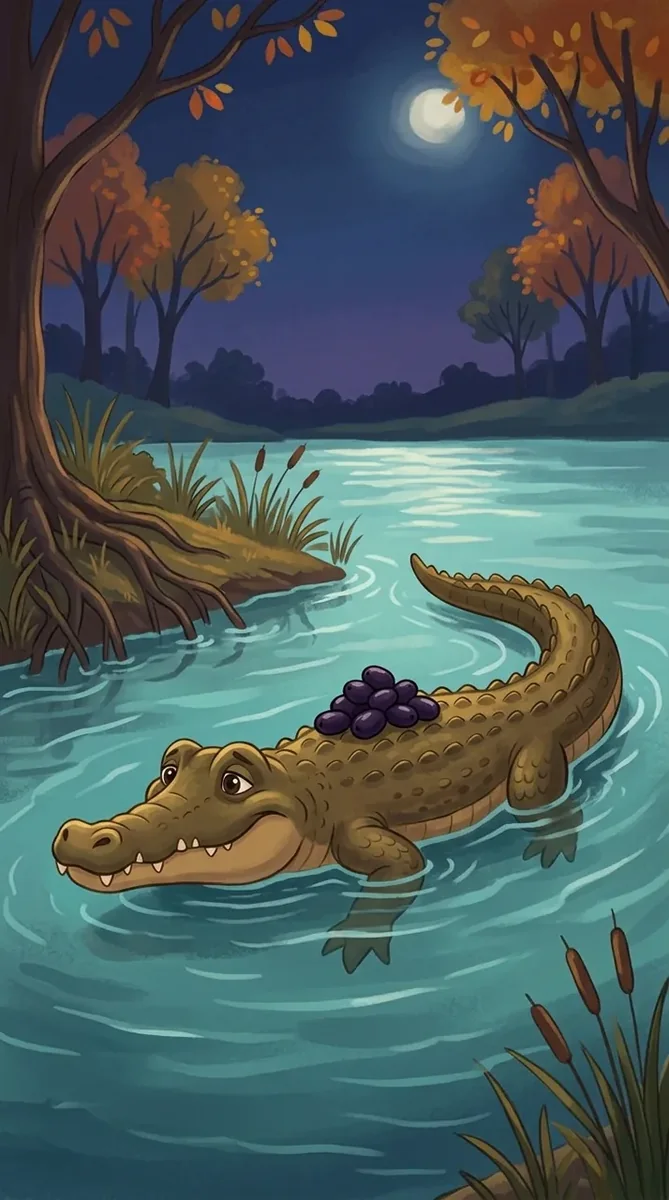

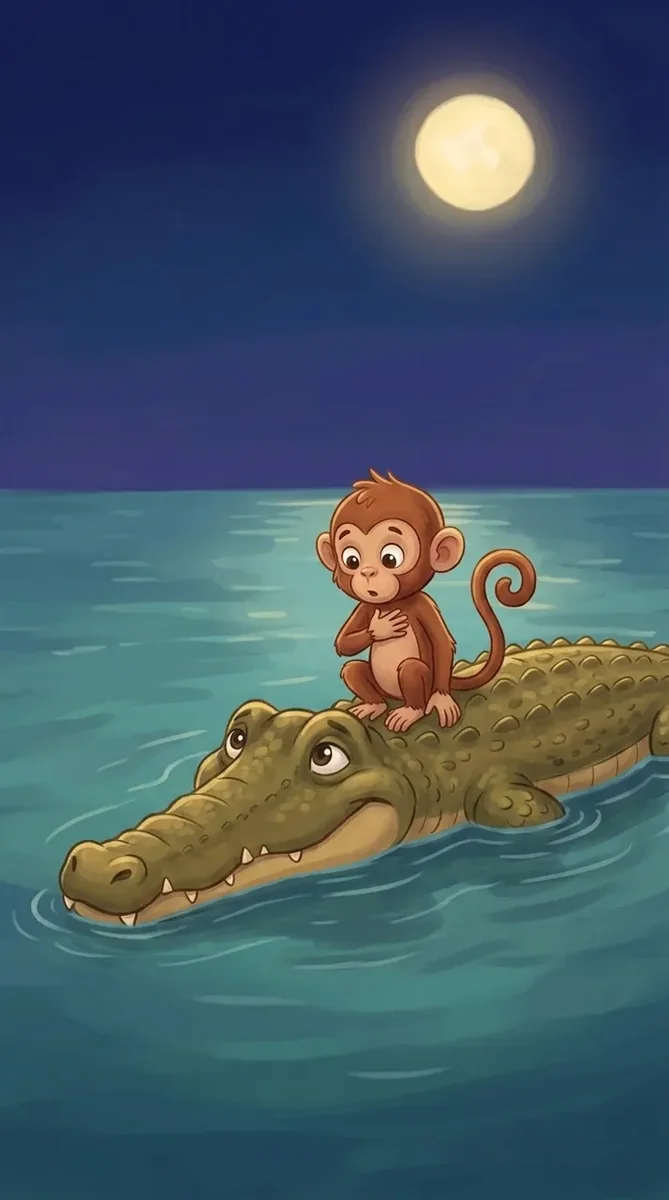
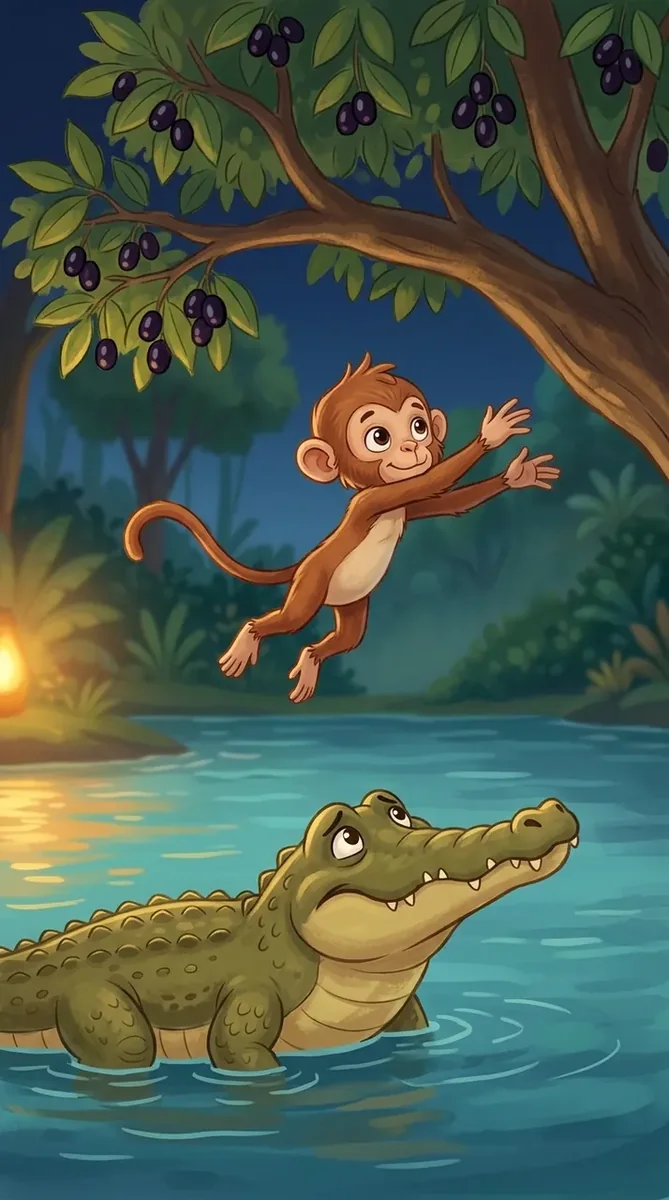
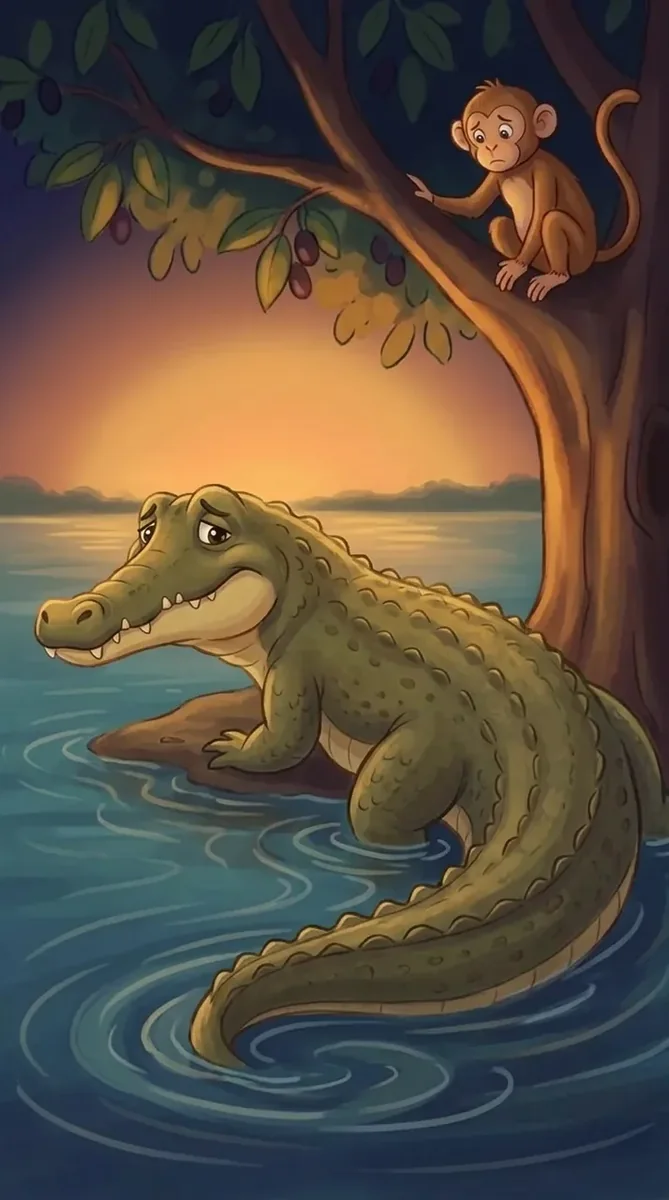
The trouble starts at the crocodile's home. He carries jamun back for his family, they ask where such fruit comes from, and someone says the thing that cannot be unsaid: a monkey who eats such sweet fruit must have an even sweeter heart. The crocodile is horrified and argues, but his family insists, and he lies awake all night, torn between his friend and his home.
Naani saysमगर का मुँह उतर गया। दिल? अपने दोस्त का दिल?The crocodile's face fell. His heart? His own friend's heart?
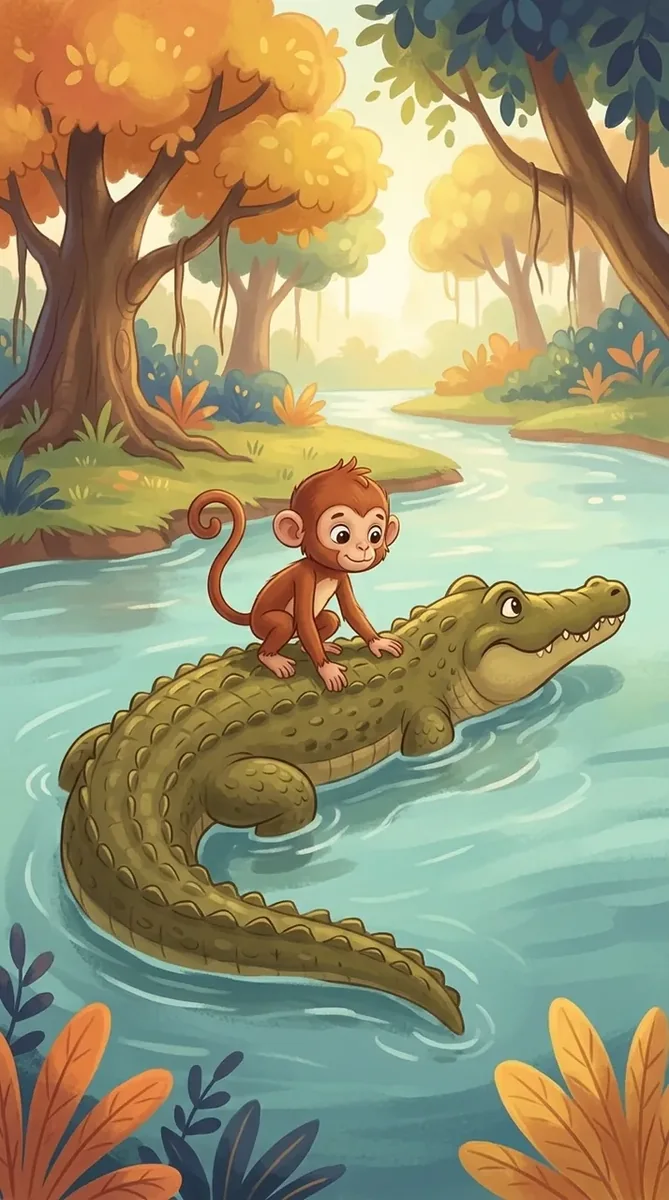
Next morning he invites Chintu to a feast and offers him a ride on his back. In the deep middle of the river, where there is no tree and no bank, the crocodile slows and tells him the truth. Chintu's small chest thuds. He is terribly afraid, but he takes one long, slow breath and finds the little space inside fear where thinking is still possible. Then, as casually as he can, he says — oh, my heart? I left it hanging on the jamun tree. We monkeys always do, so it doesn't get lost. Turn back and I will fetch it.
Naani saysडर के अंदर भी सोचने की एक छोटी सी जगह होती है — चिंटू ने वही जगह ढूँढ ली।Even inside fear there is a small space for thinking — and Chintu found that space.
The crocodile turns. The moment the bank is near, Chintu makes one enormous leap and is back on his strongest branch. From there he says quietly that a heart always stays in the chest, and a true friend never asks for it. The crocodile lowers his eyes, admits his mistake and swims slowly away. Night comes, crickets start up, and Chintu curls into the leaves — still shaking a little, but with a new, quiet courage sitting beside the fear.
The value this story teaches
Between four and seven, fears arrive faster than the words to manage them — the dark, a barking dog, being left somewhere new. Telling a child to 'be brave' rarely helps, because bravery sounds like not being scared at all. What helps is a small, repeatable thing to do when the fear is already there.
Chintu gives them exactly that. Stranded on a crocodile's back in deep water, he is openly terrified — Naani does not hide it — and then he takes one long breath, finds the quiet corner inside the fear where thinking still works, and talks his way home. The courage in this story is not loud. It is a breath, a pause and a clever sentence, which is a kind of courage a five-year-old can actually copy.
How to talk about it at bedtime
- Ask your child: what did Chintu do first when he got scared in the middle of the river — before he said anything?
- Try: take one long, slow breath together, the Chintu way, and agree that this is what you will both do the next time something feels scary.
- Ask: was the crocodile a bad friend, or a friend who made a big mistake? What should he do tomorrow?
When to pick this story
- When your child is going through a fearful phase — dark rooms, big dogs, deep water
- The night before something new and a little frightening, like a first swimming lesson
- After a friend has let your child down and they are not sure whether to forgive
Try asking your child
After the story, or the next morning on the way to school:
- Why did Chintu say his heart was hanging on the jamun tree? Was it true?
- Chintu was very scared in the middle of the river. What did he do first, before he spoke?
- When you feel scared — of the dark, a loud noise, a big dog — what helps you calm down?
Meet the characters
A little monkey who lives on the strongest branch of a jamun tree and has to think his way out of deep water.
A hungry, sad-eyed crocodile who becomes Chintu's friend and is then torn between that friendship and his family's demand.
Taste the jamun, hear about the monkey, and decide without thinking that they want his sweet heart.
From the app-store reviews
Two of the public reviews parents have left on Google Play and the App Store, quoted exactly as they wrote them.
“Great stories and really interactive. My kid love it”
“an intellectual way to describe the old stories for kids .”
Give your child a story with a value every night
Naani tells Chintu aur Magarmachh in warm Hindi, shows the pictures, asks a question halfway and listens to your child's answer. One story, one seekh, then good night.
Listen tonight — free- Free stories every night
- No ads
- Your child’s voice erased after 24 hours
- Made in India
About this story
- Language: Hindi — simple, in a grandmother’s voice
- Ages: 4–7
- Listen time: about 9 minutes
- Value: Courage, Wisdom & thinking, Friendship
- World: Panchatantra & Jataka
- Theme: Courage
Also plays in the browser: app.naani.live/stream/chintu-aur-magarmachh (sign-in required).
Parents also ask
Is the Monkey and Crocodile story too scary for a 4-year-old?
No. In Naani's telling nobody is hurt, and the frightening idea — that the family wants the monkey's heart — is spoken once, gently, and answered at once by Chintu's clever reply. The story ends with the crocodile apologising and Chintu asleep on his branch under the stars.
What is the moral of the Monkey and the Crocodile?
The classic Panchatantra moral is that presence of mind beats strength: a small monkey escapes a crocodile by thinking calmly instead of panicking. Naani adds a bedtime version for young children — when fear comes, take one long breath, and a way out will show itself.
Where does this story come from?
It is one of the best-known tales of the Panchatantra, the ancient Indian collection of animal fables, and a version also appears in the Buddhist Jataka stories. Naani's telling gives the monkey a name, Chintu, uses simple spoken Hindi, and pauses three times to ask the child what will happen next.
Next story

Neela Siyaar
A Panchatantra story that makes telling the truth feel like relief, not punishment.
More Panchatantra & Jataka
All Panchatantra & Jataka → Wisdom
Sher aur Chalaak Khargosh
A Panchatantra story that shows your child how a calm, thinking mind beats a loud, strong one.
 Wisdom
Baatuni Kachhua
A Panchatantra story that helps a chatty child learn when to speak and when to simply listen.
 Teamwork
Char Dost aur Shikari
A Panchatantra story that shows your child why a good team is made of very different friends.
More stories that teach courage
Being scared and taking the first small step anyway.
 Courage
Govardhan Parvat aur Krishna
A Krishna story about a small boy using his strength for everyone — and a village that stands together.
 Courage
Krishna Janam aur Yamuna
A Krishna story about a frightened father who keeps walking — one step at a time.
 Courage
Do Nanhe Beej
A moral story about courage — being scared and growing anyway, one small push at a time.