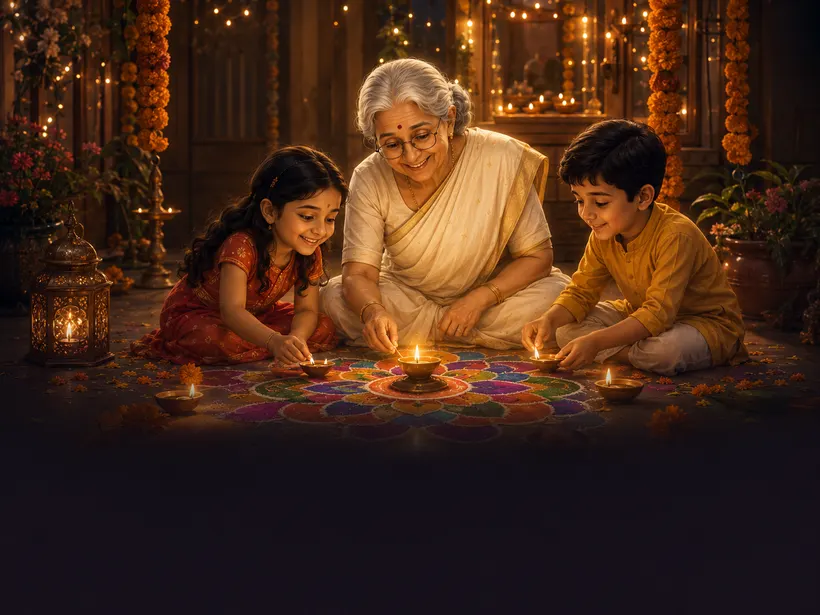
Navratri stories for kids in Hindi — the nine Devis, one story and one value a night
नवरात्रि की नौ रातें, नौ देवियाँ — नानी की नौ कहानियाँ
Strong values shape strong children. Navratri hands you nine evenings in a row with a lamp already lit and a Devi already in the puja corner. These stories give each night one face and one value — strong and gentle, never giving up, calm courage, kindness — told by Naani in warm Hindi, gently, for children between three and seven.
- A value in every story
- No ads
- Your child’s voice erased after 24 hours
- Made in India
The nine nights, one Devi a night
Each night has its own story in the Naani app, told in gentle Hindi with pictures. A card opens on the night its story does.
 Anger
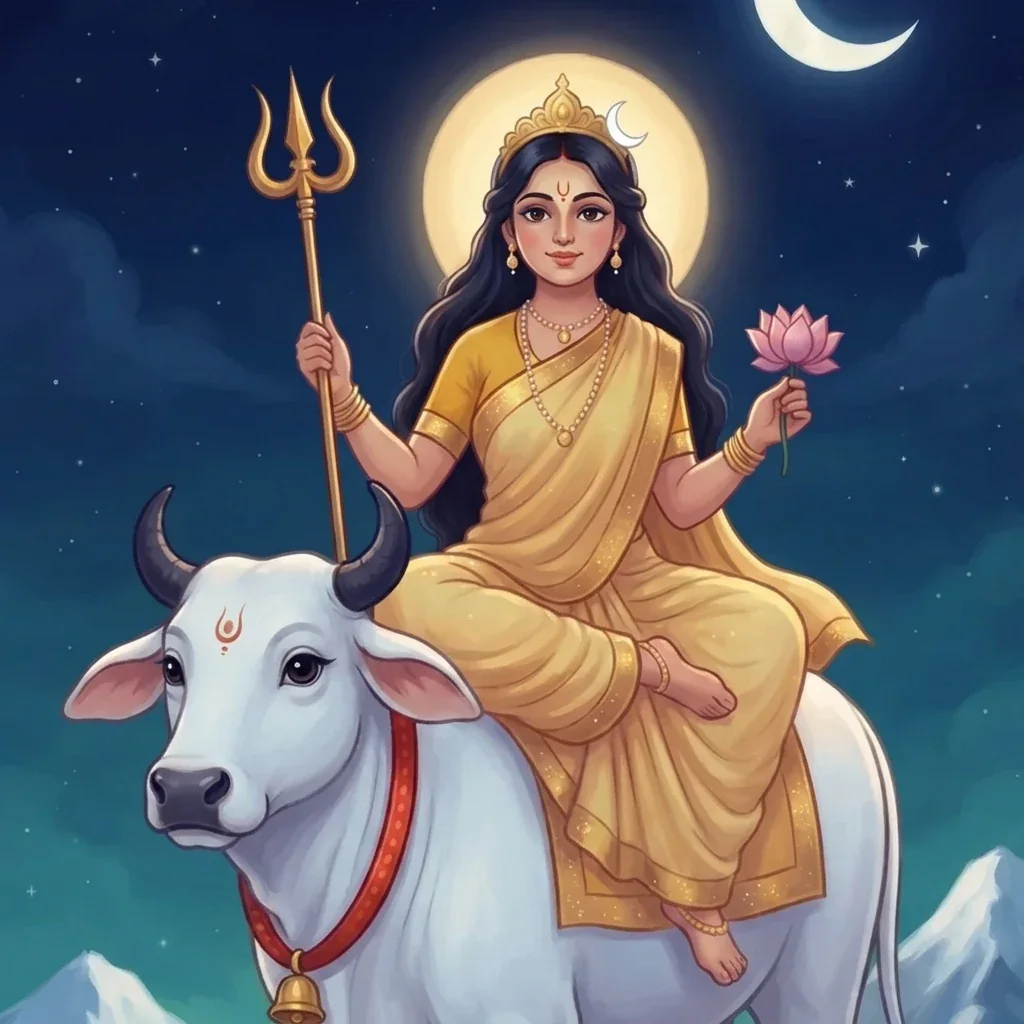
Maa Shailputri
In a snowy mountain palace, a sage with a veena reads a tiny princess's palm and smiles: something very big is coming. What did he see?
For parents: Strength and gentleness go together — mazboot haath, komal dil, like her trishul and lotus.
 Resilience
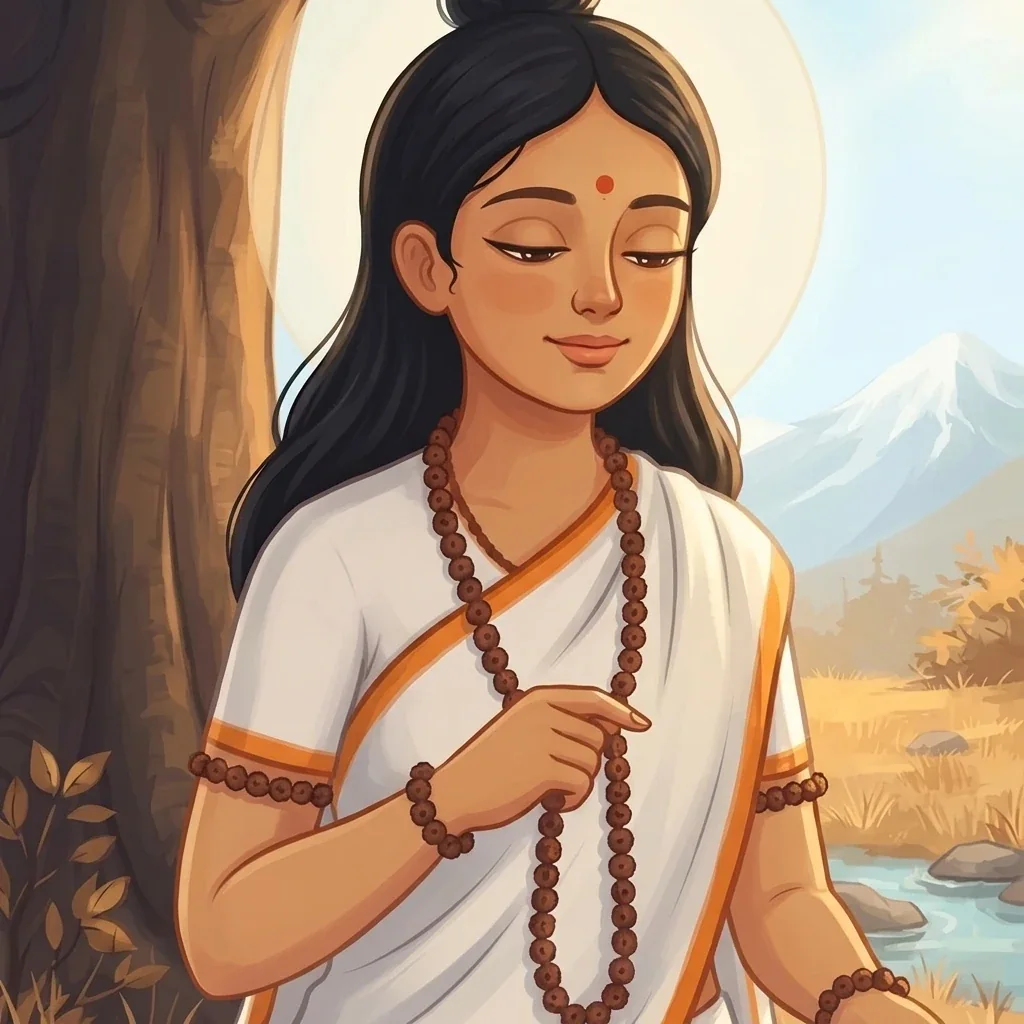
Maa Brahmacharini
She waits in the forest through sun, rain and cold. Then a stranger walks in and laughs at the one she is waiting for. Who is he?
For parents: Falling isn't losing; giving up is — so your child gets up and tries again.
 Courage
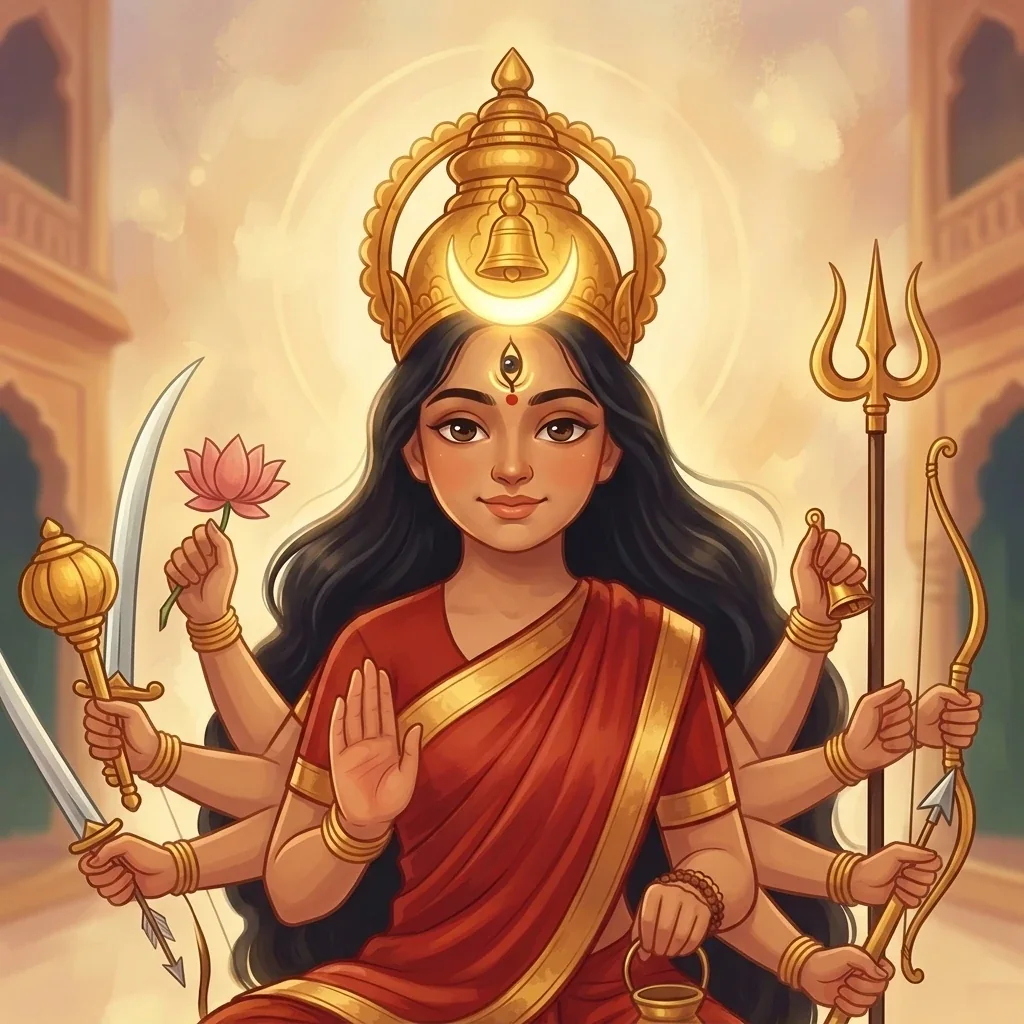
Maa Chandraghanta
"Is this the groom?" "No!" A queen on the palace roof guesses at every shining god in the procession. Then the real groom arrives, and she has to sit down. Why?
For parents: Calm courage: when everyone else is scared, take a deep breath and step forward.
 Kindness
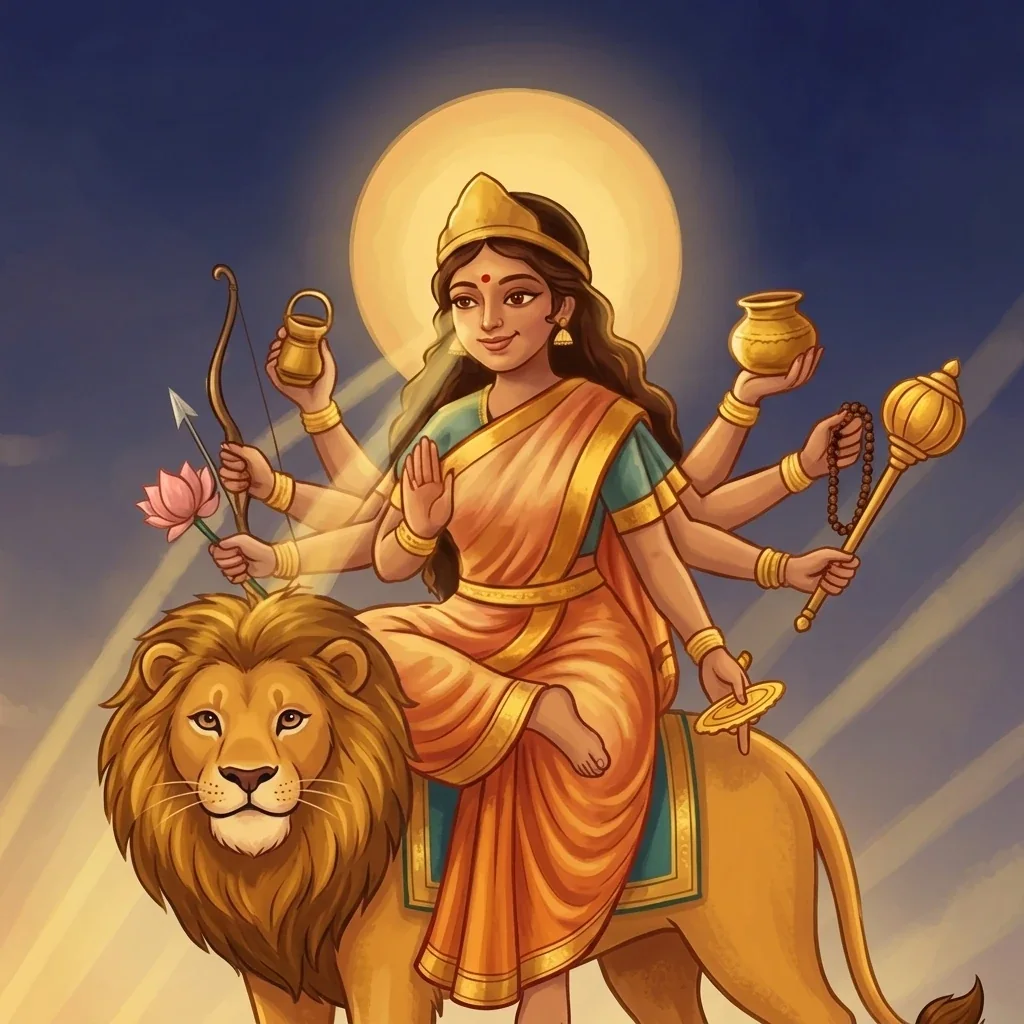
Maa Kushmanda
Before the sun, the moon or a single star, there was only darkness. Then one goddess smiled. And there is a vegetable hiding in her name. Which one?
For parents: A small smile and "I'm here" can lighten a scared sibling's or a sad friend's darkness.
 Sharing
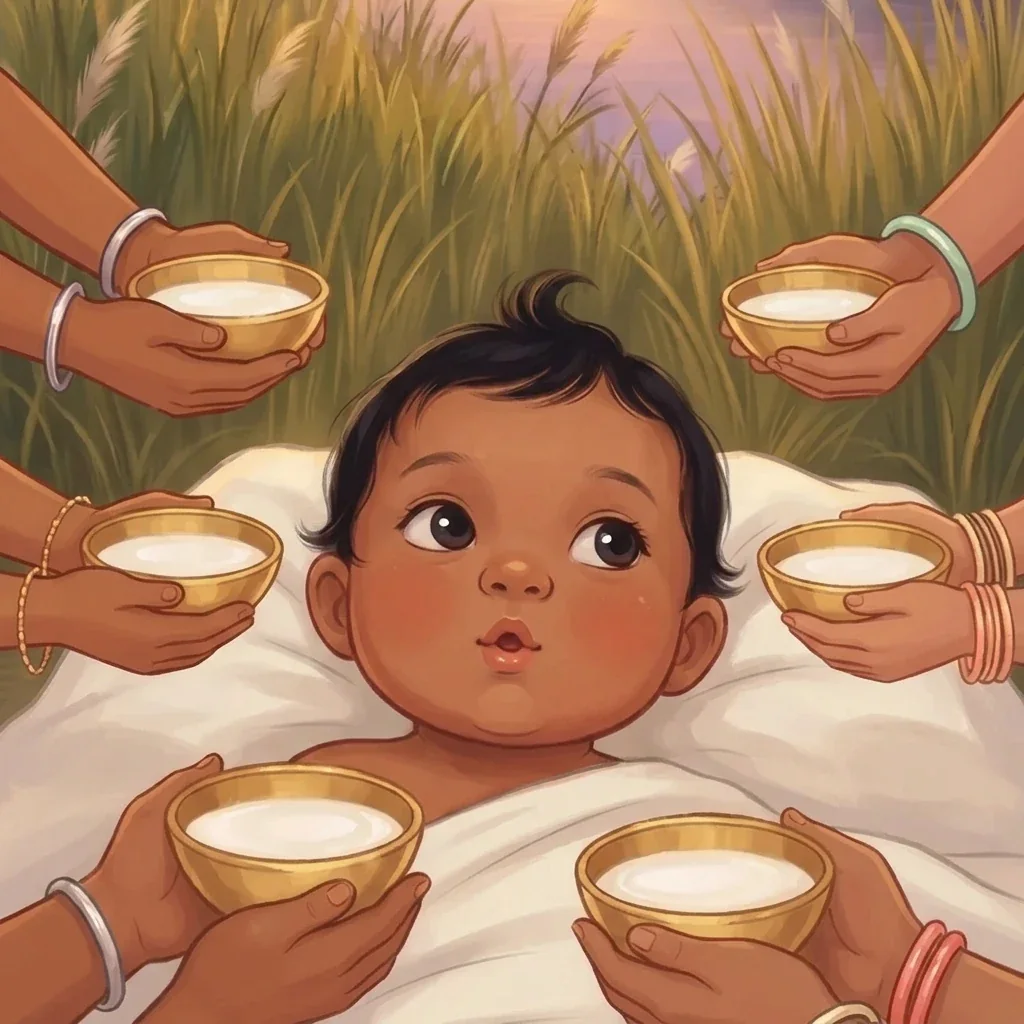
Maa Skandamata
A glowing baby lies in the tall reeds by a river. Six sisters find him, and each one says, "He's mine!" Six mothers, one baby — how will they all feed him?
For parents: Love shared is love doubled — making room on Mummy's lap never means less love.
 Faith
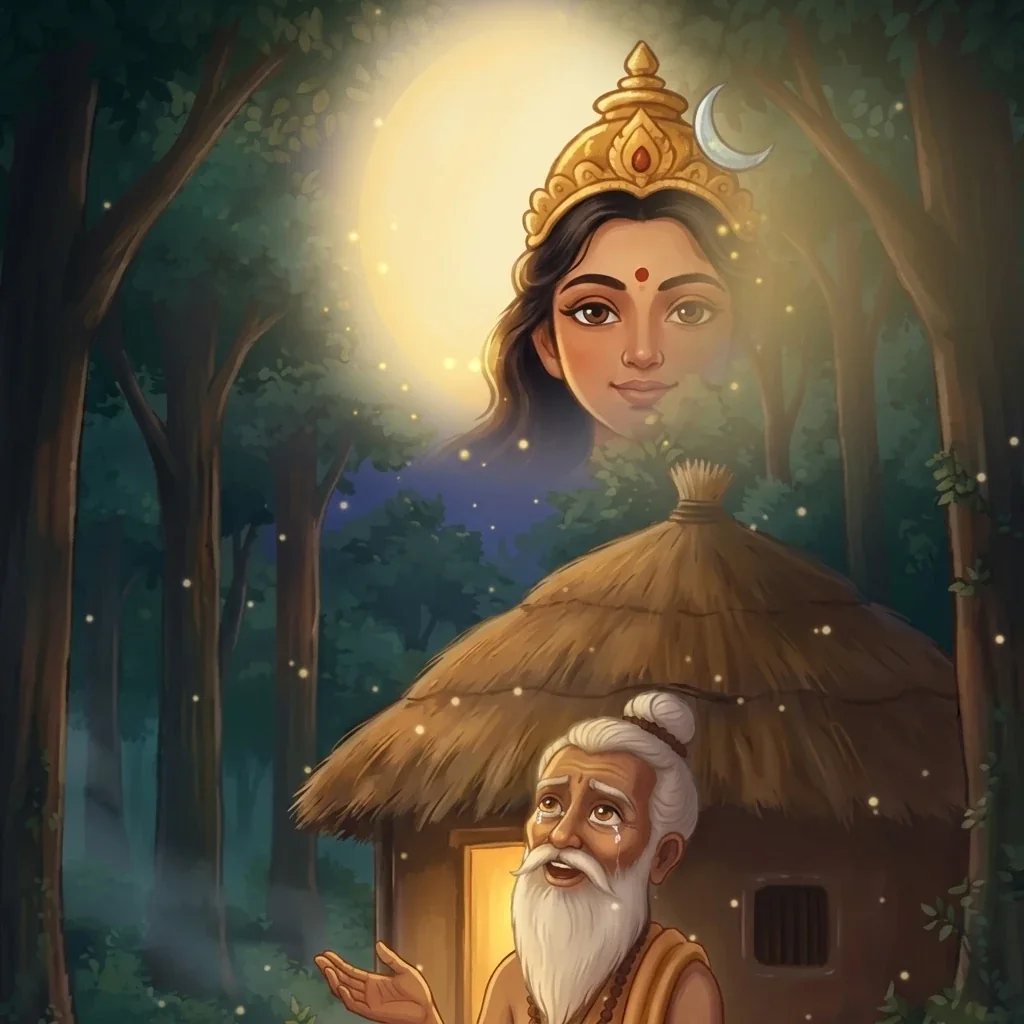
Maa Katyayani
A sage in a forest hut has prayed every morning for years, holding on to one wish. Far away, every god pours out his light, and it streams past palaces and golden thrones. Where will it land?
For parents: A thing need not be costly to be special — what your child makes with love is the best gift.
 Wisdom
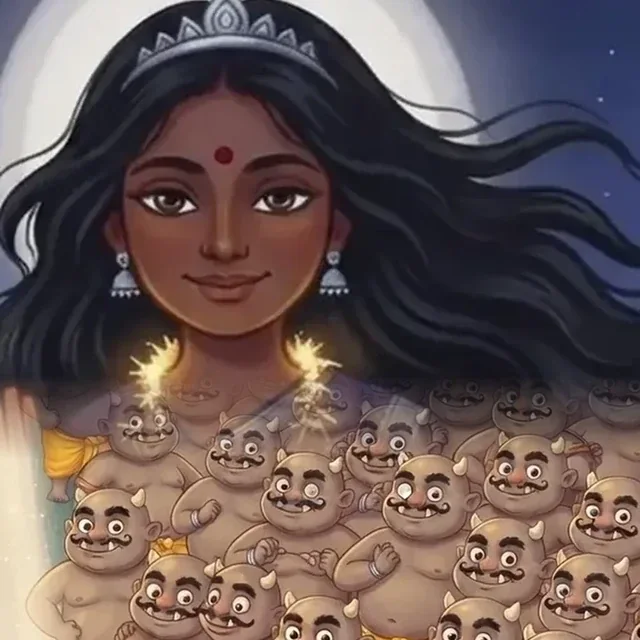
Maa Kalaratri
A boastful demon has a strange power: knock him down and he becomes two, then a hundred. Then a goddess dark as night looks down, looks up, and smiles. What has she seen?
For parents: When something won't work, stop and think — a new idea often beats more force.
 Kindness
Maa Mahagauri
A very hungry lion creeps up to Maa Parvati, deep in her tapasya — and instead of pouncing, he sits down and waits, season after season. Why?
For parents: Even in your own moment of joy, notice someone else's tiredness — that is a big heart.
 Teamwork
Maa Siddhidatri
On a snowy peak Shiv Ji sits so still that snow piles on his shoulders. The most powerful of all — so why is he waiting, year after year?
For parents: The greatest power is valuing each other's strengths and moving forward together.
Every story is researched from the texts families have told for centuries — the Devi Kavacham for the order of the nine Devis, the Shiva Purana and Kalidasa's Kumarasambhava for Parvati's own story, the Devi Mahatmya, the Bhagavata and the Ramayana for the rest — and then retold the way a grandmother would: battles in a single line, no frightening detail, and a real question for your child halfway through. Each night ends with a small mystery about tomorrow's Devi, so your child goes to sleep wanting the next one.
The nine Devis, one value a night
Navratri worships nine forms of the Devi, one on each night, in the order the Devi Kavacham gives. Read together, the nine stories follow Parvati's life — the mountain's daughter, the long tapasya, the wedding — before opening out into the Devi's greater forms. Each night has its own value, chosen so that no two nights teach the same thing:
- Night 1, Maa Shailputri — strong hands, gentle heart, like her trishul and lotus.
- Night 2, Maa Brahmacharini — falling isn't losing; giving up is.
- Night 3, Maa Chandraghanta — calm courage when everyone else is scared.
- Night 4, Maa Kushmanda — a small smile can lighten someone else's darkness.
- Night 5, Maa Skandamata — love shared is love doubled.
- Night 6, Maa Katyayani — a gift made with love is worth more than a costly one.
- Night 7, Maa Kalaratri — when force does not work, stop, look and think.
- Night 8, Maa Mahagauri — even in your own joy, notice someone else's tiredness.
- Night 9, Maa Siddhidatri — the greatest power is valuing each other's strengths, together.
How to use the nine nights at home
Keep it the same time every night — after the evening aarti, or once the lights are off. Children love a ritual more than a novelty, and by the third night yours will be asking which Devi is coming. Each story ends with a clue about the next one: a bell hidden in a name, a vegetable hidden in another. Let your child guess at breakfast and check the answer that evening.
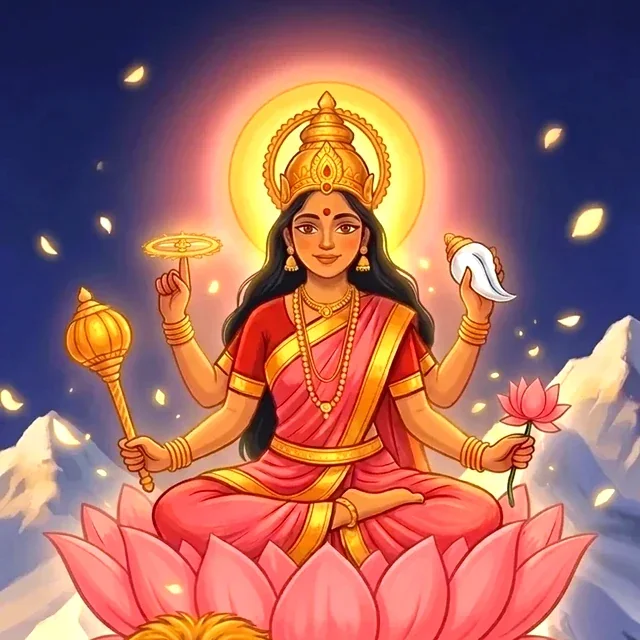
Each story also teaches your child how to recognise that night's Devi in a picture — the bull, trishul and lotus of Shailputri, the mala and kamandalu of Brahmacharini, the bell-shaped moon of Chandraghanta, the eight arms of Kushmanda. Hold the story up against the picture in your own puja corner, or the pandal you visit, and let your child do the pointing.
Then keep one line for the day. Naani closes every story with its value in a few words of Hindi — mazboot haath, komal dil; girna haar nahin hai. Say it together the next morning, and use it again when the moment comes: the knocked-over tower, the cycle that tips, the new class. Nine nights, nine small lines, and a festival your child will remember as theirs.
Told gently, for three- to seven-year-olds
The Devi's stories include demons and battles, and small children do not need either described. Mahishasura is defeated in a sentence; Raktabeej, the demon who multiplies, becomes a puzzle your child helps to solve rather than a fight. What stays is the part a young child can carry: a princess who waits through every season, a queen who guesses at the groom from her rooftop, six mothers arguing over one baby.
Each story runs about four to six minutes, has illustrated pictures, and ends quietly — one story, then good night. Halfway through, Naani stops and asks your child something from the story, listens, and replies using your child's name.
From the app-store reviews
A few of the public reviews parents have left on Google Play and the App Store, quoted exactly as they wrote them.
“Great stories and really interactive. My kid love it”
“an intellectual way to describe the old stories for kids .”
Nice“Really cute idea for bedtime! I love how Naani actually listens when kids interrupt and responds as part of the story. The mix of Hindi and English feels really natural, and the gentle lessons are a nice touch. Such a lovely way to wind down before sleep!”
“Maine to download kar liya hai aap sabhi log download karo aur yah story Apne bacchon Ko badon ko sunao bahut achcha lagega…”Let Naani tell tonight's Navratri story
In warm Hindi, with pictures, with a question for your child halfway — and a clue about tomorrow's Devi at the end.
Try Naani tonight 👉 naani.live/app- A value in every story
- No ads
- Your child’s voice erased after 24 hours
- Made in India
Parents also ask
Which Devi is worshipped on which day of Navratri?
In the order the Devi Kavacham gives: day 1 Maa Shailputri, day 2 Maa Brahmacharini, day 3 Maa Chandraghanta, day 4 Maa Kushmanda, day 5 Maa Skandamata, day 6 Maa Katyayani, day 7 Maa Kalaratri, day 8 Maa Mahagauri and day 9 Maa Siddhidatri. In 2026 that runs from Sunday 11 October to Monday 19 October, with Dussehra on Tuesday 20 October.
Are Navratri stories suitable for a 3-year-old?
Yes, told the right way. Naani's versions keep any battle to a line or two, describe nothing frightening, and spend their time on what a three-year-old enjoys: a name to say, a picture to recognise, a funny moment and one question to answer. Each story runs about four to six minutes and ends with good night.
Do the Navratri stories have to be heard in order?
Each one stands on its own, so a child who joins on the fourth night is not lost. But they are written as a series: the first three follow Parvati from a baby on her father's lap to her wedding, and every story ends with a clue about the next Devi. Heard in order, the nine nights feel like one long story.
Are these stories taken from the Puranas?
They are researched from them and retold gently. The order of the Devis comes from the Devi Kavacham; Parvati's story from the Shiva Purana and Kalidasa's Kumarasambhava; Skanda's birth from the Ramayana and Shiva Purana; the demon Raktabeej from the Devi Mahatmya, as Navratri kathas tell it. Where a detail is softened for small children — a battle shortened, a frightening image left out — the heart of the story is kept.