Krishna stories for kids in Hindi — little Kanha, and the values he teaches by example
कृष्ण की कहानियाँ — बच्चों के लिए, नानी की आवाज़ में
Strong values shape strong children — and no character in Indian childhood teaches them with less preaching than little Krishna. He steals butter and learns that asking works better. He stands up to a poisonous serpent and uses his strength to protect, not to punish. He lifts a hill so a whole village can shelter under it, and greets a poor friend with a bundle of rice as if it were gold.
- Free stories every night
- No ads
- Your child’s voice erased after 24 hours
- Made in India
Krishna stories, told by Naani
Each card plays 30 seconds of Naani's real voice. Tap through for the retelling, the value your child takes from it, and the questions to ask afterwards. New pages are added every day.
 Honesty
Makhan Chor
और उस घर में एक नन्हा सा बच्चा था, जिसे माखन दुनिया में सबसे ज़्यादा पसंद था — कृष्ण।
And in that house lived a tiny boy who loved butter more than anything in the world — Krishna.
 Kindness
Krishna aur Kaliya Naag
उसके रहने से उस कोने का पानी काला और कड़वा हो गया था।
Because he lived there, the water in that corner had turned black and bitter.
 Courage
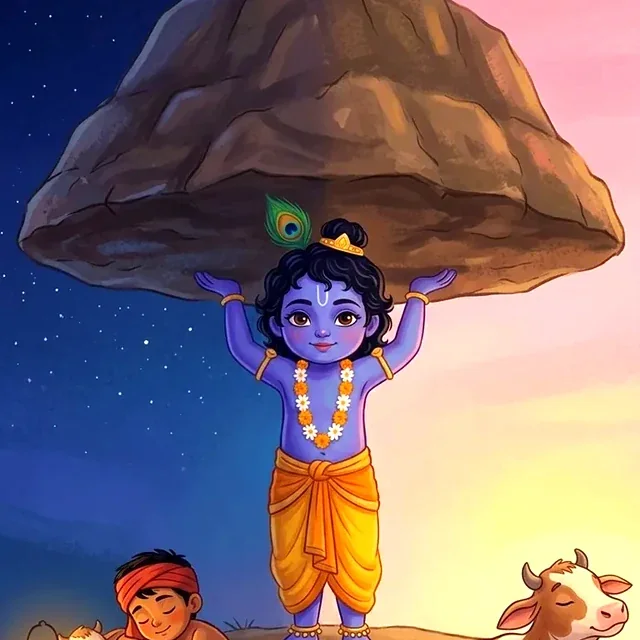
Govardhan Parvat aur Krishna
उसी की घास गायें खाती थीं, उसी के झरनों का मीठा पानी पीती थीं।
The cows ate its grass and drank the sweet water of its streams.
 Faith
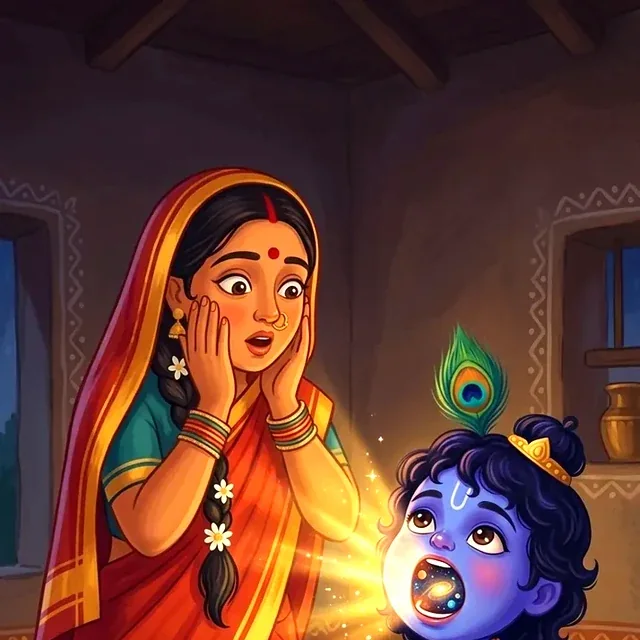
Kanha ke Munh mein Duniya
कान्हा — छोटा-सा शरारती बच्चा, बड़ी-बड़ी आँखें, और सिर पर मोर का पंख।
Kanha — a small, mischievous child, big round eyes, and a peacock feather on his head.
 Friendship
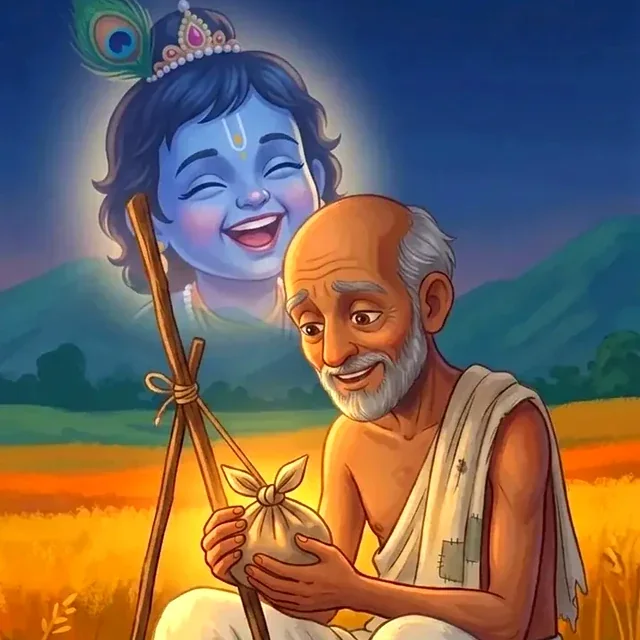
Krishna aur Sudama
दोनों बचपन में साथ खेले थे, साथ पढ़े थे, एक ही थाली से खाया करते थे।
As children they had played together, studied together, eaten from the same thali.
 Kindness
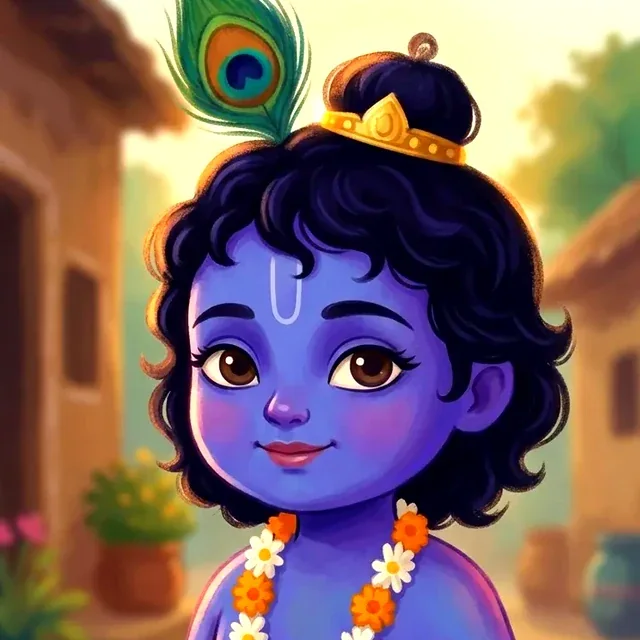
Krishna aur Phalwali
टोकरी भारी थी, पाँव थके हुए। अम्मा धीरे से सोच रही थीं — आज कुछ नहीं बिका,
The basket was heavy, her feet tired. Amma was quietly thinking — nothing sold today…
 Elders
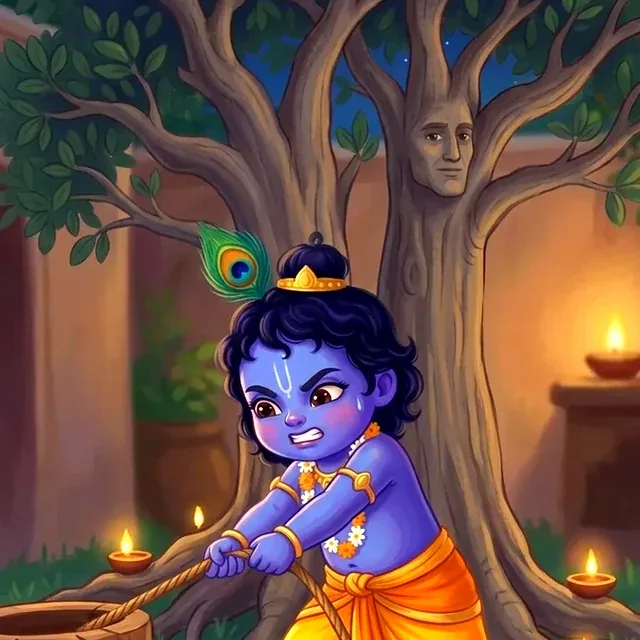
Do Ped aur Natkhat Kanha
वहीं यशोदा मैया अपने छोटे से बेटे कृष्ण के साथ रहती थीं।
There lived Yashoda Maiya with her little son Krishna.
 Humility
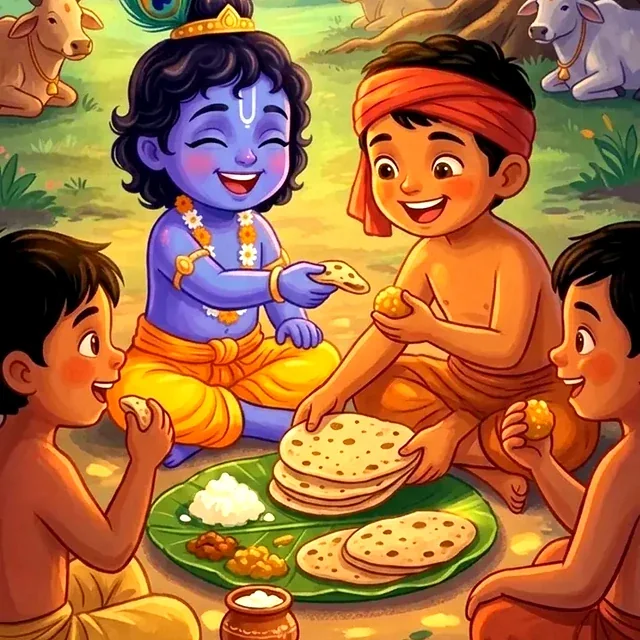
Brahma ji aur Nanha Krishna
सबने अपना-अपना खाना बीच में रख दिया — लड्डू, माखन, रोटी — ताकि सब बाँटकर खाएँ।
Everyone put their food in the middle — laddoo, makhan, roti — so that all could share.
 Courage
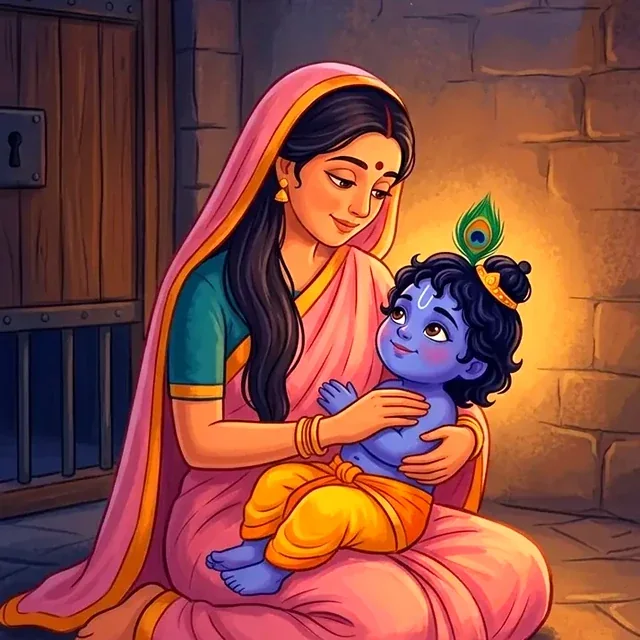
Krishna Janam aur Yamuna
बाहर झींगुर बोल रहे थे, और कमरे में बस एक छोटा सा दिया जल रहा था।
Outside the crickets were singing, and in the room a single small lamp was burning.
 Resilience
Krishna aur Jungle ki Aag
ऊँचे पेड़, घनी छाया, और पास ही यमुना — यानी एक बड़ी, साफ़ पानी वाली नदी।
Tall trees, deep shade, and the Yamuna close by — a big river of clear water.
 Faith
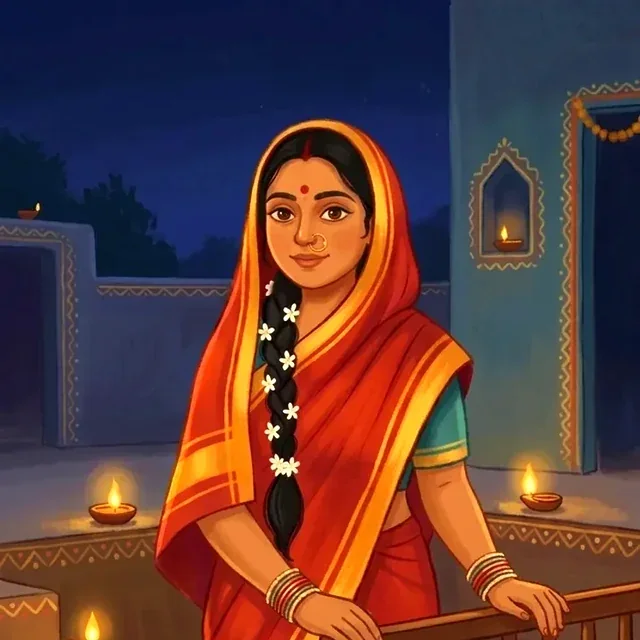
Janmashtami: Aadhi Raat Krishna Ka Janm
कंस बहुत ताकतवर था, पर उसके दिल में डर था।
Kansa was very powerful, but there was fear in his heart.
Naani saysऔर उस घर में एक नन्हा सा बच्चा था, जिसे माखन दुनिया में सबसे ज़्यादा पसंद था — कृष्ण।And in that house lived a tiny boy who loved butter more than anything in the world — Krishna.
This page gathers Naani's Krishna stories for children aged four to seven: what happens in each, the value it carries, the order that works at bedtime, and how to tell them in Hindi so that Kanha becomes a friend your child wants to be like rather than a god they are told about.
Why Krishna stories work so well at four to seven
Children this age do not learn values from rules; they learn them from someone they love. Bal Krishna is a child their own size — mischievous, hungry, a little naughty, adored by his mother — and every story puts him in a situation your child recognises: wanting something out of reach, being caught, being scared of something big, seeing a friend who has less. Because the child is already on Kanha's side, the lesson arrives as a feeling, not an instruction.
The stories also hold a very particular kind of safety. Yashoda scolds and forgives in the same breath; the villagers are frightened and then sheltered; the serpent is defeated but not killed. A four-year-old can go to sleep inside these stories, which is not true of every tale in the canon.
The stories and what each one teaches
- Makhan Chor — asking openly instead of sneaking; honesty met with love. Start here.
- Yashoda sees the universe in Krishna's mouth — faith, and the wonder hidden inside the people closest to us.
- Krishna and the fruit seller — a small, sincere gift is worth more than a calculated one; kindness.
- Krishna and Kaliya Naag — strength is for protecting others and restoring balance, not for revenge.
- Krishna lifts Govardhan hill — when everyone stands together, even a storm becomes rain on an umbrella; courage.
- Krishna saves everyone from the forest fire — in an emergency, stay together and listen to a calm voice.
- The twin Arjuna trees — a mother's correction holds love inside it; respect for elders.
- Brahma hides the calves — humility: even the cleverest can learn from the smallest.
- Krishna and Sudama — friendship does not check who is rich and who is poor.
- Krishna's birth and the Yamuna crossing — hope on the darkest night; one step at a time (also the Janmashtami story).
An order that works at bedtime
Begin with Makhan Chor — it is short, funny and ends in a lap. Follow with the fruit seller and Yashoda's glimpse of the universe, both quiet. Then the two "big" stories, Kaliya Naag and Govardhan, which have a moment of fear resolved by courage and togetherness; a five-year-old loves them and a four-year-old is fine if you have told the gentle ones first. Keep Sudama and the twin trees for six and seven, when friendship and fairness are live questions at school. Tell the birth story in Janmashtami week.
How to tell them in Hindi
Use the names the stories use — Kanha, Maiya, Gokul, makhan, matki, bansuri — and do not translate them; they are the texture. Keep your voice low for the frightened parts and let your child supply the courage: "kya Kanha darr gaya hoga, haan ya na?" Naani does exactly this, stopping in the middle of every story to ask, listening to the answer, and replying by name. End with Naani's own seekh line if you know it — "bas itni si baat yaad rakhna…" — or simply with the one sentence of the story you want them to keep.
From the app-store reviews
A few of the public reviews parents have left on Google Play and the App Store, quoted exactly as they wrote them.
“Great stories and really interactive. My kid love it”
“an intellectual way to describe the old stories for kids .”
Nice“Really cute idea for bedtime! I love how Naani actually listens when kids interrupt and responds as part of the story. The mix of Hindi and English feels really natural, and the gentle lessons are a nice touch. Such a lovely way to wind down before sleep!”
“Maine to download kar liya hai aap sabhi log download karo aur yah story Apne bacchon Ko badon ko sunao bahut achcha lagega…”Let Naani tell a Krishna story tonight
Kanha's stories in warm Hindi, with pictures and a question for your child halfway. One story, one value, then good night. Free stories every night; Naani Monthly unlocks everything.
Listen tonight — free- Free stories every night
- No ads
- Your child’s voice erased after 24 hours
- Made in India
Parents also ask
Which Krishna story is best for a 4-year-old?
Makhan Chor. It has no villain, a small boy who wants butter, friends who make a wobbly ladder and a mother who laughs and feeds him. Six minutes in simple Hindi, and the value — ask instead of sneaking — is one a four-year-old can use the next day.
Are Krishna stories religious teaching or moral stories?
For a small child they are moral stories first: honesty, courage, kindness, friendship, told through a boy their own age. The devotion grows out of loving the character. Naani tells them the way a grandmother does — as stories — and leaves the rest to the family.
Is Krishna and Kaliya Naag too scary for small children?
Naani's version is not: the serpent is large but the fear lasts a few sentences, Krishna is never hurt, and the ending is about mercy — Kaliya is sent away, not killed. Children of five and up love it; for a four-year-old, tell Makhan Chor first.
Related guides
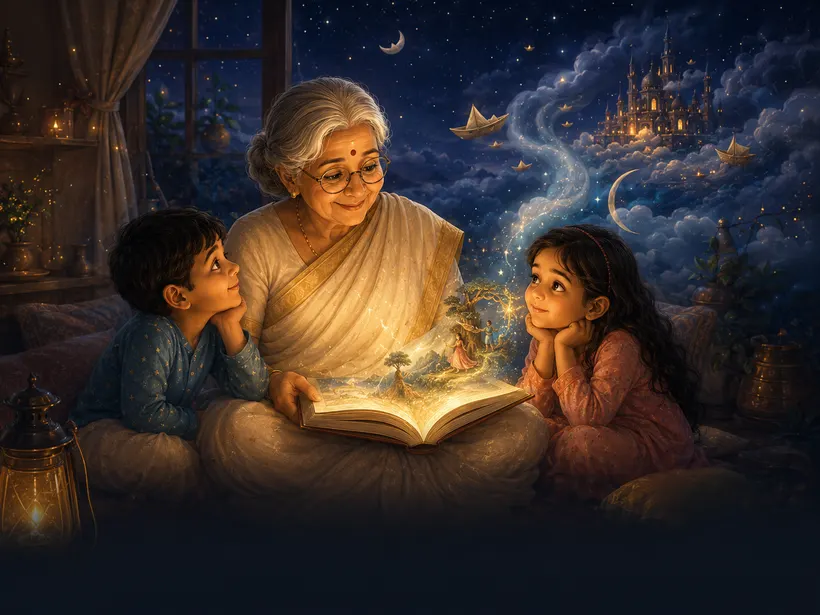 Hindi bedtime storiesWhy Hindi at bedtime, how to make it a habit, and which story to start with.
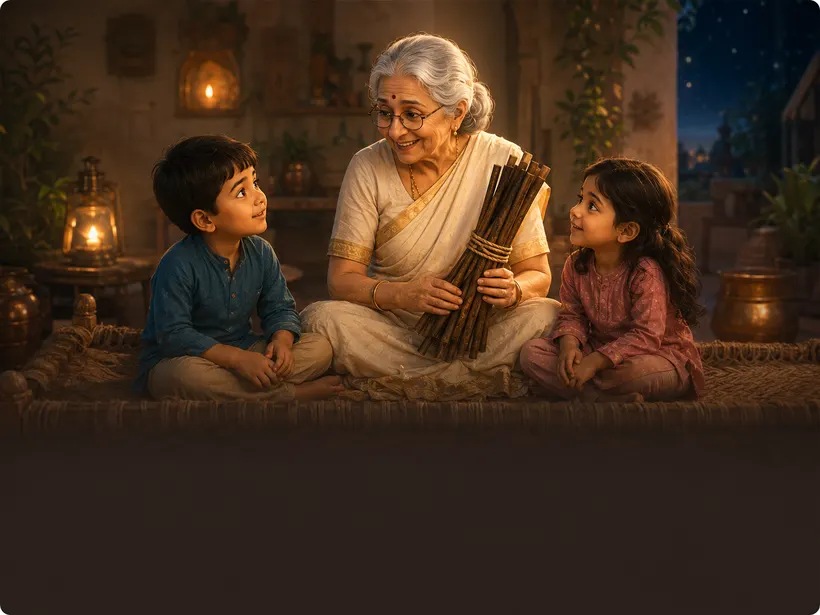 Stories by valueEvery Naani story grouped by the value it teaches — honesty, sharing, courage, kindness and more.
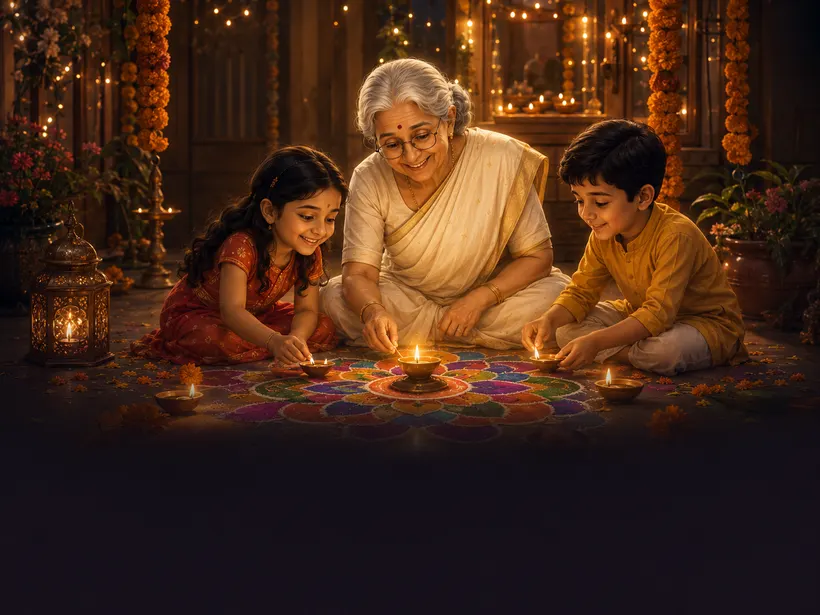 Festival storiesDiwali to Pongal: the story to tell the week before, and the value inside it.
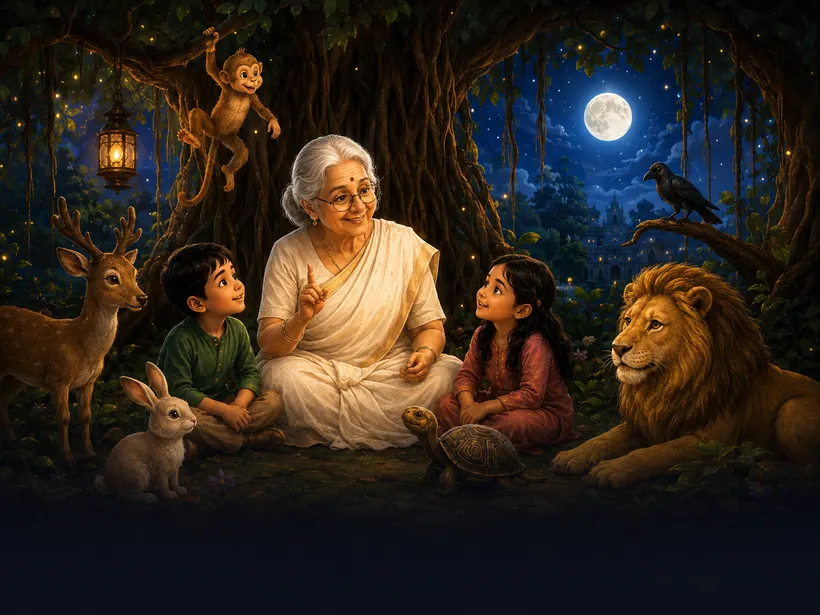 Panchatantra storiesThe animal tales with a seekh: which to tell at four, five and seven, and why they still work.