Guru Nanak story for kids in Hindi — the true bargain, for Gurpurab
गुरपुरब की कहानी — गुरु नानक का सच्चा सौदा
Strong values shape strong children — and few stories put one value as plainly as the Sachcha Sauda. A boy is given money and sent to do business. On the road he meets people who have not eaten for days. He spends every coin on food for them and comes home with nothing — and calls it the truest bargain he could have made. Gurpurab, Guru Nanak's birthday, is the week to tell it.
- Free stories every night
- No ads
- Your child’s voice erased after 24 hours
- Made in India
The Guru Nanak story and the stories around it
Told by Naani in Hindi with pictures, for ages 4–7. The play button on a card is 30 seconds of her real voice; the page has the full retelling, the value, and the questions to ask.
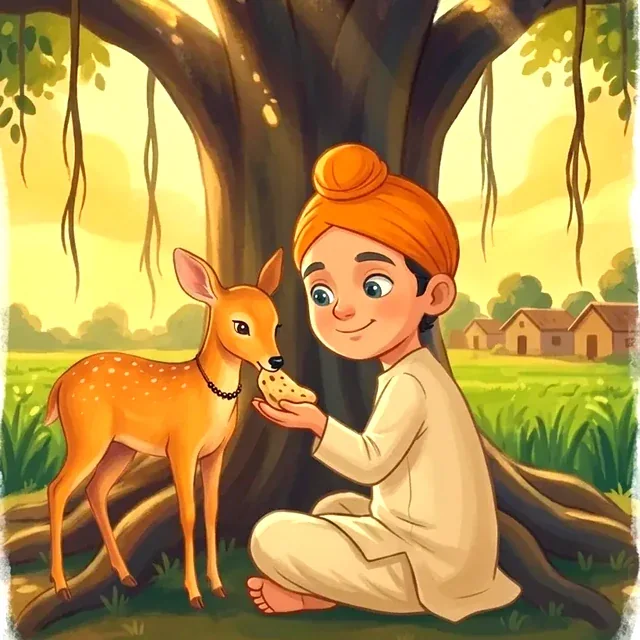 Kindness
Gurpurab: Guru Nanak Ka Sachcha Sauda
उनका दिल तो इतना बड़ा था कि उसमें सबके लिए जगह थी।
His heart was so big that there was room in it for everyone.
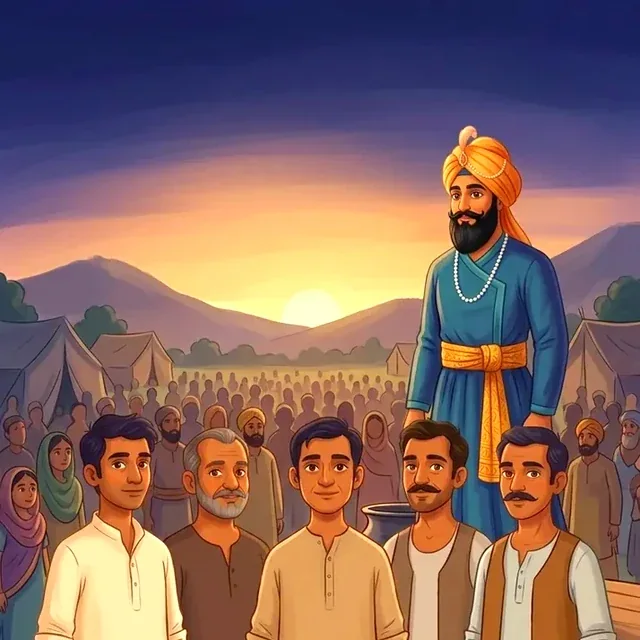 Courage
Vaisakhi: Panj Pyare Aur Khalsa Ka Janm
क्या यहाँ कोई ऐसा बहादुर है, जो सच के लिए अपना सब कुछ दे सकता है?
Is there anyone here brave enough to give everything for the truth?
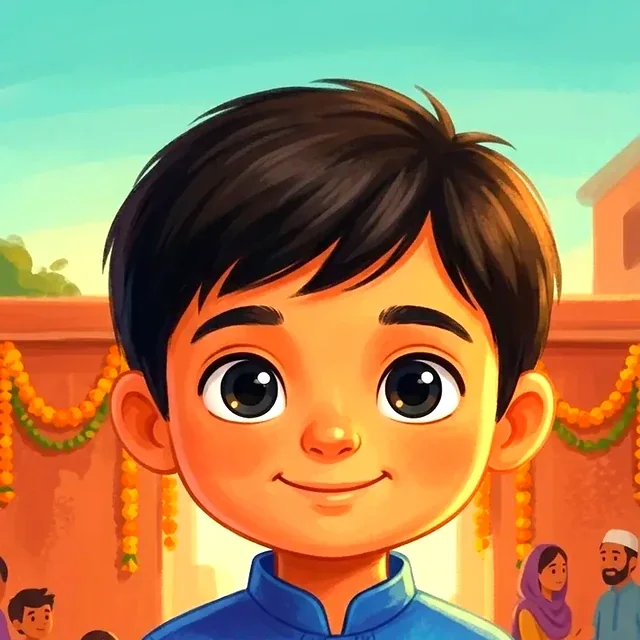 Sharing
Eid ki Pyari Eidi
आमिर ने मन ही मन सोचा, कल ईदी मिलेगी… तो मैं यही घोड़ा लूँगा।
Amir thought to himself: tomorrow I get Eidi… and then I will buy this very horse.
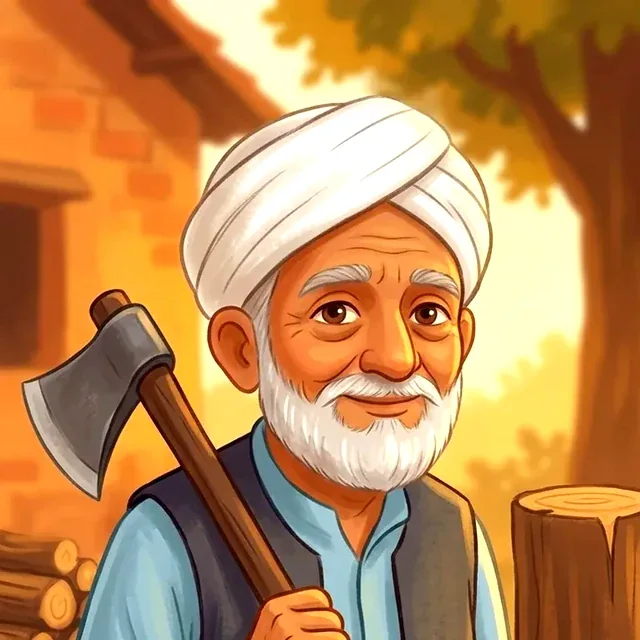 Honesty
Imaandaar Lakarhara
उसके पास एक ही चीज़ थी जो उसे सबसे प्यारी थी — उसकी लोहे की कुल्हाड़ी।
He had just one thing he loved above all — his iron axe.
Naani saysउनका दिल तो इतना बड़ा था कि उसमें सबके लिए जगह थी।His heart was so big that there was room in it for everyone.
From Gurpurab: Guru Nanak Ka Sachcha Sauda →
This page is for parents who want to tell the Guru Nanak story in Hindi to a child between four and seven: what happens, what a child takes from it (kindness over profit, doing the right thing when it costs), how to connect it to the langar and the lights of Gurpurab, and the questions that keep the conversation going the next morning.
The story, in a parent's two minutes
Nanak is a thoughtful boy who asks questions grown-ups find awkward. His father, hoping to make a sensible trader of him, gives him twenty rupees and sends him with a companion to buy goods and sell them at a profit. On the way they come across a group of holy men who have not eaten for days. Nanak sees the hunger and makes a decision: he spends all the money on food and feeds them.
He returns home with empty hands. His father is angry — where is the profit? Nanak answers that feeding the hungry was the only true bargain, the sachcha sauda, because what you give to someone in need is never lost. The story ends not with punishment but with the beginning of understanding, and today the langar in every gurdwara — a free meal for anyone who comes — carries the same idea.
What a 4–7-year-old takes from it
Children this age are learning to count, to own, to trade — "that's mine", "what do I get?" — and the story meets them exactly there. Nanak does not refuse to do business; he redefines what a good deal is. For a child, the picture of a boy choosing hungry strangers over a bag of coins is clearer than any explanation of generosity.
- Kindness over profit — "jo baant diya, wahi sabse sachcha sauda hai."
- Doing the right thing when it costs something — Nanak knows his father will be angry and does it anyway.
- Seeing need — the first thing he does is notice that someone is hungry.
- Equality — the langar feeds everyone, in the same row, from the same pot.
How to tell it, and what to do afterwards
Tell it in Hindi — sauda, bhookh, langar — and slow down at the moment of choice: Nanak holding the coins, looking at the hungry men. Ask your child what they would do before you tell them what he did; Naani does exactly this, pausing mid-story to ask and replying to the answer by name. Keep the father's anger brief and honest: he was worried, and he did not yet understand.
Then make it real. If there is a gurdwara nearby, visit the langar during Gurpurab week and let your child see the sachcha sauda being made every day. At home, cook something extra and give it away together, or let your child choose one thing from their shelf for a child who has less. The story gives the idea; the act makes it theirs.
Questions to ask after the story
- Nanak had twenty rupees. What did his father want him to do with them, and what did he do instead?
- Why did Nanak call feeding the hungry a bargain? What did he get?
- Where does the langar come from, do you think? Who cooks it, and who can eat it?
- If you had money for a toy and saw someone hungry on the way to the shop, what would you do?
From the app-store reviews
A few of the public reviews parents have left on Google Play and the App Store, quoted exactly as they wrote them.
“Great stories and really interactive. My kid love it”
“an intellectual way to describe the old stories for kids .”
Nice“Really cute idea for bedtime! I love how Naani actually listens when kids interrupt and responds as part of the story. The mix of Hindi and English feels really natural, and the gentle lessons are a nice touch. Such a lovely way to wind down before sleep!”
“Maine to download kar liya hai aap sabhi log download karo aur yah story Apne bacchon Ko badon ko sunao bahut achcha lagega…”Let Naani tell the Guru Nanak story this Gurpurab
The true bargain in warm Hindi, with pictures and a question for your child at the moment of choice. Free stories every night; Naani Monthly unlocks everything.
Listen tonight — free- Free stories every night
- No ads
- Your child’s voice erased after 24 hours
- Made in India
Parents also ask
What is the Guru Nanak story for kids?
The best known for children is the Sachcha Sauda: young Nanak is given money to trade, meets hungry holy men on the road, spends it all feeding them and tells his angry father it was the truest bargain. Gurpurab celebrates his birth; the langar in every gurdwara continues the idea.
When is Gurpurab in 2026?
Guru Nanak Jayanti (Gurpurab) falls on Tuesday, 24 November 2026, on the full moon of Kartik. Tell the story in the week before, when the gurdwaras are lit and the langar is busiest.
Is the Sachcha Sauda story suitable for a 4-year-old?
Yes — there is no fear in it at all. The only tension is a father's disappointment, which the story resolves gently. Naani's version runs about seven minutes in simple Hindi, with a question for your child at the moment Nanak decides.
Related guides
 Festival storiesDiwali to Pongal: the story to tell the week before, and the value inside it.
 Stories by valueEvery Naani story grouped by the value it teaches — honesty, sharing, courage, kindness and more.Diwali storyRam's return to Ayodhya, the diyas, and how to tell it to a 4–7-year-old.
 Hindi bedtime storiesWhy Hindi at bedtime, how to make it a habit, and which story to start with.