Dussehra story for kids in Hindi — why Ravan burns, and the value underneath it
दशहरा की कहानी — राम, रावण और घमंड की हार
Strong values shape strong children. Dussehra hands you one of the most useful of them on a plate: a king with ten heads, a golden city and a huge army who loses everything because he is too proud to return what is not his. Every child who has ever refused to say sorry recognises Ravan — and quietly decides to be Ram.
- Free stories every night
- No ads
- Your child’s voice erased after 24 hours
- Made in India
The Dussehra story and the stories around it
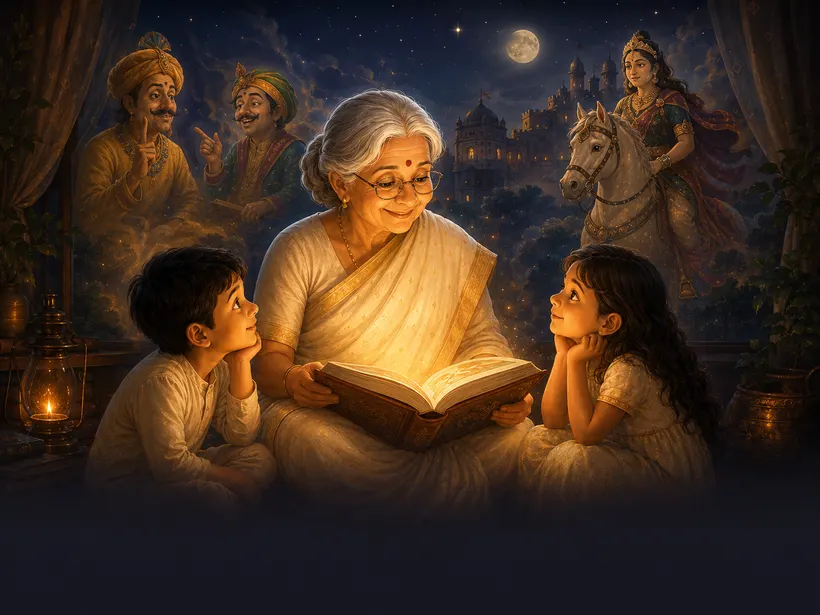
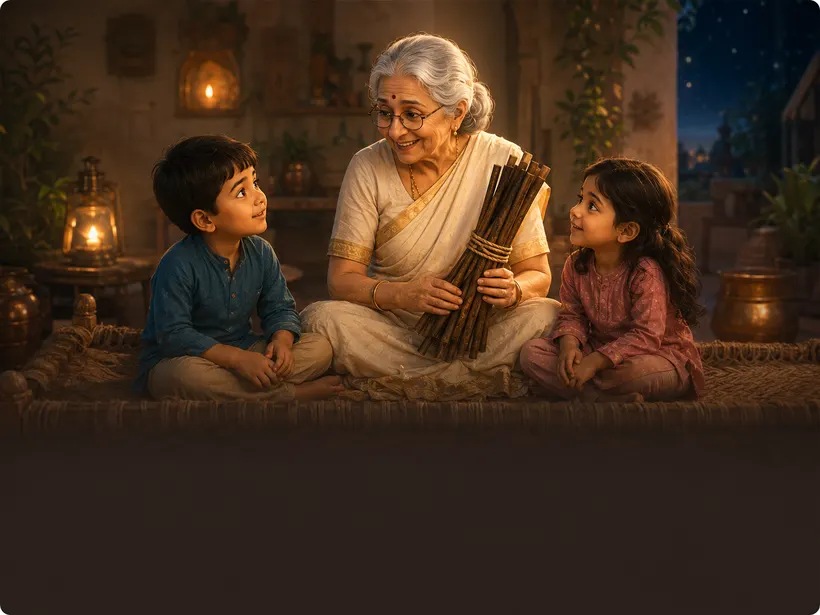
Told by Naani in Hindi with pictures, for ages 4–7. The play button on a card is 30 seconds of her real voice; the page has the full retelling, the value, and the questions to ask.
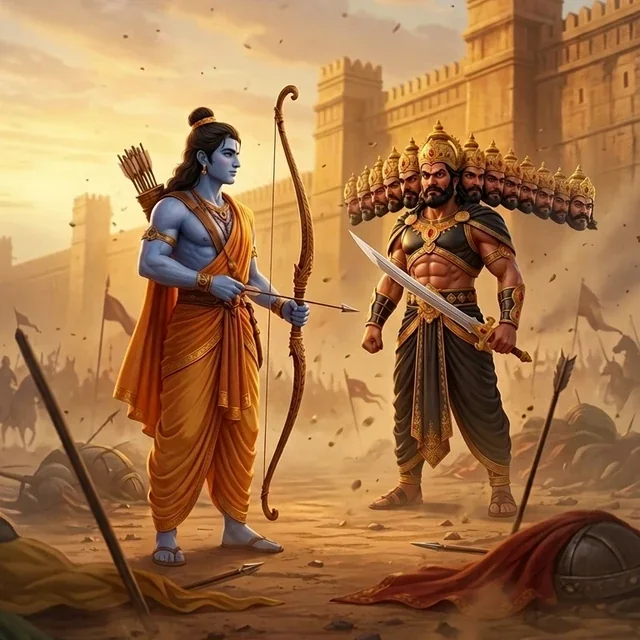 Humility
Dussehra: Rama Aur Ravana Ka Antim Yudh
वे थोड़े उदास थे, पर उन्होंने हार नहीं मानी।
They were a little sad, but they did not give up.
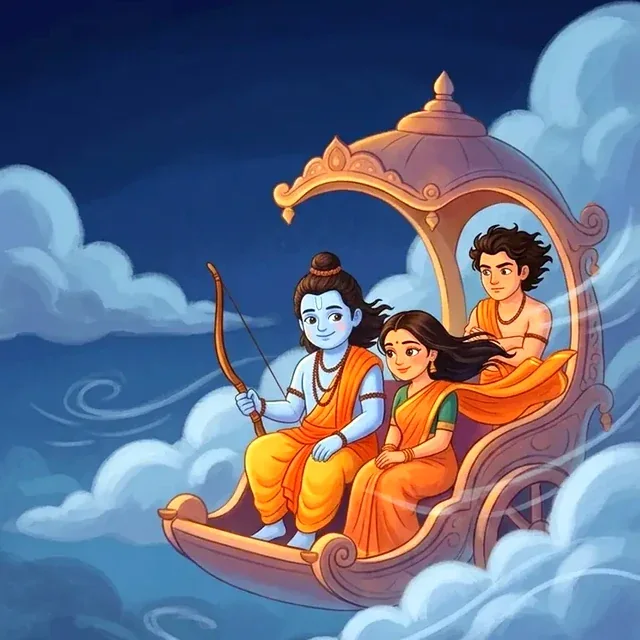 Faith
Diwali: Jab Ayodhya Jagmagayi
रामा ने दुखी होने के बजाय मुस्कुरा कर अपने पिता की बात मान ली।
Instead of being sad, Ram smiled and accepted his father's word.
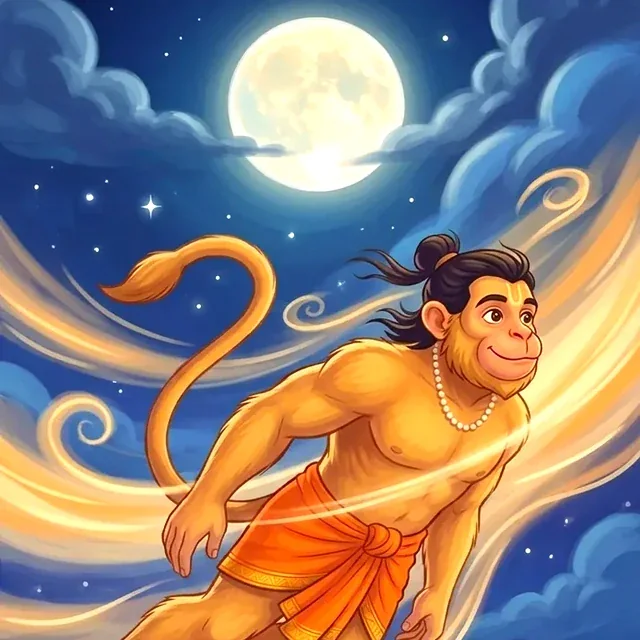 Wisdom
Hanuman aur Sanjeevani Booti
और दिल के इतने सच्चे कि जो उनका दोस्त बन जाए, उसके लिए कुछ भी कर दें।
And a heart so true that he would do anything for anyone who became his friend.
Naani saysवे थोड़े उदास थे, पर उन्होंने हार नहीं मानी।They were a little sad, but they did not give up.
From Dussehra: Rama Aur Ravana Ka Antim Yudh →
This page is for parents who want to tell the Dussehra story in Hindi to a child between four and seven: what happens, how to keep the battle gentle, the values to draw out (humility, courage, friendship), the questions that start a conversation, and how it connects to Diwali three weeks later.
The Dussehra story, in a parent's two minutes
Ram, Sita and Lakshman are living quietly in the forest when a golden deer leads Ram away and Ravan, the king of Lanka, tricks Sita and carries her across the sea. Ram and Lakshman search without giving up and meet Hanuman and King Sugriv; the search becomes a friendship. Hanuman grows as tall as a mountain, leaps the ocean, finds Sita in the garden of Ashok Vatika and shows her Ram's ring.
Two clever vanars, Nal and Neel, write Ram's name on huge stones and drop them into the sea — and the stones float, becoming a bridge. The army crosses. Ram asks Ravan, politely, to return Sita; Ravan is too proud to agree. The battle follows, and one arrow from Ram ends Ravan's pride. Flowers fall, bells ring, Sita is free. Every Dussehra we burn Ravan's effigy to remember that however big pride looks, it loses in the end.
What a 4–7-year-old takes from it
Children of this age are discovering winning, and with it boasting, digging in and refusing to apologise. A lecture about pride rarely lands; a story in which the proud one loses in front of everyone lands immediately, because the child has already picked a side.
- Humility — Ravan has everything and loses it because he will not do the one simple right thing.
- Courage with a calm head — Ram asks before he fights, and wins with patience and truth, not noise.
- Friendship — Hanuman, Sugriv, Nal and Neel: nobody wins alone.
- Clever beats strong — floating stones, not a bigger army.
How to tell it so it lands — and stays gentle
Keep the fight to two or three sentences; the drama your child actually wants is Hanuman's leap and the floating stones, so spend your time there. Tell it in Hindi — ghamand, himmat, dost are the words you want them to carry. Let your child decide the suspense out loud: will Hanuman make it across? Naani does exactly this, stopping mid-story to ask and then answering whatever the child says by name.
If you are going to watch an effigy burn, tell the story first. For a four-year-old the fire is loud and large; a child who already knows that Ravan is pride, and that pride always loses, watches it as a happy ending rather than a frightening one. The next morning, ask what Ravan should have said when Ram asked for Sita back.
Questions to ask after the story
- Ram asked Ravan nicely first. What did Ravan say, and what would have happened if he had said yes?
- Why did the heavy stones float? What was written on them?
- Ravan had ten heads and a huge army. What did Ram have that Ravan did not?
- When something feels too big for you, who are your Hanumans?
Dussehra and Diwali 2026 — one story, two festivals
Dussehra (Vijayadashami) is Tuesday, 20 October 2026; Diwali is Sunday, 8 November 2026. Dussehra is the victory; Diwali is the homecoming, when Ayodhya lights thousands of diyas so Ram can find his way on a moonless night. Tell them in order, three weeks apart, and your child will connect the Ravan in the park to the diyas on your doorstep without being told.
From the app-store reviews
A few of the public reviews parents have left on Google Play and the App Store, quoted exactly as they wrote them.
“Great stories and really interactive. My kid love it”
“an intellectual way to describe the old stories for kids .”
Nice“Really cute idea for bedtime! I love how Naani actually listens when kids interrupt and responds as part of the story. The mix of Hindi and English feels really natural, and the gentle lessons are a nice touch. Such a lovely way to wind down before sleep!”
“Maine to download kar liya hai aap sabhi log download karo aur yah story Apne bacchon Ko badon ko sunao bahut achcha lagega…”Let Naani tell the Dussehra story tonight
Hanuman's leap, the floating stones and a king who would not say sorry — in warm Hindi, with pictures, and a question for your child halfway. Free stories every night; Naani Monthly unlocks everything.
Listen tonight — free- Free stories every night
- No ads
- Your child’s voice erased after 24 hours
- Made in India
Parents also ask
What is the Dussehra story for kids?
Dussehra celebrates Ram defeating the ten-headed king Ravan, who had carried away Sita. With Hanuman, Sugriv's army and a bridge of floating stones, Ram reaches Lanka and wins — the victory of good over evil, which is why Ravan's effigy is burned.
What is the moral of the Dussehra story?
Pride loses and goodness wins. Ravan had strength and riches but would not return what was not his; Ram had truth, patience and friends. For a child, the simplest version is: don't be proud like Ravan, be gentle like Ram.
Is the Dussehra story too violent for a 4-year-old?
Not when told gently. Keep the battle to a few sentences and spend the time on Hanuman's leap, Sita recognising the ring and the floating stones. Naani's version does this and ends with bells, flowers and sleep.
Related guides
 Ramayana storiesNaani Ki Ramayan: the whole Ramayana as a bedtime series for 3–7-year-olds, one gentle episode a night, ending on Diwali.Navratri storiesA Navratri day-wise story for every night: the nine Devis, the value each one teaches, and how to tell them to a 3–7-year-old.Diwali storyRam's return to Ayodhya, the diyas, and how to tell it to a 4–7-year-old.Festival storiesDiwali to Pongal: the story to tell the week before, and the value inside it.
 Indian heroesShivaji to Rani Lakshmibai: bravery stories without the battlefield, and the values inside them.
 Stories by valueEvery Naani story grouped by the value it teaches — honesty, sharing, courage, kindness and more.