Dussehra: Ram aur Ravan ki kahani — the Dussehra story for kids, in Hindi
The Dussehra story, told so a five-year-old learns that ghamand loses and a calm, kind heart wins.
दशहरा की कहानी — राम और रावण का अंतिम युद्ध
Hear Naani tell it
Watch a glimpse
The story
Every October a ten-headed giant goes up in flames in a park near you, and your child wants to know why. Underneath the answer is a value that four-to-seven-year-olds need almost daily: Ravan had everything — ten heads, a golden city, a huge army — and lost because he was too proud to say sorry. Ram had truth, patience and friends. Naani tells it in about seven minutes of calm Hindi, with the loud bits kept gentle and the wonderful bits kept wonderful.
It opens in a green forest where Ram, Sita and Lakshman are living quietly. A golden deer flashes through the tall grass — Naani asks your child to close their eyes and picture it — and in that moment of distraction Ravan, the king of Lanka, tricks Sita and carries her far away across the sea. Ram and Lakshman search from forest to forest. They are sad, but they do not give up.
Naani saysवे थोड़े उदास थे, पर उन्होंने हार नहीं मानी।They were a little sad, but they did not give up.
The story in pictures
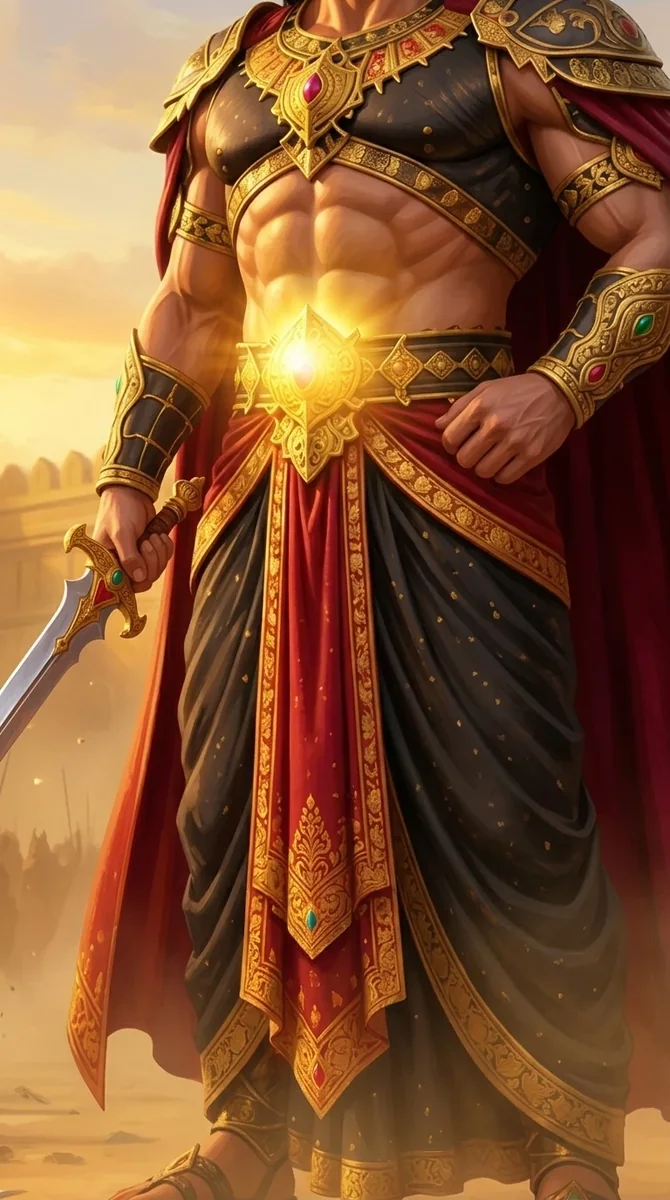
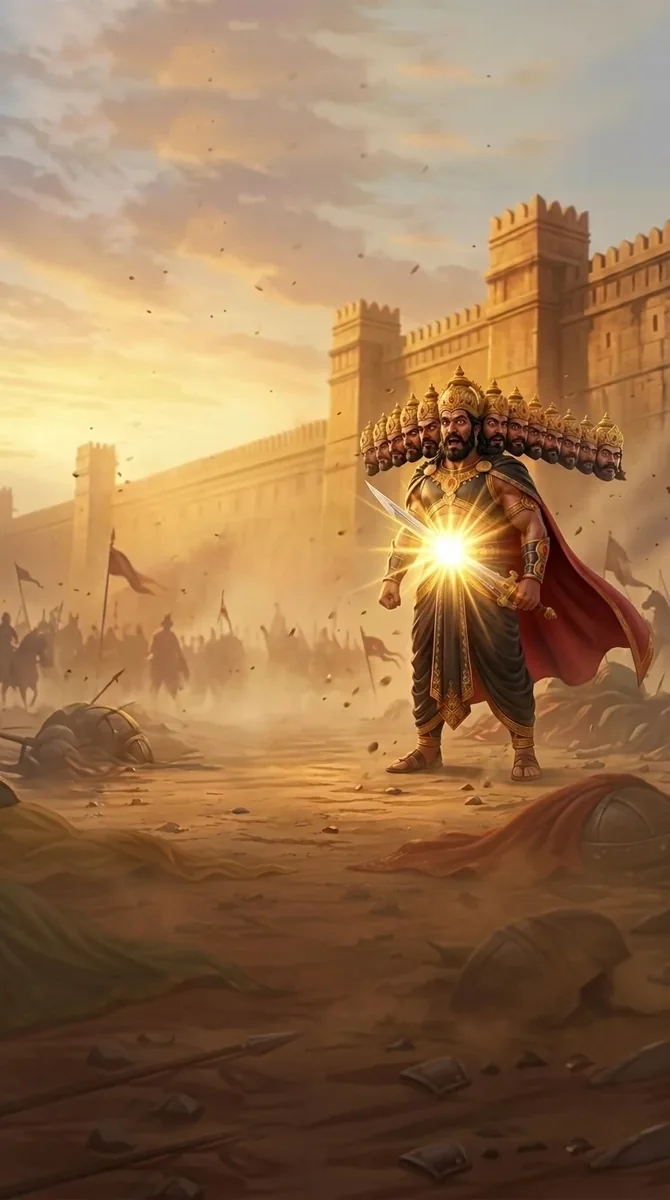
Frames from Naani’s telling, in story order — the pictures your child sees while she speaks.
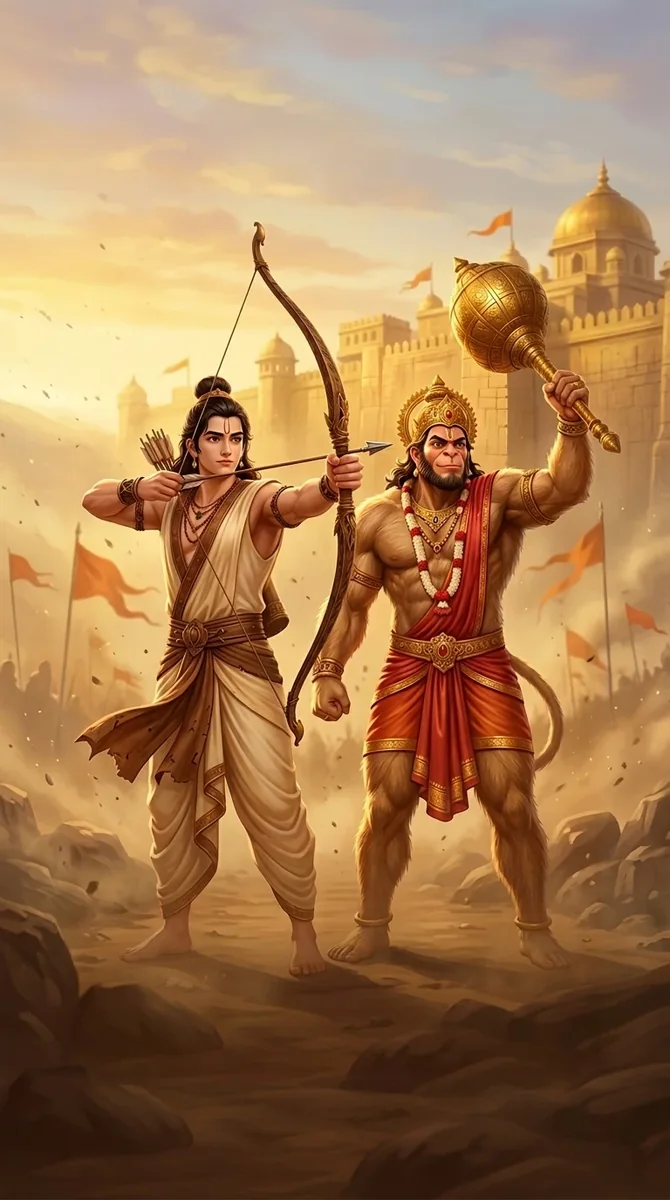
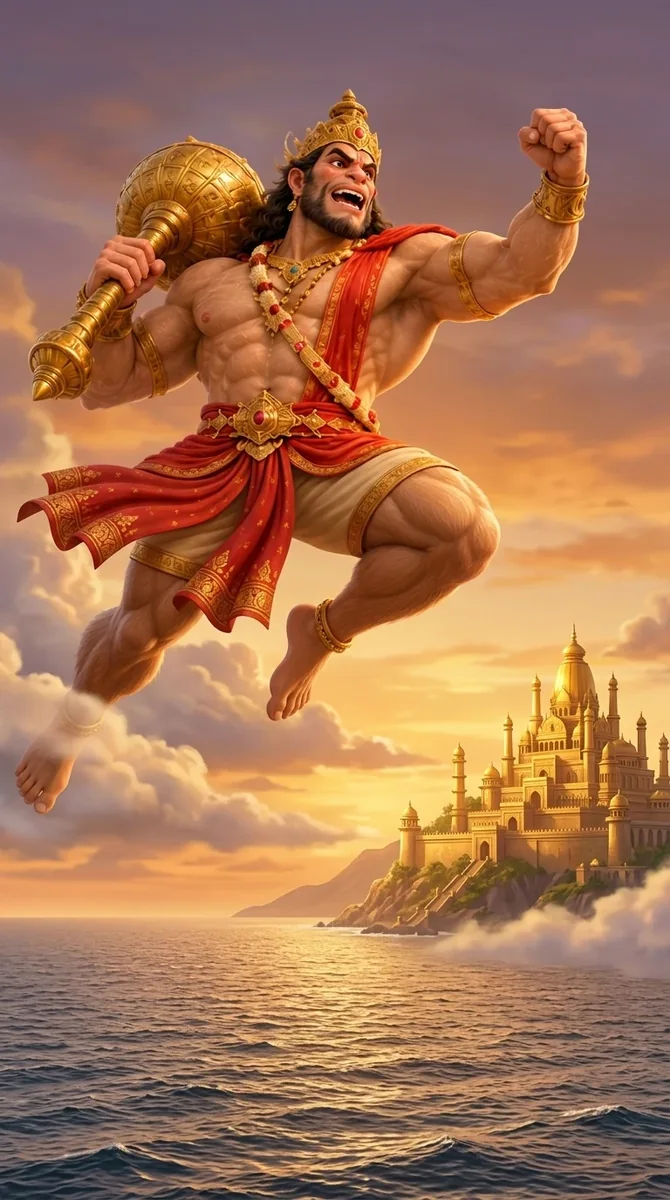
On the way they meet Hanuman and King Sugriv, and the search becomes a friendship. At the edge of a roaring ocean, Hanuman takes one deep breath, grows as tall as a mountain, says Ram's name once, and leaps. Naani pauses here: will he make it across? Your child decides, out loud, and she answers.
Naani saysहनुमान जी ने एक लंबी साँस ली और अपना शरीर एक पहाड़ जितना बड़ा कर लिया।Hanuman took one long breath and made himself as big as a mountain.
In Lanka, in the night garden of Ashok Vatika, Hanuman finds Sita sitting under a tree and shows her Ram's ring. Then comes the part children remember for years: two clever vanars, Nal and Neel, write Ram's name on huge stones and drop them into the sea — and the stones float. A bridge grows across the water and the whole army crosses to Lanka. Ram asks Ravan, politely, to return Sita. Ravan is too proud to listen.
Naani saysवे भारी पत्थर पानी में डूबे नहीं! पत्थर पानी पर तैरने लगे!Those heavy stones did not sink! The stones began to float on the water!
Naani saysपर रावण बहुत घमंडी था। उसने मना कर दिया।But Ravan was very proud. He refused.
The battle itself takes Naani only a few lines. Ravan has ten heads and great strength; Ram has truth and courage. One arrow, and Ravan's pride is broken. Flowers rain from the sky, temple bells ring, elephants trumpet, and Sita is free. Good has won over evil — and that, Naani explains, is why we burn Ravan's effigy every Dussehra: to remember that however big and strong pride looks, it never wins in the end.
The value this story teaches
Around five, children discover winning — and with it boasting, refusing to lose, and digging in rather than saying sorry. Telling them not to be proud rarely lands. Showing them a king with ten heads who loses everything because he would not return what was not his lands every time, because the child has already decided whose side they are on.
The story makes the contrast concrete. Ram asks politely before he fights; Ravan refuses out of pride. Hanuman's strength is used for a friend, not for himself. Nal and Neel win with a clever idea, not a bigger army. By the time the one arrow flies, your child has seen that calm, kindness and good friends beat size and noise — and the burning effigy in the park becomes a yearly reminder they understand.
How to talk about it at bedtime
- Ask your child: Ram asked Ravan nicely to give Sita back. What did Ravan say — and what would have happened if he had said yes?
- Try: "Jab hum galti karte hain, sorry bolna mushkil kyun lagta hai?" Share a time you found it hard, and what helped.
- Notice together how many friends Ram had — Hanuman, Sugriv, Nal, Neel. Ask who your child's helpers are when something feels too big.
When to pick this story
- Dussehra week, before you watch the Ravan effigy burn or a Ramlila
- When your child is boasting or refusing to say sorry after a quarrel
- A night when something feels too big — a new class, a bully, a fear — and they need to hear that friends and calm thinking help
Try asking your child
After the story, or the next morning on the way to school:
- Why did the heavy stones float on the water? What did Nal and Neel write on them?
- Ravan had ten heads and a huge army, but he still lost. What did Ram have that Ravan did not?
- What do you see at Dussehra where we live — the Ravan effigy, Ramlila, mela? Which part do you like best?
Meet the characters
Calm, truthful and brave — he asks before he fights, and wins with a single arrow.
The friend who grows as big as a mountain and leaps across the sea to find Sita.
The ten-headed king of Lanka, whose pride stops him from doing the one simple right thing.
Two clever vanars whose floating stones become the bridge to Lanka.
From the app-store reviews
Two of the public reviews parents have left on Google Play and the App Store, quoted exactly as they wrote them.
“an intellectual way to describe the old stories for kids .”
Nice“Really cute idea for bedtime! I love how Naani actually listens when kids interrupt and responds as part of the story. The mix of Hindi and English feels really natural, and the gentle lessons are a nice touch. Such a lovely way to wind down before sleep!”
Give your child a story with a value every night
Naani tells Dussehra: Rama Aur Ravana Ka Antim Yudh in warm Hindi, shows the pictures, asks a question halfway and listens to your child's answer. One story, one seekh, then good night.
Listen tonight — free- Free stories every night
- No ads
- Your child’s voice erased after 24 hours
- Made in India
About this story
- Language: Hindi — simple, in a grandmother’s voice
- Ages: 4–7
- Listen time: under 15 minutes
- Value: Humility, Courage, Friendship
- World: Festival Stories
- Theme: Dharma outlasts arrogance, however powerful the arrogance looks.
Also plays in the browser: app.naani.live/stream/dussehra-rama-aur-ravana-ka-antim-yudh (sign-in required).
Parents also ask
What is the Dussehra story for kids?
Dussehra (Vijayadashami) celebrates Ram defeating the ten-headed king Ravan, who had carried away Sita. With Hanuman, Sugriv's army and a bridge of floating stones, Ram reaches Lanka and wins — the victory of good over evil, which is why Ravan's effigy is burned.
Is the battle frightening for small children?
Not in Naani's telling. The fight is a few quiet sentences; most of the story is about friendship, Hanuman's leap, Sita recognising Ram's ring and the floating stones. It ends with bells, flowers and everyone going to sleep.
When is Dussehra in 2026?
Dussehra falls on Tuesday, 20 October 2026. Diwali, which continues the story with Ram's return to Ayodhya, is on 8 November 2026.
Next story
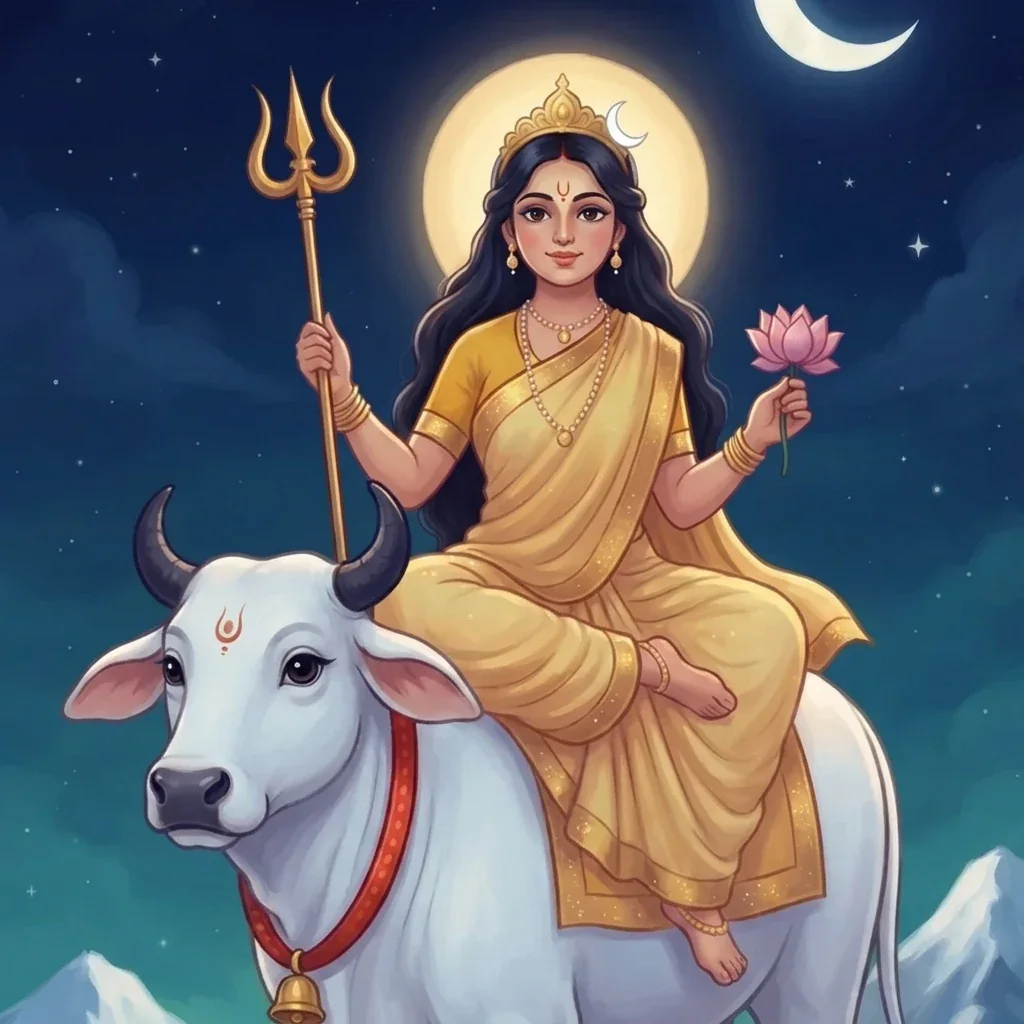
Navratri Night 1 — Maa Shailputri
The first Devi of Navratri, told so your child learns that the strongest hands can still be gentle.
More Festival Stories
All Festival Stories →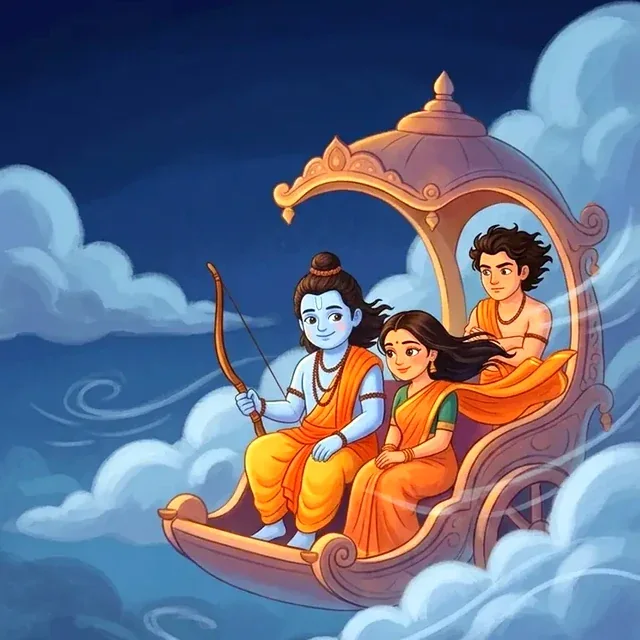 Faith
Diwali: Jab Ayodhya Jagmagayi
The Diwali story told so your child takes away hope, togetherness, and a prince who did his duty with a smile.
 Resilience
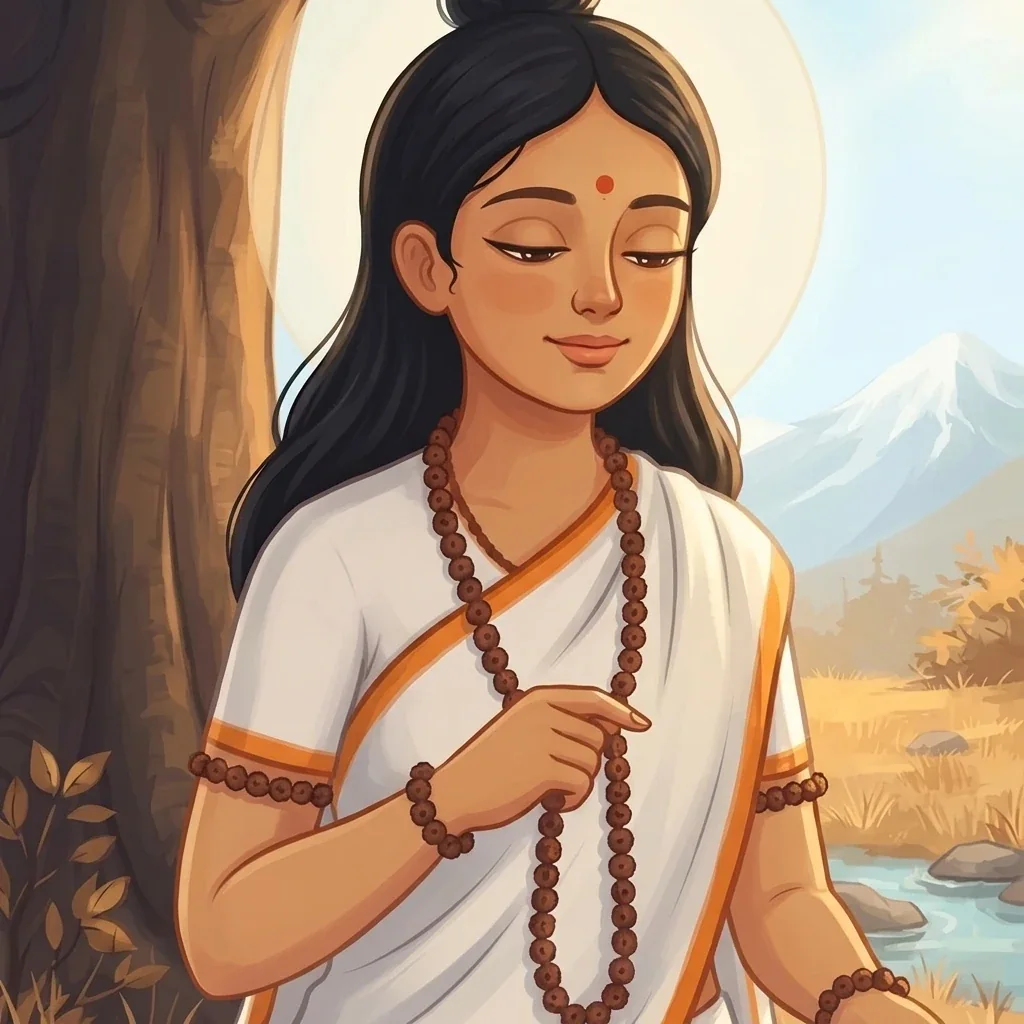
Navratri Night 2 — Maa Brahmacharini
The Devi of tapasya, told so your child learns that falling isn't losing — giving up is.
 Courage
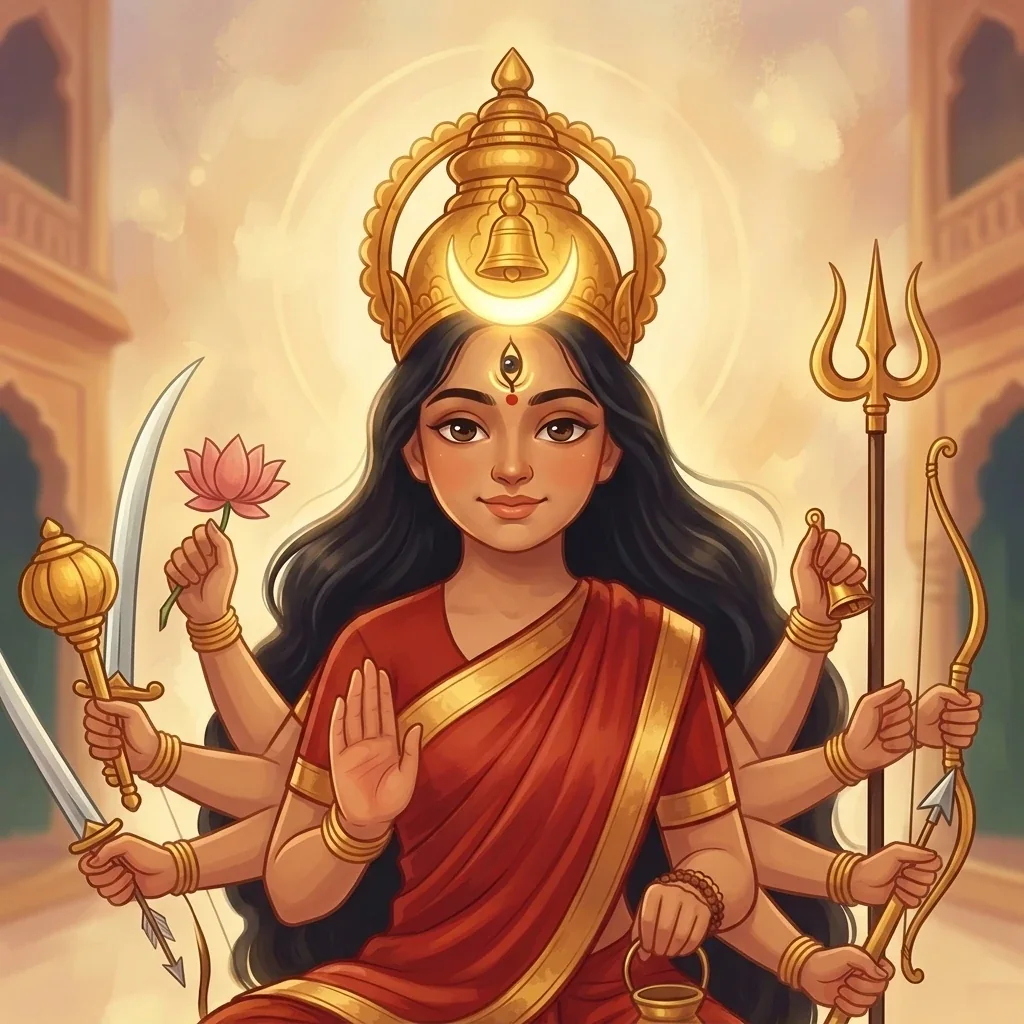
Navratri Night 3 — Maa Chandraghanta
The third Devi of Navratri, told so your child learns calm courage: one deep breath, then a brave step forward.
More stories that teach humility
Being great without needing to be grander than everyone else.
 Humility
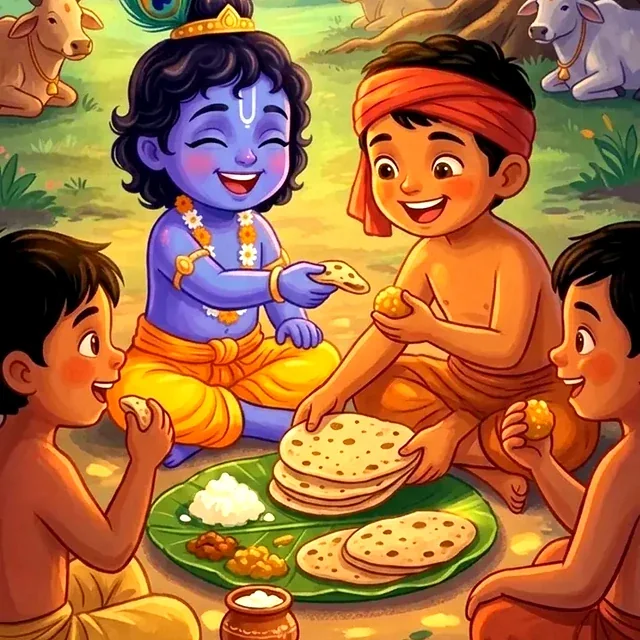
Brahma ji aur Nanha Krishna
A Krishna story that shows even the wisest can say sorry — and learn something from someone small.
 Humility
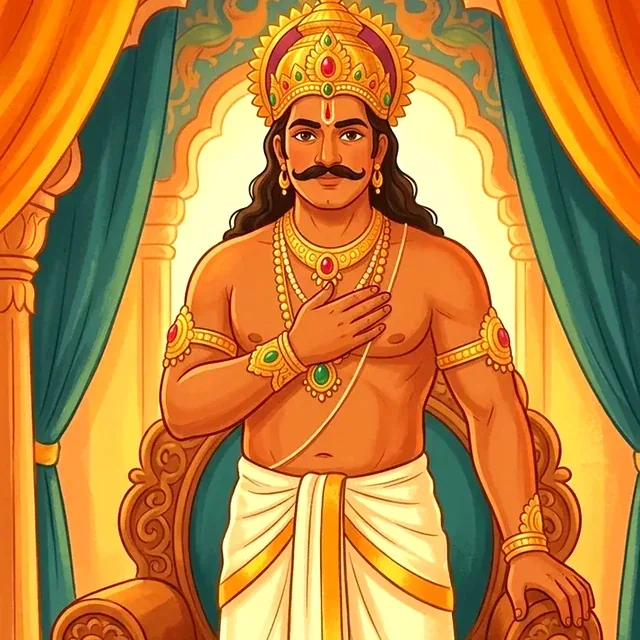
Onam: Raja Mahabali ki Vaapsi
The Onam story, told so your child sees a king keep his word and bow his head — and be loved for it for ever.
 Humility
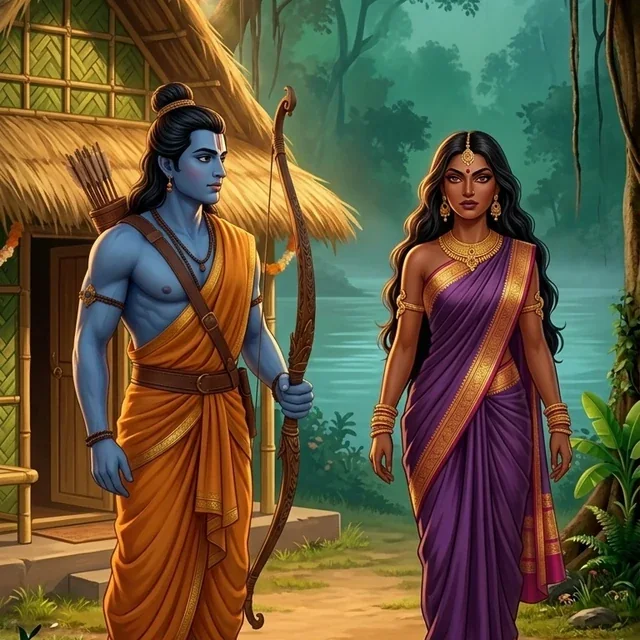
Naani Ki Ramayan 6: Panchavati mein Anjaan Mehmaan
A Ramayana night that teaches your child the strongest person is the one who listens when someone gives good advice.