Netaji aur Jai Hind — the Subhas Chandra Bose story for kids, in Hindi
A Netaji story that shows a six-year-old that people who cannot understand each other's words can still walk as one.
नेताजी और जय हिन्द — जब सबके क़दम एक साथ चले
Hear Naani tell it
The story
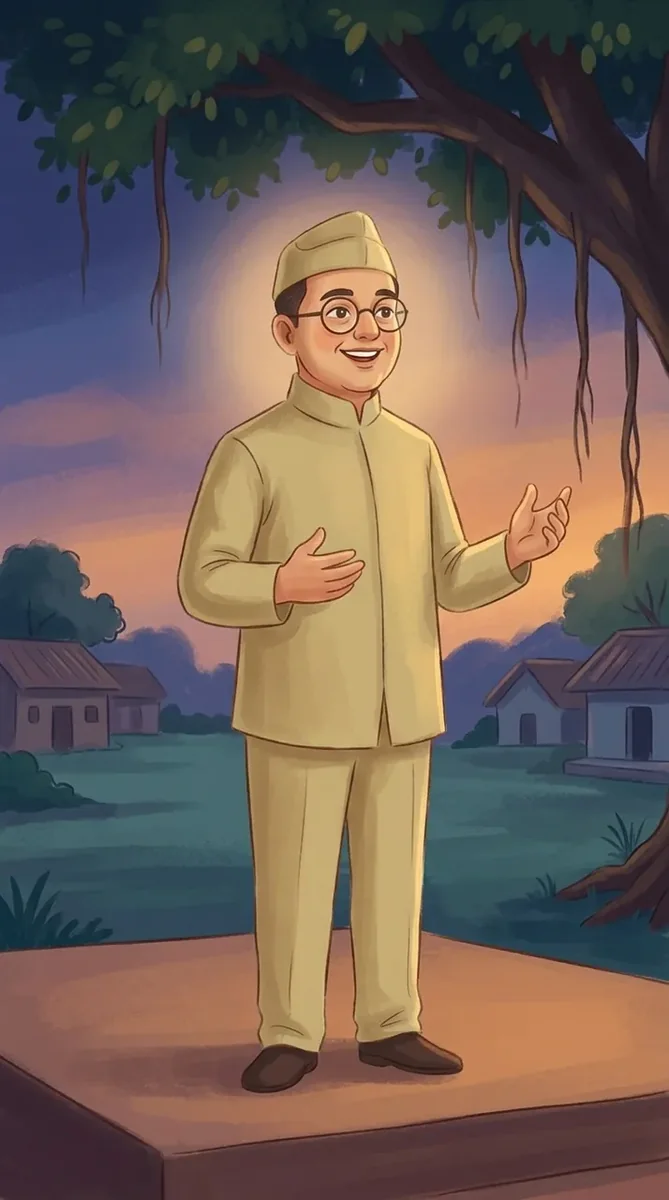
Why do we say Jai Hind? If your child has ever asked, play this — what they will keep from it is bigger than the greeting: people who cannot understand each other's words can still walk as one. Naani begins with a brave man called Subhas Chandra Bose, whom people lovingly called Netaji — a neta being someone who walks in front and looks after everyone. In those days, she explains, our country was not aazaad, not free to live its own way in its own home.
Naani saysनेता — यानी जो सबसे आगे चलता है और सबका ध्यान रखता है।A neta — someone who walks at the front and looks after everyone.
Netaji crosses the sea to a faraway land where many Indians live, all sharing one dream: that Hindustan be free. An army already waits there, the Azad Hind Fauj — a fauj being a big team that walks together — and Netaji takes charge and gives it fresh courage. Tomorrow morning, for the first time, everyone will stand together and raise their flag.
Naani saysसब अपने देश से दूर थे, और सबका एक ही सपना था — हिन्दुस्तान आज़ाद हो जाए।They were all far from their country, and they all had one dream — that Hindustan be free.
The story in pictures
Frames from Naani’s telling, in story order — the pictures your child sees while she speaks.
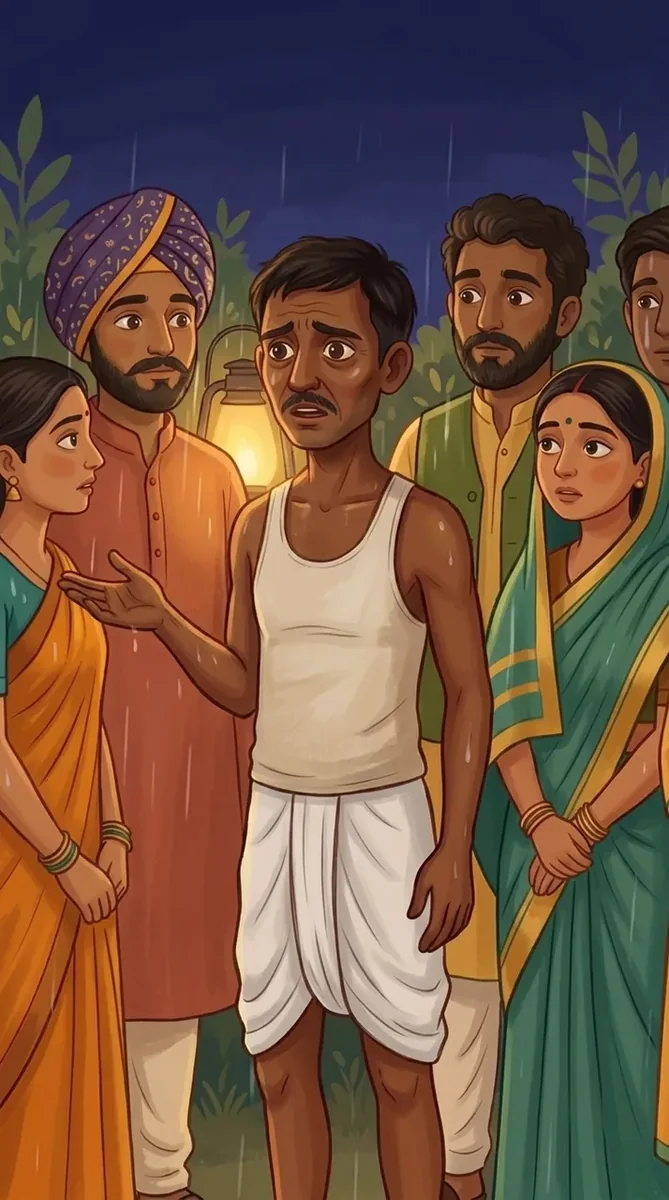
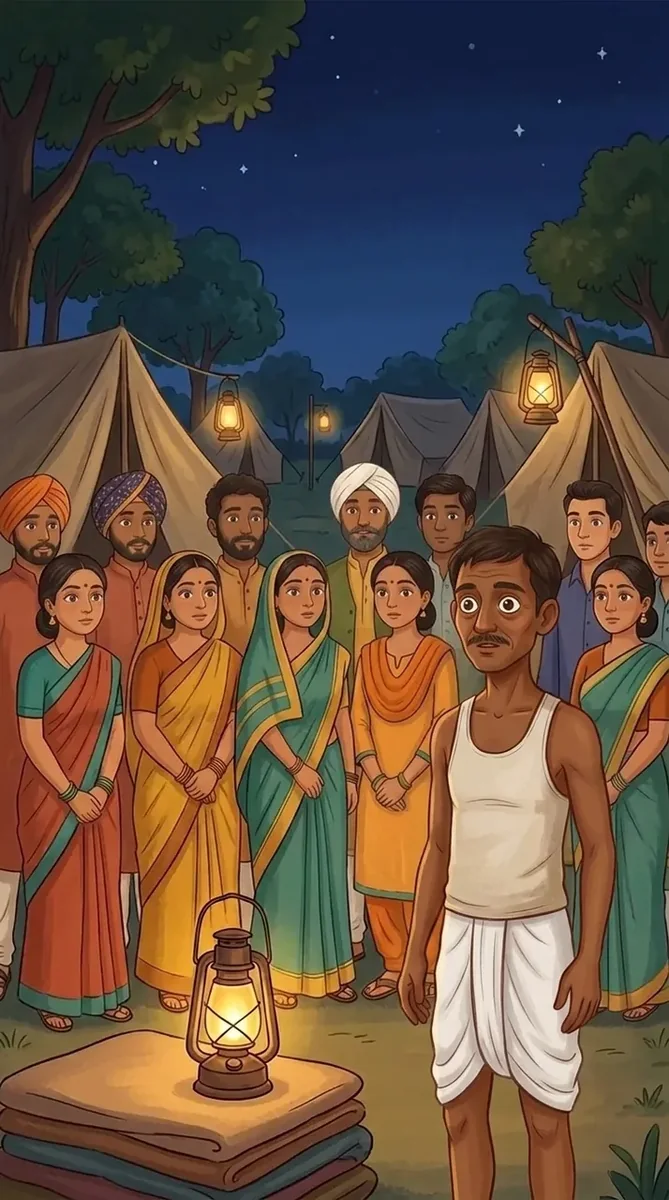
But look at the field. People sit in separate circles: Tamil speakers in one, Punjabi in another, Bengali in a third. Farmers, students, soldiers, women — and nobody can understand anybody else. When they try to walk together that evening, in light rain, one circle sets off early, another late, someone stops, someone overtakes, and every step scatters. A farmer named Murugan asks quietly: how will we walk together in front of the flag tomorrow? Faces fall. Naani pauses and asks your child how everyone felt just then — good, or sad?
Naani saysमुरुगन नाम का एक किसान धीरे से बोला — कल हम झंडे के सामने साथ कैसे चलेंगे?A farmer named Murugan said quietly: how will we walk together in front of the flag tomorrow?
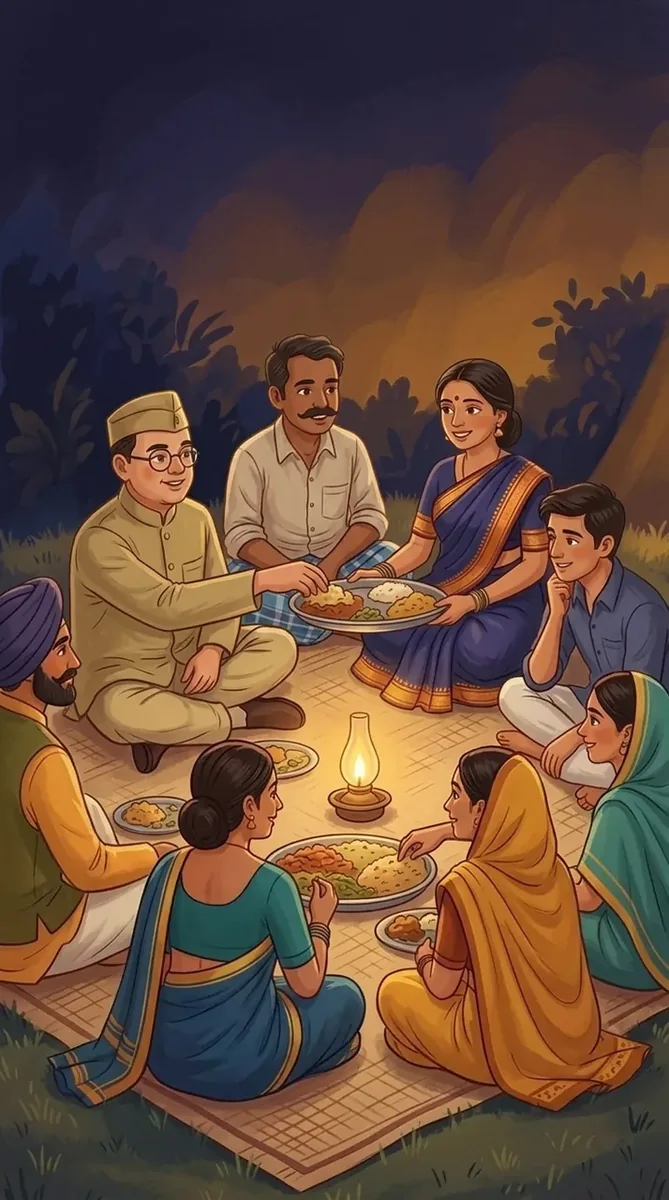
When the rain stops, Netaji walks to every circle. He eats from the Tamil group's plate, listens to the Punjabis, smiles with the Bengalis; farmer or soldier, man or woman, he treats no one as small. A distant temple bell rings and everyone turns to listen. See, says Netaji, the bell sounds the same to all of us. Our languages are different, but our heart is one. So from today we will have one greeting everyone can say. Which one? He smiles: Jai Hind — may our Hindustan be happy and live on. Circle by circle the words come back, and the smiles return.
Naani saysहमारी बोलियाँ अलग हैं, पर दिल एक है।Our languages are different, but our heart is one.
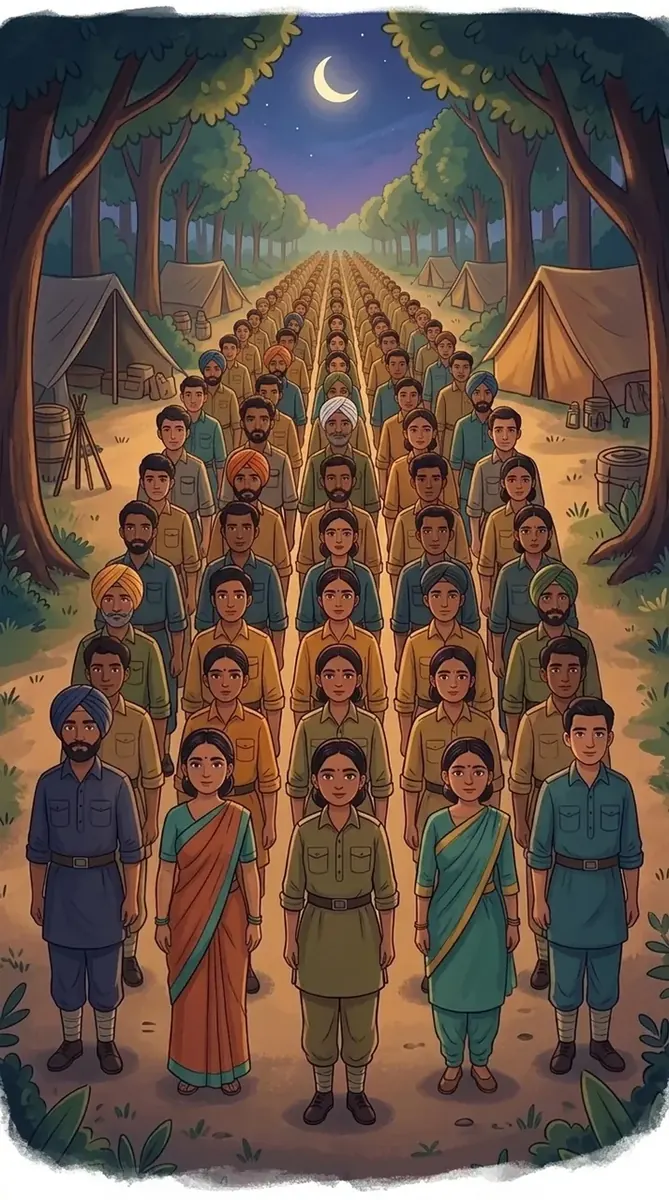
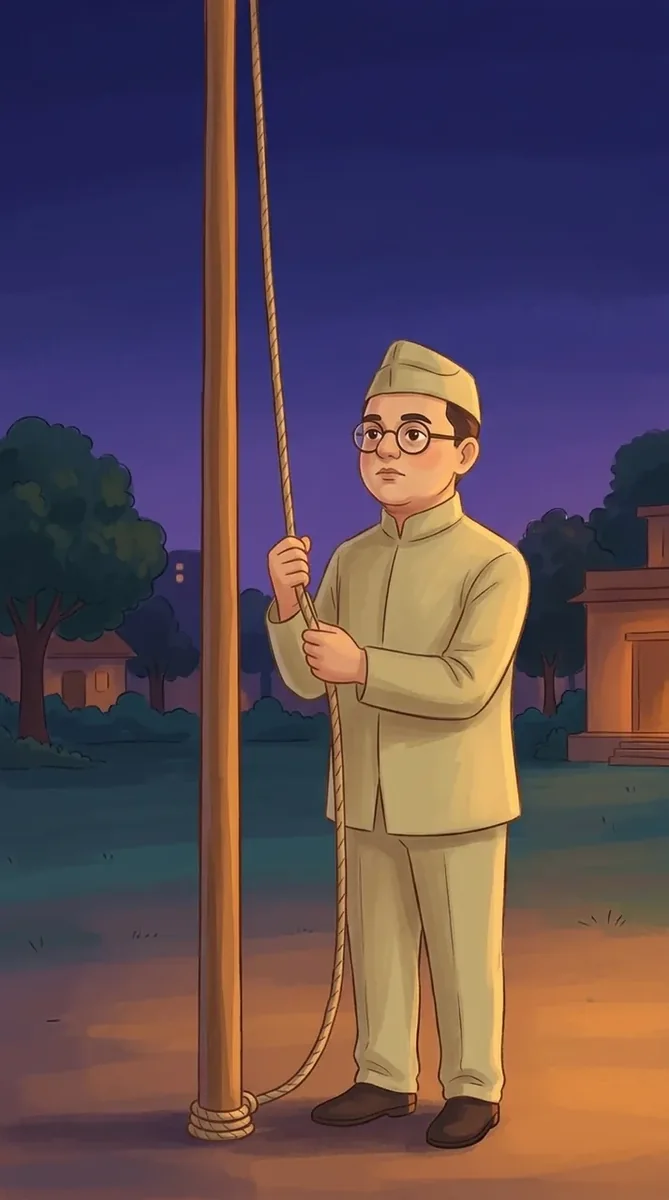
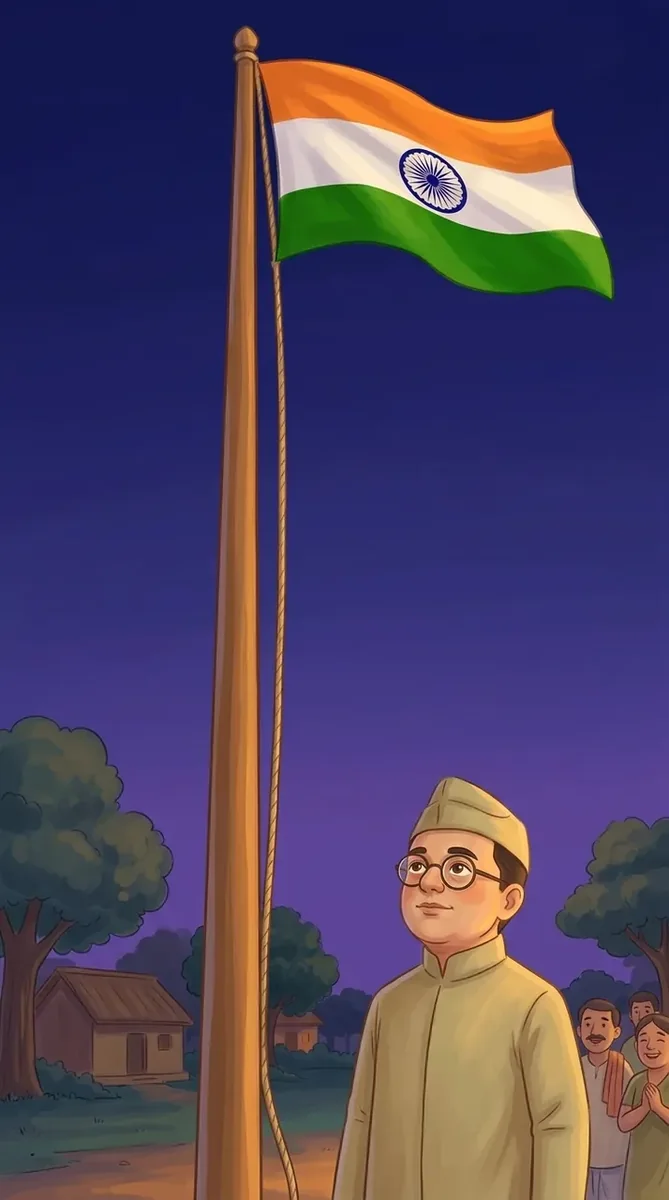
Then the footsteps. When languages differ, says Netaji, a song teaches people to walk together, and he teaches them Kadam Kadam Badhaye Ja. First the Tamils hum it, then the Punjabis, then everyone sings, and this time every foot lands together. Murugan laughs. They walk under the stars till late — different tongues, one song, the same step. In the morning there are no circles, only one long line. Netaji gently pulls the rope, the tiranga climbs, and every voice says Jai Hind as one. That day, Naani tells your child, they stopped being different people and became a family.
The value this story teaches
Between four and seven, children start sorting the world into "like me" and "not like me" — the child who speaks a different language at home, eats different food, goes to a different festival. Teamwork at this age means learning that the group can still move together, and that the first move is usually someone sitting down with the people who feel left out.
That is what Netaji does. Before he says a word about marching, he sits with the Tamil circle and eats from their plate, listens to the Punjabis, smiles with the Bengalis. Only then does he offer a greeting everyone can say and a song everyone can keep step to. Naani has your child say Jai Hind out loud in the middle of the story, so by the time the whole camp says it together, they are part of the line.
How to talk about it at bedtime
- Ask your child: why could the people not walk together at first? What did Netaji do before he taught them the song?
- Try: learn one word of greeting from a classmate's home language this week — your child's own Jai Hind.
- Ask: what is fun about a friend who is different from you? Naani ends on this question, and the answers are often lovely.
When to pick this story
- Around Independence Day, Republic Day or Netaji Jayanti
- When a new child who speaks a different language joins the class or the building
- After a group game fell apart because nobody would go second
Try asking your child
After the story, or the next morning on the way to school:
- Why could the people in the field not walk together at first, even though they all wanted the same thing?
- What greeting did Netaji give everyone, and what does Jai Hind mean?
- Is there a friend at school or in your building who speaks a different language at home? What do you two do together?
Meet the characters
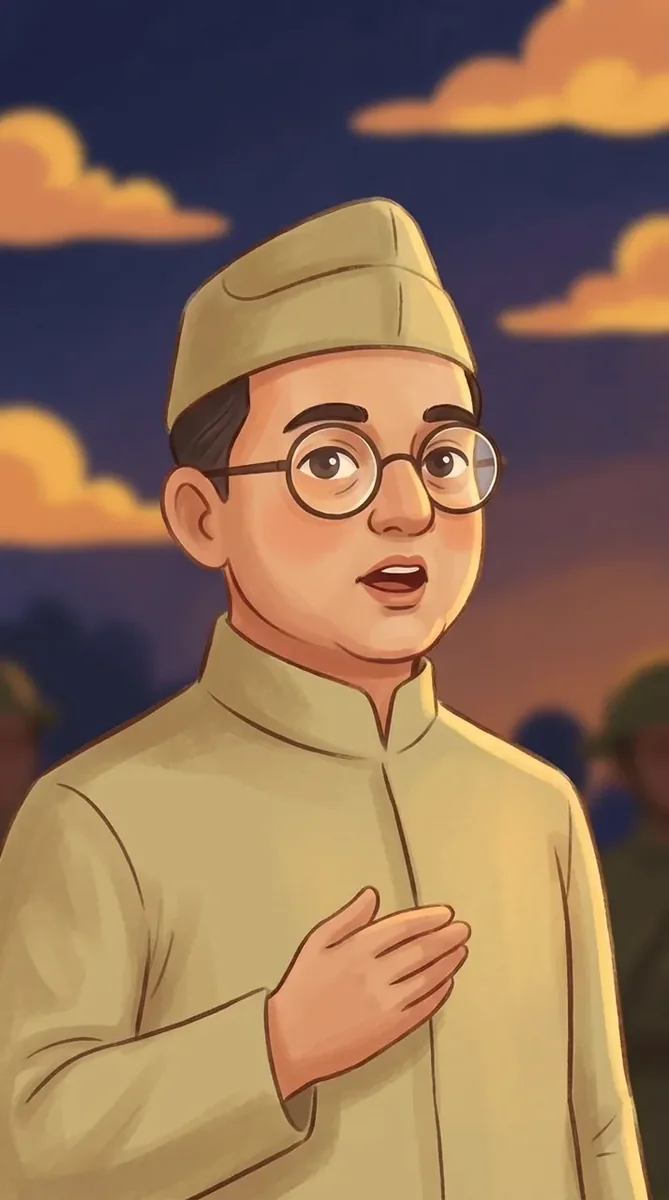
Subhas Chandra Bose, the leader who sits with every circle before he asks them to march
A Tamil farmer who asks the question everyone is thinking
Tamil, Punjabi and Bengali speakers, farmers, students, soldiers and women, learning one step
From the app-store reviews
Two of the public reviews parents have left on Google Play and the App Store, quoted exactly as they wrote them.
“Maine to download kar liya hai aap sabhi log download karo aur yah story Apne bacchon Ko badon ko sunao bahut achcha lagega…”“Great stories and really interactive. My kid love it”
Give your child a story with a value every night
Naani tells Subhas Babu aur Azad Hind Fauj in warm Hindi, shows the pictures, asks a question halfway and listens to your child's answer. One story, one seekh, then good night.
Listen tonight — free- Free stories every night
- No ads
- Your child’s voice erased after 24 hours
- Made in India
About this story
- Language: Hindi — simple, in a grandmother’s voice
- Ages: 4–7
- Listen time: about 12 minutes
- Value: Teamwork, Friendship, Kindness & empathy
- World: Tales of Valour
- Theme: Leadership means inspiring different people to work toward a shared goal.
Also plays in the browser: app.naani.live/stream/subhas-chandra-bose-and-the-azad-hind-fauj (sign-in required).
Parents also ask
Who was Subhas Chandra Bose, for a child?
Subhas Chandra Bose, called Netaji, was a leader of India's freedom struggle who took charge of the Azad Hind Fauj — an army of Indians living far from home — and gave the country its greeting, Jai Hind. Naani's story is about one evening in that camp, when he helped people of many languages learn to walk as one.
Is this a war story?
No. There is no battle, no enemy on screen and nobody is hurt. The problem in the story is that people who speak Tamil, Punjabi and Bengali cannot march in step; the solution is a shared meal, a greeting and a song. It ends with a flag going up and everyone saying Jai Hind together.
Does Naani sing Kadam Kadam Badhaye Ja?
She names the song and tells how Netaji taught it circle by circle, but she does not sing the whole thing. In the middle of the story she invites your child to say Jai Hind softly out loud, and praises them when they do — most children say it again at the end without being asked.
Next story

Hanuman aur Sanjeevani Booti
A Hanuman story that shows a five-year-old that when a job makes no sense, you stop, think, and find another way.
More Tales of Valour
All Tales of Valour →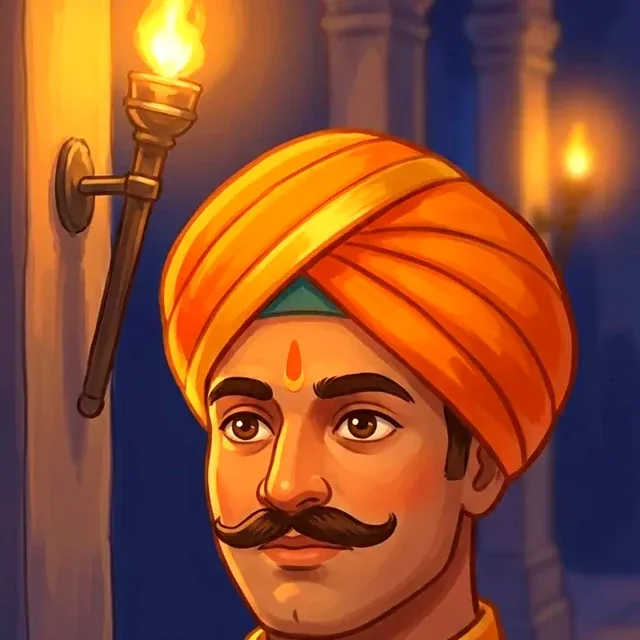 Patience
Shivaji Maharaj ki Chaturai
A Shivaji Maharaj story that shows a six-year-old that courage is mostly patience and thinking.
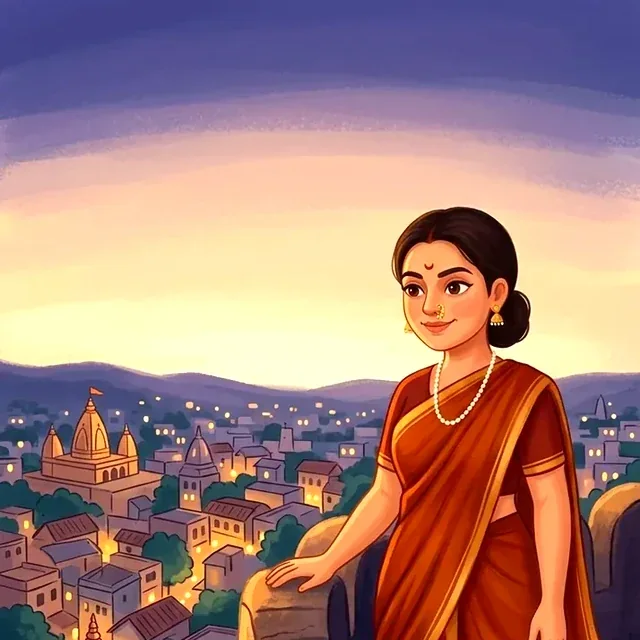 Courage
Jhansi ki Rani Lakshmibai
A Rani Lakshmibai story that shows a five-year-old you can be scared in the dark and still do the brave thing.
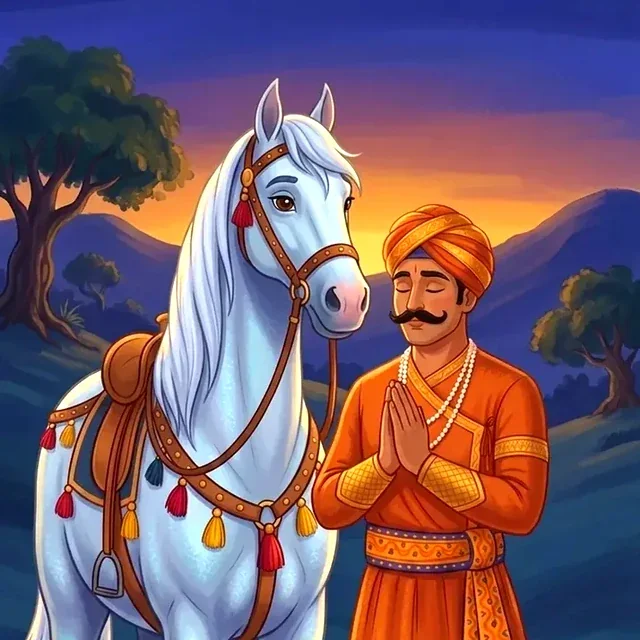 Friendship
Maharana Pratap aur Chetak
A Maharana Pratap story that shows a six-year-old what a loyal friend does — and how to be one back.
More stories that teach teamwork
Different strengths, one bundle of sticks nobody can break.
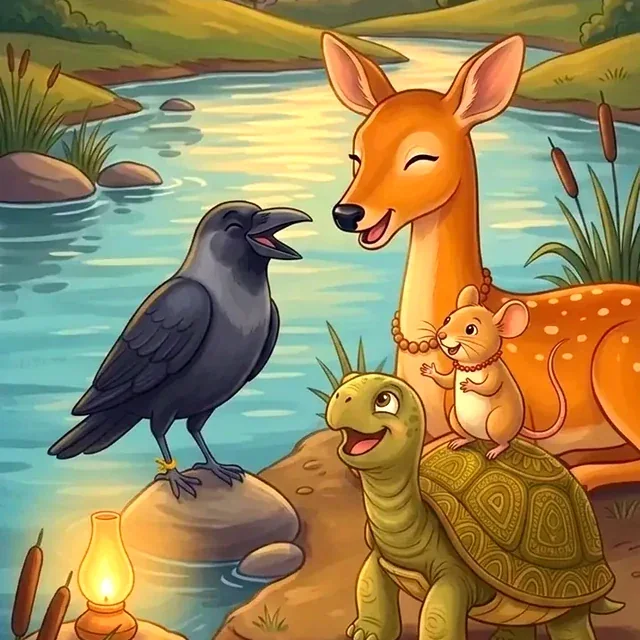 Teamwork
Char Dost aur Shikari
A Panchatantra story that shows your child why a good team is made of very different friends.
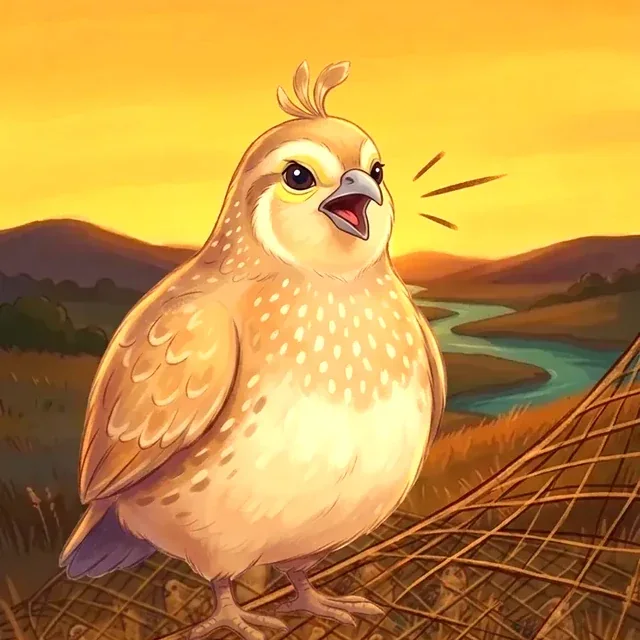 Teamwork
Bateron ki Ladayi
A Jataka story that shows your child how a small quarrel can make a shared load impossible — and how to lift it again.
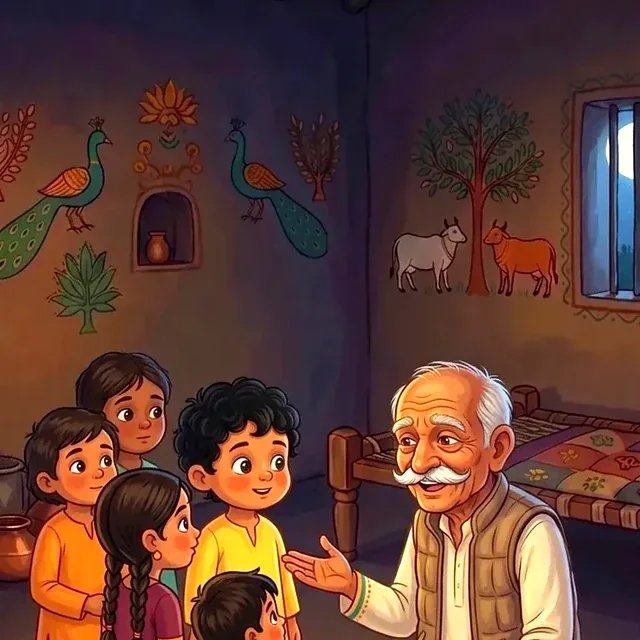 Teamwork
Lakdiyon Ka Gattha
A moral story that teaches teamwork — three squabbling siblings discover it for themselves, with no lecture.