Lakdiyon ka Gattha — the bundle of sticks moral story for kids, in Hindi
A moral story that teaches teamwork — three squabbling siblings discover it for themselves, with no lecture.
लकड़ियों का गट्ठा — गोपू, मुनिया और भोलू की कहानी
Hear Naani tell it
The story
If your children squabble over everything, this is the story that shows them — without a single scolding — what they can do together. Three children, one grandfather, and a bundle of firewood that refuses to move: that is the whole of Lakdiyon ka Gattha. Gopu, Muniya and Bholu live with their Dadaji in a mud house beside a small river, and they bicker all day long — over who gets the bigger roti, over who sits by the window.
Naani saysतीनों थे तो बड़े प्यारे, पर एक बात थी… तीनों में दिन भर झगड़ा चलता रहता।All three were lovely children, but there was one thing — they quarrelled all day long.
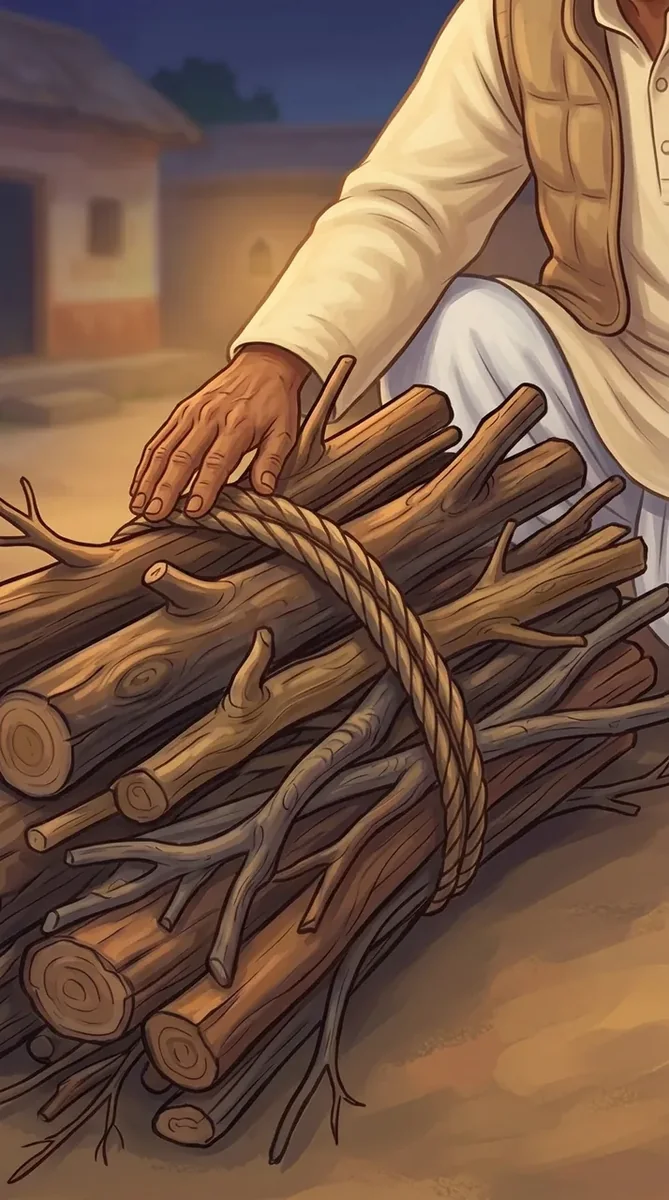
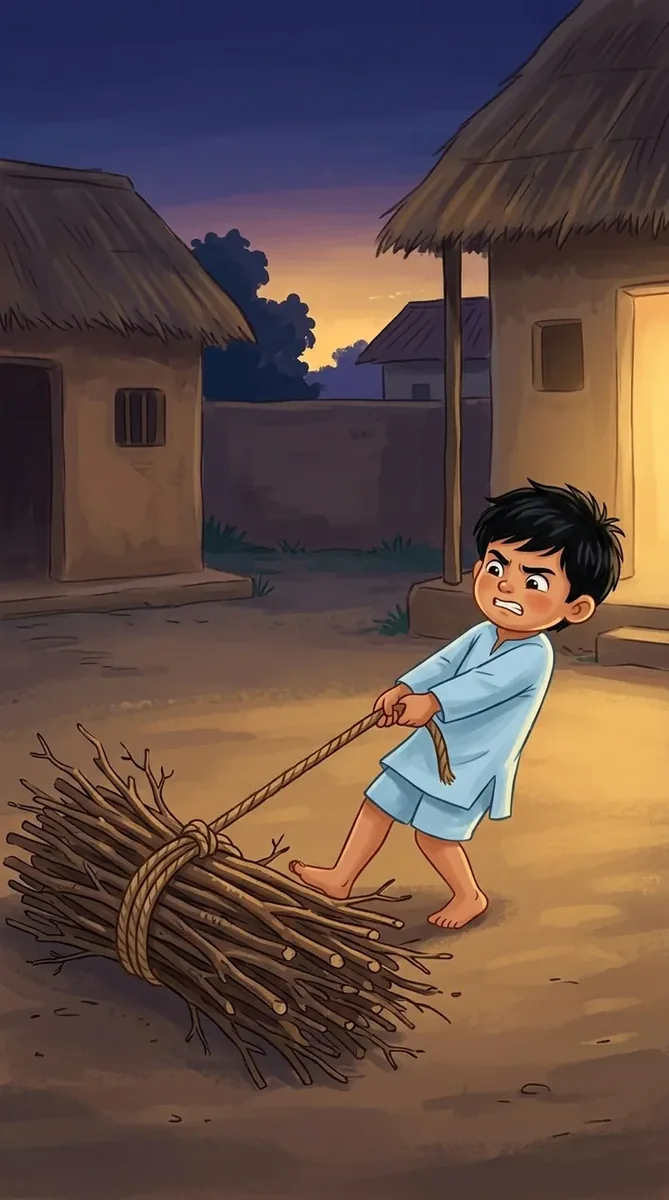
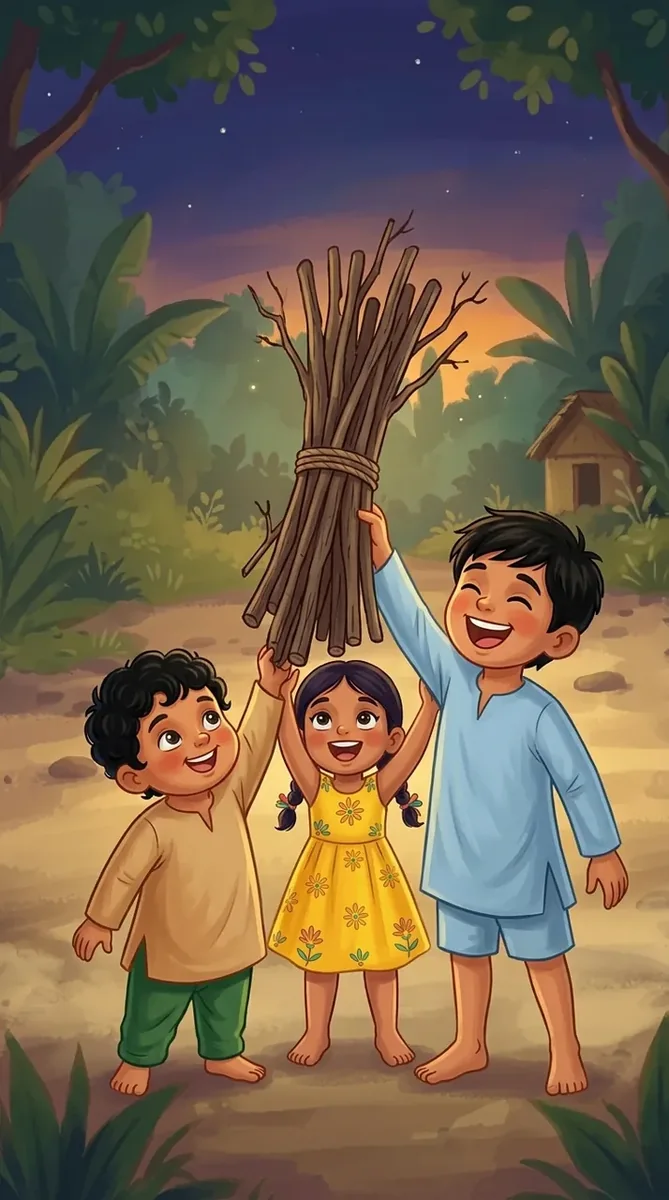
One cool evening Dadaji wants to cook hot khichdi, but the firewood is out in the courtyard, tied into one big gattha. He calls the children to bring it in. Cue the argument: Gopu says Muniya should go, Muniya says she already fetched water that morning, little Bholu pouts that he is the smallest. They walk out separately, backs turned to one another, and one by one they tug at the rope. The bundle does not shift. They flop down, tired and hungry, while the stove stays cold.
Naani saysपर गट्ठा अपनी जगह से ज़रा भी नहीं हिला! तीनों थककर वहीं बैठ गए।But the bundle did not budge an inch. All three sat down right there, worn out.
The story in pictures
Frames from Naani’s telling, in story order — the pictures your child sees while she speaks.

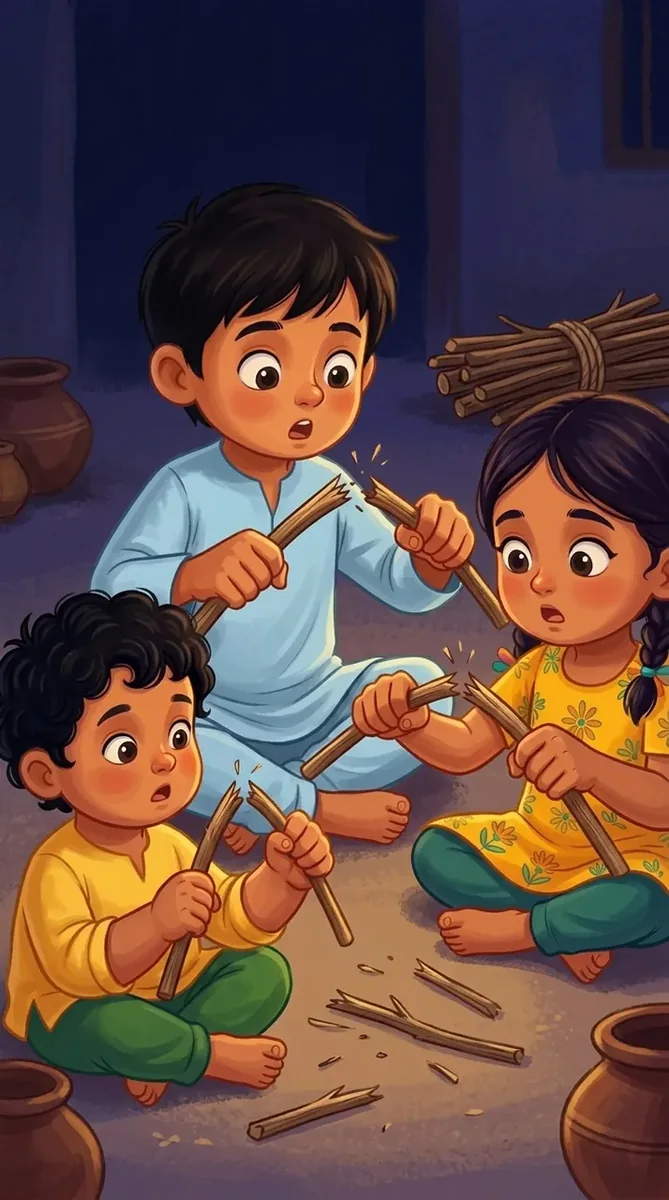

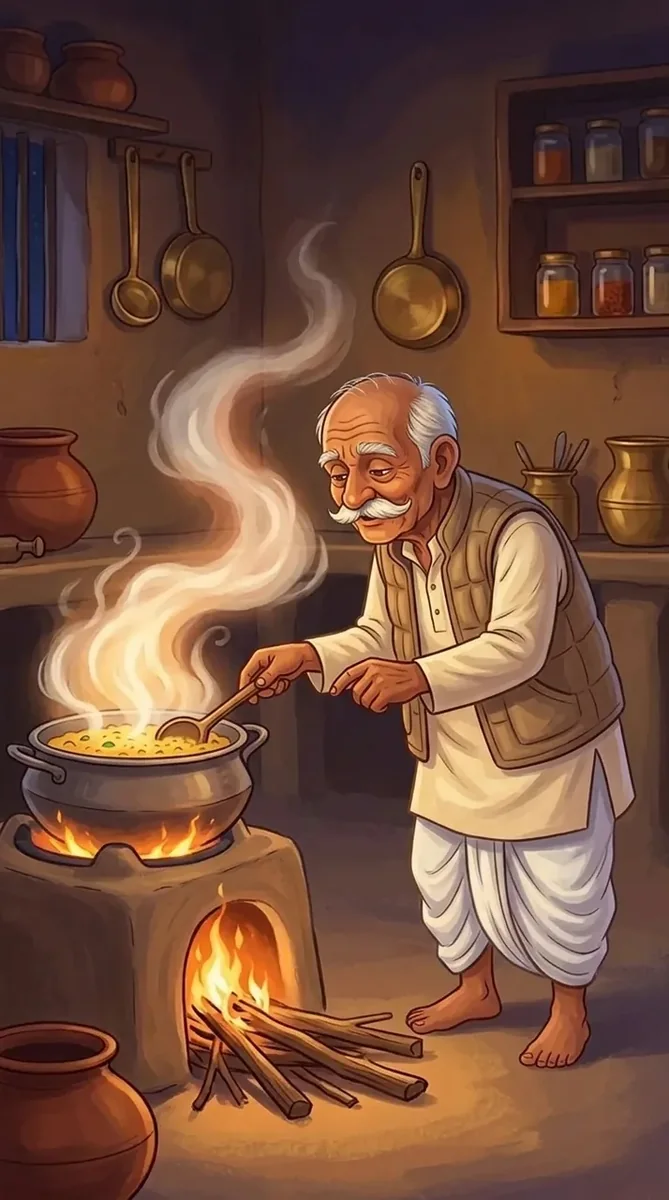
Dadaji comes out — and he is not angry. He has remembered an old tarkeeb. He unties the rope, hands each child a single thin stick and says: break it. Snap, snap, snap. Bholu laughs at how easy that was. Then Dadaji ties all the sticks back together and says: now break this. Here Naani pauses and asks your child what they think will happen — will the three of them manage to snap the thick bundle? — and listens to the answer before going on.
Naani saysउन्होंने गोपू को एक पतली लकड़ी दी, मुनिया को एक, और भोलू को एक। लो, वे बोले, इसे तोड़ो तो ज़रा।He gave Gopu one thin stick, Muniya one, and Bholu one. Here, he said — break this, will you.
Gopu's face goes red with effort. Muniya tries, Bholu tries, they take turns. Nothing. In the quiet that follows, as the evening temple bell sounds across the fields, Muniya says it first: when the sticks are together, nobody can break them. Dadaji says nothing at all. He just sits there hiding a smile under his white moustache.
Naani saysजब लकड़ियाँ साथ हैं, तो कोई उन्हें तोड़ नहीं पाया।When the sticks are together, nobody could break them.
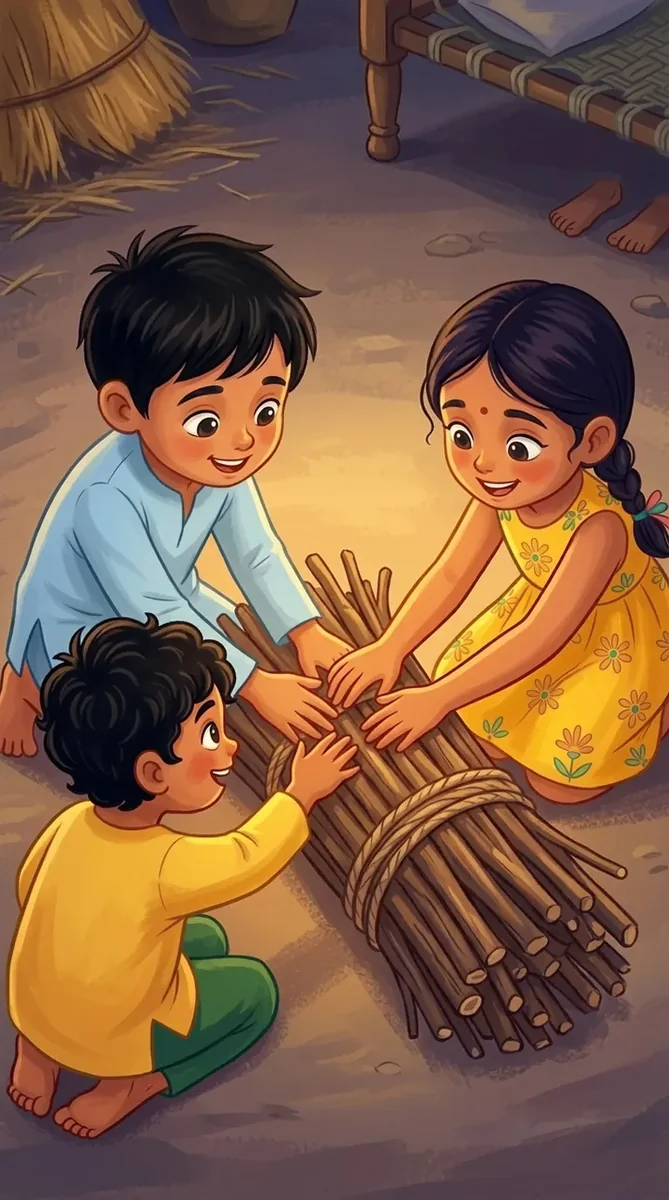
The ending is small and lovely. Gopu silently holds out a hand to Muniya, Muniya to Bholu, and six small hands lift the bundle on Dadaji's count of three. The stove is lit, the house fills with the smell of khichdi, and for once dinner has no quarrel in it. Later Bholu falls asleep in Dadaji's lap, and Gopu and Muniya sit shoulder to shoulder under one razai — exactly like those sticks.
The value this story teaches
Between four and seven, children live in a world of 'mine' and 'my turn'. Teamwork is not natural yet; it has to be felt before it can be understood. A story in which cooperation produces something a child can actually see — a bundle that suddenly lifts, a stove that finally lights — does more than any reminder to 'help each other'.
Naani's telling puts the proof in the children's own hands. Each snaps a single stick with ease; none can break the tied bundle. Dadaji never explains. He waits, hiding a smile under his moustache, until Muniya says it herself — when the sticks are together, nobody can break them — and Gopu silently reaches for his sister's hand.
How to talk about it at bedtime
- Ask your child: why do you think Dadaji didn't just carry the bundle in himself?
- Try: tomorrow, give your children one small job that genuinely needs two pairs of hands, and count 'ek… do… teen' like Dadaji.
- Ask your child: who is in your gattha — the people who make you stronger when you stand together?
When to pick this story
- After a sibling fight over a chore or a toy
- The night before a team event — a school play, a match, a group project
- When one child keeps saying 'I'll do it myself'
Try asking your child
After the story, or the next morning on the way to school:
- Why could none of the children move the bundle alone, but all three could lift it together?
- Dadaji never scolded Gopu, Muniya or Bholu. What did he do instead, and why do you think it worked?
- Is there something at home you could do together with your brother, sister or a friend, the way the three children lifted the gattha?
Meet the characters
The children's grandfather, who teaches with a bundle of sticks instead of a scolding
The eldest, first to pull alone and first to hold out a hand
The middle child, who puts the lesson into words
The smallest, who laughs loudest when the thin stick snaps
From the app-store reviews
Two of the public reviews parents have left on Google Play and the App Store, quoted exactly as they wrote them.
“Maine to download kar liya hai aap sabhi log download karo aur yah story Apne bacchon Ko badon ko sunao bahut achcha lagega…”“Great stories and really interactive. My kid love it”
Give your child a story with a value every night
Naani tells Lakdiyon Ka Gattha in warm Hindi, shows the pictures, asks a question halfway and listens to your child's answer. One story, one seekh, then good night.
Listen tonight — free- Free stories every night
- No ads
- Your child’s voice erased after 24 hours
- Made in India
About this story
- Language: Hindi — simple, in a grandmother’s voice
- Ages: 4–7
- Listen time: about 10 minutes
- Value: Teamwork, Sharing
- World: Naani's Lessons
- Theme: Families and teams become stronger when members support one another.
Also plays in the browser: app.naani.live/stream/lakdiyon-ka-gattha (sign-in required).
Parents also ask
What is the moral of the Lakdiyon ka Gattha story?
Unity is strength. One stick breaks easily; a bundle tied together cannot be broken. In Naani's telling the three squabbling siblings discover this for themselves, and the story ends with them carrying the firewood together — a gentle way of showing that families and teams are stronger when they stand by one another.
Is this the same as Aesop's fable The Bundle of Sticks?
It is the Indian village retelling of that very old fable, familiar from Hindi textbooks as Ekta mein Bal or Lakdiyon ka Gattha. Naani sets it in a mud house by a river, with a grandfather, three named children and a pot of khichdi, so it feels like something that happened next door rather than a lesson.
Is it suitable for a 4-year-old?
Yes. There is no villain and nothing to fear — only a cold stove, a heavy bundle and a wise grandfather. The nine minutes are full of warm sounds: cows coming home, a temple bell, crickets. Naani's mid-story questions are simple predictions a four-year-old can answer with a yes or a no.
Next story
Naani ki Teen Chhalniyan
A moral story about honesty and kind words — three simple questions your child can ask before repeating anything.
More Naani's Lessons
All Naani's Lessons → Wisdom
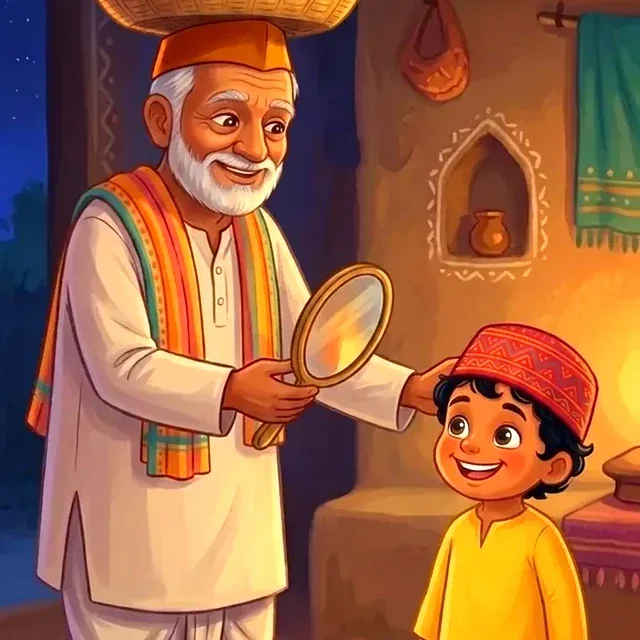
Pyaasa Kauwa
A moral story about persistence and clever thinking — small efforts, one pebble at a time, solve a big problem.
 Wisdom
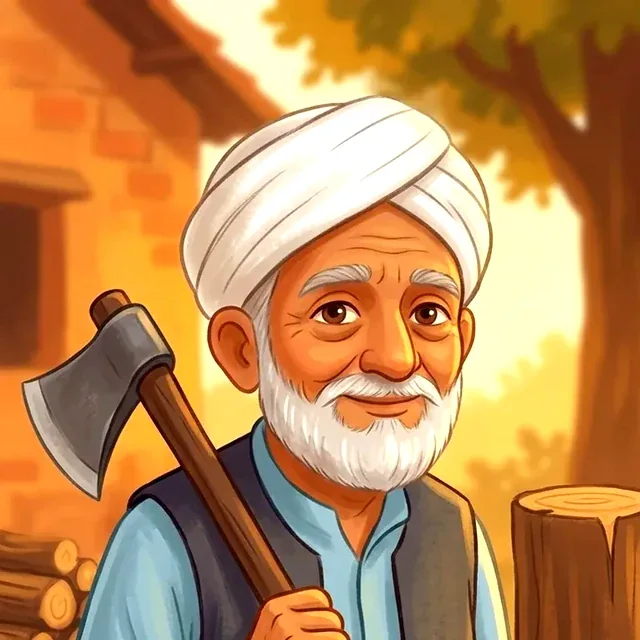
Topiwala aur Natkhat Bandar
A moral story about thinking before reacting — the answer is often right in front of you, if you stop and look.
 Honesty
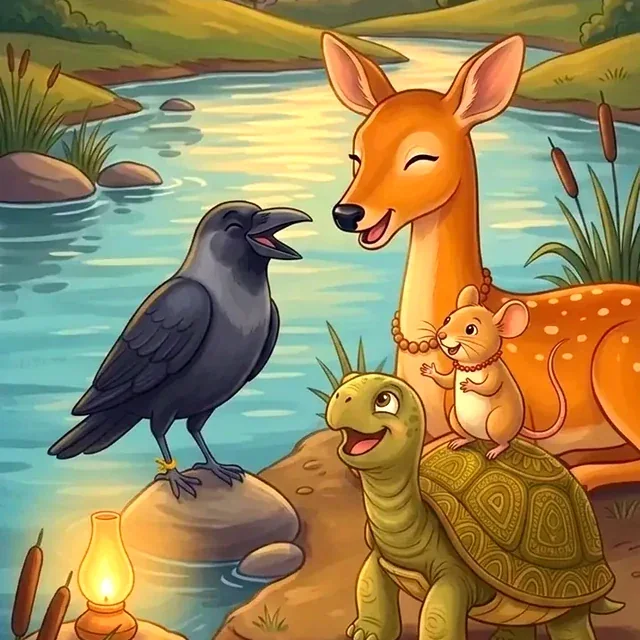
Imaandaar Lakarhara
A moral story that teaches honesty without a lecture — a poor man says no to gold because it is not his.
More stories that teach teamwork
Different strengths, one bundle of sticks nobody can break.
 Teamwork
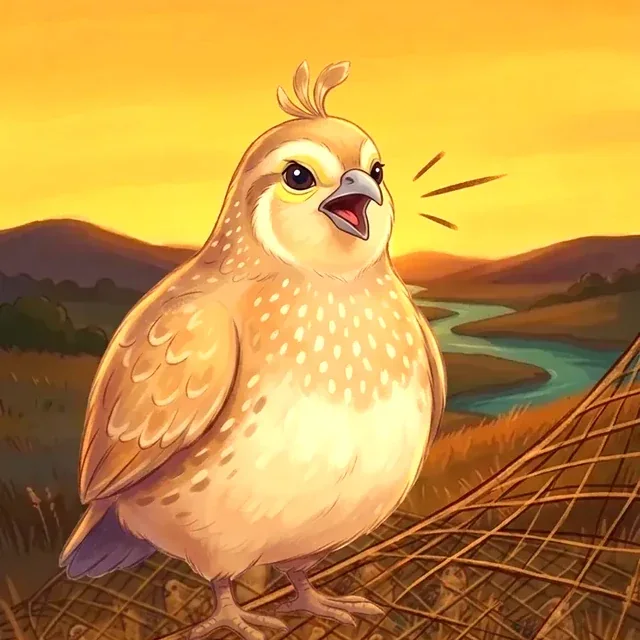
Char Dost aur Shikari
A Panchatantra story that shows your child why a good team is made of very different friends.
 Teamwork
Bateron ki Ladayi
A Jataka story that shows your child how a small quarrel can make a shared load impossible — and how to lift it again.
 Teamwork
Navratri Night 9 — Maa Siddhidatri
The ninth Devi of Navratri, told so your child learns the greatest power is valuing each other's strengths and making things together.