Eid ki Pyari Eidi — the Eid story of Amir and his fifty rupees, in Hindi
An Eid story that shows your child what sharing really costs — and why it still feels like the sweetest thing.
ईद की सबसे मीठी सेवइयाँ — आमिर की ईदी की कहानी
Hear Naani tell it
The story
What your child will notice first is not the lesson but the cost: Amir gives up the one toy he wanted, and the story is honest that it stays in the shop. That is why this Eid story teaches sharing better than any rule. It all turns on fifty rupees of Eidi and a brown wooden horse with a shining saddle in the village bazaar.
Naani saysआमिर ने मन ही मन सोचा, कल ईदी मिलेगी… तो मैं यही घोड़ा लूँगा।Amir thought to himself: tomorrow I get Eidi… and then I will buy this very horse.
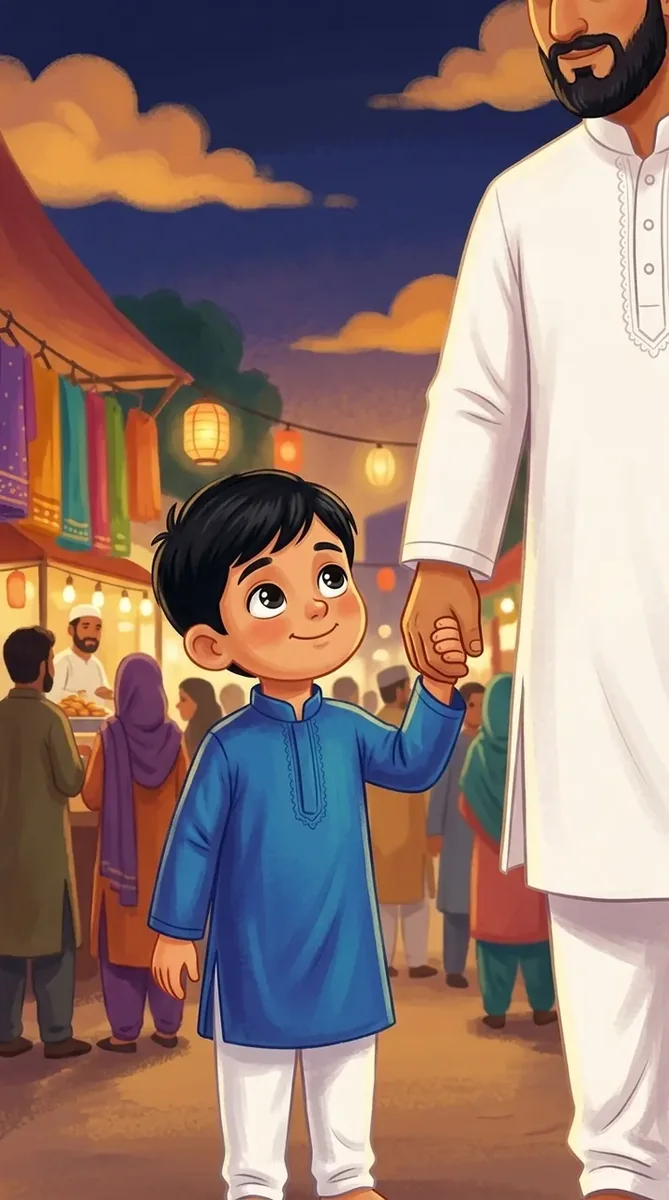
Naani opens by explaining Eid for a child who may not have grown up with it — new clothes, sweet sewaiyan cooked in milk, and Eidi, the little money or gift that elders give children with love. The thin Eid moon has been sighted, the bazaar is full of bangles and vermicelli, and six-year-old Amir walks through it holding his Abbu's finger, planning what tomorrow's Eidi will buy. Eid morning comes with birdsong. Amir puts on his new blue kurta, Ammi kisses his forehead, and then the moment he has waited for: Dadi gives Eidi, Chacha gives Eidi, Abbu reaches into his pocket. In a quiet corner Amir counts — das, bees, tees — and reaches a full fifty rupees. His eyes shine like stars.
Naani saysबीस… तीस… और तब… पूरे पचास रुपये! आमिर की आँखें तारों की तरह जगमगा उठीं।Twenty… thirty… and then… a full fifty rupees! Amir's eyes lit up like stars.
The story in pictures
Frames from Naani’s telling, in story order — the pictures your child sees while she speaks.


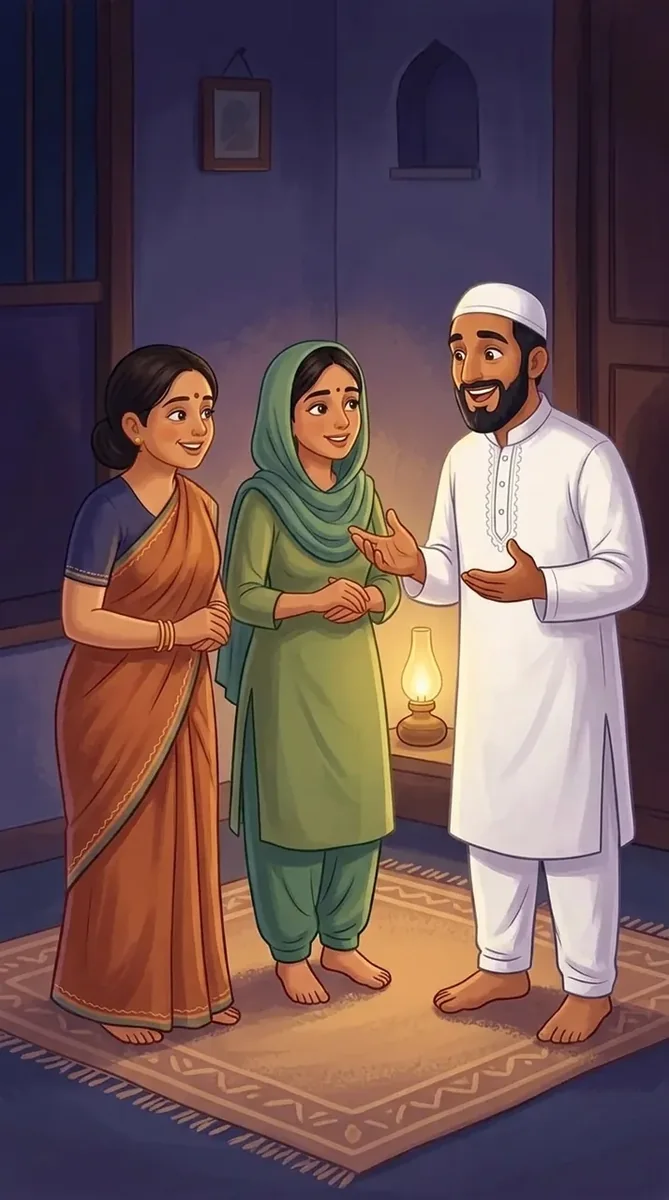
On the way to the bazaar he passes his friend Sadiq's house, and something is wrong. No smell of sewaiyan. A cold chulha. Sadiq sitting alone on the step in old clothes, chin in his hand. Ammi says there is no money for sewaiyan this year, he tells Amir. Eid has not come to Sadiq's house. This is where Naani pauses and asks your child how Sadiq's heart must have felt — udaas? — and listens to the answer.
Naani saysसादिक़ के घर से सेवइयों की खुशबू नहीं आ रही थी। चूल्हा ठंडा पड़ा था।No smell of sewaiyan was coming from Sadiq's house. The stove lay cold.
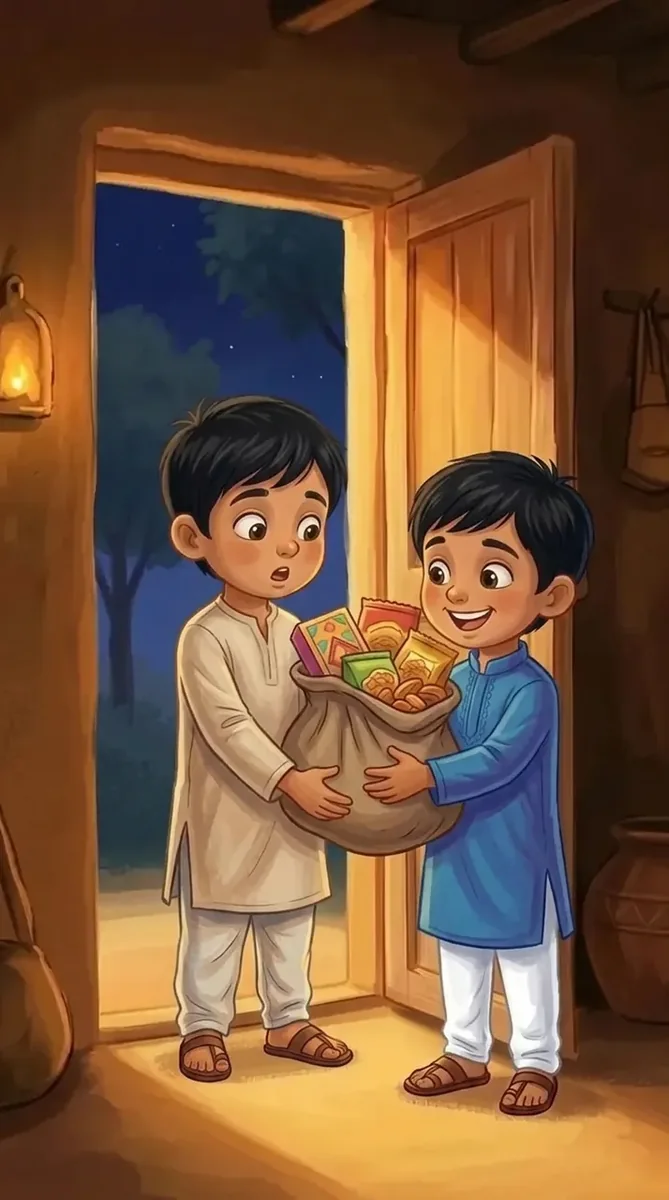
At the toy shop the horse is as beautiful as ever. Amir looks at it, looks at his pocket, remembers Sadiq's face — and then smiles. Chacha, not the horse. Sewaiyan, please. Some dates. And that small box of mithai. All fifty rupees gone, his pocket empty and his feet somehow lighter. At Sadiq's door he puts the full bag into his friend's hands and says the line the whole story turns on: this isn't Eidi, it's an Eid gift. A friend gives it to a friend.
Naani saysये ईदी नहीं है, आमिर ने कहा, ये तो ईद का तोहफ़ा है। दोस्त, दोस्त को देता है।This is not Eidi, said Amir — this is an Eid gift. A friend gives it to a friend.
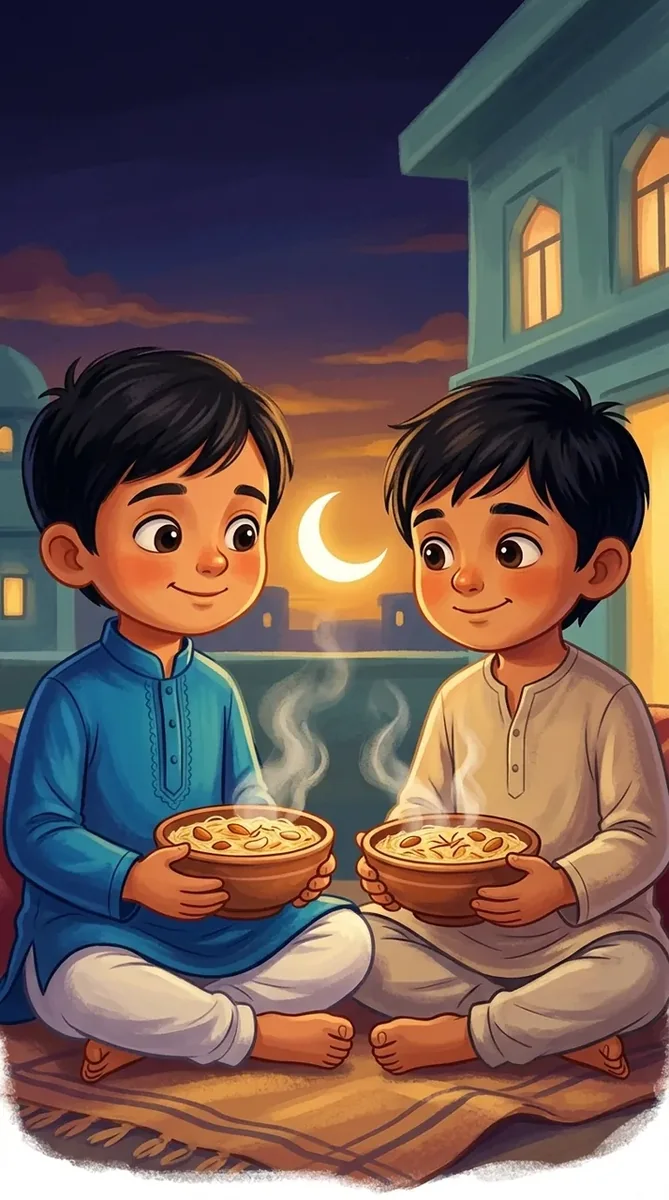
By evening the smell of warm sewaiyan is rising from Sadiq's house too. Both families eat together, and the two boys sit on the same step with two bowls and one moon above them. The wooden horse stays in the shop, and Amir does not feel he is missing anything at all.
The value this story teaches
Sharing is the value parents ask for most at four to seven, and the hardest to teach by instruction, because a child can tell the difference between handing over a spare and giving up something they actually want.
Amir's choice is the second kind. He has counted his fifty rupees, he can see the wooden horse, and he still says "chacha, ghoda nahi" and fills a bag with sewaiyan for Sadiq. Naani does not reward him with the horse at the end; he gets two bowls, a friend on the step and a full heart. Children notice that honesty, and it is why the lesson sticks.
How to talk about it at bedtime
- Ask your child: if you had fifty rupees and saw a friend with no sewaiyan on Eid, what would you buy?
- Try: the next time your child gets a treat, ask who they would like to share half with — and let them choose.
- Ask: why did Amir's feet feel lighter when his pocket was empty?
When to pick this story
- The night before Eid, when Eidi is on everyone's mind
- After a fight over a toy or a sweet
- When your child's friend has less than they do
Try asking your child
After the story, or the next morning on the way to school:
- What did Amir buy with his fifty rupees instead of the wooden horse, and who was it for?
- Amir said "this is not Eidi, this is an Eid gift". What is the difference, do you think?
- If you got Eidi or birthday money tomorrow, is there a friend you would want to share it with?
Meet the characters
A six-year-old with big eyes, fifty rupees of Eidi and his heart set on a wooden horse
Amir's friend, sitting alone on his doorstep because Eid has not come to his house this year
Who lights the cold chulha again when Amir arrives with a full bag
From the app-store reviews
Two of the public reviews parents have left on Google Play and the App Store, quoted exactly as they wrote them.
Nice“Really cute idea for bedtime! I love how Naani actually listens when kids interrupt and responds as part of the story. The mix of Hindi and English feels really natural, and the gentle lessons are a nice touch. Such a lovely way to wind down before sleep!”
“Maine to download kar liya hai aap sabhi log download karo aur yah story Apne bacchon Ko badon ko sunao bahut achcha lagega…”Give your child a story with a value every night
Naani tells Eid ki Pyari Eidi in warm Hindi, shows the pictures, asks a question halfway and listens to your child's answer. One story, one seekh, then good night.
Listen tonight — free- Free stories every night
- No ads
- Your child’s voice erased after 24 hours
- Made in India
About this story
- Language: Hindi — simple, in a grandmother’s voice
- Ages: 4–7
- Listen time: about 10 minutes
- Value: Sharing, Friendship, Kindness & empathy
- World: Festival Stories
- Theme: Celebrations become richer when others are included with dignity.
Also plays in the browser: app.naani.live/stream/eid-the-child-who-shared-his-eidi (sign-in required).
Parents also ask
What is Eidi?
Eidi is the gift — usually a little money, sometimes a toy or sweets — that elders give children on Eid as a blessing. In the story Amir receives Eidi from his Dadi, Chacha and Abbu, counts it up to fifty rupees, and then has to decide what to do with it.
Can a family that does not celebrate Eid listen to this story?
Yes. It is a story about a friendship on a festival morning. Naani explains Eid in a few lines — new clothes, sewaiyan, the thin moon, Eidi — and the rest is Amir, Sadiq and a bag of groceries. It works as a first introduction to Eid for a young child of any background.
What does Eid celebrate?
Eid ul-Fitr marks the end of Ramzan, the month of fasting. It begins when the new moon is sighted — the thin chaand Amir sees in the evening sky — and is celebrated with prayers, new clothes, sewaiyan and visits to family and neighbours. Because it follows the lunar calendar, its date moves about eleven days earlier each year.
Next story
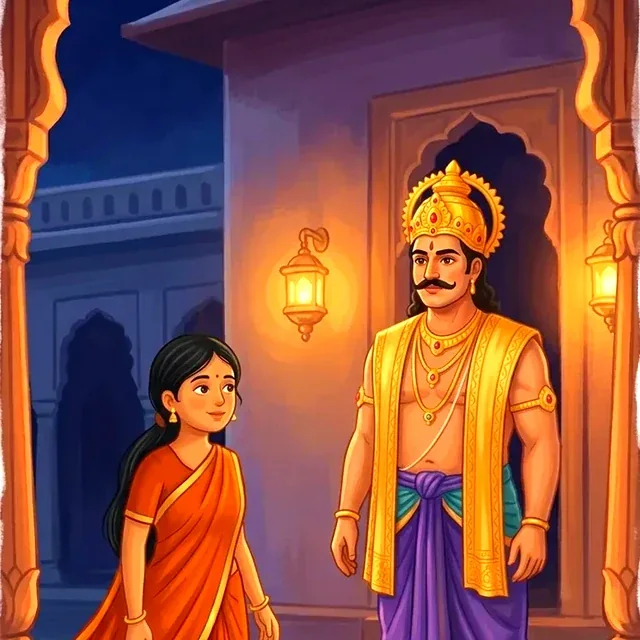
Holi: Prahlad, Holika Aur Rangon Ki Shuruat
The Holi story, told so a five-year-old takes away courage and faith rather than fear.
More Festival Stories
All Festival Stories → Faith
Diwali: Jab Ayodhya Jagmagayi
The Diwali story told so your child takes away hope, togetherness, and a prince who did his duty with a smile.
 Humility
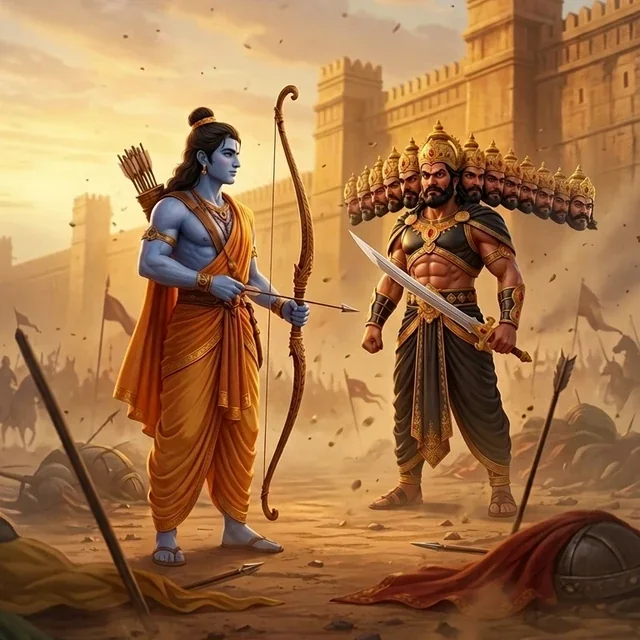
Dussehra: Rama Aur Ravana Ka Antim Yudh
The Dussehra story, told so a five-year-old learns that ghamand loses and a calm, kind heart wins.
 Anger
Navratri Night 1 — Maa Shailputri
The first Devi of Navratri, told so your child learns that the strongest hands can still be gentle.
More stories that teach sharing
The art of sharing — the thing that grows when you give it away.
 Sharing
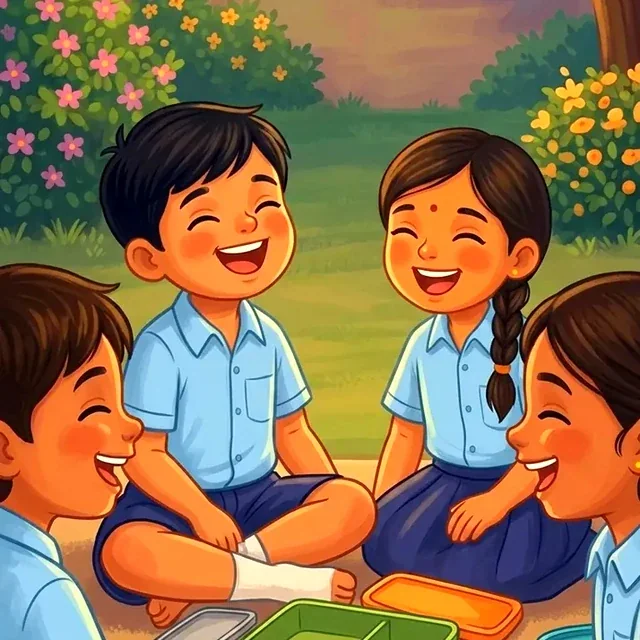
Khaali Tiffin Box
A moral story about sharing — and about helping a friend in a way that lets them keep their pride.
 Sharing
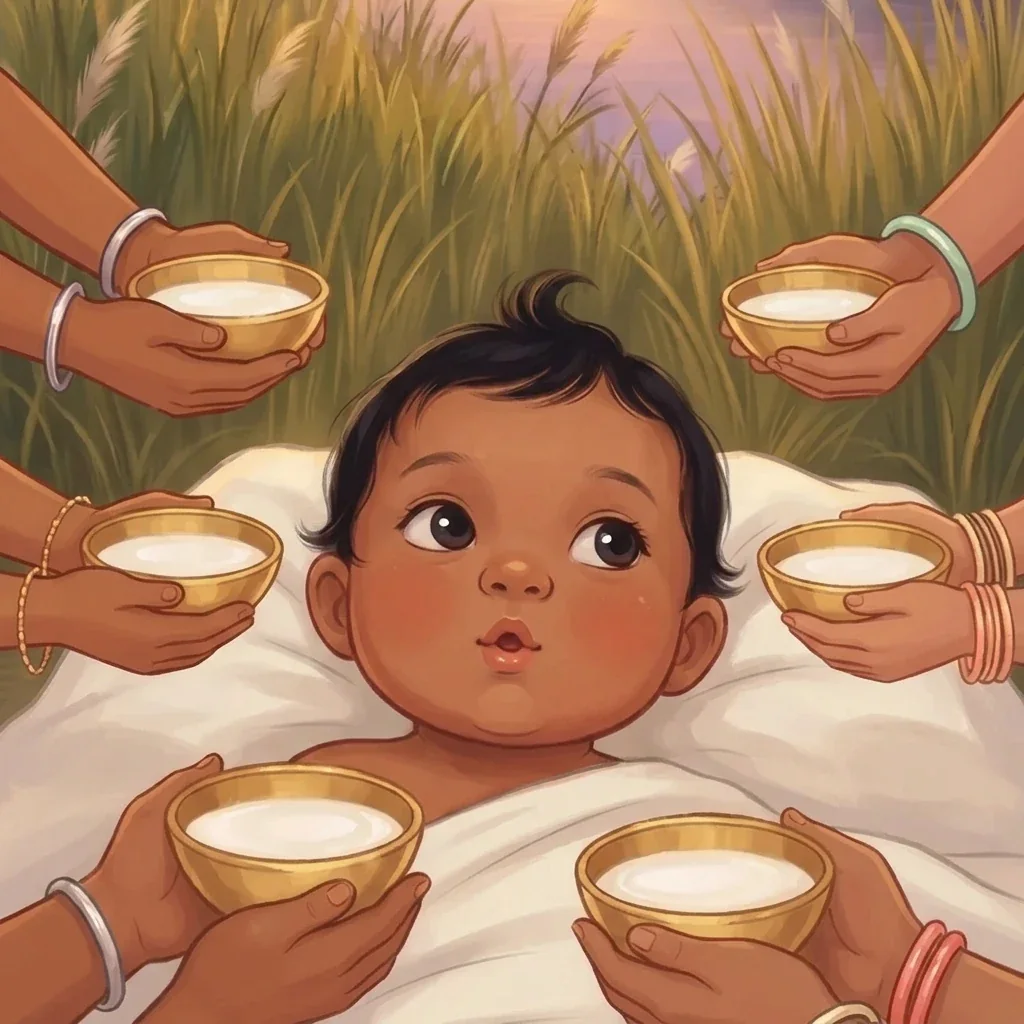
Navratri Night 5 — Maa Skandamata
The fifth Devi of Navratri, told so your child learns that love shared is love doubled — making room on Mummy's lap never means less love.