Imaandaar Lakarhara — the honest woodcutter story for kids, in Hindi
A moral story that teaches honesty without a lecture — a poor man says no to gold because it is not his.
ईमानदार लकड़हारा — रामू और नदी की देवी की कहानी

Hear Naani tell it
Watch a glimpse
The story
If you want your child to see honesty cost something and still win, this is the story: a golden axe would buy Ramu's family flour and dal for years, and he turns it down in a heartbeat. Ramu is a lakarhara, a woodcutter, who lives at the edge of the forest with one possession he loves: an old iron kulhadi with a long handle and a wide, strong blade. Every day it earns his family's dinner.
Naani saysउसके पास एक ही चीज़ थी जो उसे सबसे प्यारी थी — उसकी लोहे की कुल्हाड़ी।He had just one thing he loved above all — his iron axe.
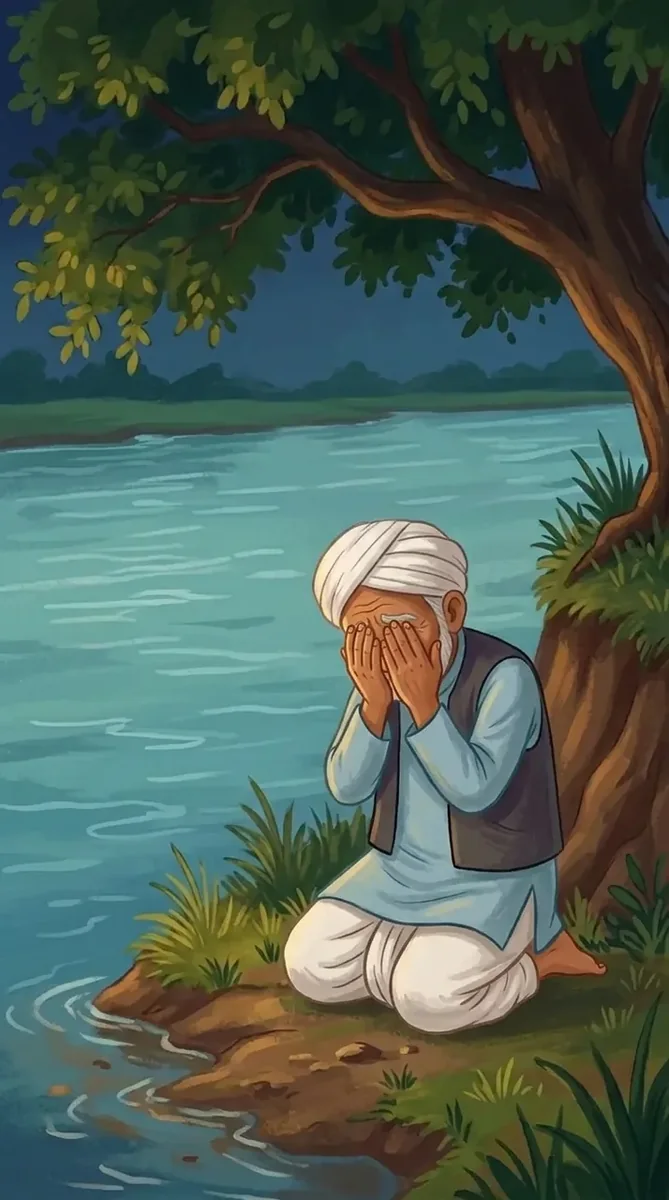
One morning, with the birds singing, he walks into the forest to a deep green river — so deep you cannot see the bottom — and sets to work on a big dry tree by the bank. The sun climbs. His palms grow slick with sweat. One more swing, the handle slips, and the axe sails out of his hands into the water. Ramu kneels on the bank and peers into green darkness. His eyes fill. Without the axe there is no wood tomorrow, and without wood, no food. Naani asks your child here how Ramu must be feeling — khush or udaas? — and talks over the answer with them.
Naani saysकुल्हाड़ी हाथ से छूटकर नदी के गहरे पानी में जा गिरी!The axe slipped from his hands and fell into the deep water of the river.
The story in pictures
Frames from Naani’s telling, in story order — the pictures your child sees while she speaks.


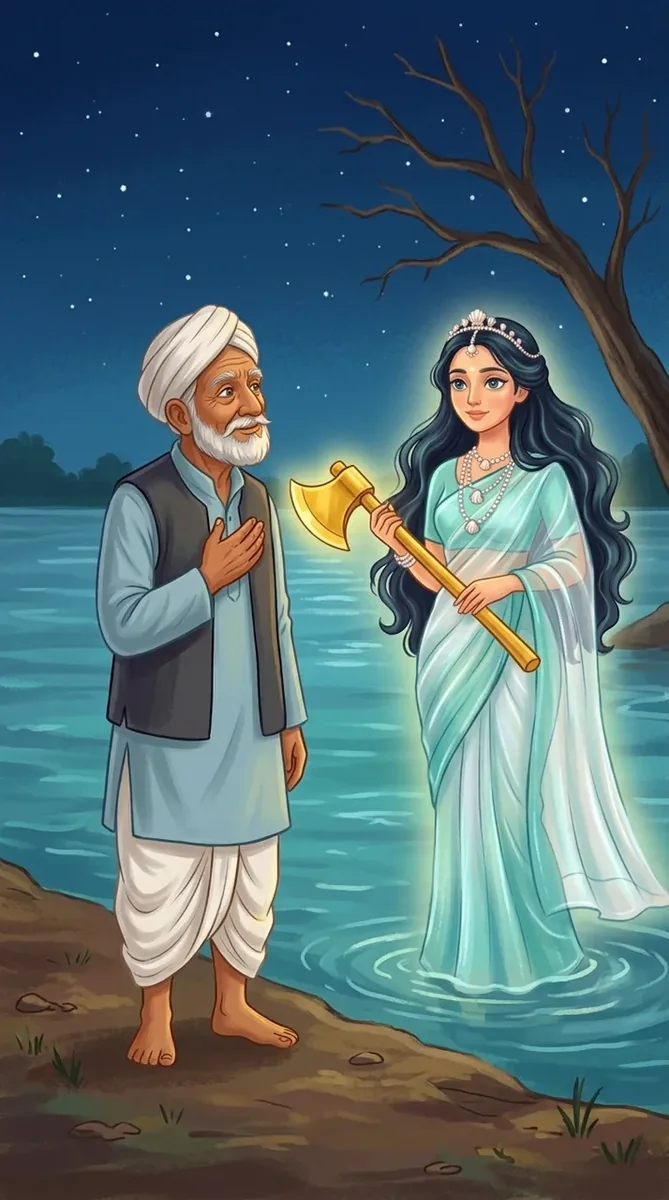


Then the middle of the river stirs. Circles spread on the water, and up rises a devi — the goddess of the river, her clothes shimmering like water, her voice sweet. Why are you crying, child? She dives, and comes up holding an axe of pure gold. Is this yours? Ramu looks at it. It is beautiful. It would change everything. But his heart says: it is not mine. No, Devi Maa, he says. Mine is iron, and old.
Naani saysपर उसका दिल अंदर से बोला — यह तो मेरी नहीं। रामू ने सिर हिलाया। नहीं देवी माँ।But his heart spoke from inside — this is not mine. Ramu shook his head. No, Devi Maa.
She dives again and brings up silver, cold and gleaming. And this one? No, Devi Maa, not mine either. Far off, the evening temple bell rings; his family will be waiting; his heart thumps. Will he ever see his own axe again? The goddess goes down a third time — one moment, two, three — and surfaces with the battered iron kulhadi. Yes, that one is mine! Ramu's face lights up. You saw gold, she says, you saw silver, and still you told the truth. All three are yours now.
Naani saysउसका नन्हा सा दिल धक-धक करने लगा। क्या उसकी अपनी कुल्हाड़ी अब कभी नहीं मिलेगी?His heart began to thump. Would he never find his own axe again?
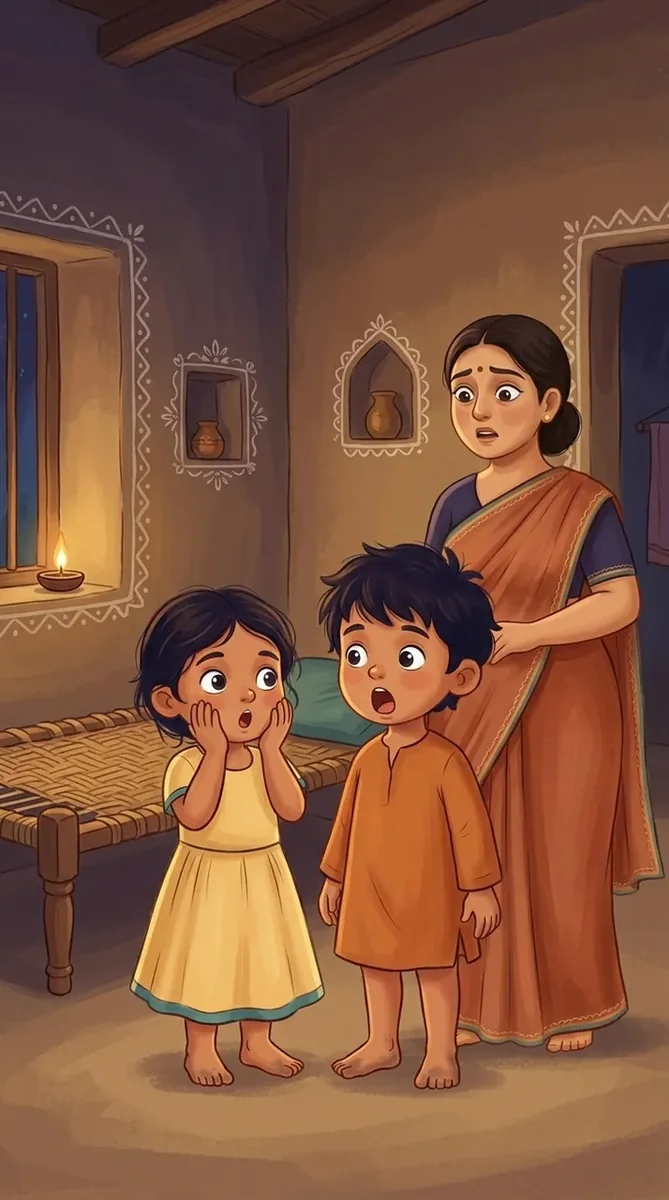
He walks home under a sky turning from gold to deep blue, and when he opens his bag the three axes blaze in the lamplight. Everyone gasps. But Ramu wipes his old iron axe with a cloth and sets it in its usual place by the door. Those two are beautiful, he says, but this one is my own. Then the family sits down to hot khichdi, and the village sleeps.
The value this story teaches
By five, most children know they are supposed to tell the truth. What they have not yet felt is that honesty can be expensive — that the true answer is sometimes the one that loses you the sweet, the toy or the shiny thing. Stories let them rehearse that choice safely before life asks it of them.
Naani slows right down when the goddess holds up the golden axe. Ramu looks at it, thinks of years of food, and his heart says: it is not mine. He refuses the silver too, with the temple bell ringing and his family waiting. The reward comes afterwards — but the moment children remember is the quiet 'No, Devi Maa'.
How to talk about it at bedtime
- Ask your child: when Ramu saw the gold axe, what do you think he wanted to say? What did he actually say?
- Try: tell your child about a time you told an inconvenient truth and how it felt afterwards — light, like Ramu's man halka.
- Ask your child: why do you think Ramu put his old iron axe by the door, and not the gold one?
When to pick this story
- When your child has told a small fib and you want to talk about it without a scolding
- After they found something that wasn't theirs — a toy, a coin, a pencil
- On a night they need to hear that doing the right thing gets noticed
Try asking your child
After the story, or the next morning on the way to school:
- The river goddess brought up a gold axe first. Why did Ramu say it was not his, even though it was so beautiful?
- How many axes did Ramu take home in the end, and which one did he put by the door?
- Has there been a time when telling the truth was hard for you? What happened after you told it?
Meet the characters
A poor woodcutter whose only treasure is an old iron axe
A gentle devi who rises from the water and tests Ramu with gold and silver
From the app-store reviews
Two of the public reviews parents have left on Google Play and the App Store, quoted exactly as they wrote them.
Nice“Really cute idea for bedtime! I love how Naani actually listens when kids interrupt and responds as part of the story. The mix of Hindi and English feels really natural, and the gentle lessons are a nice touch. Such a lovely way to wind down before sleep!”
“Maine to download kar liya hai aap sabhi log download karo aur yah story Apne bacchon Ko badon ko sunao bahut achcha lagega…”Give your child a story with a value every night
Naani tells Imaandaar Lakarhara in warm Hindi, shows the pictures, asks a question halfway and listens to your child's answer. One story, one seekh, then good night.
Listen tonight — free- Free stories every night
- No ads
- Your child’s voice erased after 24 hours
- Made in India
About this story
- Language: Hindi — simple, in a grandmother’s voice
- Ages: 4–7
- Listen time: about 11 minutes
- Value: Honesty, Doing the right thing
- World: Naani's Lessons
- Theme: Honesty protects self-respect and builds trust.
Also plays in the browser: app.naani.live/stream/the-honest-woodcutter (sign-in required).
Parents also ask
What is the moral of the honest woodcutter?
Honesty is worth more than gold. Ramu refuses the golden and silver axes because they are not his, and the river goddess rewards that truthfulness with all three. Naani's seekh for children: telling the truth keeps your mind light, and imaandaari is the biggest treasure of all.
Who is the goddess in the story?
Naani calls her simply nadi ki devi, the goddess of the river — a kind figure in shimmering water-coloured clothes who tests Ramu with gold and silver before returning his iron axe. The tale is an old fable told across many cultures; this is its Indian village form, in Hindi.
Is it suitable for a 4-year-old?
Yes. The only tense moment is the axe falling into the river, and Naani stops right there to talk with your child about how Ramu feels. There is no villain, the goddess is gentle, and the story ends with a family dinner and a quiet village. Words like kulhadi, sona and chaandi are explained as she goes.
Next story
Lakdiyon Ka Gattha
A moral story that teaches teamwork — three squabbling siblings discover it for themselves, with no lecture.
More Naani's Lessons
All Naani's Lessons →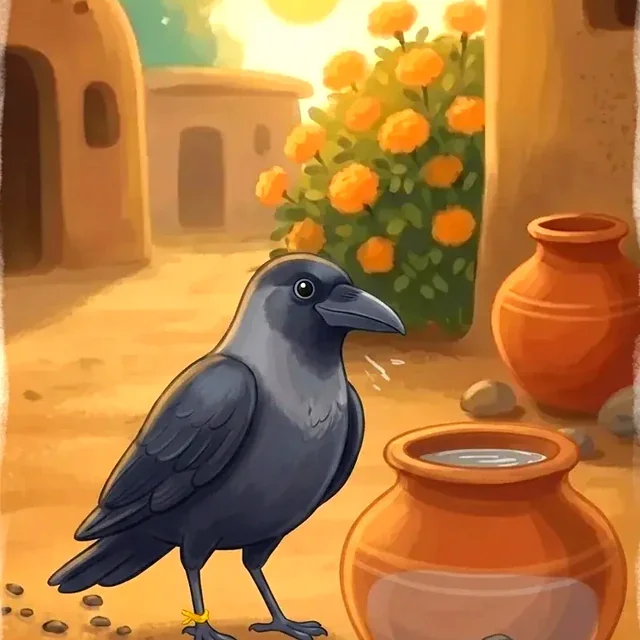 Wisdom
Pyaasa Kauwa
A moral story about persistence and clever thinking — small efforts, one pebble at a time, solve a big problem.
 Wisdom
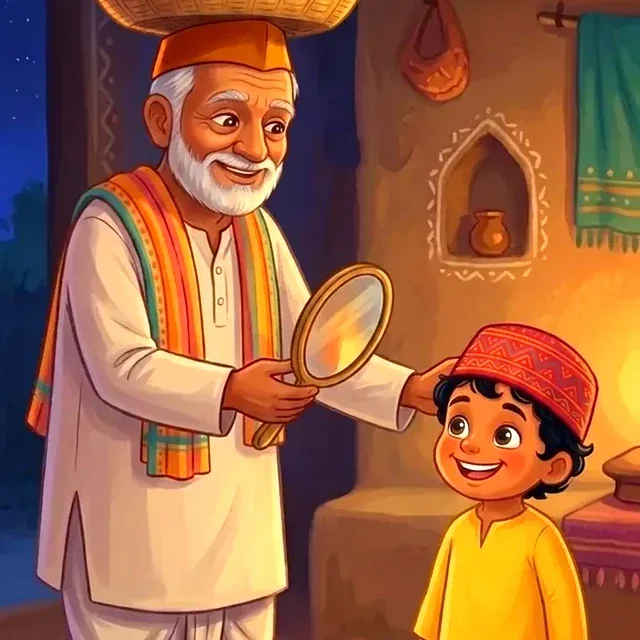
Topiwala aur Natkhat Bandar
A moral story about thinking before reacting — the answer is often right in front of you, if you stop and look.
 Honesty
Naani ki Teen Chhalniyan
A moral story about honesty and kind words — three simple questions your child can ask before repeating anything.
More stories that teach honesty
Telling the truth even when a small lie would be easier.
 Honesty
Makhan Chor
A Krishna story that teaches a four-year-old to ask openly instead of sneaking — honesty, without a lecture.
 Honesty
Neela Siyaar
A Panchatantra story that makes telling the truth feel like relief, not punishment.