Krishna aur Kaliya Naag — the story of Krishna and the serpent in the Yamuna, in Hindi
A Krishna story about using strength to protect others, and forgiving the one who did wrong.
कृष्ण और कालिया नाग — यमुना के काले पानी की कहानी
Hear Naani tell it
Watch a glimpse
The story
Children who hear this story come away with a clear idea of what strength is for: protecting the thirsty, not punishing the one who caused the trouble. It opens at a bend in the Yamuna where the water has turned black. The fish have left, the villagers keep away, and the cows that come to drink stop at the edge and low softly, as if to ask: how can we drink this? Naani begins not with the snake, but with the thirst.
Naani saysउसके रहने से उस कोने का पानी काला और कड़वा हो गया था।Because he lived there, the water in that corner had turned black and bitter.
Krishna is a cowherd boy in Gokul whose flute makes the whole village smile. One afternoon he brings the cows to the river and a small calf, desperate for water, licks his hand. His friends tug at him: let's go, Krishna, the big snake lives here. Krishna looks at the black water, then at the thirsty cows, then at his sad friends — and announces that today he is going to meet Kaliya. Naani pauses here and asks your child: all the friends were frightened, but was Krishna scared, haan ya na? She listens, and answers.
Naani saysकृष्ण ने काले पानी को देखा। फिर प्यासी गायों को देखा। फिर अपने उदास दोस्तों को। और तब…Krishna looked at the black water. Then at the thirsty cows. Then at his sad friends. And then…
The story in pictures
Frames from Naani’s telling, in story order — the pictures your child sees while she speaks.


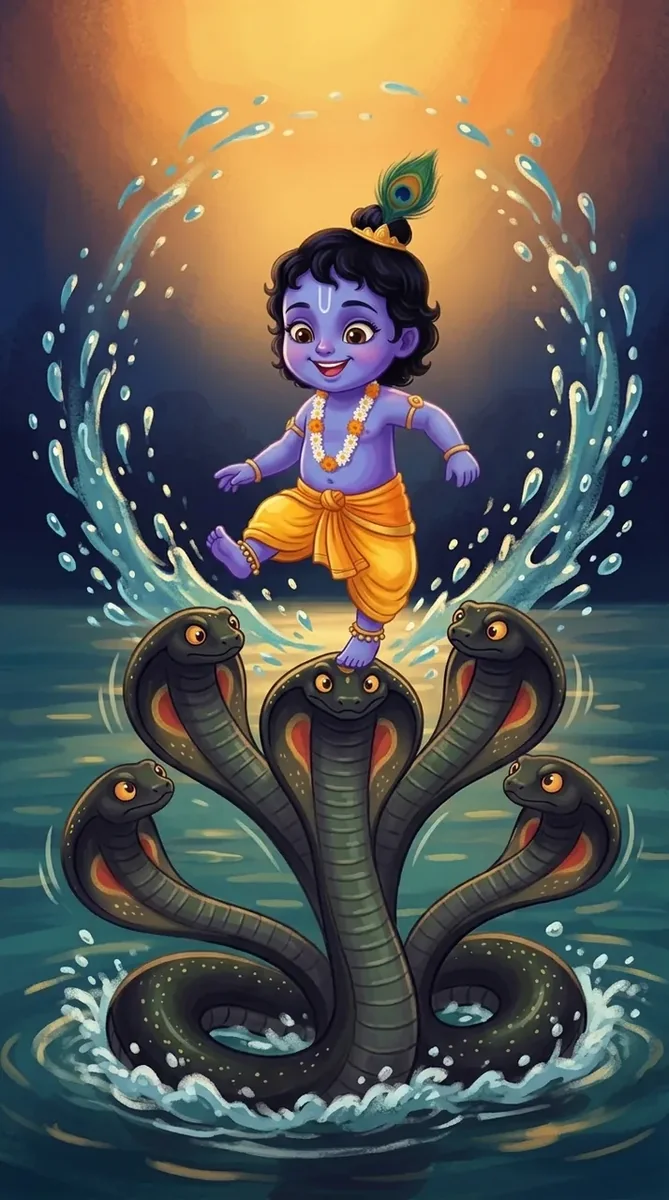
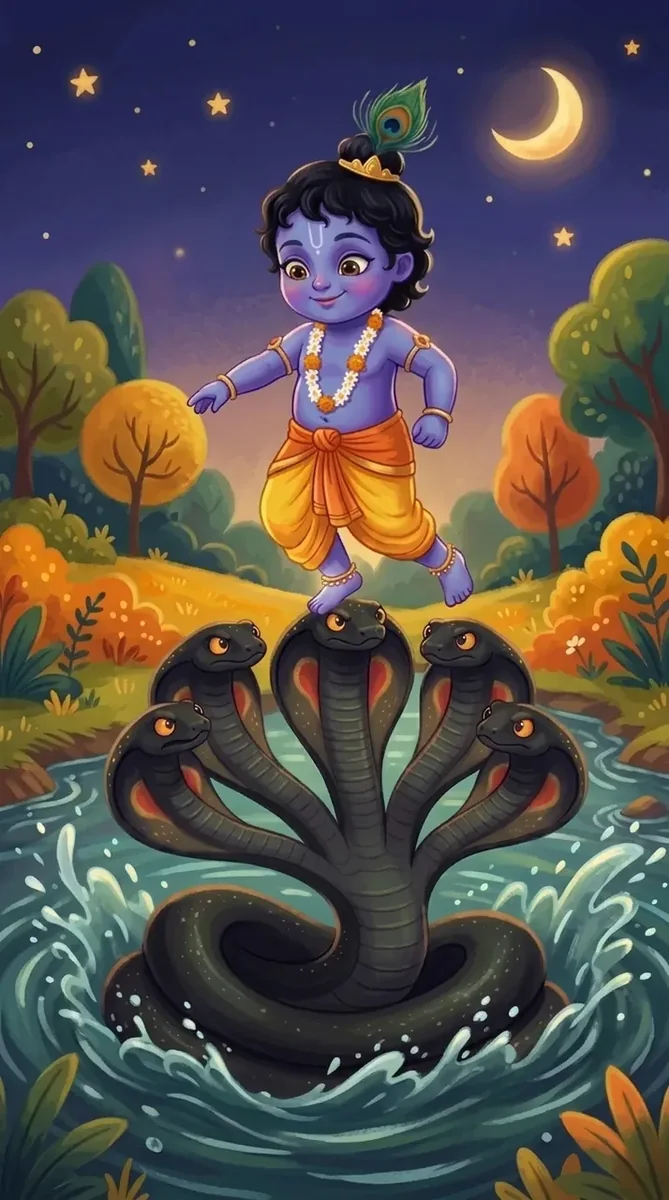
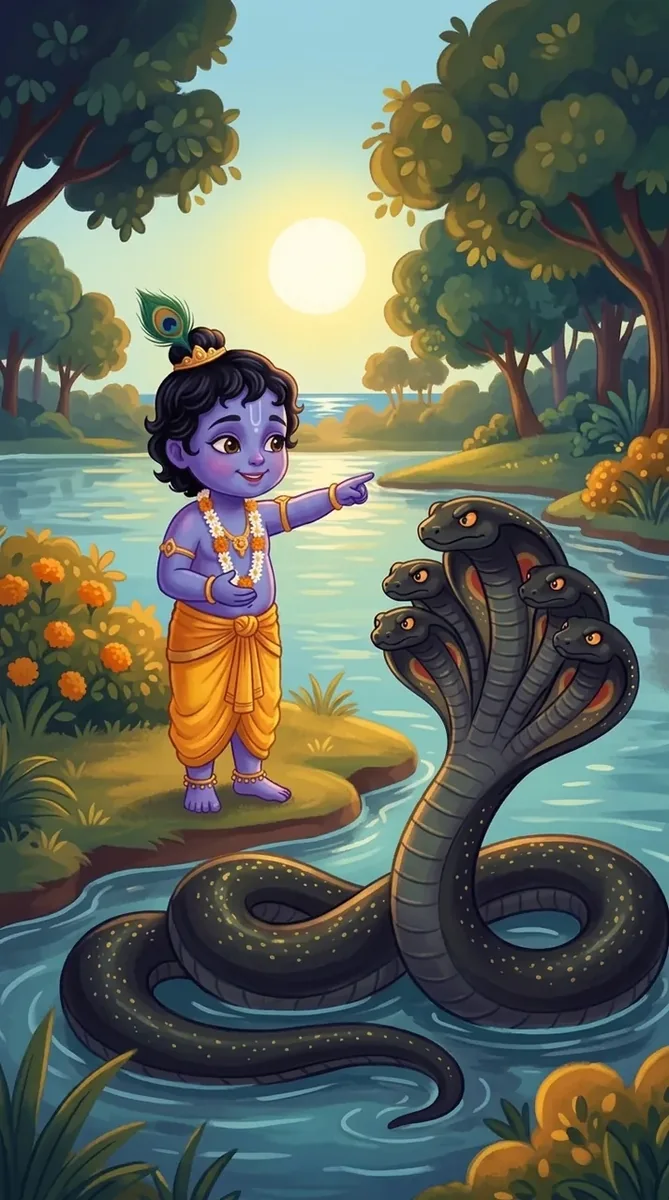
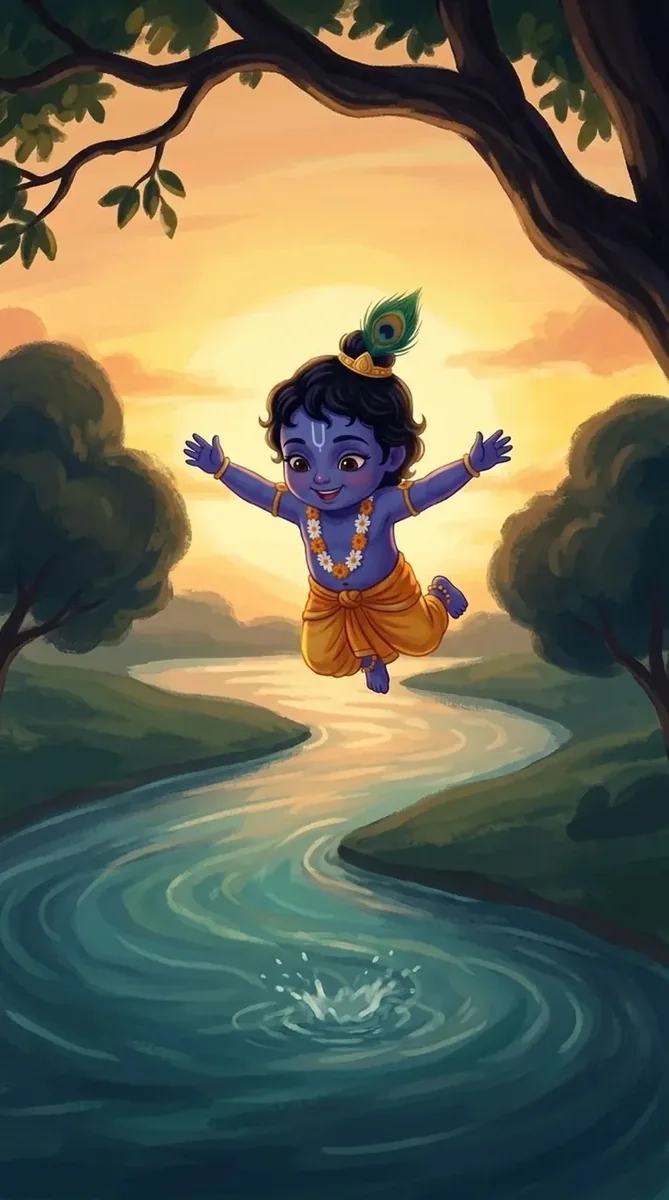
He climbs the tall kadamb tree on the bank, branch by branch, until he is on the highest one with the deep river far below. The leaves tremble in the breeze. His friends call up, mat jao, Krishna. He pauses for one breath, and jumps. Kaliya rises from the depths with many hoods spread like great umbrellas and wraps the boy in his coils — but Krishna slips out as easily as a finger through makhan, leaps onto the widest hood, and begins to dance. His ghunghroo ring. Kaliya twists this way and that, but the little feet never leave his heads, until at last the great snake is tired and his heavy head sinks.
Naani saysकृष्ण उस पेड़ पर चढ़ने लगे — पहले एक डाल, फिर दूसरी, फिर सबसे ऊपर वाली।Krishna began to climb the tree — first one branch, then another, then the very top one.
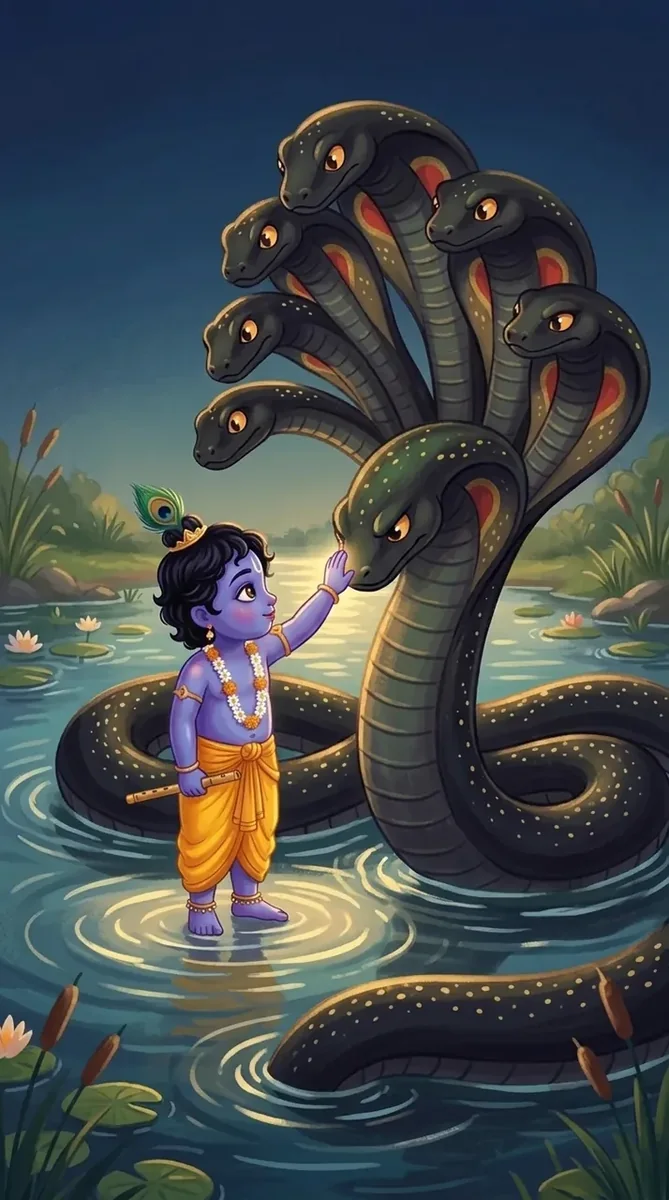
Kaliya says sorry: he did not know this river was home to so many creatures. And here is the part that makes this a bedtime story rather than a battle. Krishna lays a hand on the snake's hood the way you would on a friend's shoulder. I am not angry, he says. But this river belongs to the cows, the fish, the children of the village. Go to the sea — there is room there for you and your family. Kaliya's eyes fill with tears. Nobody beat him, nobody chased him off; someone showed him a new home.
As Kaliya leaves, the Yamuna runs clear. The cows rush in and drink their fill, the birds come back to the trees, and Krishna sits on the bank playing his flute as evening quietly comes down.
The value this story teaches
Four- to seven-year-olds are working out what to do with their own strength — the shove that wins the toy, the grab, the argument they come out on top of. Empathy at this age is learning that the other side can be sorry, and that winning is the moment to be gentle, not the moment to gloat.
The story makes that concrete. Kaliya, exhausted, bows his heavy head and says maaf kar do. Krishna, who has every right to be angry, lays a hand on his hood the way you would on a friend's shoulder and says, I am not angry — but this river belongs to the cows, the fish and the children; go to the sea, there is room there. Nobody hits him, nobody chases him; someone shows him a new home.
How to talk about it at bedtime
- Ask your child: when Kaliya said sorry, what did Krishna do with his hand? Why didn't he hit him?
- Try: the next time your child wins an argument with a sibling, ask what Krishna would do next.
- Ask: the river was for the cows, the fish and the children. Who shares the park near our house?
When to pick this story
- After a fight your child won and the other child cried
- When your child is scared of something big — a dog, a deep pool, a dark corner
- When the family has been talking about keeping rivers and parks clean
Try asking your child
After the story, or the next morning on the way to school:
- Why did the cows refuse to drink the water? What had Kaliya done to the river?
- Krishna did not hit Kaliya or chase him away. What did he do instead, and why?
- If you were bigger or stronger than someone, how could you use that to help them?
Meet the characters
The cowherd boy of Gokul who jumps into the poisoned river for the sake of the thirsty cows.
The many-hooded serpent whose poison blackens the Yamuna, forgiven and sent to the sea with his family.
Thirsty at the edge of the black water — the reason Krishna acts.
From the app-store reviews
Two of the public reviews parents have left on Google Play and the App Store, quoted exactly as they wrote them.
Nice“Really cute idea for bedtime! I love how Naani actually listens when kids interrupt and responds as part of the story. The mix of Hindi and English feels really natural, and the gentle lessons are a nice touch. Such a lovely way to wind down before sleep!”
“Maine to download kar liya hai aap sabhi log download karo aur yah story Apne bacchon Ko badon ko sunao bahut achcha lagega…”Give your child a story with a value every night
Naani tells Krishna aur Kaliya Naag in warm Hindi, shows the pictures, asks a question halfway and listens to your child's answer. One story, one seekh, then good night.
Listen tonight — free- Free stories every night
- No ads
- Your child’s voice erased after 24 hours
- Made in India
About this story
- Language: Hindi — simple, in a grandmother’s voice
- Ages: 4–7
- Listen time: about 10 minutes
- Value: Kindness & empathy, Courage, Respect for nature
- World: Stories of Krishna
- Theme: Strength should protect life and restore balance, not seek revenge.
Also plays in the browser: app.naani.live/stream/krishna-and-kaliya-naag (sign-in required).
Parents also ask
What is the story of Krishna and Kaliya Naag for kids?
A many-headed serpent, Kaliya, has poisoned a bend of the Yamuna near Gokul. Young Krishna jumps in from a kadamb tree, dances on Kaliya's hoods until he tires, then forgives him and sends him to live in the sea with his family. The river turns clean and the cows can drink again.
Is the snake scary for a 4- or 5-year-old?
Naani keeps Kaliya big but not horrible: his hoods are like umbrellas, Krishna smiles the whole way through, and the fight is a dance with anklets ringing. The snake cries, is forgiven and leaves with his family. Most children remember the clear water at the end more than the coils.
What is the moral of Krishna and Kaliya Naag?
Real strength is strength that protects life and gives the other side a chance to change. Krishna's goal is clean water for the cows and the village, not revenge on the snake — which is why he forgives Kaliya the moment he asks, and finds him a new home instead of punishing him.
Next story
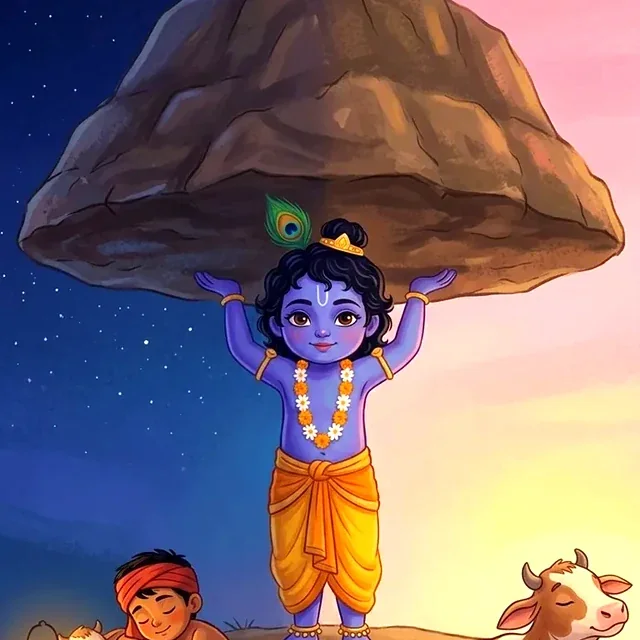
Govardhan Parvat aur Krishna
A Krishna story about a small boy using his strength for everyone — and a village that stands together.
More Stories of Krishna
All Stories of Krishna →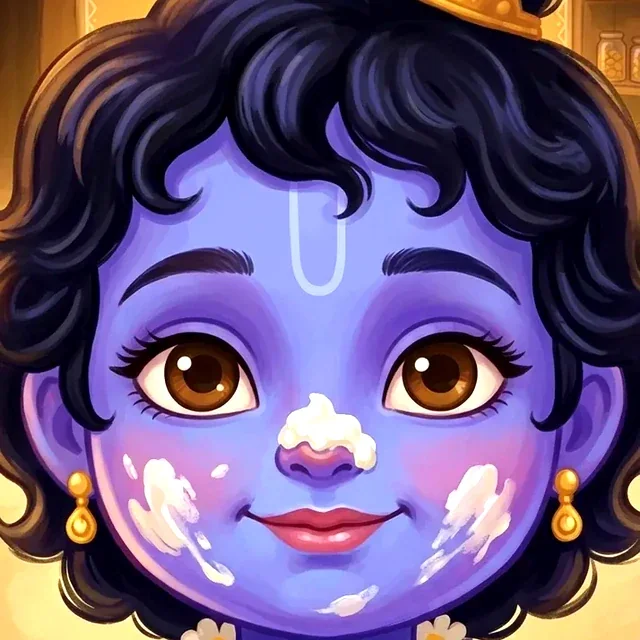 Honesty
Makhan Chor
A Krishna story that teaches a four-year-old to ask openly instead of sneaking — honesty, without a lecture.
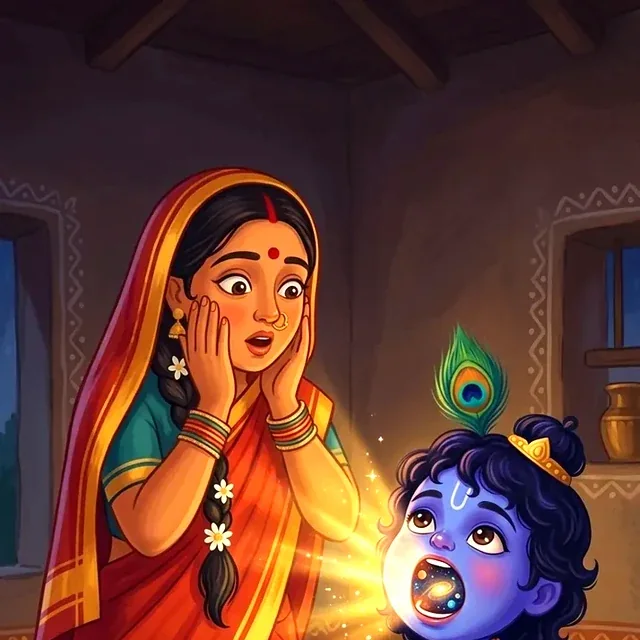 Faith
Kanha ke Munh mein Duniya
A Krishna story that teaches your child to look closely at the people they love — there is a whole world inside.
 Friendship
Krishna aur Sudama
A Krishna story that teaches true friendship looks at the heart, not at what someone owns.
More stories that teach kindness & empathy
Noticing how someone else feels, and doing something about it.
 Kindness
Krishna aur Phalwali
A Krishna story that shows how a small thing given with love comes back many times bigger.
 Kindness
Dayalu Raja Hiran
A Jataka story that shows your child what it looks like to stand up for someone smaller — and what it does to the people watching.
 Kindness
Chand par Khargosh
A Jataka story that teaches your child that giving is about the heart, not the size of the gift.