Krishna aur Phalwali — the story of little Krishna and the fruit seller, in Hindi
A Krishna story that shows how a small thing given with love comes back many times bigger.
कृष्ण और फल वाली अम्मा — मुट्ठी भर अनाज की कहानी
Hear Naani tell it
The story
If you want a story about sharing where nobody counts, this is the quietest one on Naani's Krishna shelf, and the one many parents of three- and four-year-olds reach for first. Nothing magical happens until the very end, and the whole plot turns on a few grains of rice slipping through a toddler's fingers.
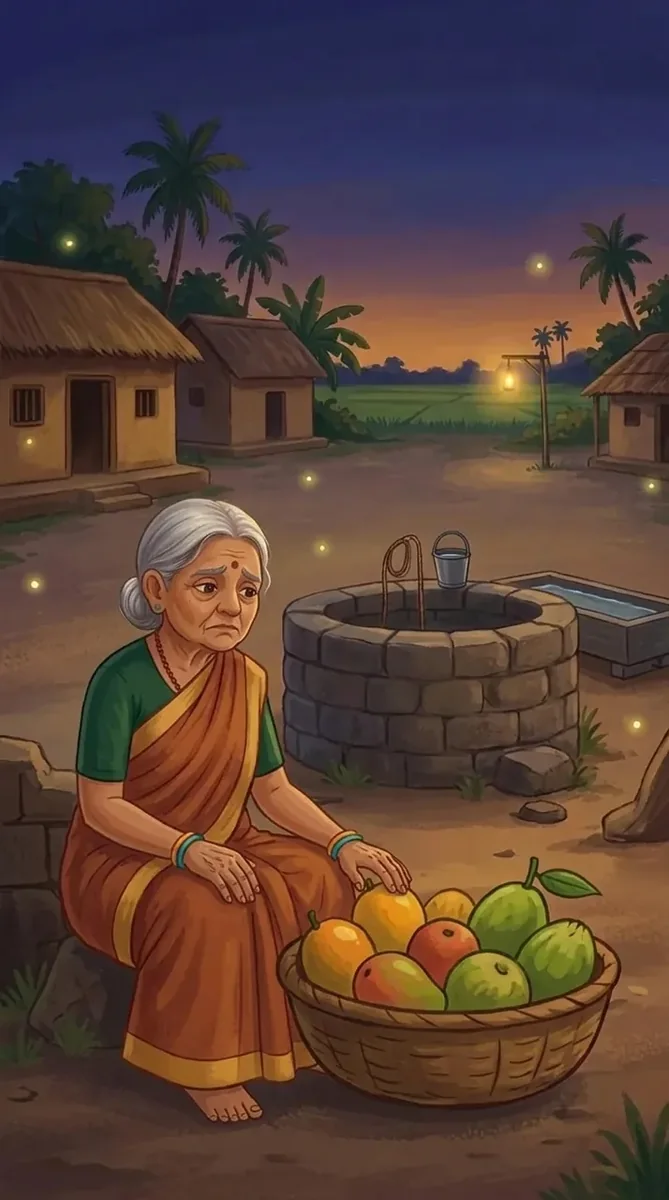
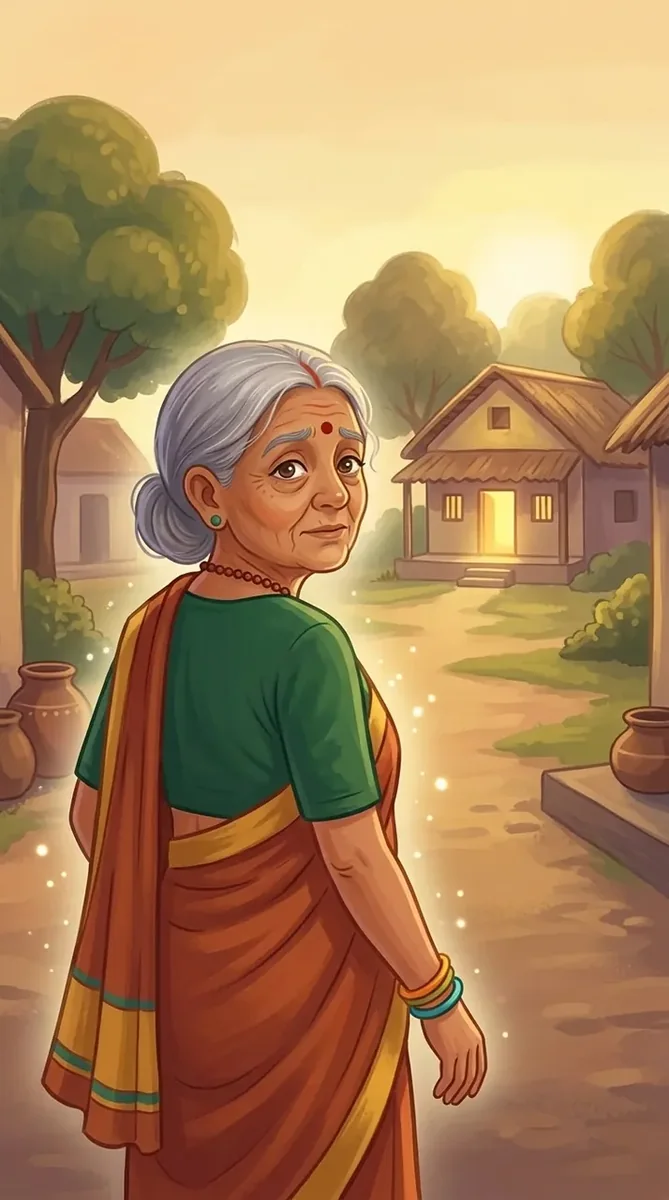
In those days, Naani explains, there was no money in Gokul. You paid for things with grain — a fistful of anaaj for a fruit, that was simply how it worked. One morning a phalwali amma arrives from a faraway village with a heavy basket on her head: ripe mangoes, bananas, purple jamun. She has been walking since dawn and has not sold a thing. Her feet hurt, and she is quietly wondering how she will bring grain home for the evening meal.
Naani saysटोकरी भारी थी, पाँव थके हुए। अम्मा धीरे से सोच रही थीं — आज कुछ नहीं बिका,The basket was heavy, her feet tired. Amma was quietly thinking — nothing sold today…
The story in pictures
Frames from Naani’s telling, in story order — the pictures your child sees while she speaks.
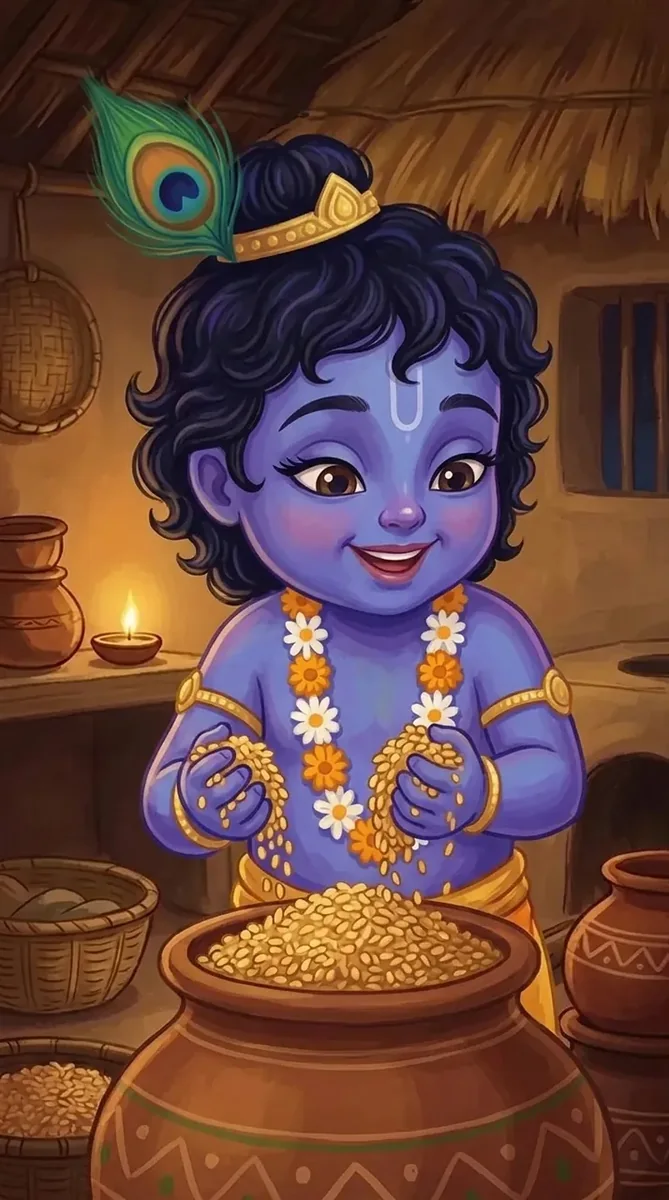
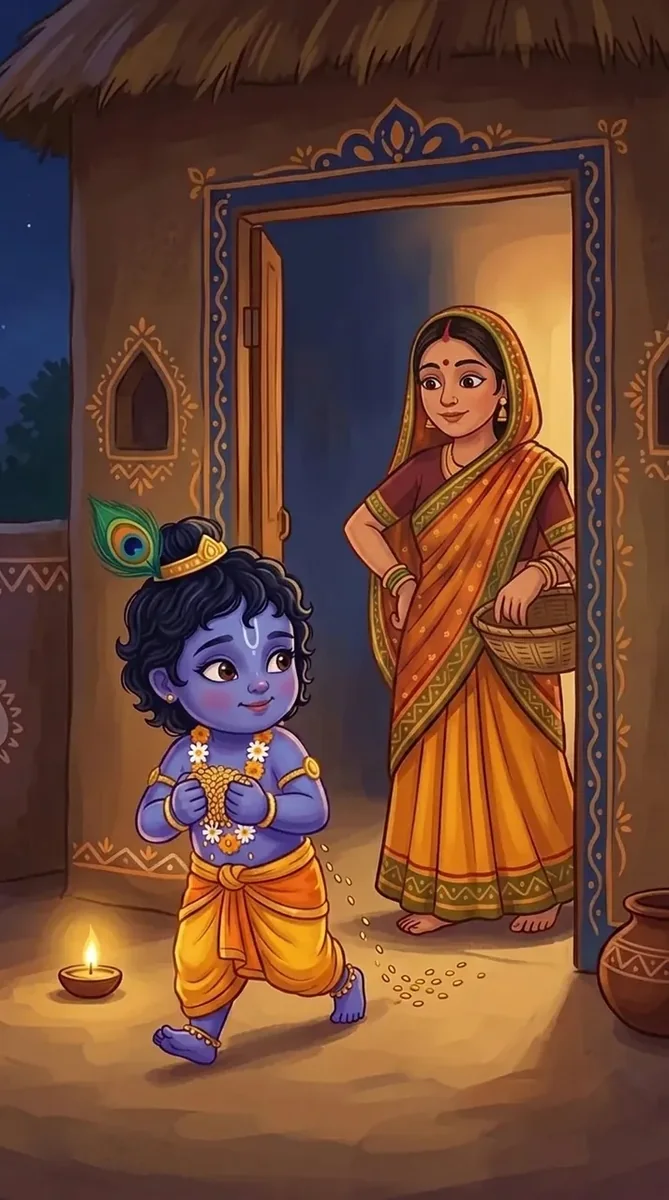

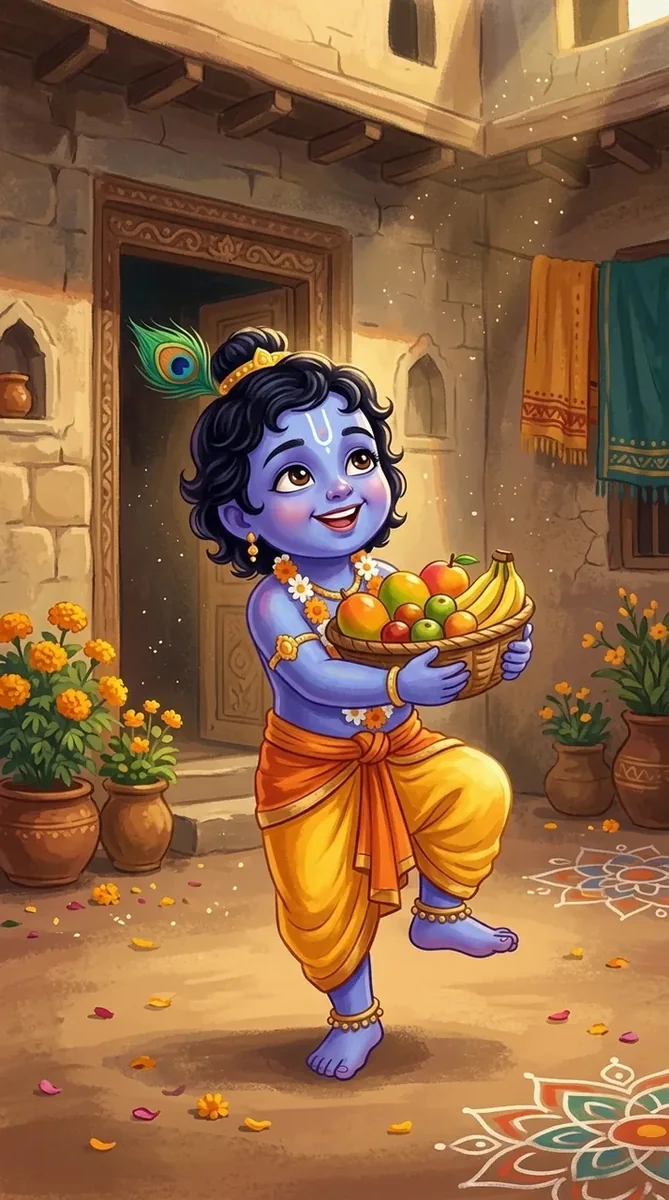
Her call — phal le lo, taaze phal — reaches Yashoda's courtyard, where little Krishna is playing, round cheeks, ghunghroo on his ankles. His mouth waters at the word mango. He knows what to do: run to the big grain pot in the corner, stand on tiptoe, and fill both tiny fists. Then off he goes down the lane. Here Naani asks your child a question — so much grain in such a small fist, will it last all the way? haan ya na? — and the answer, of course, is no. Grain trickles out between his fingers, one here, two there, until by the corner he has only a few grains left. His small heart thumps. Will amma give fruit for this?
Naani saysमटका ऊँचा था, हाथ छोटे। पंजों पर उचककर उन्होंने अंदर हाथ डाला… और तब…The pot was tall, the hands small. Up on his toes, he reached inside… and then…
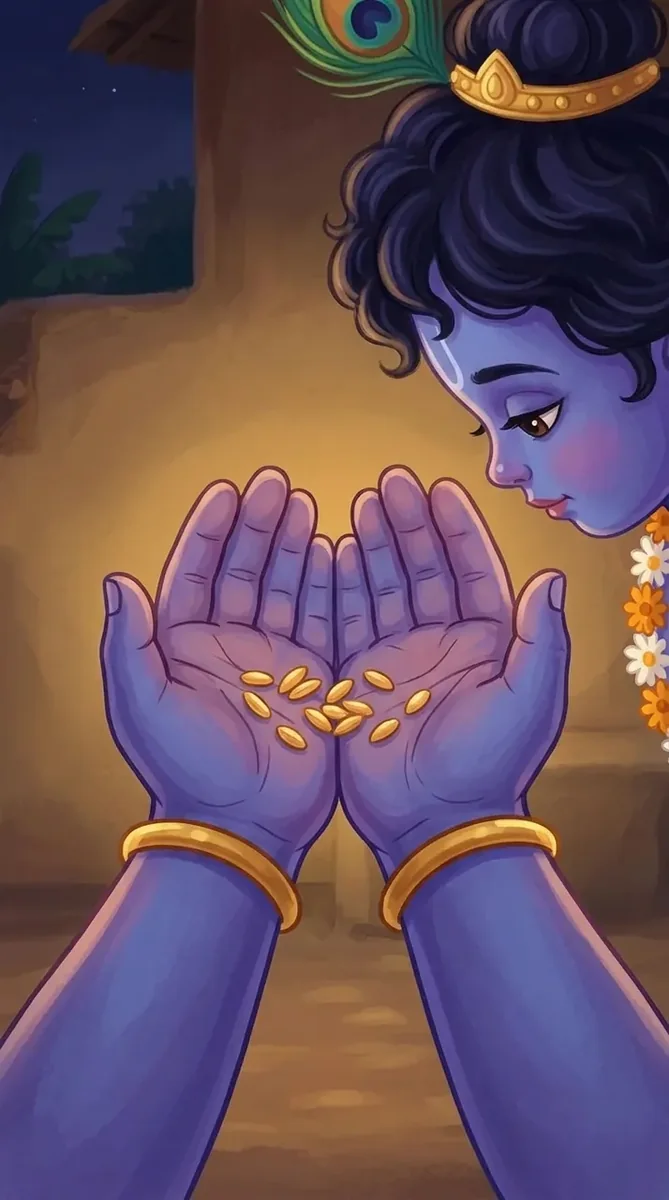
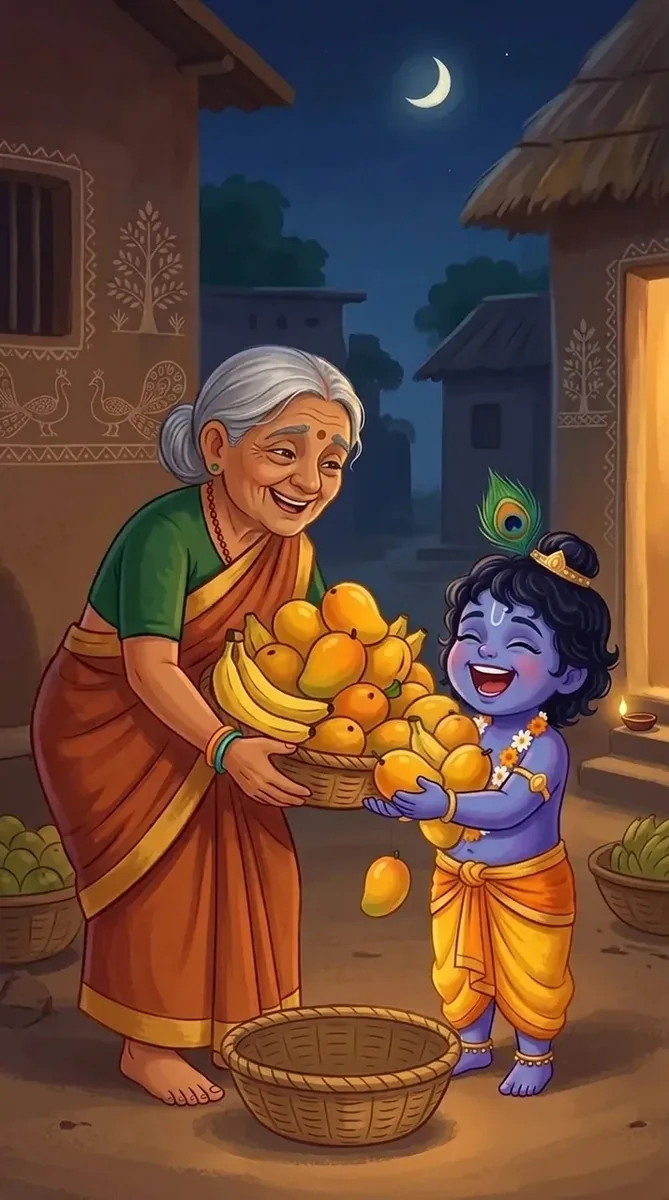
He gathers his courage, walks up and opens both palms. Amma looks down: a little boy with big eyes and almost nothing in his hands, asking softly, amma, phal dogi? Mere paas bas itna hi hai. She remembers her tired day and her empty-handed worry — and then her heart melts like butter in the sun. She takes those few grains as carefully as if they were treasure, picks the best mango and the ripest bananas from her basket, and fills both his hands. Krishna bursts out laughing and dances right there in the lane, bells ringing, while amma laughs too and forgets she was ever tired.
Naani saysकृष्ण धीरे से बोले, अम्मा… फल दोगी? मेरे पास बस इतना ही है।Krishna said softly, Amma… will you give me fruit? This is all I have.
Then she lifts her basket to go home and finds it heavier than before. Under the cloth, where the fruit was, it is full of shining pearls and jewels. Naani tells your child what amma understood at once: what is given with love comes back many times bigger. That night amma sleeps with a full stomach and a full heart, and Krishna sleeps in Yashoda's lap with mango on his chin.
The value this story teaches
For a three- to five-year-old, sharing is usually a negotiation: how much do I give, what do I get back, is it fair. This story quietly offers another way — giving without counting — and shows the giver being met with the same open hand, which is what makes a small child want to try it.
The picture that stays is two open palms with almost nothing in them. Krishna, grain spilled all down the lane, walks up and asks softly, amma, phal dogi? Mere paas bas itna hi hai. The tired fruit-seller takes those few grains as if they were treasure and fills his hands with her best mango and ripest bananas — and only later finds her basket full of jewels.
How to talk about it at bedtime
- Ask your child: amma was given only a few grains. Why did she still give Krishna the best mango?
- Try: the next time your child offers you a bite or a scribble, take it like treasure, out loud.
- Ask: what is one small thing we could give someone tomorrow — a flower, a drawing, a smile?
When to pick this story
- After a fight over sharing a snack or a toy
- When your child has been generous and you want them to notice it
- A quiet night when a three-year-old needs the gentlest story
Try asking your child
After the story, or the next morning on the way to school:
- Why did Krishna have only a few grains left when he reached amma? What happened on the way?
- Amma was tired and had sold nothing all day. Why did she still fill Krishna's hands with fruit?
- Have you ever given someone something tiny — a flower, a sticker, one bite of your snack? How did their face look?
Meet the characters
The little boy of Gokul with ghunghroo on his ankles who runs to trade grain for a mango.
The tired fruit-seller from a faraway village who has sold nothing all day.
Krishna's mother, in whose lap he falls asleep with mango on his chin.
From the app-store reviews
Two of the public reviews parents have left on Google Play and the App Store, quoted exactly as they wrote them.
“Maine to download kar liya hai aap sabhi log download karo aur yah story Apne bacchon Ko badon ko sunao bahut achcha lagega…”“Great stories and really interactive. My kid love it”
Give your child a story with a value every night
Naani tells Krishna aur Phalwali in warm Hindi, shows the pictures, asks a question halfway and listens to your child's answer. One story, one seekh, then good night.
Listen tonight — free- Free stories every night
- No ads
- Your child’s voice erased after 24 hours
- Made in India
About this story
- Language: Hindi — simple, in a grandmother’s voice
- Ages: 4–7
- Listen time: about 11 minutes
- Value: Kindness & empathy, Sharing, Gratitude
- World: Stories of Krishna
- Theme: A sincere act of generosity is more valuable than a calculated exchange.
Also plays in the browser: app.naani.live/stream/krishna-and-the-fruit-seller (sign-in required).
Parents also ask
What is the story of Krishna and the fruit seller?
A fruit-selling woman comes to Gokul having sold nothing all day. Little Krishna runs to her with grain to trade, but most of it spills on the way. Moved by his few grains and hopeful face, she fills his hands with her best fruit, and then finds her basket has turned to jewels. It is a Bhagavata Purana episode about giving with love.
Is this a good first Krishna story for a 3-year-old?
It is one of the best. The cast is two people and a cow, the action is a boy running down a lane spilling rice, and the only surprise is a happy one. Naani explains words like anaaj and ghunghroo as she goes, and the questions she asks along the way are yes-or-no.
Why does the basket turn into jewels?
In the story Krishna is God in a child's form, and the jewels are his way of returning amma's kindness many times over. Naani keeps the explanation simple — it was little Krishna's love magic — and lets the idea do its own work: generosity given freely comes back bigger than it went out.
Next story
Do Ped aur Natkhat Kanha
A Krishna story that helps your child feel the love inside a parent's no.
More Stories of Krishna
All Stories of Krishna → Honesty
Makhan Chor
A Krishna story that teaches a four-year-old to ask openly instead of sneaking — honesty, without a lecture.
 Kindness
Krishna aur Kaliya Naag
A Krishna story about using strength to protect others, and forgiving the one who did wrong.
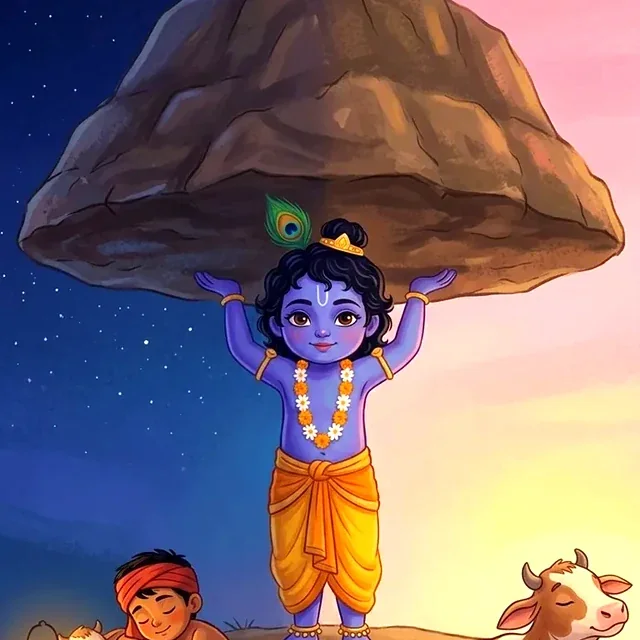 Courage
Govardhan Parvat aur Krishna
A Krishna story about a small boy using his strength for everyone — and a village that stands together.
More stories that teach kindness & empathy
Noticing how someone else feels, and doing something about it.
 Kindness
Dayalu Raja Hiran
A Jataka story that shows your child what it looks like to stand up for someone smaller — and what it does to the people watching.
 Kindness
Chand par Khargosh
A Jataka story that teaches your child that giving is about the heart, not the size of the gift.
 Kindness
Nanhi Cheenti aur Kabootar
A moral story about kindness — a small good turn comes back in a way nobody expected.