Maa Shailputri story for kids in Hindi — the Navratri day 1 story
The first Devi of Navratri, told so your child learns that the strongest hands can still be gentle.
माँ शैलपुत्री — पहाड़ की बेटी, नवरात्रि की पहली रात

Hear Naani tell it
Watch a glimpse
The story
Ask a small child what being strong means and you will usually hear about muscles, or winning. This story offers a different answer, and it is the one parents notice their child repeating afterwards: mazboot haath, komal dil — strong hands, gentle heart. It gives the first night of Navratri a face and a reason, and it gives your child a way of being strong that never needs shouting.
Naani begins high in the snowy Himalaya, where Raja Himavan, king of the mountains, lives with Rani Mena. A very special daughter is born to them, and everyone starts calling her Shailputri. Naani stops to explain the name, the way a grandmother would: shail means mountain and putri means daughter, so she is the daughter of the mountain. And because a mountain is also called parvat, her other name is Parvati.
Naani says“शैल” यानी पहाड़… और “पुत्री” यानी बेटी। यानी — पहाड़ की बेटी, शैलपुत्री!'Shail' means mountain and 'putri' means daughter — the daughter of the mountain, Shailputri!
The story in pictures
Frames from Naani’s telling, in story order — the pictures your child sees while she speaks.
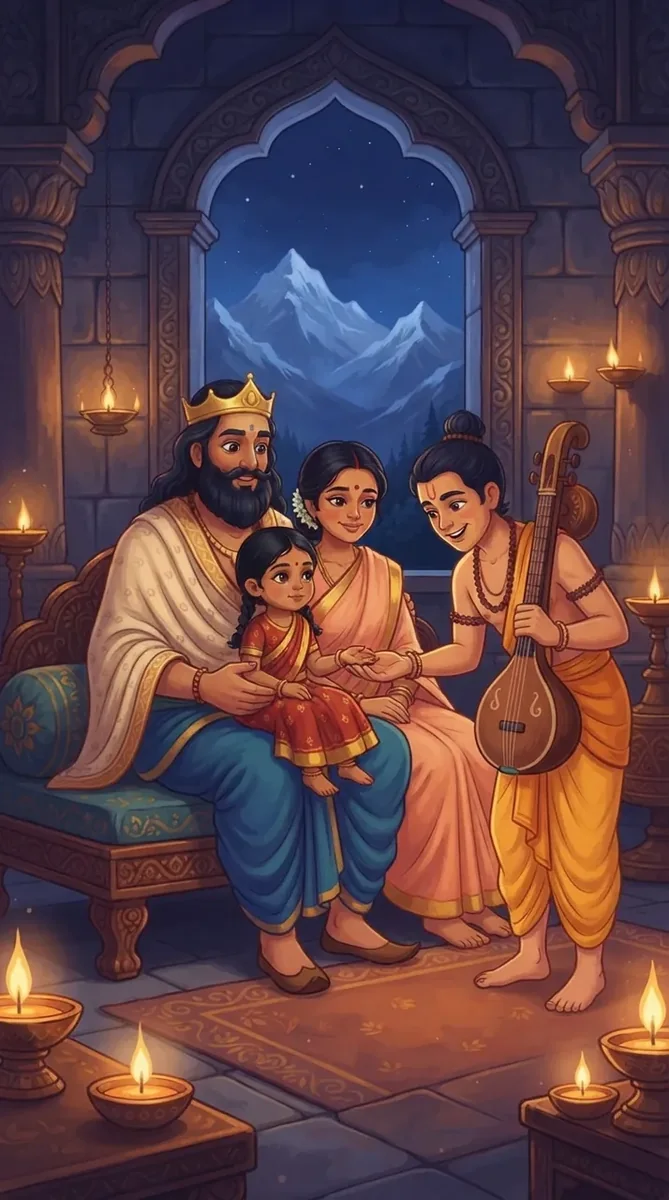


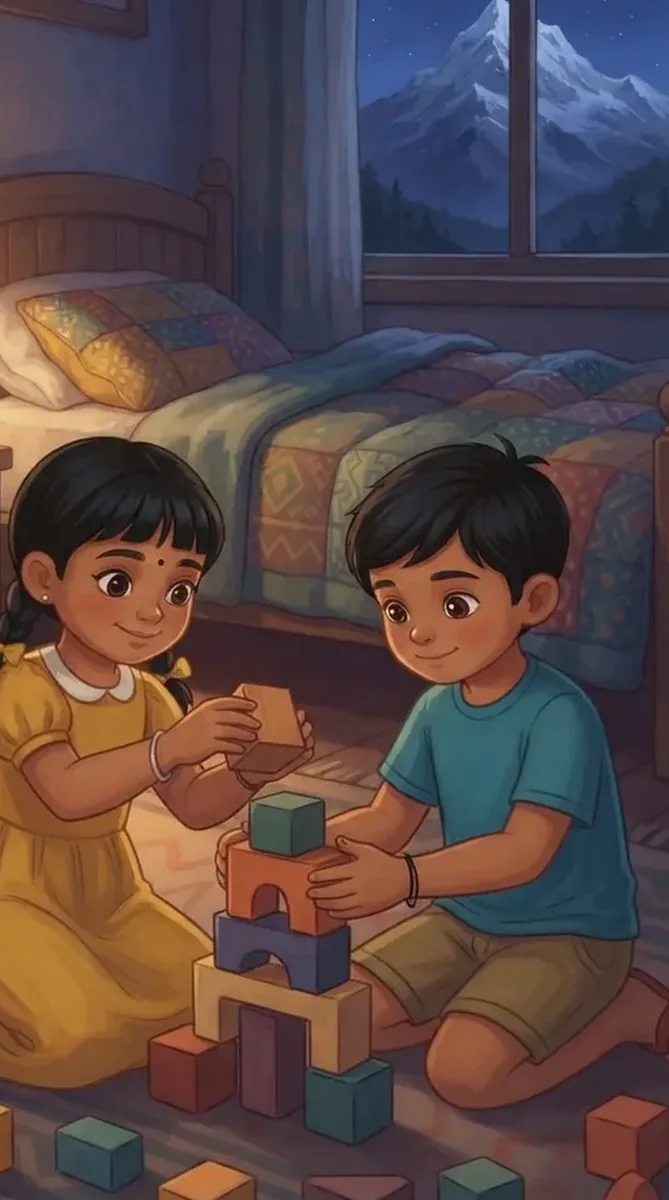
One day a famous guest arrives at the palace with a veena in his hands and a smile on his face — Narada Muni. The king seats little Shailputri on his lap and asks what she will become. Narada looks at her palm, smiles, and says only that she is very special and something very big lies ahead. Here Naani pauses and asks your child a real question: if Narada looked at you and said this child has a special power, what would yours be? She listens, and answers whatever your child says.
Naani saysनारद मुनि ने नन्ही शैलपुत्री की हथेली देखी… और मुस्कुराए।Narada Muni looked at little Shailputri's palm… and smiled.
Naani says“राजन, आपकी बेटी बहुत खास है। इसके जीवन में कुछ बहुत बड़ा होने वाला है।”"Your daughter is very special, O King. Something very big is going to happen in her life."
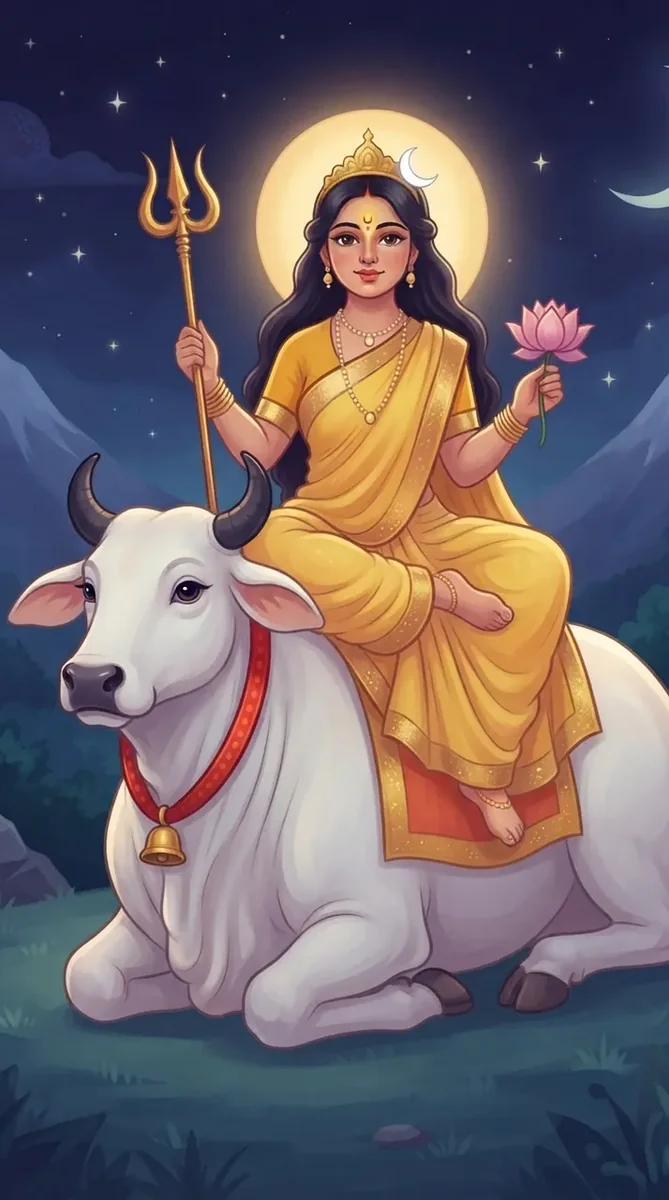
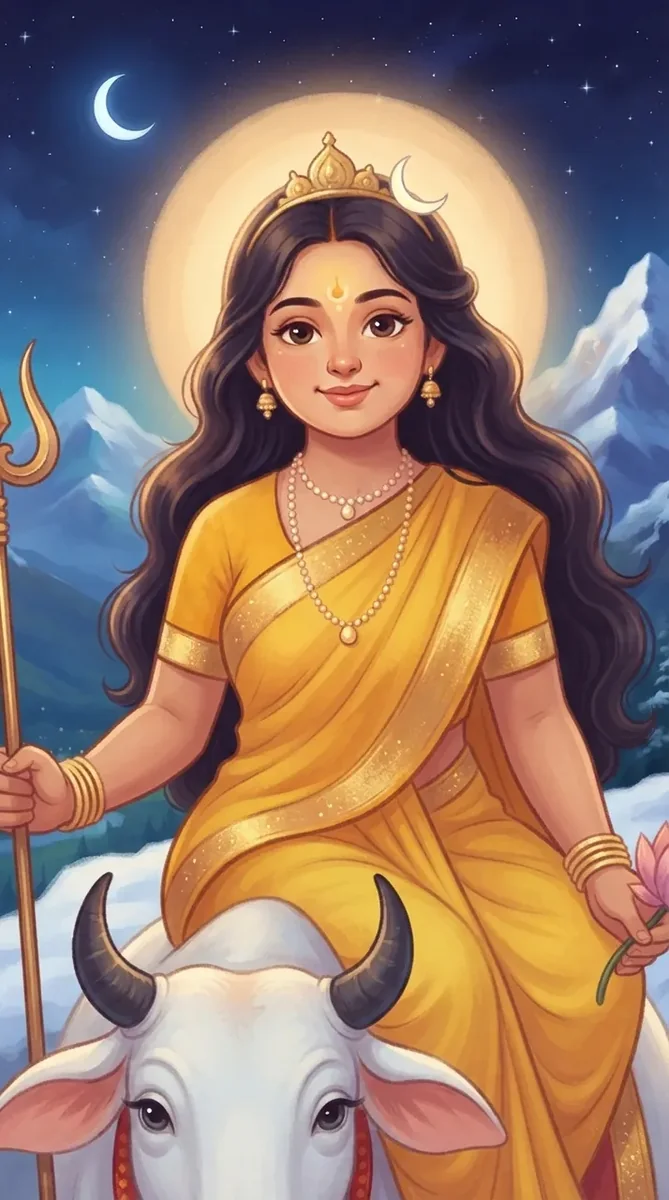
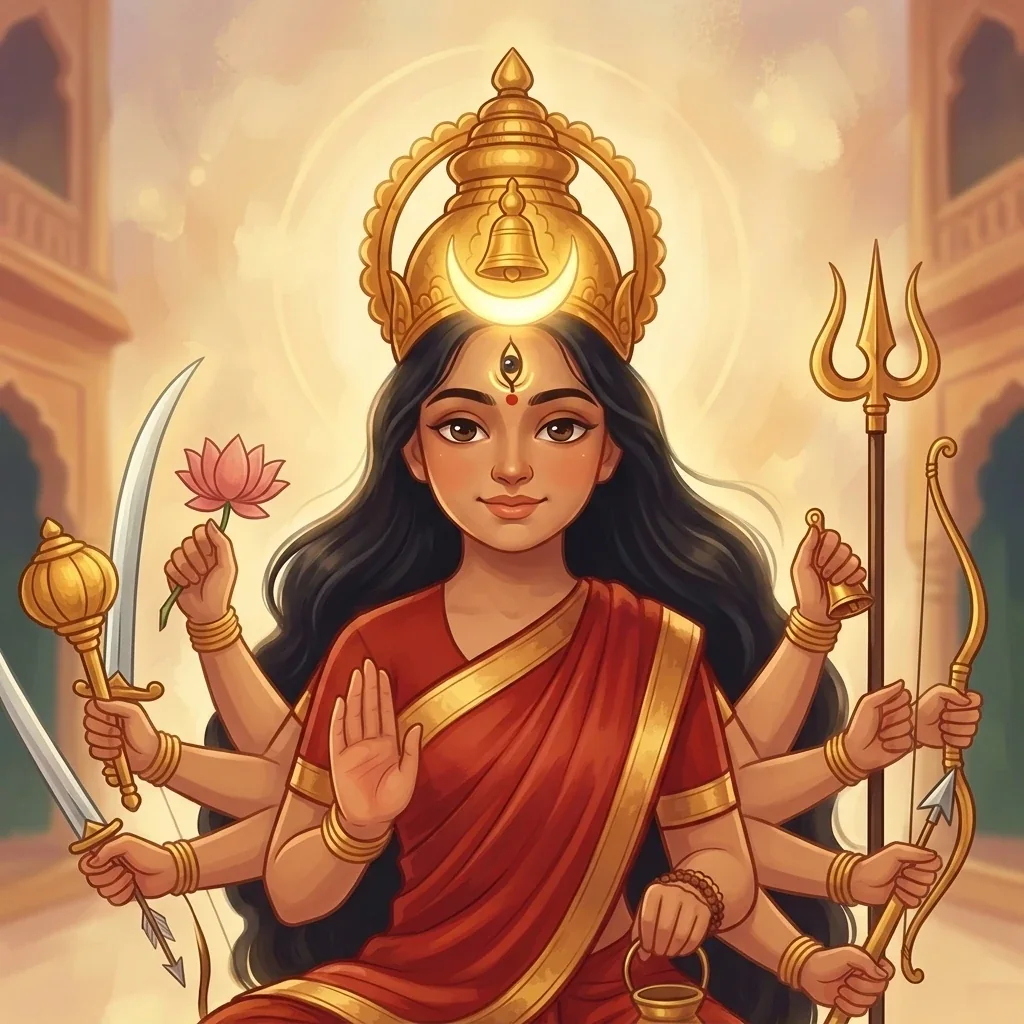
Then she shows where Shailputri's own power hides: in her name. A mountain is tall and strong, Naani says, and yet flowers bloom on it and birds build their nests on it — strong and gentle at once. She teaches your child to recognise Maa Shailputri in any picture: seated on a white bull, a trishul in her right hand for strength, a lotus in her left for gentleness. And she explains why this Devi is worshipped first: whenever we begin something new, what we need first is strong hands and a soft heart.
Naani saysइतना मज़बूत… फिर भी उस पर फूल खिलते हैं, चिड़ियाँ घोंसला बनाती हैं। मज़बूत भी… और कोमल भी।So strong — and still flowers bloom on it and birds build their nests there. Strong, and gentle too.
The story comes home to a moment every family knows: someone knocks your block tower down, or a little one scribbles across your drawing. Not anger, says Naani — be a mountain, and say kindly, koi baat nahin, aao, saath mein banate hain. It ends with a hint of tomorrow's Devi, who tried for a very long time and never gave up, and a soft shubh ratri.
The value this story teaches
Between four and seven, children are told to be brave and told to be kind, often in the same breath, and they can hear the two as opposites. The moment that tests them is small and constant: a sibling topples the tower, a toddler scribbles on the page. What helps is one picture that holds both ideas at once, so that being strong stops meaning hitting back.
The story gives them that picture twice. First the mountain, huge and strong, with flowers on its slopes and birds nesting on its ledges. Then the Devi herself, a trishul in one hand and a lotus in the other. When Naani turns to the knocked-down tower, the strong thing to do is to stay calm and say, let's build it again together.
How to talk about it at bedtime
- Ask your child: what was Shailputri's superpower, and where was it hiding? (In her name — the mountain: strong, and still full of flowers and nests.)
- Try: "Aaj kisi ne tumhari koi cheez bigaadi?" — then say Naani's line together: mazboot haath, komal dil.
- Next time you pass a picture of Maa Shailputri, let your child find the bull, the trishul and the lotus, and tell you which one means strength and which means gentleness.
When to pick this story
- The first night of Navratri, so the puja at home has a story behind it
- After a younger sibling has knocked over or scribbled on something your child made
- When your child thinks being strong means being rough, or that being gentle means being weak
Try asking your child
After the story, or the next morning on the way to school:
- What do 'shail' and 'putri' mean? So what does Shailputri mean?
- What does Maa Shailputri hold in her right hand, and what in her left? What does each one remind us of?
- If a little one scribbled on your drawing tomorrow, what would a mountain-strong, lotus-gentle child say?
Meet the characters
The daughter of the mountain, also called Parvati — the first of the nine Devis of Navratri, with a trishul for strength and a lotus for gentleness.
The king of the mountains, her father, who asks Narada Muni what his little daughter will become.
The queen of the Himalaya and Shailputri's mother.
The wise sage with the veena who reads the little girl's palm and smiles.
From the app-store reviews
Two of the public reviews parents have left on Google Play and the App Store, quoted exactly as they wrote them.
Nice“Really cute idea for bedtime! I love how Naani actually listens when kids interrupt and responds as part of the story. The mix of Hindi and English feels really natural, and the gentle lessons are a nice touch. Such a lovely way to wind down before sleep!”
“Maine to download kar liya hai aap sabhi log download karo aur yah story Apne bacchon Ko badon ko sunao bahut achcha lagega…”Give your child a story with a value every night
Naani tells Navratri Night 1 — Maa Shailputri in warm Hindi, shows the pictures, asks a question halfway and listens to your child's answer. One story, one seekh, then good night.
Try Naani tonight 👉 naani.live/app- A value in every story
- No ads
- Your child’s voice erased after 24 hours
- Made in India
About this story
- Language: Hindi — simple, in a grandmother’s voice
- Ages: 4–7
- Listen time: about 6 minutes
- Value: Managing anger, Kindness & empathy, Faith & devotion
- World: Festival Stories
- Theme: Strong hands, gentle heart — mazboot haath, komal dil, like her trishul and lotus.
Also plays in the browser: app.naani.live/stream/navratri-1-maa-shailputri-v2 (sign-in required).
Parents also ask
Who is Maa Shailputri?
Maa Shailputri is the first of the nine forms of Durga worshipped in Navratri. Her name means daughter of the mountain: shail is mountain and putri is daughter. She is Parvati, born to the Himalaya. She is shown seated on a white bull, with a trishul in her right hand, a lotus in her left and a crescent moon on her forehead.
Why is Navratri day 1 for Maa Shailputri?
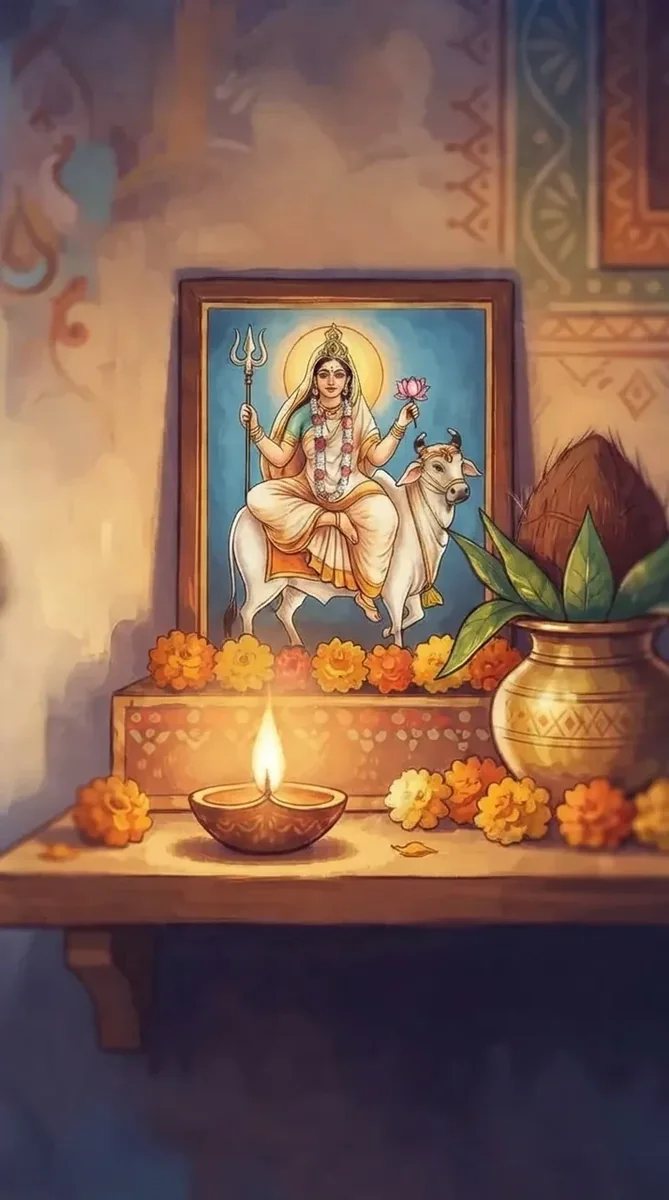
The Devi Kavacham, recited with the Durga Saptashati, lists the nine Devis in order and names Shailputri first — prathamam Shailaputri. So she is worshipped on Pratipada, the first day, when families set up the kalash for Ghatasthapana. Many read her as the foundation, like a mountain; Naani tells children that anything new begins best with strong hands and a gentle heart.
Who are Maa Shailputri's parents?
Her father is Himavan, king of the Himalaya, and her mother is Queen Mena (also written Maina). In the Shiva Purana, the sage Narada visits their palace and reads the little girl's palm. Because a mountain is also called parvat, she is known as Parvati too — both names mean the mountain's daughter.
Next story
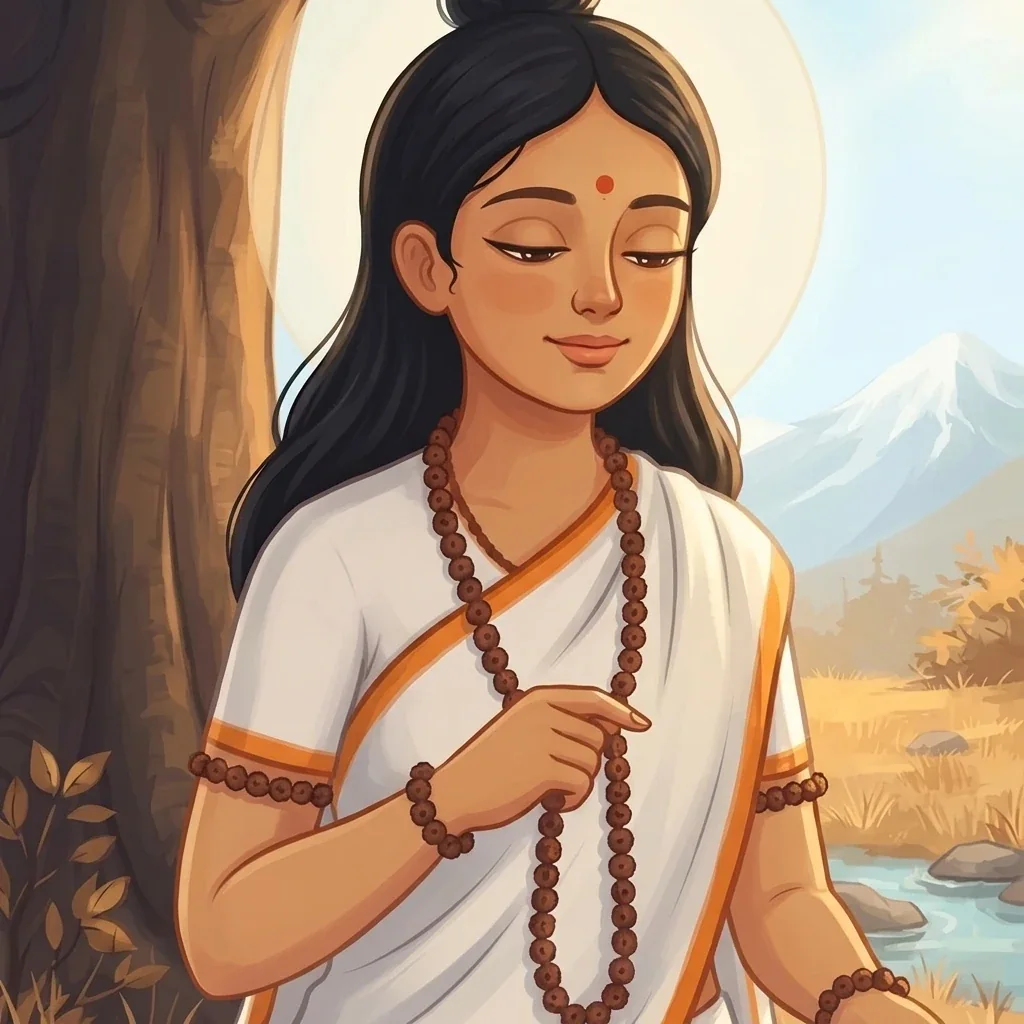
Navratri Night 2 — Maa Brahmacharini
The Devi of tapasya, told so your child learns that falling isn't losing — giving up is.
More Festival Stories
All Festival Stories →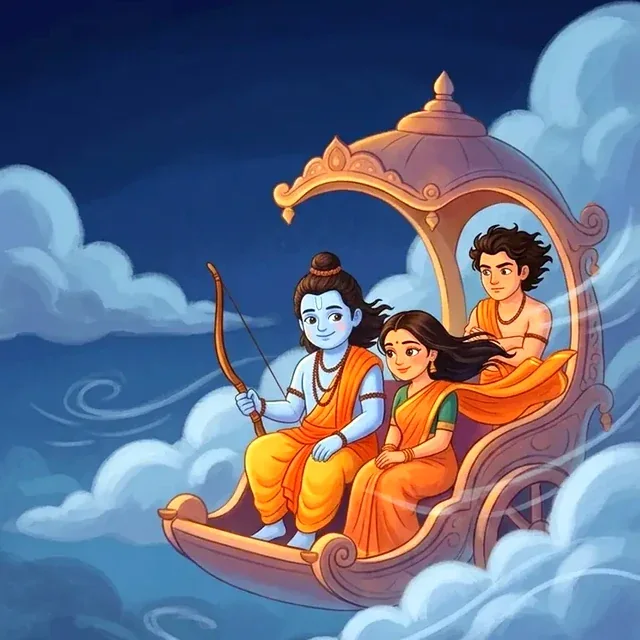 Faith
Diwali: Jab Ayodhya Jagmagayi
The Diwali story told so your child takes away hope, togetherness, and a prince who did his duty with a smile.
 Humility
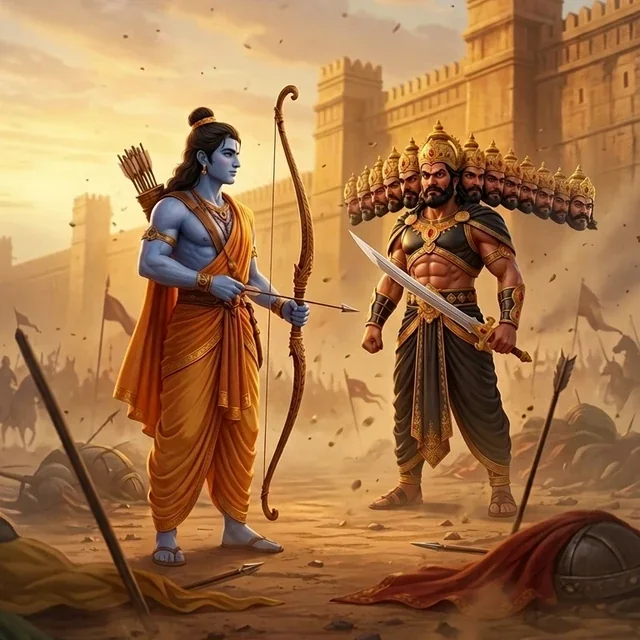
Dussehra: Rama Aur Ravana Ka Antim Yudh
The Dussehra story, told so a five-year-old learns that ghamand loses and a calm, kind heart wins.
 Courage
Navratri Night 3 — Maa Chandraghanta
The third Devi of Navratri, told so your child learns calm courage: one deep breath, then a brave step forward.
More stories that teach managing anger
Feeling angry is allowed; hurting someone is a choice.
 Anger
Wafadaar Nevla
A Panchatantra story that teaches your child — and you — to look before you shout.
 Anger
Mira aur Gusse ka Jar
A bedtime story that gives a six-year-old a way to hold anger without hurting anyone — in three steps they can actually use.