Maa Brahmacharini — the Navratri Day 2 story for kids, in Hindi
The Devi of tapasya, told so your child learns that falling isn't losing — giving up is.
माँ ब्रह्मचारिणी — जिन्होंने हार नहीं मानी, नवरात्रि की दूसरी रात
Hear Naani tell it
Watch a glimpse
The story
Every child knows the moment: the cycle tips over, the laces will not tie, the puzzle piece refuses to fit. This story gives that moment a hero. What parents tend to hear afterwards is the line Naani leaves behind — girna haar nahin hai, koshish chhod dena haar hai — said out loud at the next wobbly attempt. It is perseverance without a lecture, carried by one of the best-loved stories of Navratri.
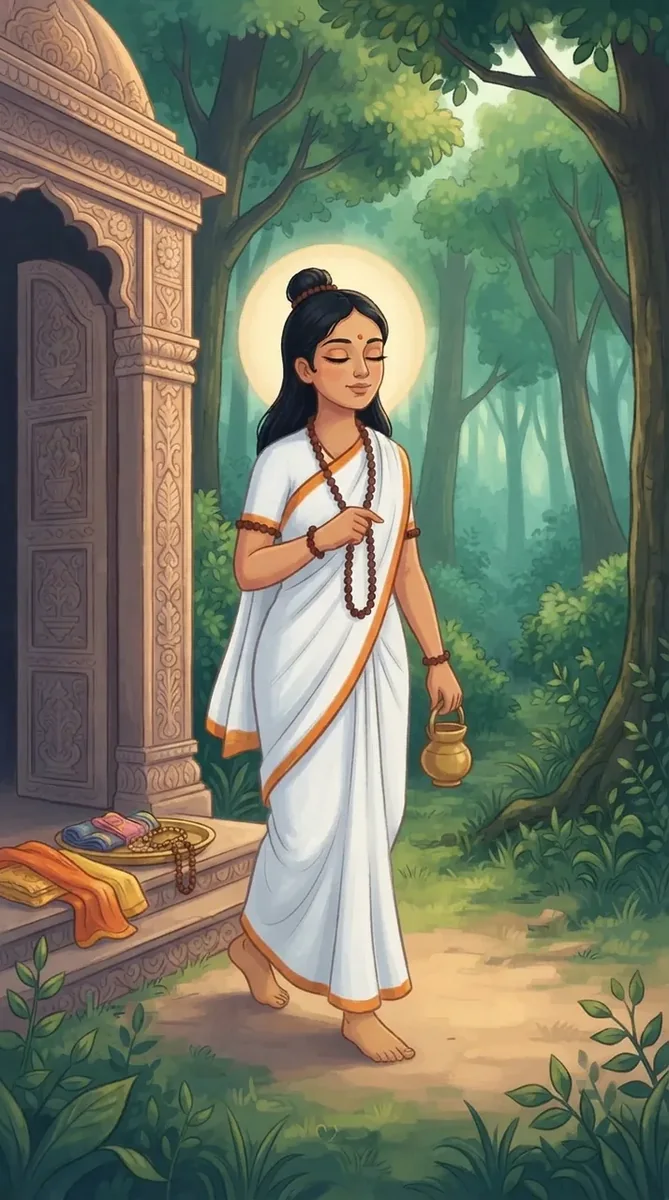
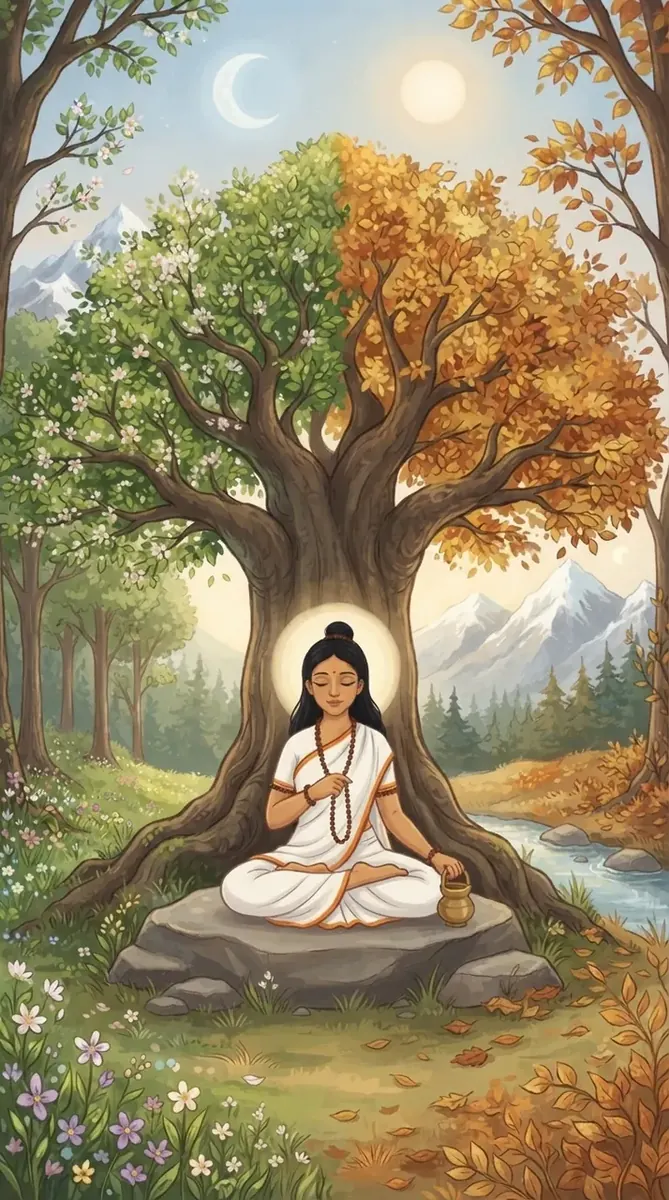
Naani picks up from the first night, when Narada Muni promised that something very big would happen in little Shailputri's life. She has grown up now — our Parvati — and she has decided in her heart that Shiv ji, sitting far away in deep meditation on Kailash, will be her life's companion. So she leaves the comfort of the palace for tapasya in the forest. Summer sun blazes, monsoon rain pours, icy winds blow, and through all of it she stays where she is. Days pass, months pass, years pass. This form of the Devi, Naani explains, is the one we call Brahmacharini.
Naani saysगर्मी आई… तेज़ धूप पड़ी… वो डटी रहीं। बारिश आई… झमाझम पानी बरसा… वो डटी रहीं।Summer came, the sun blazed, and she stayed. The rains came pouring down, and still she stayed.
Naani saysदिन बीते… महीने बीते… साल बीत गए। लेकिन पार्वती ने हार नहीं मानी।Days went by, then months, then years. But Parvati did not give up.
The story in pictures
Frames from Naani’s telling, in story order — the pictures your child sees while she speaks.

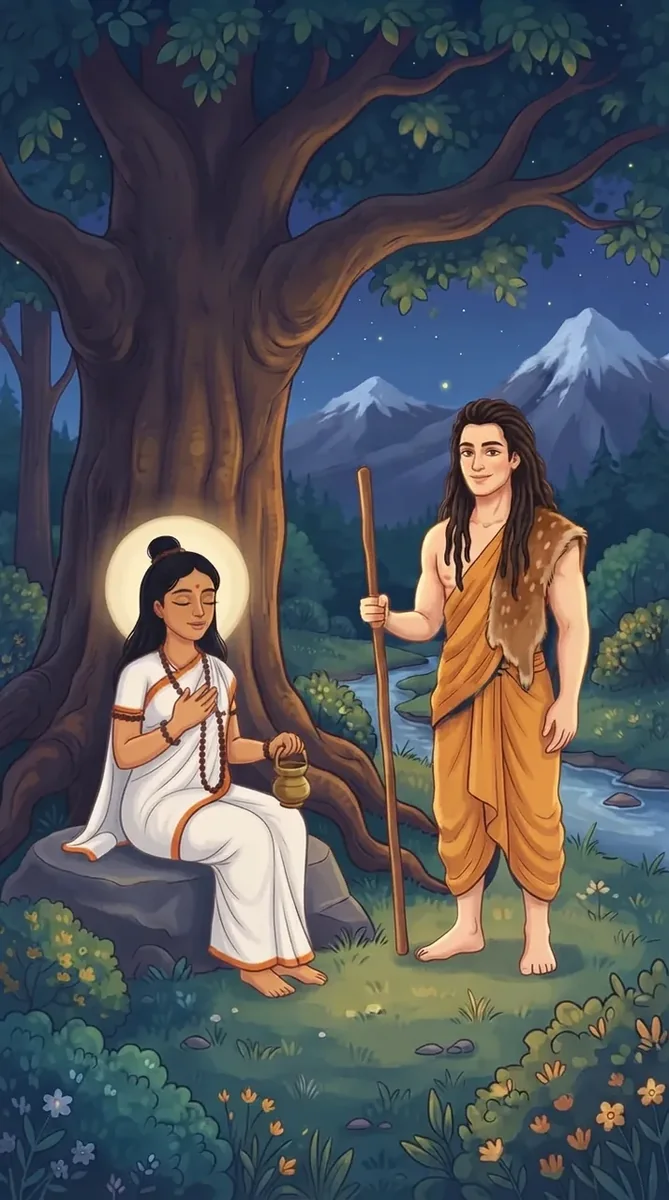
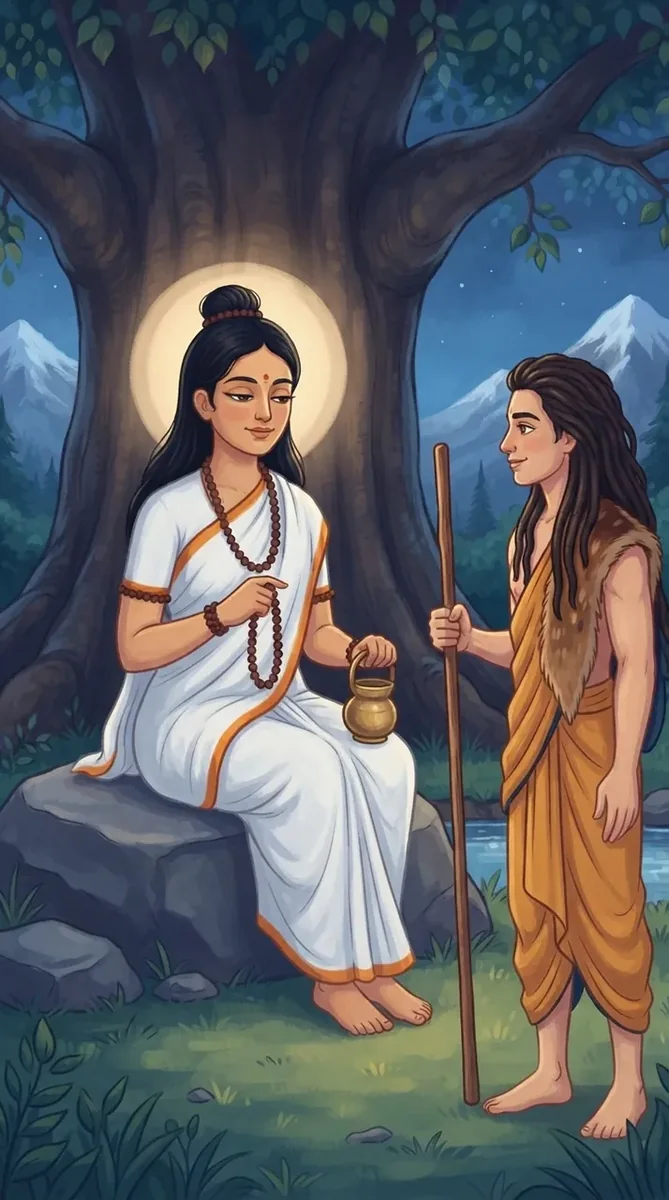
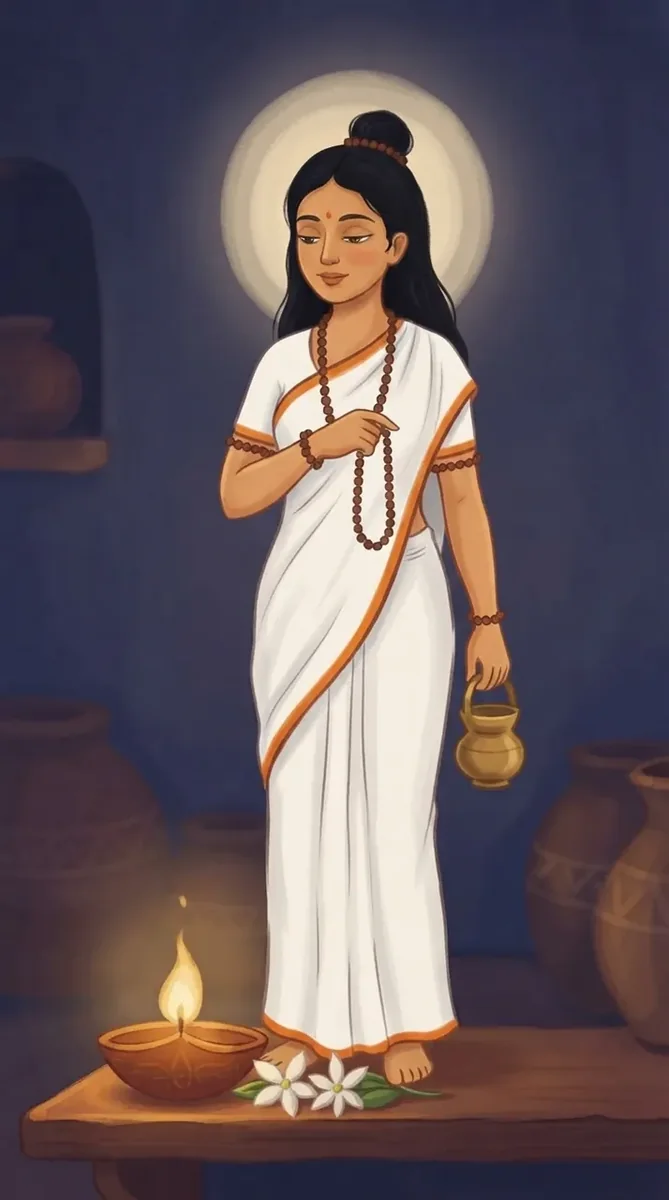
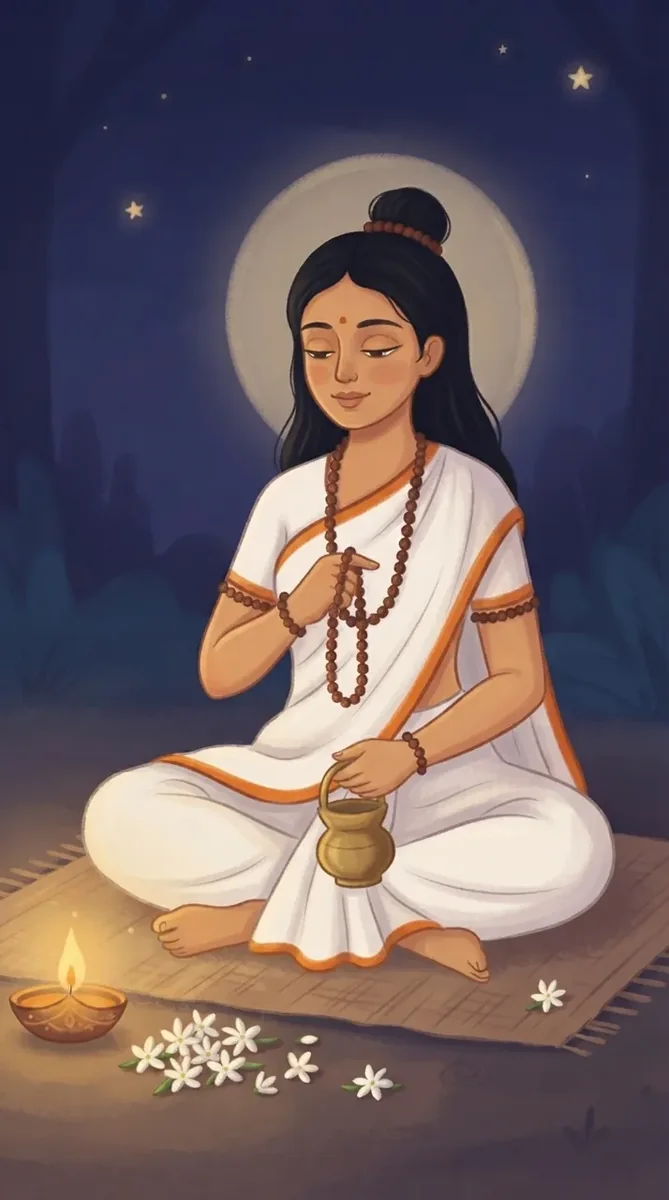
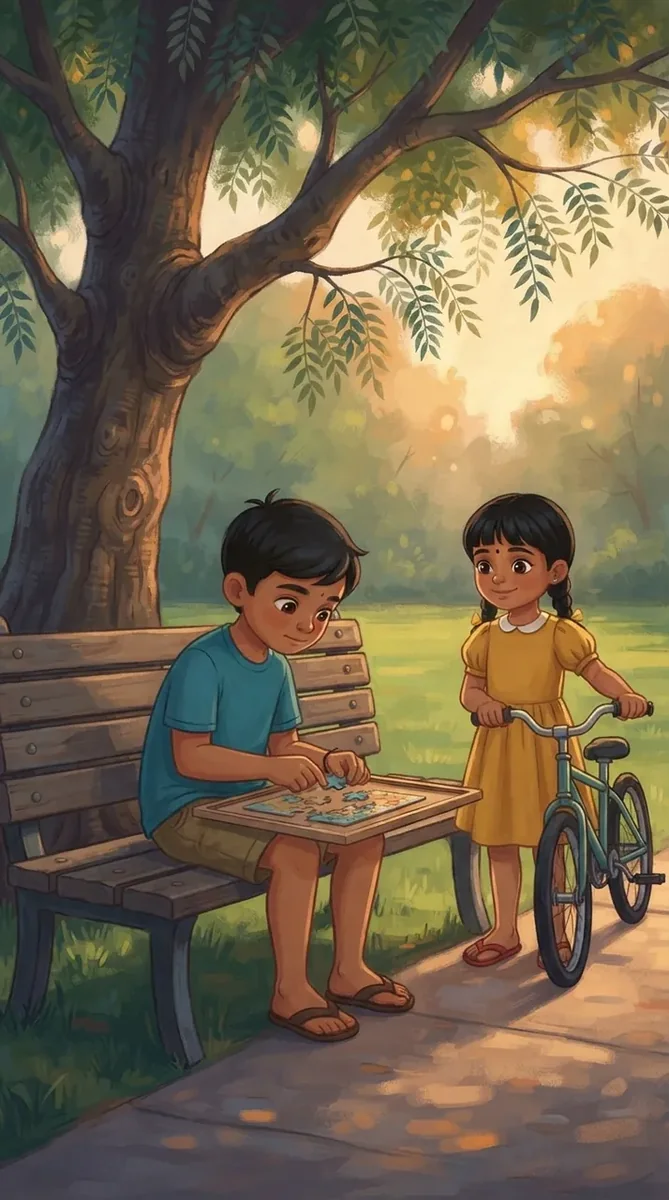
Before the hardest test, Naani stops and asks your child a real question: what is one thing that did not work the very first time, and that you tried again? She listens, and answers whatever your child says. Then the kissa: a young sadhu with long jata and a staff walks up and asks whom all this tapasya is for. For Lord Shiva, Parvati says. The sadhu smiles and teases her — ash on his body, a snake round his neck, a bull to ride; why choose him?
Naani says“शिव? वही जो पहाड़ों में रहते हैं… शरीर पर राख लगाते हैं… गले में साँप रखते हैं… और बैल पर घूमते हैं?"Shiva? The one who lives in the mountains, wears ash on his body, keeps a snake round his neck and rides a bull?"
Parvati does not shout and does not give in. You see Shiv ji only from the outside, she says calmly; I know who he is, and I will not step back. When the sadhu still does not stop, she turns to leave — and something wonderful happens. The stranger was Shiva himself, and the one she had waited for so patiently was standing in front of her.
Naani says“आप शिव जी को सिर्फ बाहर से देख रहे हैं। मैं जानती हूँ, वो कैसे हैं।"You see Shiv ji only from the outside. I know what he is truly like."
Naani then shows your child how to recognise Maa Brahmacharini in any picture, brings the lesson home to a fallen cycle and an unfinished puzzle, and closes with a hint of tomorrow's Devi, who has a half moon on her forehead and a bell hidden in her name.
The value this story teaches
Between four and seven, children are learning a new skill almost every week, and most of those skills begin with failing. Whether a child tries again often depends less on talent than on how they read the fall: as proof they cannot, or as part of learning. A simple sentence, said by someone they love, can tip that reading the right way.
The story shows perseverance twice. First as patience, in the three seasons Parvati sits through without moving. Then as quiet firmness, when the sadhu mocks Shiv ji and she answers without anger — "You see Shiv ji only from the outside" — and simply refuses to step back. Your child sees that not giving up can be calm, not stubborn.
How to talk about it at bedtime
- Ask your child: what was Maa Brahmacharini's superpower? (Not giving up — she kept going through sun, rain and cold.)
- Try: "Aaj kya cheez pehli baar mein nahi hui?" — then say Naani's line together: girna haar nahin hai, koshish chhod dena haar hai.
- Ask: when the sadhu laughed at Parvati's choice, did she get angry? What did she say instead?
When to pick this story
- The second night of Navratri, so the day's puja has a story behind it
- After a tearful afternoon of learning to ride a cycle, swim or tie laces
- When your child wants to quit something new after the first try
Try asking your child
After the story, or the next morning on the way to school:
- Which three kinds of weather did Parvati sit through in the forest?
- Who was the young sadhu really? How did Parvati answer him when he teased her?
- What is one thing you will try again tomorrow, even if you fall the first time?
Meet the characters
Parvati in her form of tapasya — the second of the nine Devis of Navratri, who kept going for years and never gave up.
A stranger with long jata and a staff who walks into the forest and teases Parvati about her choice.
Sitting in deep meditation on Kailash — the one Parvati's tapasya is for.
From the app-store reviews
Two of the public reviews parents have left on Google Play and the App Store, quoted exactly as they wrote them.
“Great stories and really interactive. My kid love it”
“an intellectual way to describe the old stories for kids .”
Give your child a story with a value every night
Naani tells Navratri Night 2 — Maa Brahmacharini in warm Hindi, shows the pictures, asks a question halfway and listens to your child's answer. One story, one seekh, then good night.
Try Naani tonight 👉 naani.live/app- A value in every story
- No ads
- Your child’s voice erased after 24 hours
- Made in India
About this story
- Language: Hindi — simple, in a grandmother’s voice
- Ages: 4–7
- Listen time: about 6 minutes
- Value: Emotional resilience, Patience, Self-belief
- World: Festival Stories
- Theme: Never give up — haar mat maano; girna haar nahi, koshish chhodna haar hai.
Also plays in the browser: app.naani.live/stream/navratri-2-maa-brahmacharini (sign-in required).
Parents also ask
Why is Navratri day 2 for Maa Brahmacharini?
The Devi Kavacham, recited with the Durga Saptashati, gives the nine Devis in order — prathamam Shailaputri, dvitiyam Brahmacharini — so she is worshipped on Dwitiya, the second day. The order also follows Parvati's own life: the mountain's daughter of the first night grows up and begins her long tapasya on the second.
Who is Maa Brahmacharini?
She is Parvati in her form of tapasya, the second of the nine forms of Durga. Her picture is the simplest of the nine: white clothes, bare feet, a rudraksha japa mala in her right hand and a kamandalu, a small water pot, in her left. Naani tells children her form says that big work needs only patience and a firm resolve.
Why did Shiva come in disguise?
To test how firm Parvati's resolve was. In Kalidasa's Kumarasambhava and the Shiva Purana, Shiva comes as a brahmachari with matted hair and a staff and runs himself down to her face. When she defends him and turns to leave, he takes his own form and says her tapasya has won him.
Next story
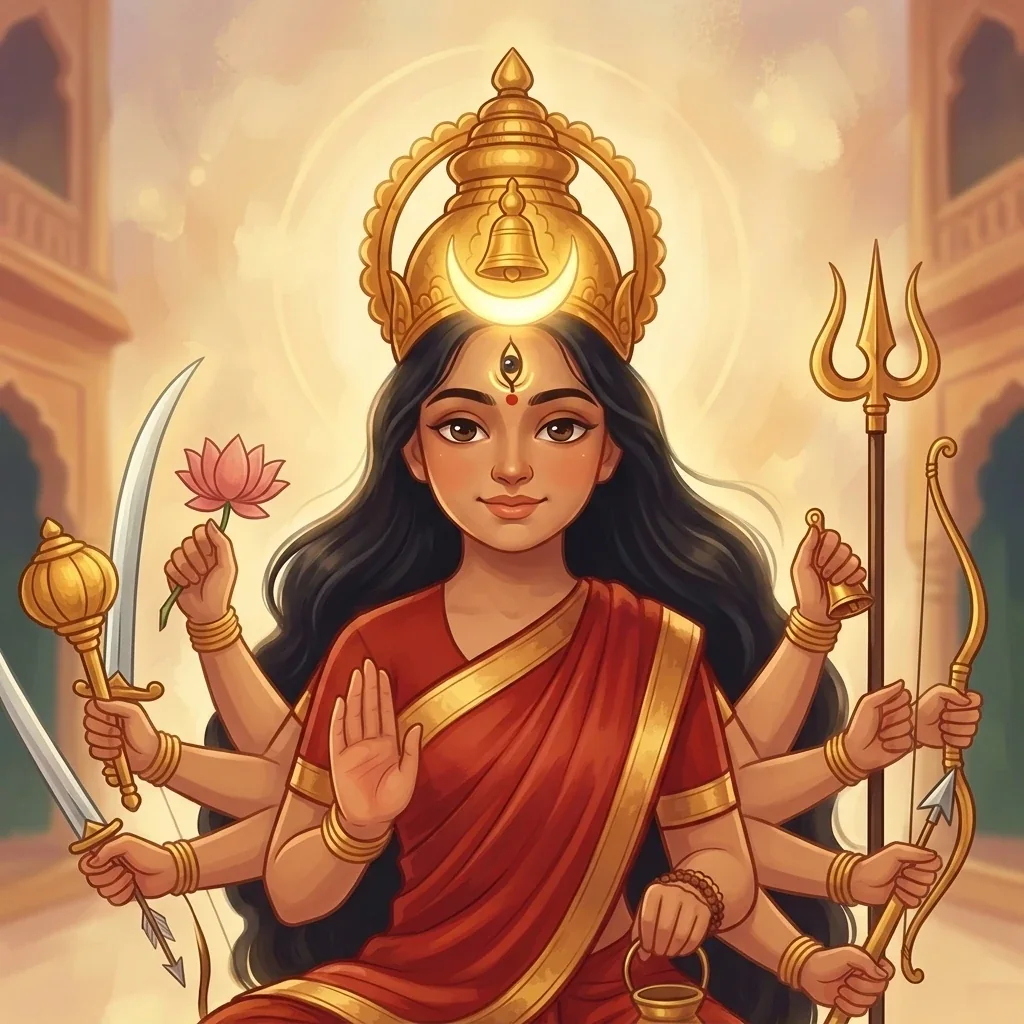
Navratri Night 3 — Maa Chandraghanta
The third Devi of Navratri, told so your child learns calm courage: one deep breath, then a brave step forward.
More Festival Stories
All Festival Stories → Faith
Diwali: Jab Ayodhya Jagmagayi
The Diwali story told so your child takes away hope, togetherness, and a prince who did his duty with a smile.
 Humility
Dussehra: Rama Aur Ravana Ka Antim Yudh
The Dussehra story, told so a five-year-old learns that ghamand loses and a calm, kind heart wins.
 Anger
Navratri Night 1 — Maa Shailputri
The first Devi of Navratri, told so your child learns that the strongest hands can still be gentle.
More stories that teach emotional resilience
Getting up after a mistake, a bad day or a lost game.
 Resilience
Krishna aur Jungle ki Aag
A Krishna story that gives your child a plan for being scared: stay close, hold a hand, say it out loud.
 Resilience
Easter: Khali Kabr Ka Savera
The Easter story, told so a five-year-old takes away that every long night ends in morning — hope, not sadness.
 Resilience
Chanda Mama ki Chamak
A gentle bedtime story for the child who feels overlooked — about a shine that stays even when no one says thank you.