Mira aur Gusse ka Jar — a bedtime story about anger for kids, in Hindi
A bedtime story that gives a six-year-old a way to hold anger without hurting anyone — in three steps they can actually use.
मीरा का कंकड़ों वाला मर्तबान — रुको, नाम लो, फिर बोलो

Hear Naani tell it
The story
What your child takes from this one is a habit, not a rule: three small steps for the moment anger boils up, and a vivid picture of why hurtful words matter. In Dadi's house in Sapno village there is a big round clay jar on a high shelf — a martaban — and Dadi has always said something odd about it. Whenever someone in this house says a bitter word that hurts another person, a pebble appears inside the jar by itself. Because a cruel word, once spoken, never comes back. Seven-year-old Mira laughs at this. Of course it isn't true.
Naani saysजब भी इस घर में कोई किसी को दुख देने वाली कड़वी बात बोलता है ना, इस मर्तबान में अपने आप एक कंकड़ आ जाता है।Whenever someone in this house says a bitter word that hurts another, a pebble appears in this jar by itself.
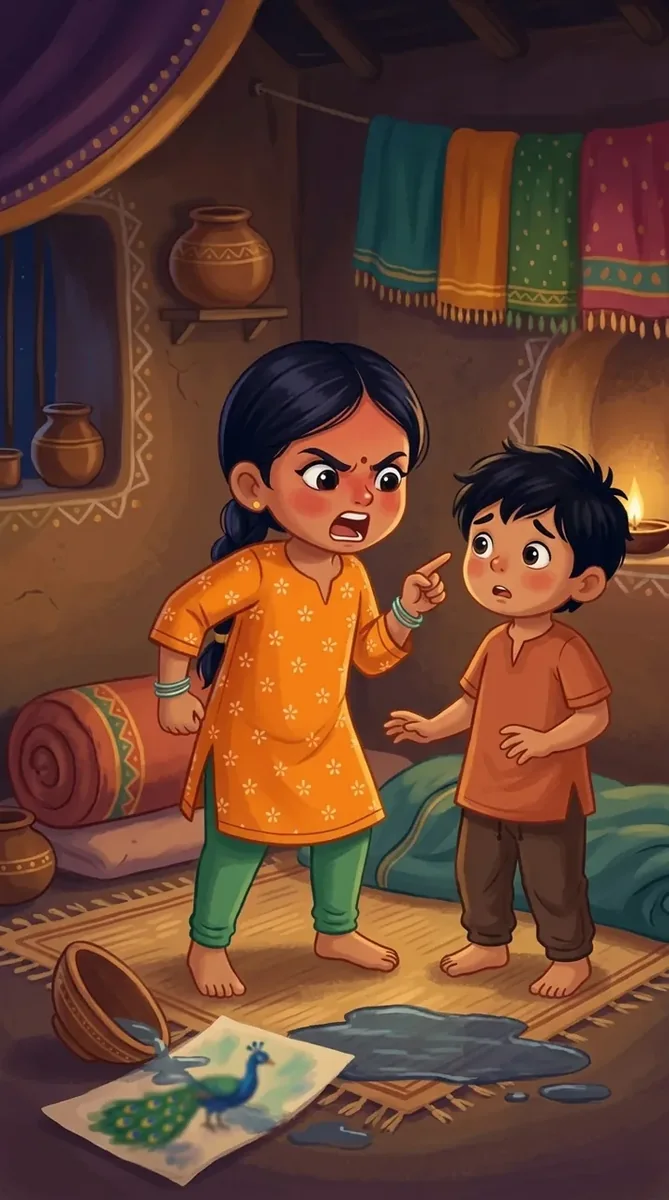
Then comes the day of the peacock. Mira has painted a blue-green mor for the village mela and wants it to be the loveliest picture there. She is colouring the tail, tongue between her teeth, when her little brother Golu runs in, knocks the water bowl, and the whole peacock washes away. Mira's anger flares. You are so messy, she shouts. You ruin everything. I don't want to talk to you. Golu's small face crumples and he hides behind the door, crying — and up on the shelf, inside the jar, a black pebble appears.
Naani saysऔर उसी पल, ऊपर ताक पर रखे मर्तबान के अंदर… एक काला कंकड़ आ गया!And at that very moment, inside the jar on the high shelf… a black pebble appeared!
The story in pictures
Frames from Naani’s telling, in story order — the pictures your child sees while she speaks.



Naani pauses here and asks your child how Mira must have felt inside once Golu cried — good or bad? — and talks over the answer before going on. Because Mira does feel it. She creeps back, lifts the lid, and tries to pull the rough black pebble out. It will not come. She shakes the jar, turns it upside down. It stays.
Naani saysदादी बोलीं — मीरा, गुस्सा आना ग़लत नहीं है। गुस्सा तो मुझे भी आता है।Dadi said — Mira, getting angry is not wrong. I get angry too.
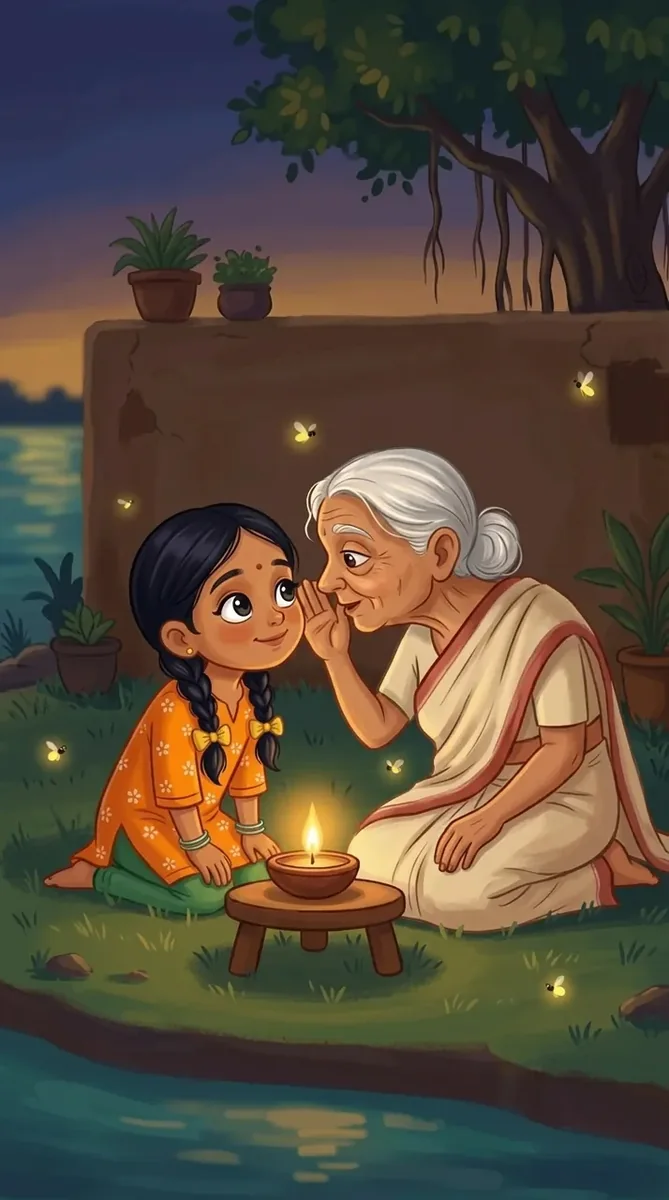
Dadi has been watching. She takes Mira to the river and tells her the thing this story is really about: getting angry is not wrong — Dadi gets angry too. But when the anger starts to boil, there is a small piece of magic. Stop for one moment. Name what is happening inside: this is anger. And then speak, having thought. That is all.
Naani saysदादी उसके कान के पास आईं, और बोलीं — रुको… नाम लो… फिर बोलो! पहले एक पल रुको।Dadi came close to her ear and said — stop… name it… then speak! First, pause for one moment.
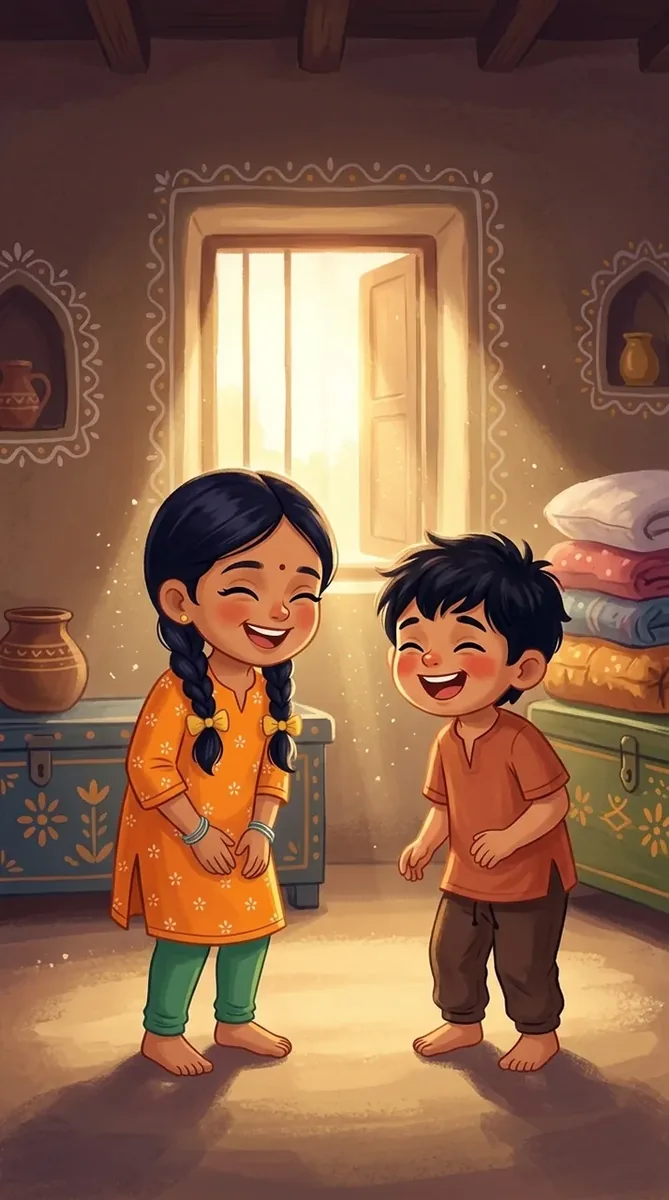
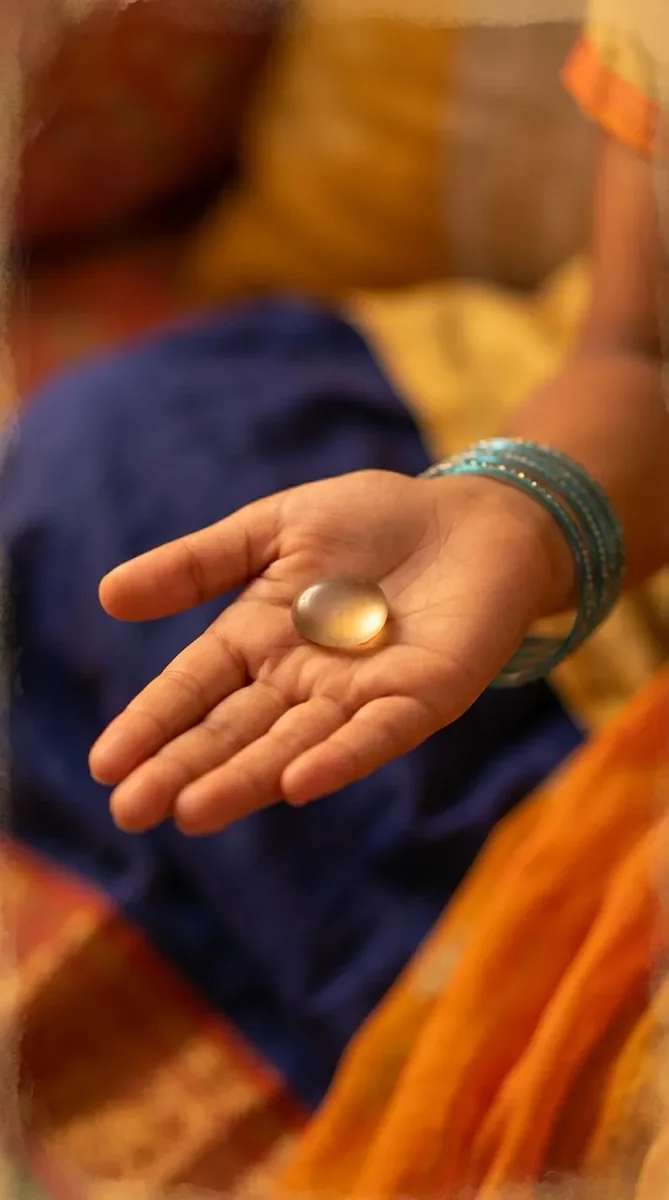
That evening Mira says sorry to Golu and they start a new peacock together. And then Golu's hand drifts towards the water bowl again. Mira's heart thumps, the anger climbs — and this time she stops, names it, and simply asks him to move the bowl to the corner. Both of them laugh. No new pebble appears. After dinner Dadi puts the old one in Mira's palm: it has grown small and smooth, like a river stone, and now it is only there to remind her. Under one quilt, Golu holds his sister's finger as he falls asleep.
The value this story teaches
Anger arrives fast at this age and the words come out faster. Telling a child not to be angry does not work, because the feeling is real; what they need is a gap between the feeling and the sentence. Learning to make that gap is one of the most useful skills of early childhood.
Dadi never tells Mira she was wrong to be angry. She takes her to the river and gives her three steps — pause, name it, speak — and then the story tests them: Golu's hand reaches for the water bowl a second time, and Mira stops. The pebble turning smooth shows that repair is possible too.
How to talk about it at bedtime
- Ask your child: what did Mira do differently the second time Golu reached for the bowl?
- Try: next time anyone at home is cross, say 'this is anger' out loud together, then decide what to say.
- Ask your child: how did Golu feel when Mira said sorry? What made the pebble turn smooth?
When to pick this story
- After a shouting match between siblings
- When your child has said something hurtful and feels bad about it
- When a drawing, tower or game has just been spoiled by a little brother or sister
Try asking your child
After the story, or the next morning on the way to school:
- Why did a black pebble appear in Dadi's jar? Could Mira pull it out?
- What were Dadi's three magic steps? Can you say them in order?
- Think of the last time you felt really angry. What could you have said after stopping for one moment?
Meet the characters
A seven-year-old who loves painting and learns what her angry words can do
Her little brother, who knocks over the water bowl and hides behind the door
Their grandmother, keeper of the clay jar and the three magic steps
From the app-store reviews
Two of the public reviews parents have left on Google Play and the App Store, quoted exactly as they wrote them.
“Maine to download kar liya hai aap sabhi log download karo aur yah story Apne bacchon Ko badon ko sunao bahut achcha lagega…”“Great stories and really interactive. My kid love it”
Give your child a story with a value every night
Naani tells Mira aur Gusse ka Jar in warm Hindi, shows the pictures, asks a question halfway and listens to your child's answer. One story, one seekh, then good night.
Listen tonight — free- Free stories every night
- No ads
- Your child’s voice erased after 24 hours
- Made in India
About this story
- Language: Hindi — simple, in a grandmother’s voice
- Ages: 4–7
- Listen time: about 12 minutes
- Value: Managing anger, Kindness & empathy
- World: World of Dreams
- Theme: Anger is valid, but hurting someone remains a choice.
Also plays in the browser: app.naani.live/stream/mira-s-jar-of-angry-words (sign-in required).
Parents also ask
Is Mira's jar a frightening idea for a young child?
No. The jar never punishes anyone — it simply shows, in a way a child can picture, that a hurtful word stays said. Nobody scolds Mira; her grandmother sits with her by the river and teaches her what to do instead, and the pebble itself turns small and smooth by the end.
What is the moral of Mira aur Gusse ka Jar?
That feeling angry is normal and not wrong, but hurting someone with words is a choice we can learn to make differently. The story gives a child a three-step habit — pause, name the feeling, then speak — and shows it working in a real moment.
Which age is this story best for?
Naani tells it for children of about five to seven, who already know what it is to have a drawing spoiled by a younger sibling. Four-year-olds enjoy it too, mostly for the peacock and the magic jar, and the three steps are simple enough for them to repeat.
Next story
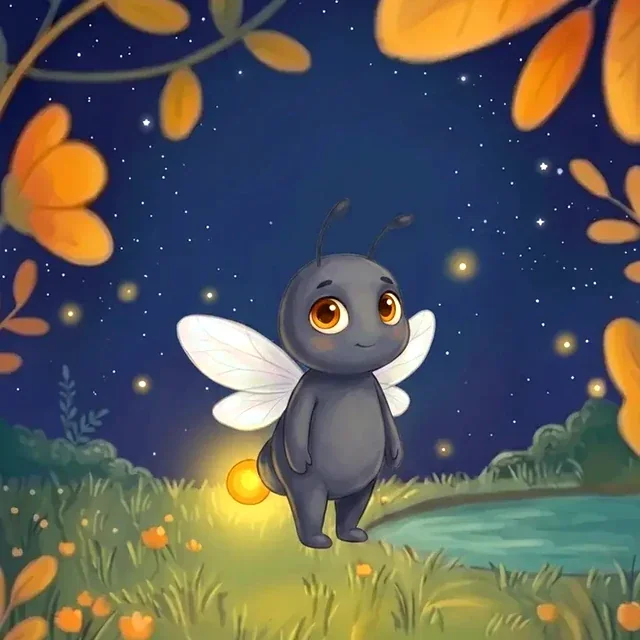
Jugnu ki Chhoti Roshni
A bedtime story for the child who feels too small to matter — a firefly whose tiny light guides a lost boy home.
More World of Dreams
All World of Dreams → Courage
Aarav aur Chhoti Himmat
A bedtime story that shows a four-year-old where courage really comes from: the first small step, not a magic charm.
 Gratitude
Rangon wala Shukriya
A bedtime story that turns 'say thank you' from a rule into something your child wants to do.
 Patience
Dheere Chalne wala Waqt
A calming bedtime story that shows a hurrying child why slowing down gets you there sooner.
More stories that teach managing anger
Feeling angry is allowed; hurting someone is a choice.
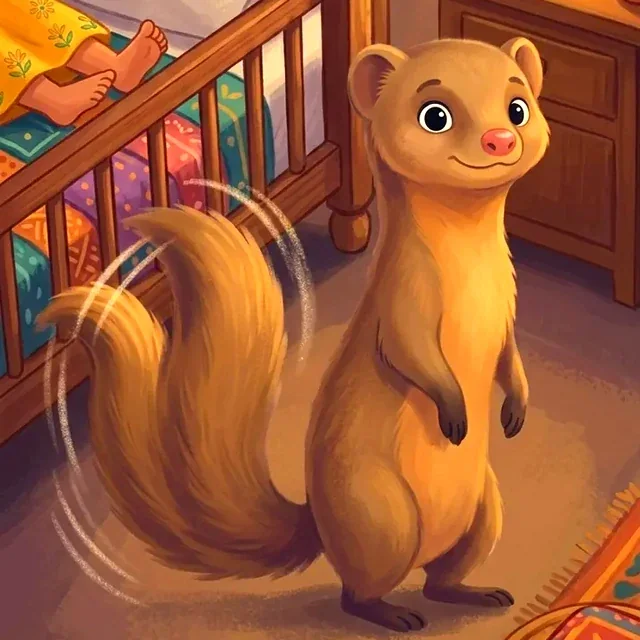 Anger
Wafadaar Nevla
A Panchatantra story that teaches your child — and you — to look before you shout.
 Anger
Navratri Night 1 — Maa Shailputri
The first Devi of Navratri, told so your child learns that the strongest hands can still be gentle.