Rangon wala Shukriya — a story about saying thank you for kids, in Hindi
A bedtime story that turns 'say thank you' from a rule into something your child wants to do.
वह शहर जहाँ कोई शुक्रिया नहीं कहता था — एक छोटे शब्द का जादू
Hear Naani tell it
The story
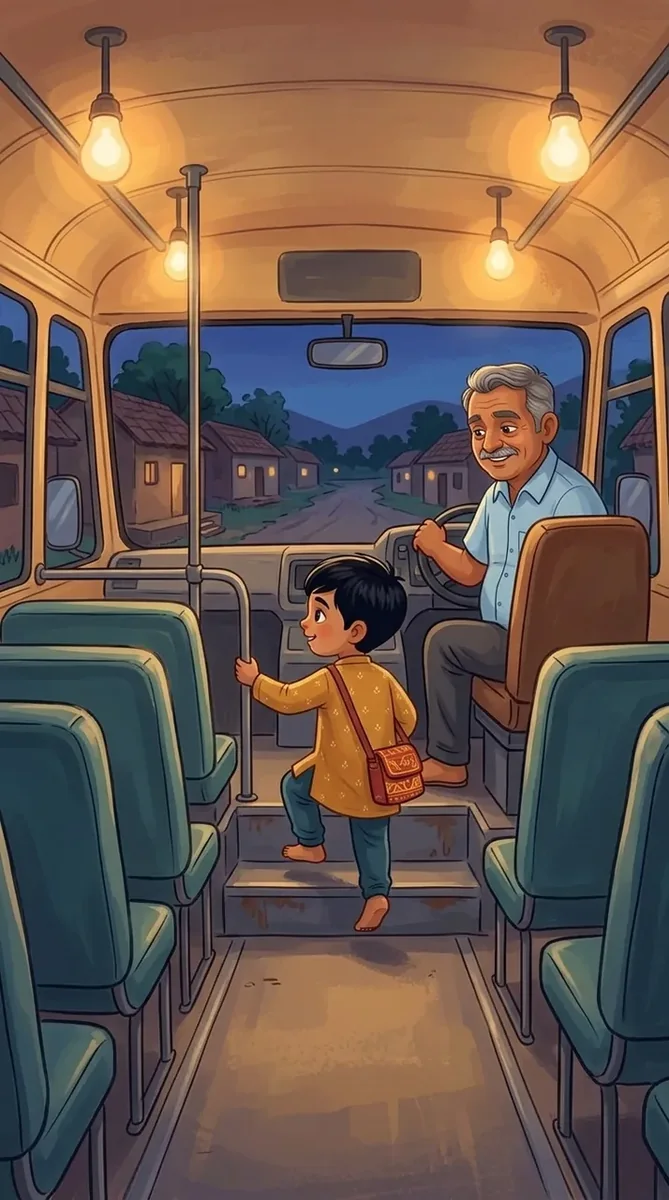
Children say thank you because they are told to; Kabir says it because he sees what it does to a tired face — and that is the difference your child will notice. Sapno, in this story, is a big city: tall buildings, long roads, a market where everybody hurries. It has everything except one small word. Nobody in Sapno says shukriya. People take their milk from the doodh-wala and walk off, take their vegetables from the sabzi-wali amma and walk off. The word thank you has simply gone missing.
Naani saysपर उस शहर में एक अजीब सी बात थी… वहाँ कोई किसी से शुक्रिया नहीं कहता था।But there was one strange thing about that city… nobody there ever said thank you to anyone.
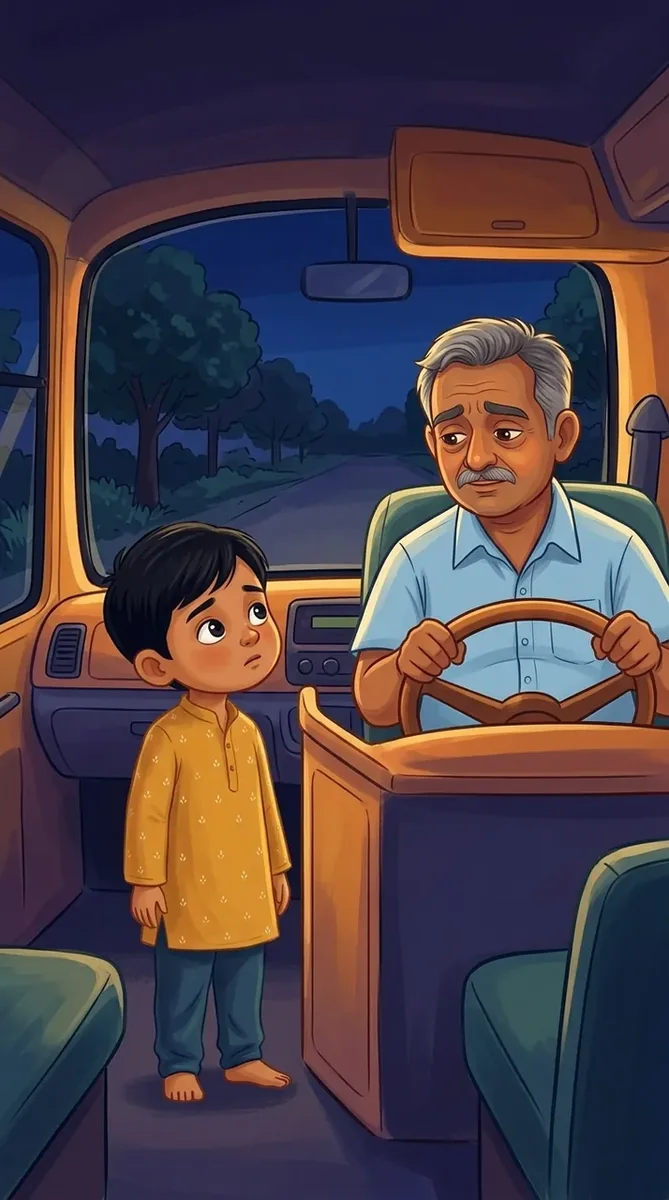
Six-year-old Kabir, who has big eyes and notices things, loves Raju Kaka, the driver of his school bus. Every morning Raju Kaka arrives with the bus and lets Kabir on first. But one morning Kaka does not say aao beta or point to the seat. His eyes are tired. When Kabir asks if he is all right, Kaka takes a long breath: today is my last bus, beta. I am going back to my village. All these years driving, and nobody in this city sees me. Sometimes I wonder whether I am even here.
Naani saysबेटा… आज मेरी आख़िरी बस है! मैं अपने गाँव लौट रहा हूँ।Beta… today is my last bus! I am going back to my village.
The story in pictures
Frames from Naani’s telling, in story order — the pictures your child sees while she speaks.

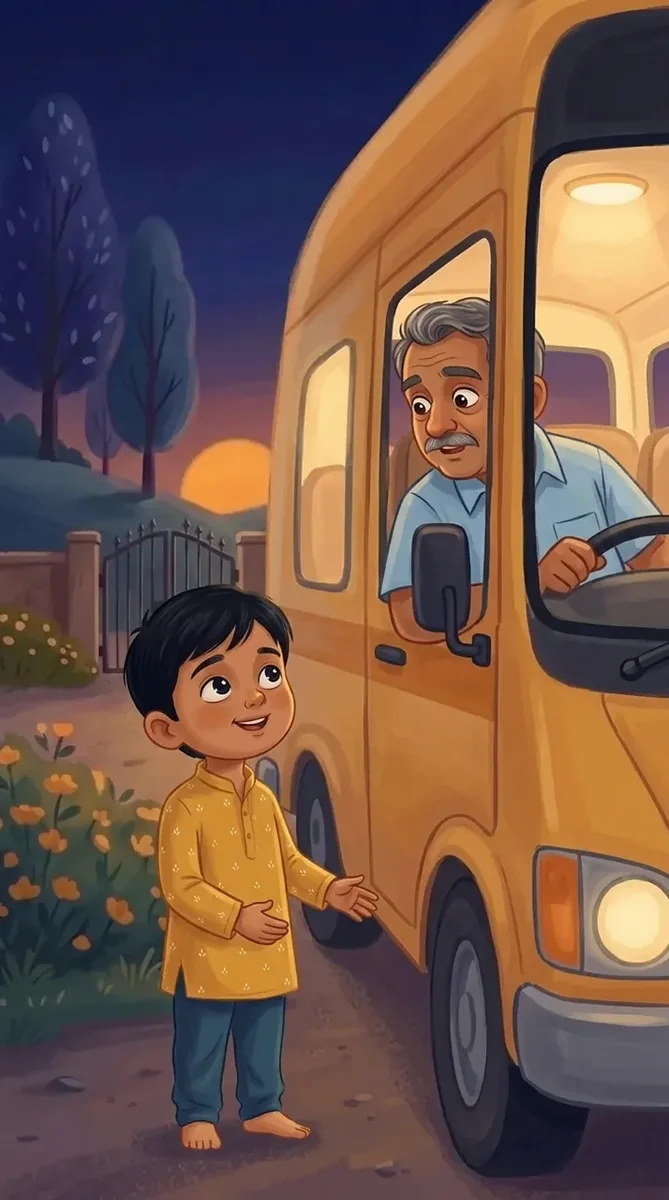



Naani stops here and asks your child whether that made Kabir sad — yes or no? — and listens before going on. At the school gate, Kabir's feet stop. He thinks: I know how to see someone. And I know how to say it. He turns back to the bus window and says, in his sweetest voice, shukriya, Raju Kaka — for bringing us to school every day. Kaka's hands go still on the wheel. His eyes fill, and a small smile appears, like an old diya lit after a long time.
Naani saysऔर अपनी सबसे प्यारी आवाज़ में बोला — शुक्रिया, राजू काका! आप रोज़ हमें स्कूल लाते हैं, इसलिए।And in his sweetest voice he said — shukriya, Raju Kaka! For bringing us to school every day.
That gives Kabir an idea. At lunch he thanks the safai-wale kaka sweeping the corner, whose face opens like a dry plant given water. He thanks the didi who cooked the khichdi; she laughs and says nobody has said that in all these years. The children watching copy him — a girl thanks her teacher, a boy thanks the water aunty — and soon the whole school is smiling, a tiny star lighting in every thanked person's eyes.
Naani saysदीदी हँस पड़ीं और बोलीं, इतने सालों में पहली बार किसी ने यह कहा है, बेटा।Didi laughed and said: in all these years, beta, this is the first time anyone has said that.
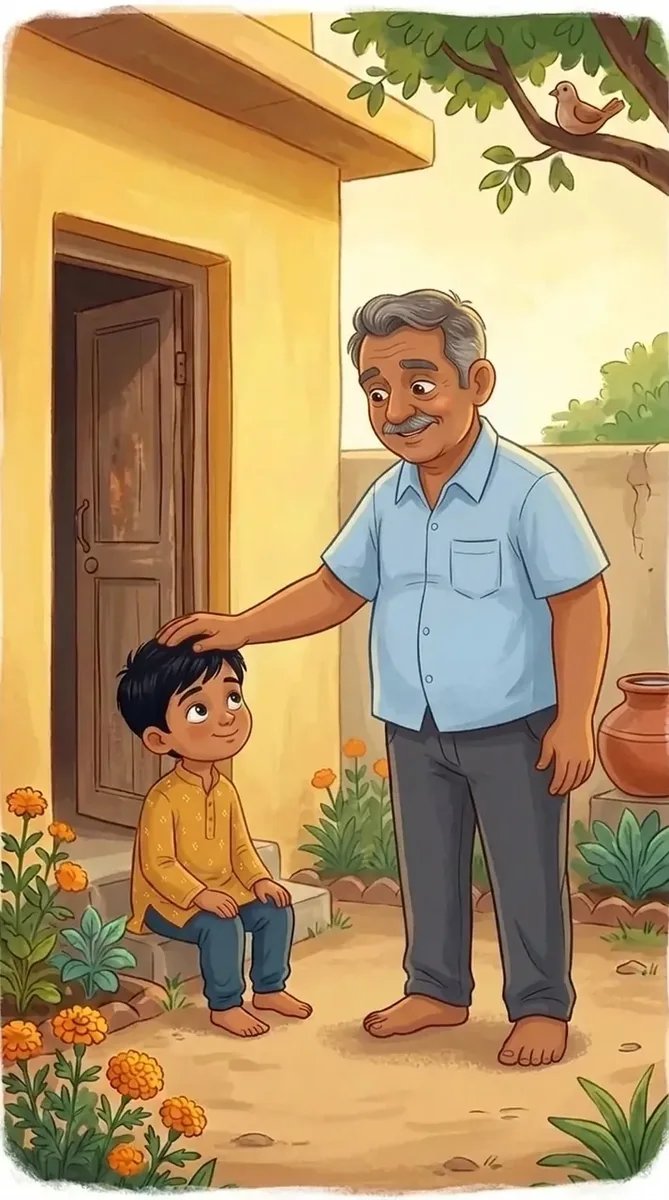
On the ride home Kabir sees it spreading through the city: the milkman humming, the vegetable amma handing out blessings. When the bus reaches his house, Raju Kaka bends down, puts a hand on his head, and says he is not going anywhere after all — how could anyone leave a city with children like you in it? Kabir falls asleep that night thinking about how many faces one small word has changed.
The value this story teaches
Gratitude is one of the first values parents teach and one of the hardest to make real. A reminded 'thank you' is a reflex; a felt one begins when a child notices who did something for them. At four to seven, children can learn to see the bus driver, the cleaner, the cook.
Kabir is not told to be grateful. He hears Raju Kaka say nobody in the city sees him, and finds he already knows how to see. His shukriya is specific — for bringing us to school every day — and the story shows what it does: a tired face lights up like an old diya. Then the children copy him, and the city changes.
How to talk about it at bedtime
- Ask your child: who did Kabir thank at school, and what for? Who helps you like that?
- Try: at breakfast, each say one thank you with a 'because' — thank you for the paratha, because it was warm.
- Ask your child: how did Raju Kaka's face change when Kabir thanked him?
When to pick this story
- When 'thank you' has become automatic — or has stopped altogether
- After a kind thing a teacher, helper or grandparent did that went unnoticed
- An evening when you want a warm, no-tears story with a big smile at the end
Try asking your child
After the story, or the next morning on the way to school:
- Why did Raju Kaka want to leave the city and go back to his village?
- Who else did Kabir thank at school, and what did he thank each of them for?
- Who helps you every day — at home, at school, on the way? What could you thank them for tomorrow morning?
Meet the characters
A six-year-old with big eyes who notices his bus driver is sad
The school bus driver who plans to leave the city because nobody sees him
The school's cleaner and cook, thanked for the first time in years
From the app-store reviews
Two of the public reviews parents have left on Google Play and the App Store, quoted exactly as they wrote them.
“Great stories and really interactive. My kid love it”
“an intellectual way to describe the old stories for kids .”
Give your child a story with a value every night
Naani tells Rangon wala Shukriya in warm Hindi, shows the pictures, asks a question halfway and listens to your child's answer. One story, one seekh, then good night.
Listen tonight — free- Free stories every night
- No ads
- Your child’s voice erased after 24 hours
- Made in India
About this story
- Language: Hindi — simple, in a grandmother’s voice
- Ages: 4–7
- Listen time: about 12 minutes
- Value: Gratitude, Kindness & empathy
- World: World of Dreams
- Theme: Appreciation makes people feel seen and valued.
Also plays in the browser: app.naani.live/stream/the-city-where-nobody-said-thank-you (sign-in required).
Parents also ask
Is this story suitable for a 3- or 4-year-old?
Yes. There is nothing frightening in it, only a tired bus driver who is cheered up by a child. The repeated shukriya moments are easy for a very young listener to follow and to join in with, and the story ends with Kabir safe in bed under the stars.
What does Rangon wala Shukriya mean?
Roughly 'a thank you full of colours'. The story imagines a grey, hurrying city that becomes colourful again as people start thanking one another — as if, in Naani's words, someone had lit a small diya on every face.
How does Naani involve the child in this story?
She pauses three times and asks a short question — whether Kabir felt sad, whether he will thank more people, and whether your child likes being thanked — then replies to whatever they say, using their name. At the end she asks who they will thank today.
Next story
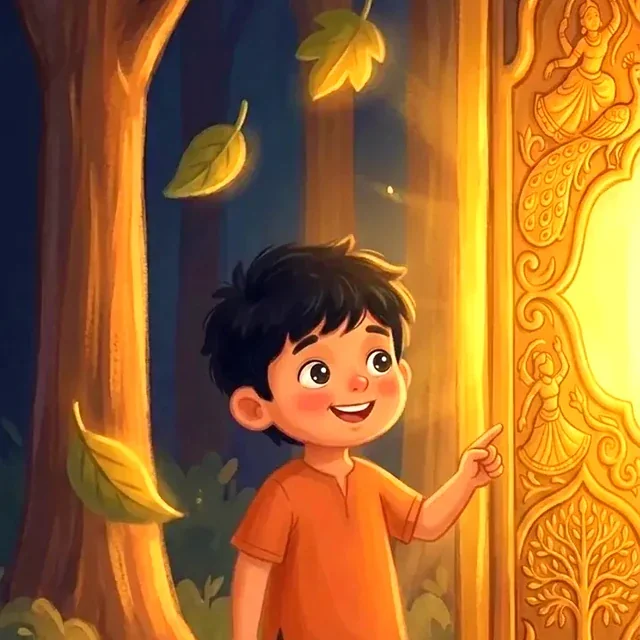
Dheere Chalne wala Waqt
A calming bedtime story that shows a hurrying child why slowing down gets you there sooner.
More World of Dreams
All World of Dreams →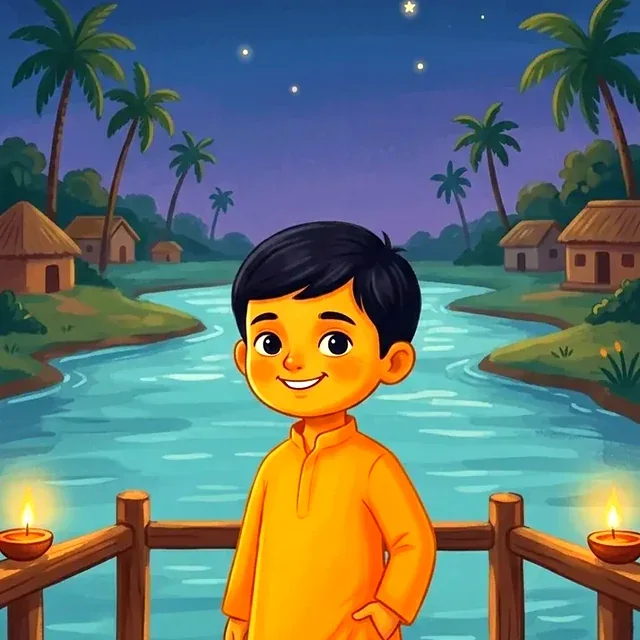 Courage
Aarav aur Chhoti Himmat
A bedtime story that shows a four-year-old where courage really comes from: the first small step, not a magic charm.
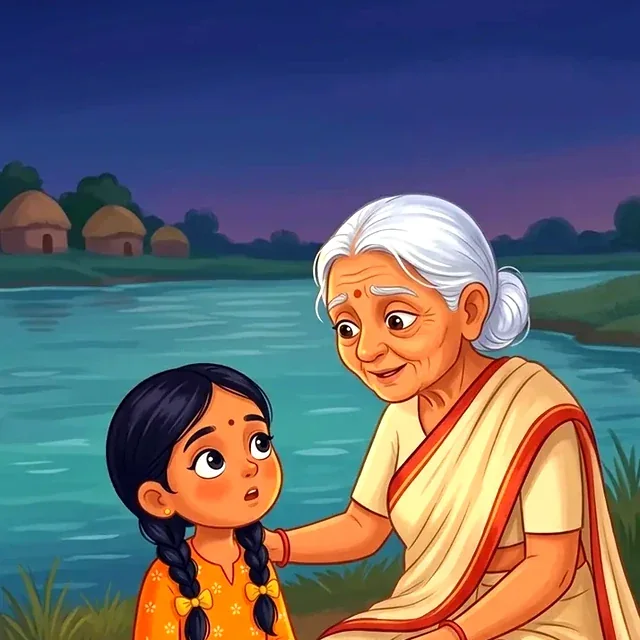 Anger
Mira aur Gusse ka Jar
A bedtime story that gives a six-year-old a way to hold anger without hurting anyone — in three steps they can actually use.
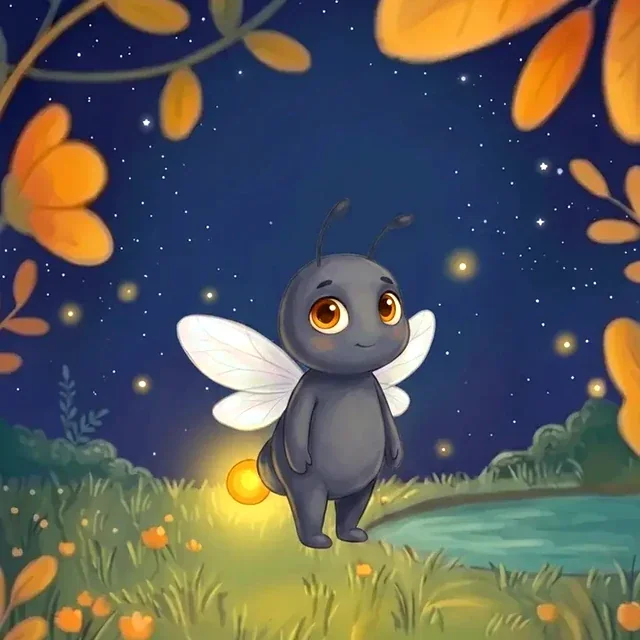 Self-belief
Jugnu ki Chhoti Roshni
A bedtime story for the child who feels too small to matter — a firefly whose tiny light guides a lost boy home.
More stories that teach gratitude
Saying thank you — to people, to food, to the morning.
 Gratitude
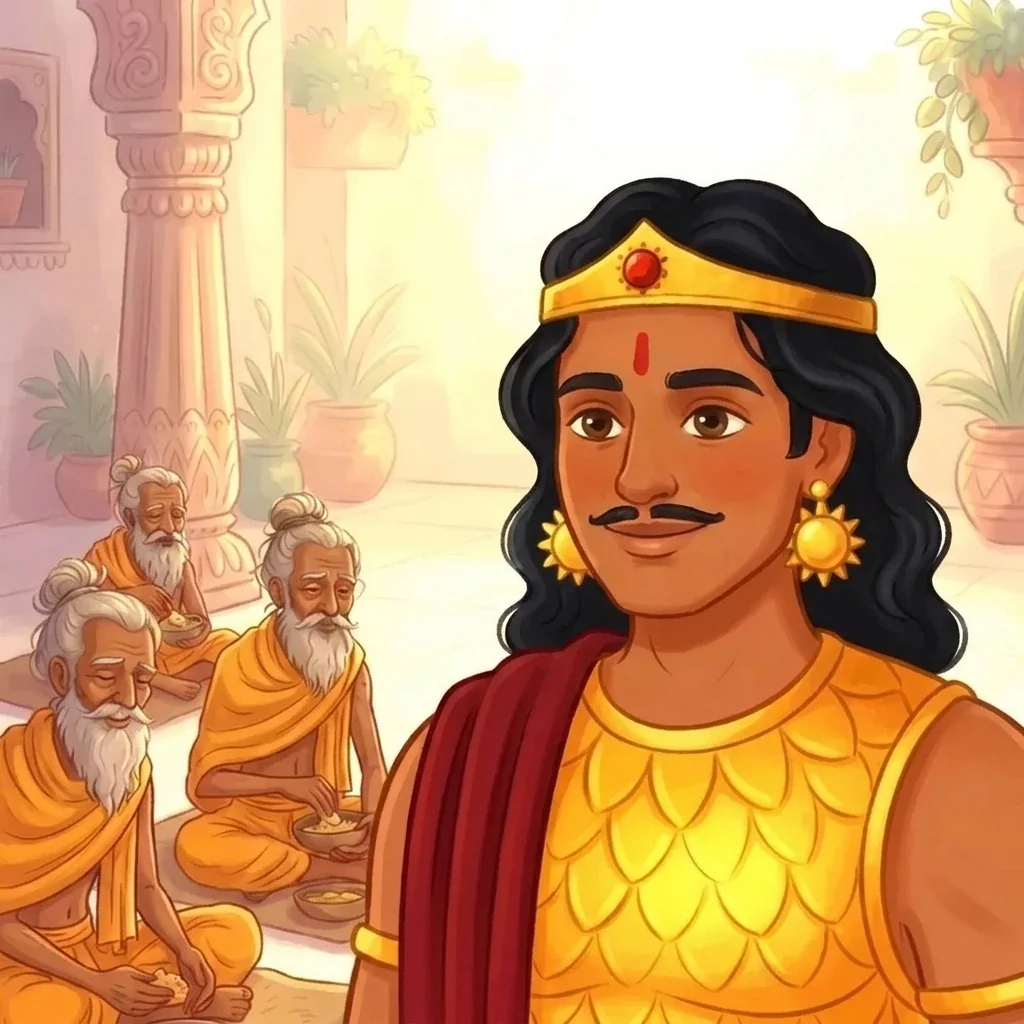
Shraddh — Karna and the Golden Plate
A Shraddh story that teaches your child to thank the family who came before — and that food for the hungry beats gold.
 Gratitude
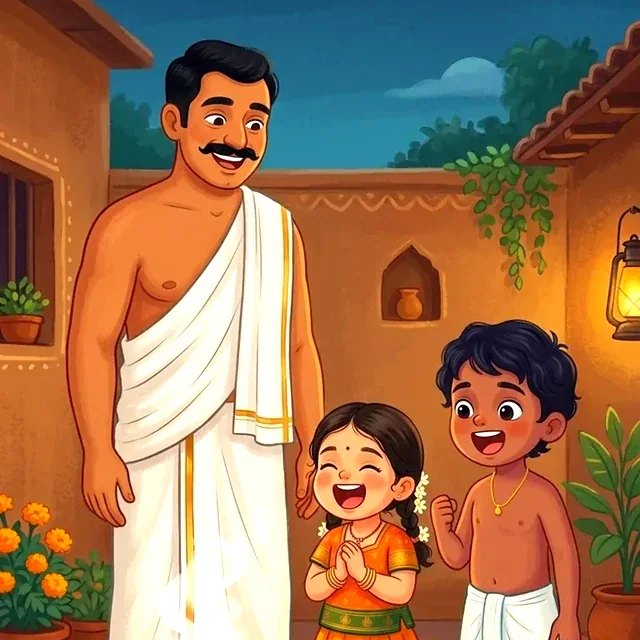
Pongal aur Dharti Maa
A Pongal story that teaches your child to thank the sun, the rain, the soil and a cow for every bowl of rice.