The Loyal Mongoose — Wafadaar Nevle ki kahani, told for kids in Hindi
A Panchatantra story that teaches your child — and you — to look before you shout.
वफ़ादार नेवला — मोती और नन्ही बच्ची की कहानी

Hear Naani tell it
Watch a glimpse
The story
What your child will take from this one is a habit worth having early: look before you shout. If you remember this Panchatantra tale's ending from your childhood, relax: Naani's Moti does not get it. Moti is a nevla, a mongoose: smaller than a cat, quick as lightning, with a bushy tail. A mother found him soaked in the rain when he was tiny, fed him milk, and he has been family ever since. His place is beside the baby's paalna, her swinging cradle, where he sits all day and wags his tail when she laughs.
Naani saysमाँ उसे घर ले आईं, दूध पिलाया, और तब से मोती घर का ही हो गया।Mother brought him home, fed him milk, and from then on Moti belonged to the house.
One morning the water pot is empty. Amma picks up the ghada, looks at the sleeping baby, and hesitates at the door. Then, to Moti: I am going to the river for water — look after her till I come back. He fixes his round eyes on her as if to say, go without a worry, and sits down on guard beside the cradle. Naani pauses here to ask your child: will Moti look after the baby, haan ya na?
Naani saysमैं नदी से पानी लेकर आती हूँ। तब तक बच्ची का ध्यान रखना।I am going to fetch water from the river. Look after the baby till I'm back.
The story in pictures
Frames from Naani’s telling, in story order — the pictures your child sees while she speaks.
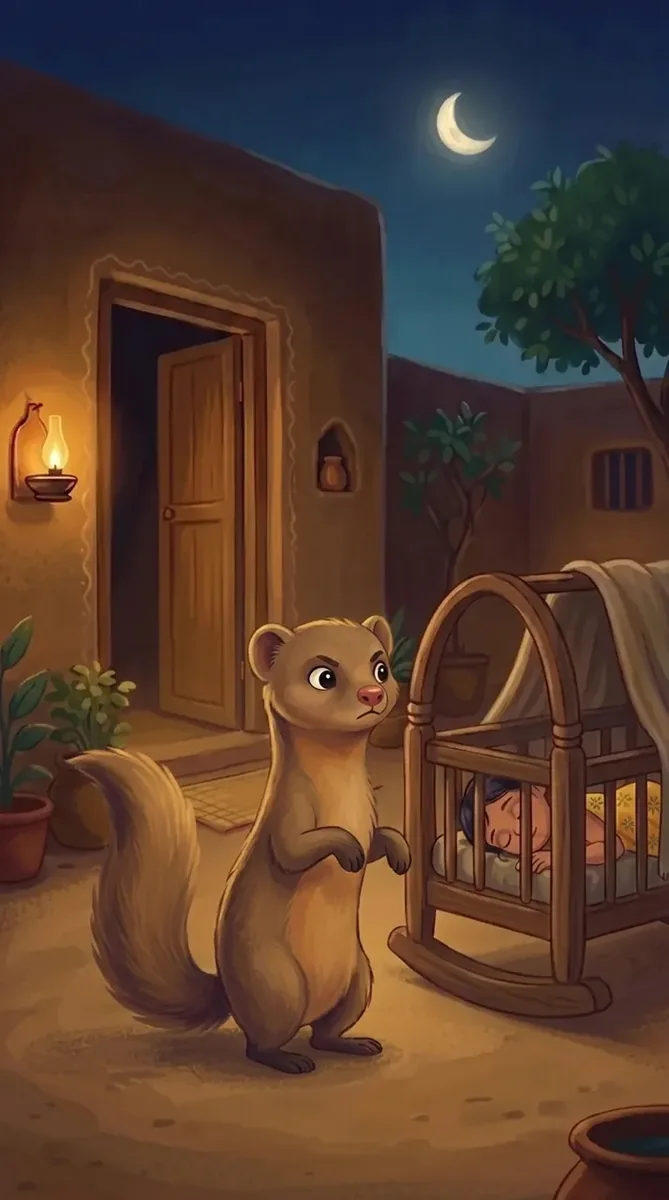



That afternoon a long snake slides in through a hole in the wall and heads straight for the cradle. Moti's eyes flash. Mongooses, Naani reminds your child, are not afraid of snakes. He is between the snake and the cradle in a single bound. The snake spreads its hood; one still moment, face to face — and then Moti pounces and chases it out of the door and far across the fields, never to return. The baby sleeps through all of it. Moti has a small red scratch on his nose, and he goes to wait at the door.
Naani saysमोती बिजली की तरह उछलकर पालने और साँप के बीच आ खड़ा हुआ।Quick as lightning, Moti leapt and stood between the cradle and the snake.
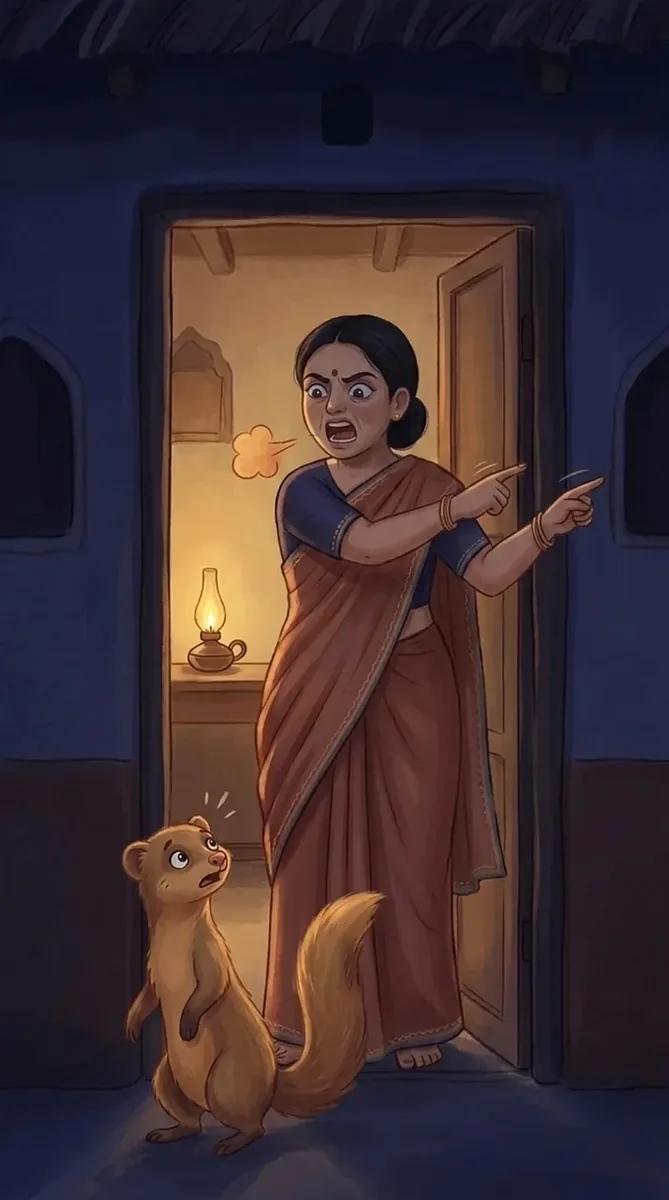
Amma hurries home with a strange thumping in her chest. Moti leaps up to greet her — and she sees the red on his face. The pot nearly slips from her hands. One picture fills her mind — the baby — and in pure fright she shouts: hatt, get away. Moti does not understand. He backs off and sits, miserable, under the neem tree.
Naani saysडर के मारे उनकी साँस अटक गई, और वे ज़ोर से बोलीं, हट… दूर हो जा।Fear caught her breath, and she cried out: get away… go!
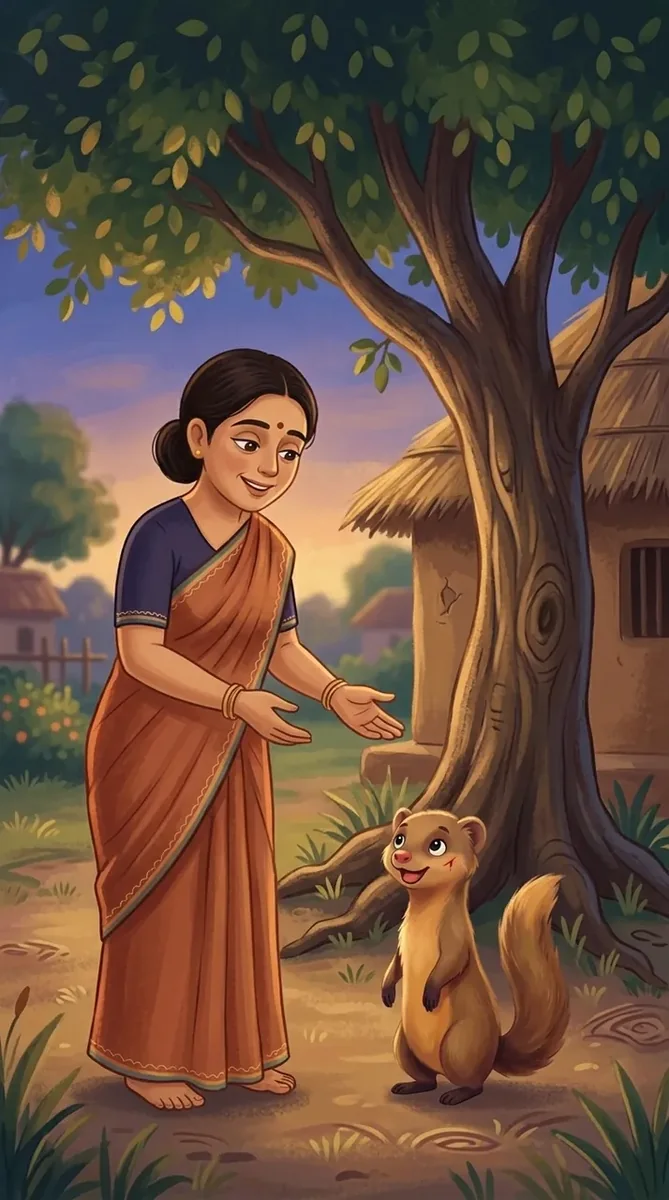
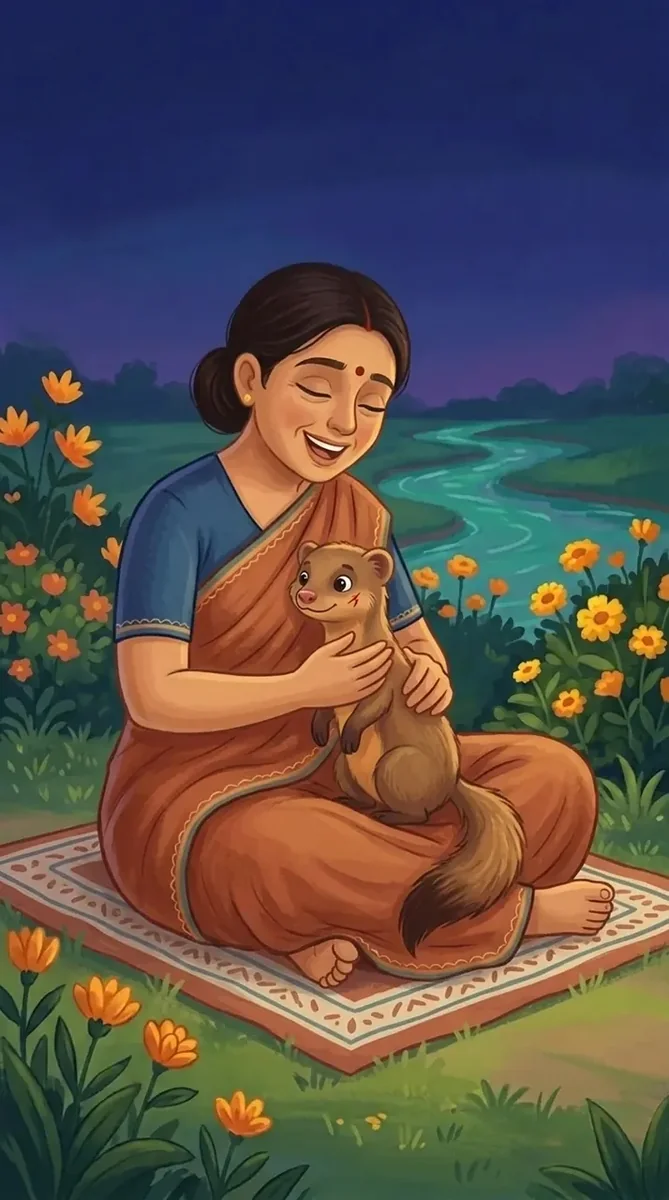
Inside, the baby is sleeping peacefully. Amma breathes out. Then she sees the wavy track of a snake in the dust, from the hole in the wall to the door — and understands everything. A snake came. Moti saved her child. The red was his own small wound. She takes a bowl of milk to the neem tree, sits beside him and says: I scolded you without looking. You saved my baby. Forgive me. Moti watches her for one moment, then runs straight into her lap. Haldi on the scratch, milk from her own hand, and that night the whole house sleeps, because everyone knows — Moti hai na.
The value this story teaches
Children between four and seven are constantly on the receiving end of quick reactions, and they are learning their own: the shove before the question, the shout before the look. A story in which the grown-up is the one who reacts too fast, and then puts it right, gives a child a model from a safe distance.
Amma sees red on Moti's face and the fear does the rest; she shouts him away before she has stepped inside. Then she finds the baby safe, the snake's track in the dust, and understands. Naani spends real time on the repair — a bowl of milk, sitting down under the neem tree, saying plainly, I scolded you without looking, forgive me. Your child hears that stopping to understand comes first, and that a proper sorry can mend what a hasty word broke.
How to talk about it at bedtime
- Ask your child: what did Amma see that made her shout? What had she not seen yet?
- Ask: how did Amma say sorry to Moti? Was it a good sorry? What made it good?
- Try: agree on a family phrase for next time — 'let me look first' — and use it the next time anyone is about to shout.
When to pick this story
- After a hasty scolding — yours or theirs — that turned out to be unfair
- When your child jumped to a conclusion about a friend or sibling
- When a pet or a younger sibling has been blamed for something they did not do
Try asking your child
After the story, or the next morning on the way to school:
- Why did Amma shout at Moti when she came home? What had she not seen yet?
- How did Amma find out what really happened? What did she do next?
- Has anyone ever been cross with you before they knew the whole story? What would you have wanted them to do?
Meet the characters
Rescued as a shivering baby in the rain, now the family's loyal guardian beside the cradle.
The mother who trusts Moti with her sleeping baby, reacts in fear, and then makes a proper apology.
Sleeps peacefully in her swinging cradle through the whole adventure.
Slides in through a hole in the wall looking for a cool spot — and meets a mongoose.
From the app-store reviews
Two of the public reviews parents have left on Google Play and the App Store, quoted exactly as they wrote them.
“Maine to download kar liya hai aap sabhi log download karo aur yah story Apne bacchon Ko badon ko sunao bahut achcha lagega…”“Great stories and really interactive. My kid love it”
Give your child a story with a value every night
Naani tells Wafadaar Nevla in warm Hindi, shows the pictures, asks a question halfway and listens to your child's answer. One story, one seekh, then good night.
Listen tonight — free- Free stories every night
- No ads
- Your child’s voice erased after 24 hours
- Made in India
About this story
- Language: Hindi — simple, in a grandmother’s voice
- Ages: 4–7
- Listen time: about 12 minutes
- Value: Managing anger, Wisdom & thinking, Responsibility
- World: Panchatantra & Jataka
- Theme: Check the facts before reacting in fear or anger.
Also plays in the browser: app.naani.live/stream/the-loyal-mongoose (sign-in required).
Parents also ask
Does the mongoose die in Naani's version?
No. In the traditional Panchatantra tale the mother kills the mongoose before discovering the dead snake. Naani keeps the misunderstanding — Amma shouts at Moti in fear — but she goes inside, finds the baby safe and the snake's track in the dust, and comes back to apologise. Moti ends the story asleep beside the cradle.
Is the snake scene frightening for small children?
It is tense for a few lines, but there is no bite and no blood beyond a small scratch on Moti's nose. The baby sleeps through it, Moti chases the snake out, and the neighbour's dog barking adds a touch of comedy. Children usually find Amma shouting at Moti sadder than the snake itself.
What is a nevla?
Nevla is Hindi for mongoose, a small brown mammal found across India and famous for facing snakes without fear. Naani opens the story by explaining the word to the child — smaller than a cat, quick as lightning, with a thick bushy tail — before introducing Moti, the family's rescued pet mongoose.
Next story

Bateron ki Ladayi
A Jataka story that shows your child how a small quarrel can make a shared load impossible — and how to lift it again.
More Panchatantra & Jataka
All Panchatantra & Jataka → Courage
Chintu aur Magarmachh
A Panchatantra story that shows your child what to do with fear: breathe once, then think.
 Honesty
Neela Siyaar
A Panchatantra story that makes telling the truth feel like relief, not punishment.
 Wisdom
Sher aur Chalaak Khargosh
A Panchatantra story that shows your child how a calm, thinking mind beats a loud, strong one.
More stories that teach managing anger
Feeling angry is allowed; hurting someone is a choice.
 Anger
Navratri Night 1 — Maa Shailputri
The first Devi of Navratri, told so your child learns that the strongest hands can still be gentle.
 Anger
Mira aur Gusse ka Jar
A bedtime story that gives a six-year-old a way to hold anger without hurting anyone — in three steps they can actually use.