Shraddh: Karna aur Sone ki Thali — the Pitru Paksha story for kids, in Hindi
A Shraddh story that teaches your child to thank the family who came before — and that food for the hungry beats gold.
श्राद्ध की कहानी — कर्ण और सोने की थाली
Hear Naani tell it
Watch a glimpse
The story
Shraddh can feel like a grown-ups' ritual that a small child only watches: Dadi setting out food for a crow, a quiet morning, a special meal. This story gives your child a way in. What parents tend to notice afterwards is a new word, purkhe, and a new kind of thank-you — for the grandparents who are here to hug, and for the family who came before them. It is told gently, with no talk of death or ghosts.
Naani opens with a riddle. Imagine you are very hungry, your tummy is saying khana do, and she sets down a big shining thali — full of gold coins. Can you fill your tummy with gold? She pauses and asks your child exactly that, listens, and laughs along with whatever answer comes. Then she introduces Danveer Karna, the great giver, who never sent anyone away empty-handed and gave gold and riches to anyone who asked. But, they say, he forgot to give one very important thing.
Naani saysतुम जल्दी से थाली में देखो… उसमें खाना नहीं— सोने के सिक्के!You peek into the plate… and there's no food in it — only gold coins!
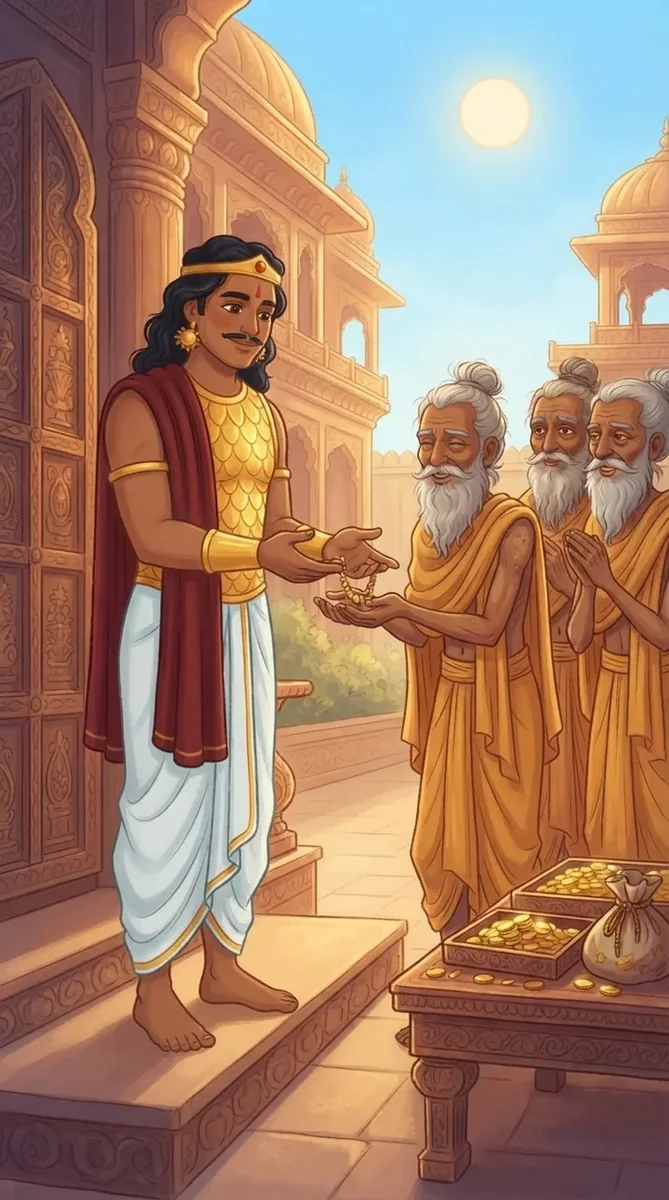
Naani saysकोई मदद माँगने आता तो वो उसे खाली हाथ नहीं भेजते थे।Whoever came to him for help, he never sent them away empty-handed.
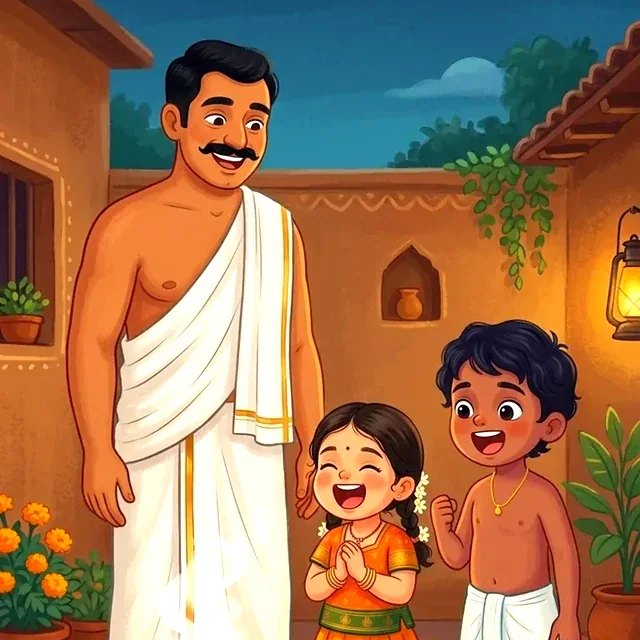
The story in pictures
Frames from Naani’s telling, in story order — the pictures your child sees while she speaks.
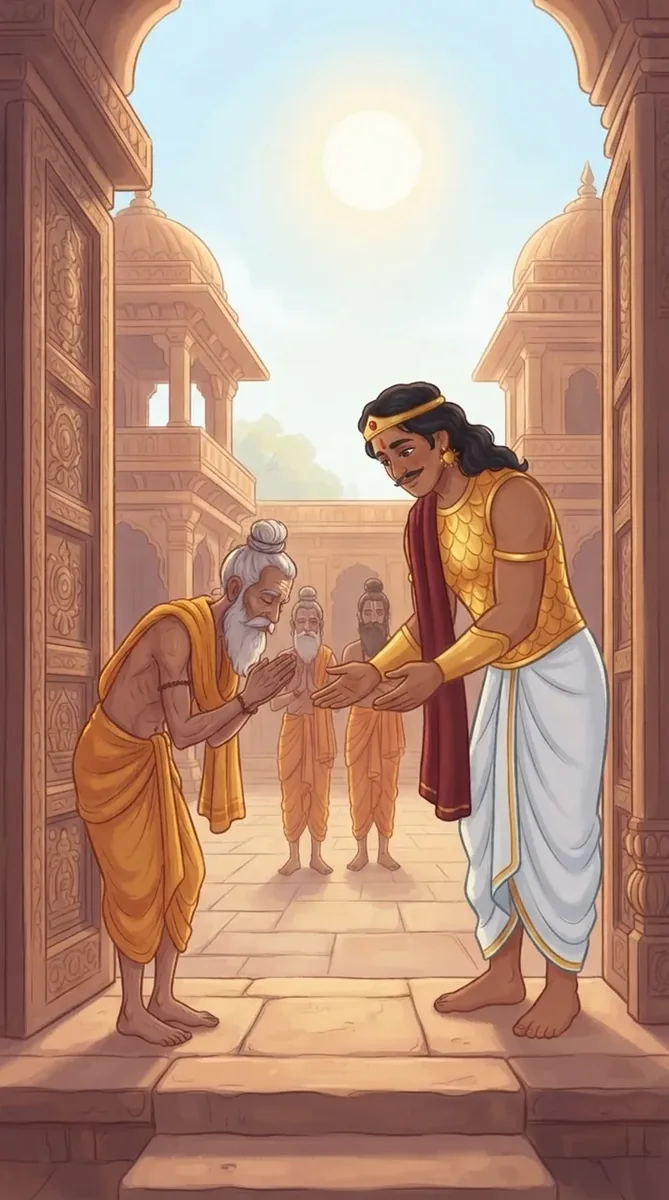
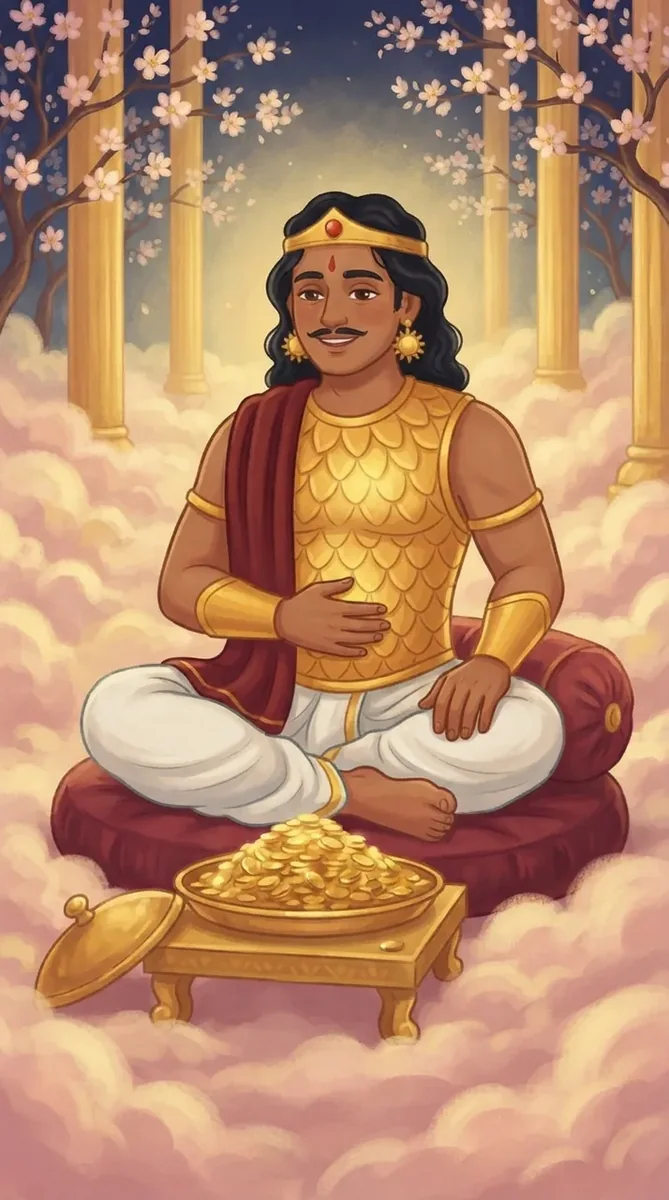

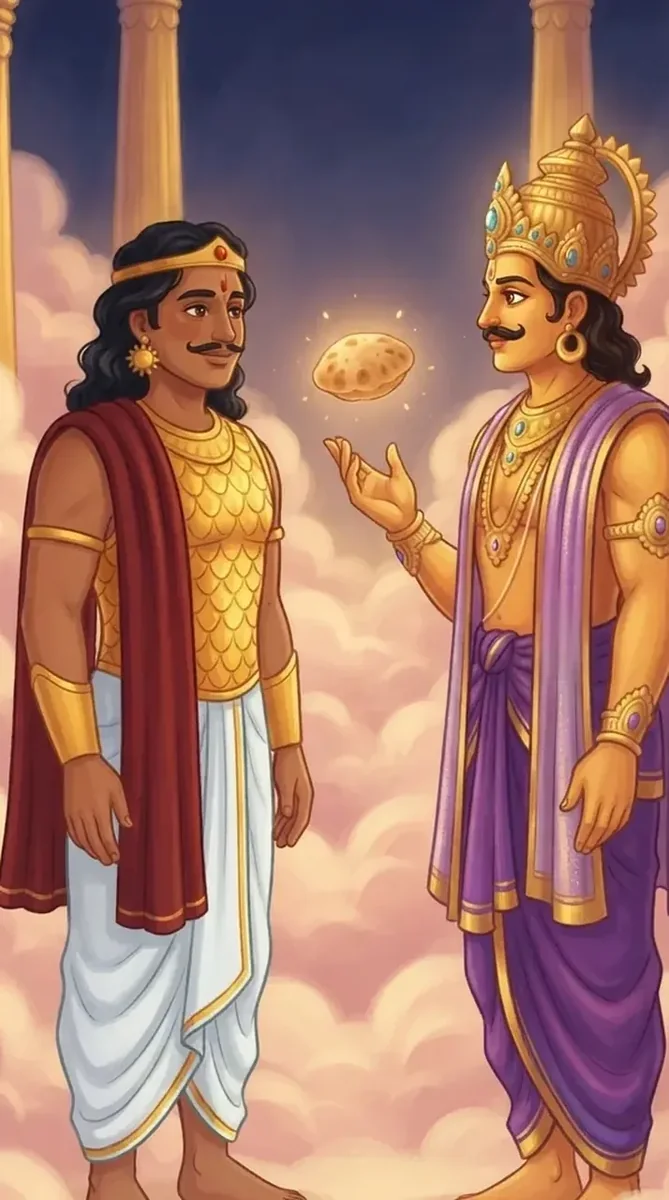


In an old tale, Karna reaches Swarga and is very hungry. A thali arrives: gold. A second thali: gold again. He wants food, not gold, yet there is not a single roti. Indra Dev, the king of Swarga, explains: Karna gave away plenty of gold, but never once gave food while remembering his purkhe. Naani makes sure your child knows who they are — Mummy-Papa's Mummy-Papa, Dada-Dadi and Nana-Nani, and their parents before them.
Naani saysकर्ण बोले— “मुझे सोना नहीं चाहिए… मुझे खाना चाहिए!”Karna said, "I don't want gold… I want food!"
Naani saysहमसे पहले हमारे परिवार में जो-जो लोग आए— उन्हें पुरखे कहते हैं।Everyone who came before us in our family — they are called our purkhe.
Karna asks how he can put it right, and Indra lets him go back to Earth for a few days. This time he hands out no gold and no diamonds. He feeds people, gives them water, and remembers his ancestors with love and respect — the days, Naani says, that we connect with Pitru Paksha. And Karna understands that giving food to someone hungry can be worth more than gold.
Then the story comes home. Naani turns to your child's own Dadi-Dada and Nani-Nana — the memories with them are treasure, she says — explains why many families keep a little food aside for the crow, a cow, a dog and people in need during Shraddh, and boils the festival down to something a five-year-old can hold: remember the family who came before us with love, and do something good in their name. The grandparents with us today? Those we can simply hug, and ask for a story. It closes with a peek at Navratri and a soft good night.
The value this story teaches
Gratitude is easy to teach as manners — say thank you to Nani — and hard to teach as a feeling. Between four and seven, children are just beginning to see that the people around them have stories of their own: that Dadi was once someone's little girl, that Nana had a Nana too. A child who can picture that chain of family behind them starts to feel thankful rather than just say it, and that feeling is what Shraddh is really about.
The story earns it with a riddle a small child understands in their stomach. Gold is the most precious thing in the world, but Karna cannot eat it; what he forgot was food, given with love, in the name of the people who came before him. When he goes back and feeds the hungry, the lesson lands without a sermon — and Naani brings it straight home to the grandparents your child can hug tonight.
How to talk about it at bedtime
- Ask your child: why couldn't Karna eat anything in Swarga, even with all that gold? What did he do differently when he went back to Earth?
- Try drawing a small family tree together — your child, you, Dada-Dadi, Nana-Nani — and add one more row above with the names you know. Those are the purkhe.
- Ask: "Dadi ya Nana ke saath tumhe sabse achha kya lagta hai?" Then call them tomorrow and let your child say, "Ek kahani sunao na!"
When to pick this story
- During Pitru Paksha or on Sarva Pitru Amavasya, when your child sees food set out for the crow
- Before a visit or a call with Dadi-Dada or Nani-Nana
- When your child keeps asking for more and more, and needs a gentle reminder of what really fills us
Try asking your child
After the story, or the next morning on the way to school:
- Can you fill your tummy by eating gold? What did Karna really need?
- Who are your purkhe? Can you name your Dada-Dadi and Nana-Nani?
- What do you love doing most with your grandparents, and what could you share with someone in their name?
Meet the characters
The great giver who never sent anyone away empty-handed — and who learns what he forgot to give.
The king of Swarga, who kindly explains to Karna why his plates hold only gold, and gives him a chance to set it right.
Everyone who came before us in our family — Dada-Dadi, Nana-Nani, their parents, and their parents before them.
The bird many families feed during Shraddh, because tradition connects the crow with our ancestors.
From the app-store reviews
Two of the public reviews parents have left on Google Play and the App Store, quoted exactly as they wrote them.
“Great stories and really interactive. My kid love it”
“an intellectual way to describe the old stories for kids .”
Give your child a story with a value every night
Naani tells Shraddh — Karna and the Golden Plate in warm Hindi, shows the pictures, asks a question halfway and listens to your child's answer. One story, one seekh, then good night.
Try Naani tonight 👉 naani.live/app- A value in every story
- No ads
- Your child’s voice erased after 24 hours
- Made in India
About this story
- Language: Hindi — simple, in a grandmother’s voice
- Ages: 4–7
- Listen time: about 6 minutes
- Value: Gratitude, Respect for elders, Sharing
- World: Festival Stories
- Theme: Remember the people who came before us with love — and share food with the hungry in their name.
Also plays in the browser: app.naani.live/stream/shraddh-karna-sone-ki-thali (sign-in required).
Parents also ask
What is Shraddh, explained for kids?
During Pitru Paksha, families remember the people who came before them — grandparents, great-grandparents and beyond — with love and respect, and do something good in their name, such as feeding a crow, a cow, a dog or a person in need. That is Shraddh. The fortnight ends on Sarva Pitru Amavasya, which falls on Saturday, 10 October 2026.
Does the story talk about death? Is it right for a 4-year-old?
It is written for children aged 4–7 and never mentions death, ghosts or souls. Karna simply reaches Swarga in an old tale, Indra is gentle and kind, and the purkhe are explained as the people who came before us in our family. The grandparents Naani talks about at the end are the living ones your child can hug.
Is the story of Karna and the golden plate in the Mahabharata?
No. It is a much-loved Pitru Paksha legend, but it is not found in the Mahabharata itself, which is why Naani says 'kehte hain' — they say. In it, Indra tells Karna he gave plenty of gold but never food in his ancestors' name, and lets him return to Earth to feed the hungry. Karna's generosity is straight from the epic.
Next story
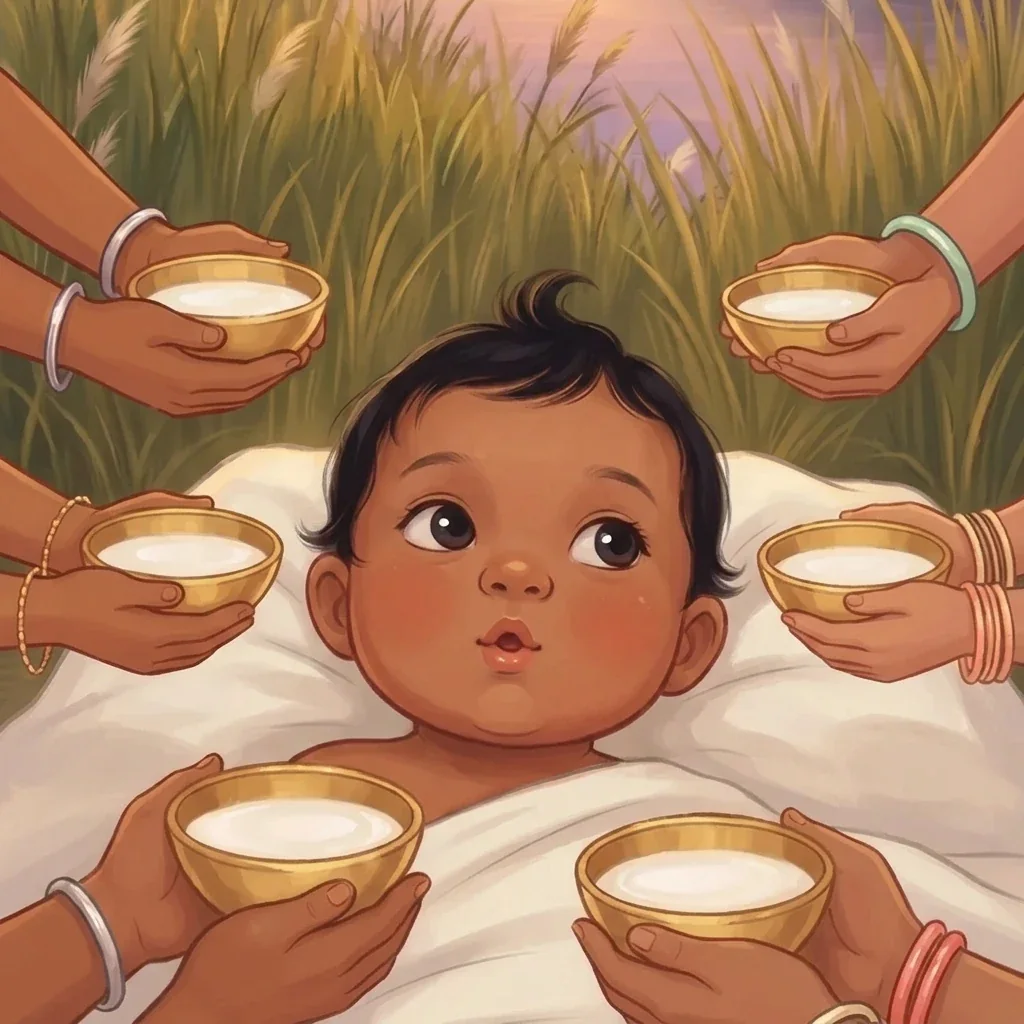
Navratri Night 5 — Maa Skandamata
The fifth Devi of Navratri, told so your child learns that love shared is love doubled — making room on Mummy's lap never means less love.
More Festival Stories
All Festival Stories →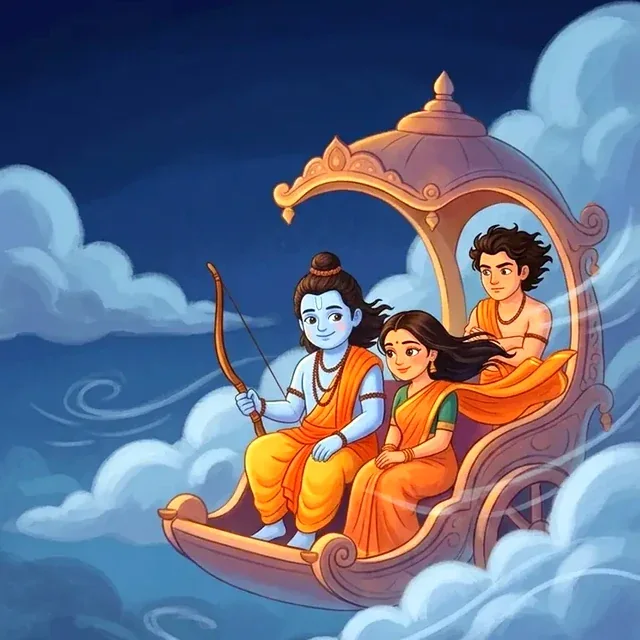 Faith
Diwali: Jab Ayodhya Jagmagayi
The Diwali story told so your child takes away hope, togetherness, and a prince who did his duty with a smile.
 Humility
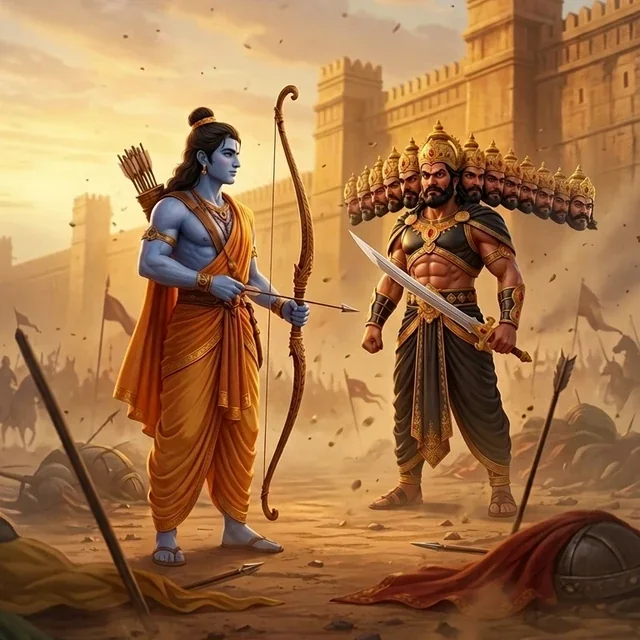
Dussehra: Rama Aur Ravana Ka Antim Yudh
The Dussehra story, told so a five-year-old learns that ghamand loses and a calm, kind heart wins.
 Anger
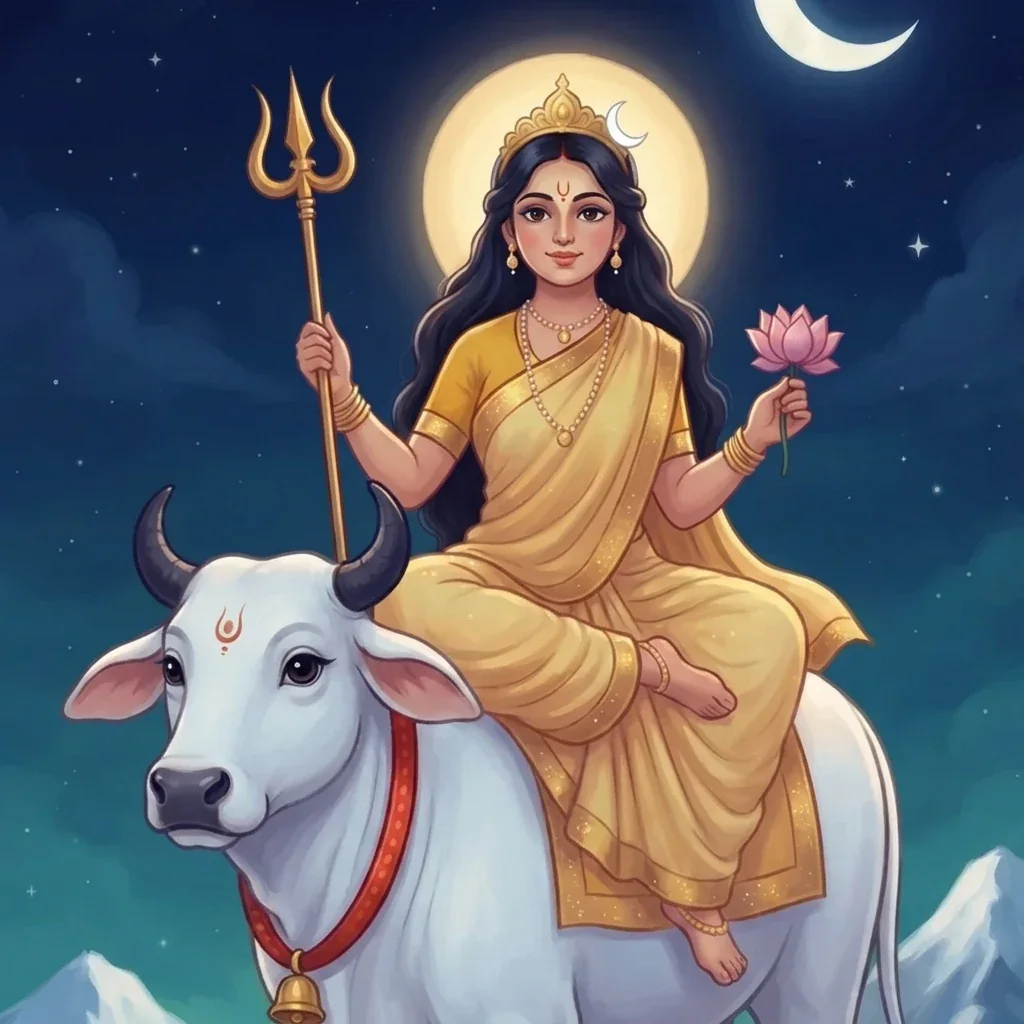
Navratri Night 1 — Maa Shailputri
The first Devi of Navratri, told so your child learns that the strongest hands can still be gentle.
More stories that teach gratitude
Saying thank you — to people, to food, to the morning.
 Gratitude
Pongal aur Dharti Maa
A Pongal story that teaches your child to thank the sun, the rain, the soil and a cow for every bowl of rice.
 Gratitude
Rangon wala Shukriya
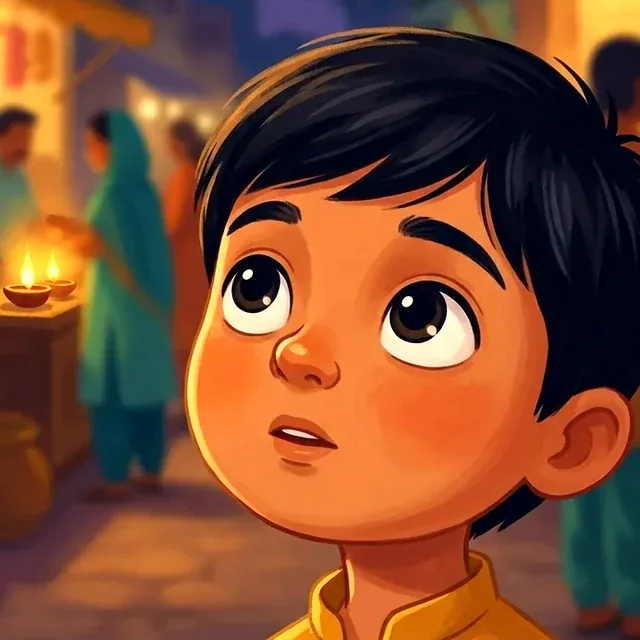
A bedtime story that turns 'say thank you' from a rule into something your child wants to do.