Pongal aur Dharti Maa — the Pongal story for kids, in Hindi
A Pongal story that teaches your child to thank the sun, the rain, the soil and a cow for every bowl of rice.
पोंगल की कहानी — पोंगल की सुबह और धरती माँ
Hear Naani tell it
The story
Gratitude, for a five-year-old, has to be pointed at something — and this Pongal story gives your child a sun, a rain cloud, a patch of soil and a cow called Gauri to thank. The whole crisis is wet firewood: for a boy named Kannan it means the milk might not boil over at sunrise, and if the milk does not boil over, how can it be Pongal?
Naani saysऔर जब दूध उफनकर बाहर आता है ना, तब सब मिलकर बोलते हैं — पोंगलो पोंगल।And when the milk froths up and spills over, everyone says together — Pongalo Pongal.
Naani starts with the basics for a child who may not know them: dhaan is the plant rice comes from, and Pongal is the morning farmers thank the sun, the rain, the soil and their animals, because rice grows with the help of all of them. In a new clay pot, as the sun rises, fresh rice and milk are boiled, and when the milk froths up and spills over everyone shouts Pongalo Pongal — it has overflowed. Kannan lies in bed wishing morning would hurry. Crickets outside. A little rain at midnight. He sleeps through it.
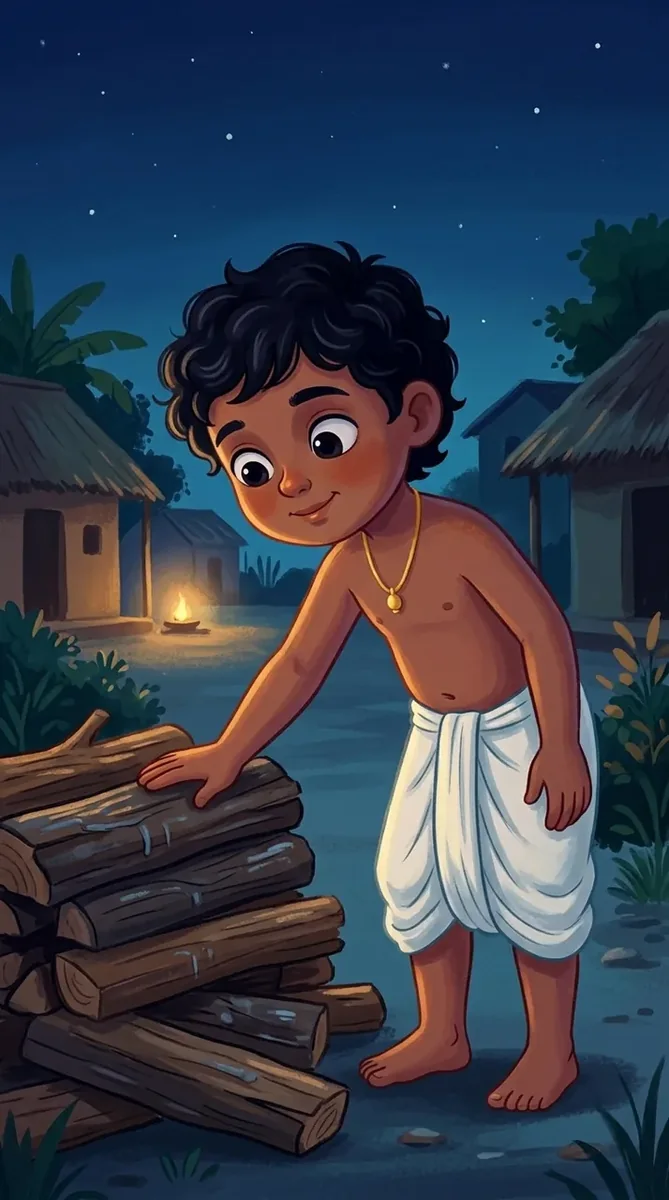
Naani saysसारी लकड़ी गीली हो गई थी! अब सोचो। गीली लकड़ी से आग नहीं जलती।All the wood had got wet! Now think. Wet wood will not catch fire.
The story in pictures
Frames from Naani’s telling, in story order — the pictures your child sees while she speaks.





At cock-crow he races into the courtyard and finds Amma standing by the cold chulha with a sad face. It rained in the night, beta. Kannan touches the woodpile — soaked. Naani stops and asks your child: will wet wood burn, haan ya na? — and when your child answers, she answers back. No fire means no boiling milk, and the sun is about to come up. Kannan's heart thumps.
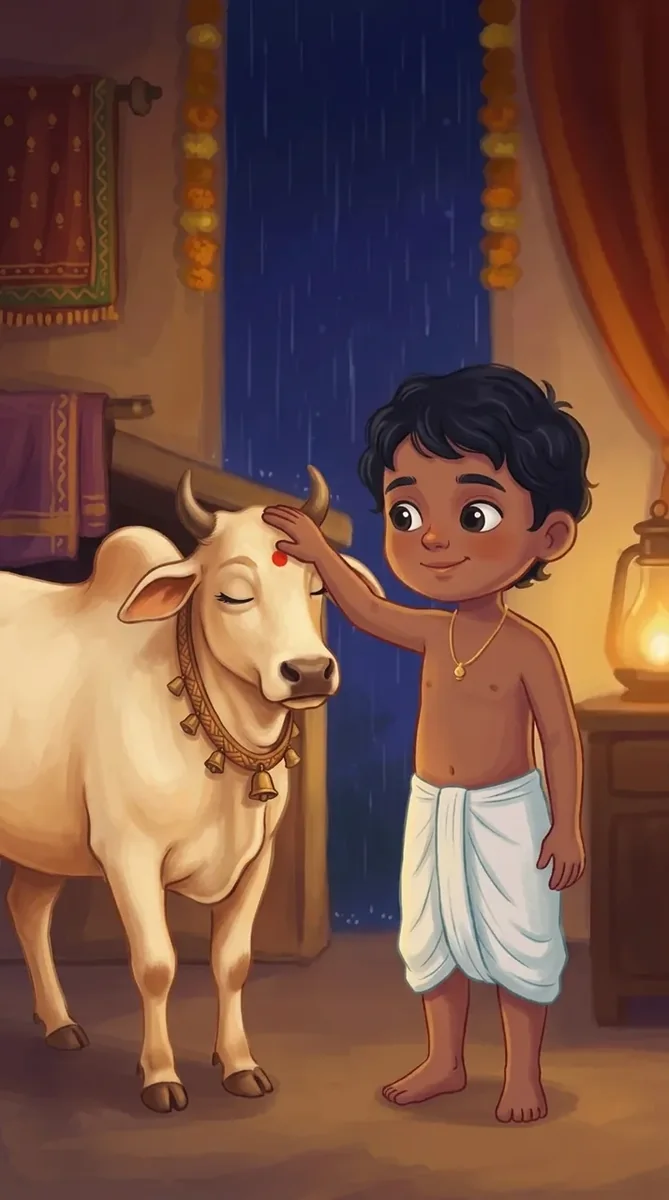
Naani saysकन्नन ने गौरी के माथे पर हाथ फेरा और बोला, धन्यवाद गौरी। तेरे घर ने हमारा पोंगल बचा लिया।Kannan stroked Gauri's forehead and said: thank you, Gauri. Your house saved our Pongal.
He looks here, he looks there — and remembers the gaushala, the little shed where their cow Gauri lives, with its thick roof that keeps the rain out. He runs. Gauri moos at him as if to say come in, come in. In the corner, under the roof, right beside her: a whole pile of dry wood that Appa had stored away in summer. Kannan strokes Gauri's forehead. Thank you, Gauri — your house saved our Pongal.
Naani saysपोंगलो पोंगल, पोंगलो पोंगल, सबने मिलकर खुशी से बोला।Pongalo Pongal, Pongalo Pongal, everyone shouted together with joy.
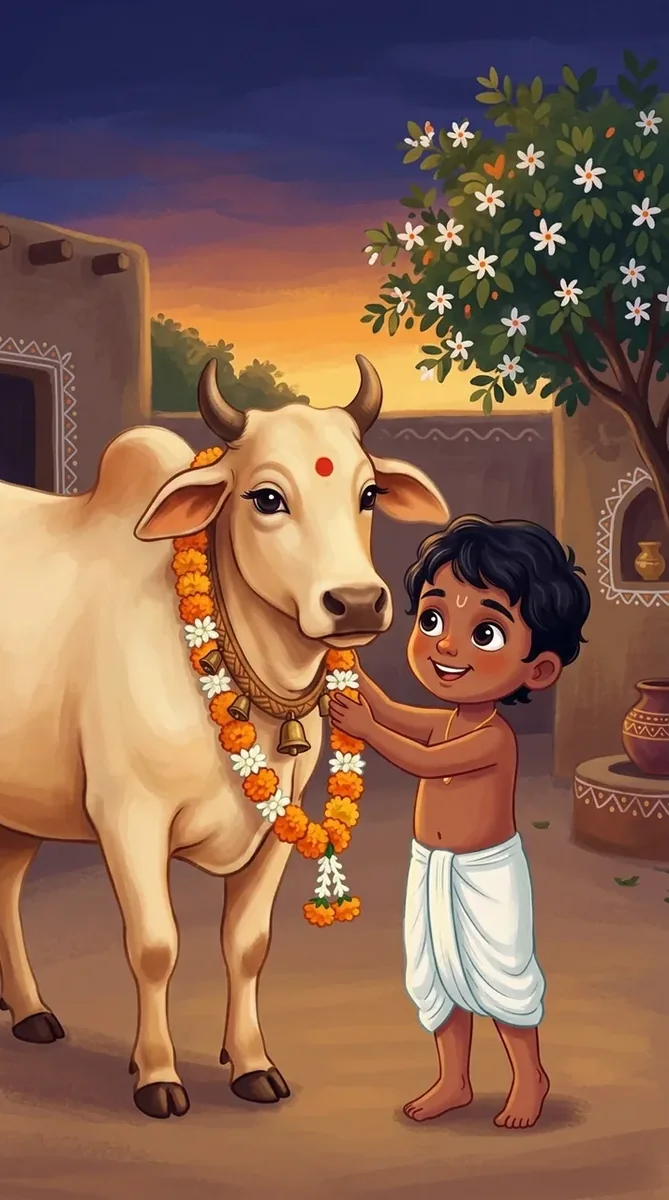
Then everything happens at once. The chulha catches, the new pot goes on with milk and rice, the whole family gathers — Appa, Amma, little sister Meena, Kannan in the middle. A temple bell in the distance, the first gold ray of sun, the milk creeping up and up, everyone holding their breath… and over it goes. Pongalo Pongal! Amma stirs in jaggery and cashews and the smell of sweet pongal fills the courtyard. Appa puts a little on a banana leaf and thanks Suraj Dada; Amma thanks the rain and Mitti Maiya. The next day, Mattu Pongal, Kannan hangs a flower garland round Gauri's neck and feeds her sugarcane. Birds are back in the mango tree. Kannan closes his eyes with a full stomach and a full heart.
The value this story teaches
Gratitude at four to seven has to be pointed at something concrete: a person, an animal, the sun. 'Say thank you for your food' means little until a child can see who the thank-you is for.
The story makes the helpers visible. The firewood is wet, Pongal is about to fail, and it is Gauri the cow's dry shed that saves it — so Kannan thanks a cow. Then Appa thanks Suraj Dada on a banana leaf, Amma thanks the rain and Mitti Maiya, and the next morning Kannan garlands Gauri and feeds her sugarcane. Naani closes by asking your child whom they would thank for tonight's dinner.
How to talk about it at bedtime
- Ask your child: who helped make tonight's dinner — the farmer, the sun, the rain, Mummy? Name them one by one.
- Try: at the next meal, say one thank-you out loud to something that is not a person — the sun, the rain, a cow.
- Ask: why did Kannan say thank you to Gauri?
When to pick this story
- Pongal morning, or the night before
- When food is being refused or wasted at the table
- When your child asks where rice comes from
Try asking your child
After the story, or the next morning on the way to school:
- Why could Amma not light the chulha on Pongal morning, and where did Kannan find dry wood?
- What does everyone shout when the milk boils over? Can you say it the way the family did?
- Appa thanked the sun and Amma thanked the rain. Who would you thank for the food on your plate today?
Meet the characters
The village boy who cannot wait for Pongal morning and has to find dry wood before the sun comes up
The family cow, whose dry gaushala saves the day and who gets a garland on Mattu Pongal
Kannan's mother, who washes the new clay pot and thanks the rain and Mitti Maiya
Kannan's father, who stored the wood in summer and thanks Suraj Dada on a banana leaf
From the app-store reviews
Two of the public reviews parents have left on Google Play and the App Store, quoted exactly as they wrote them.
“an intellectual way to describe the old stories for kids .”
Nice“Really cute idea for bedtime! I love how Naani actually listens when kids interrupt and responds as part of the story. The mix of Hindi and English feels really natural, and the gentle lessons are a nice touch. Such a lovely way to wind down before sleep!”
Give your child a story with a value every night
Naani tells Pongal aur Dharti Maa in warm Hindi, shows the pictures, asks a question halfway and listens to your child's answer. One story, one seekh, then good night.
Listen tonight — free- Free stories every night
- No ads
- Your child’s voice erased after 24 hours
- Made in India
About this story
- Language: Hindi — simple, in a grandmother’s voice
- Ages: 4–7
- Listen time: about 10 minutes
- Value: Gratitude, Respect for nature, Not wasting
- World: Festival Stories
- Theme: Never take food, farmers, animals or nature for granted.
Also plays in the browser: app.naani.live/stream/pongal-thanking-nature-and-the-harvest (sign-in required).
Parents also ask
What is Pongal, for a child who has never celebrated it?
Pongal is Tamil Nadu's harvest festival, celebrated over four days from 14 or 15 January, when the Tamil month of Thai begins. On the main morning new rice and milk are boiled in a clay pot and allowed to overflow — pongal means 'overflowing' — and families thank the sun, rain, earth and cattle. The next day, Mattu Pongal, is for the cows.
Will a child outside Tamil Nadu follow the Pongal story?
Yes. Naani explains every unfamiliar word as she goes — dhaan, chulha, gaushala, ganna — and there is no villain at all. The only worry is wet firewood, solved by a boy and a cow, and the loudest moment is a family shouting Pongalo Pongal together as the milk spills over.
What is the moral of the Pongal story?
Never take food, farmers, animals or nature for granted. Kannan's Pongal is saved by the cow's shed and the wood his father stored, and the family's thanks go to the sun, rain, soil and Gauri — the story's way of showing a child how many helpers hide in one bowl of rice.
Next story
Naani Ki Ramayan 1: Chaar Rajkumar Aur Ek Anokhi Maang
The first night of the Ramayan, told so your child sees that growing brave is hard for a parent too — and that it is love.
More Festival Stories
All Festival Stories → Faith
Diwali: Jab Ayodhya Jagmagayi
The Diwali story told so your child takes away hope, togetherness, and a prince who did his duty with a smile.
 Humility
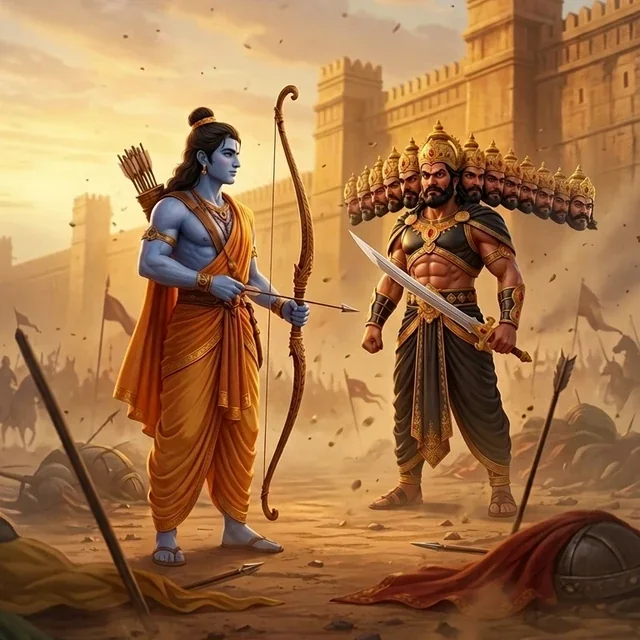
Dussehra: Rama Aur Ravana Ka Antim Yudh
The Dussehra story, told so a five-year-old learns that ghamand loses and a calm, kind heart wins.
 Anger
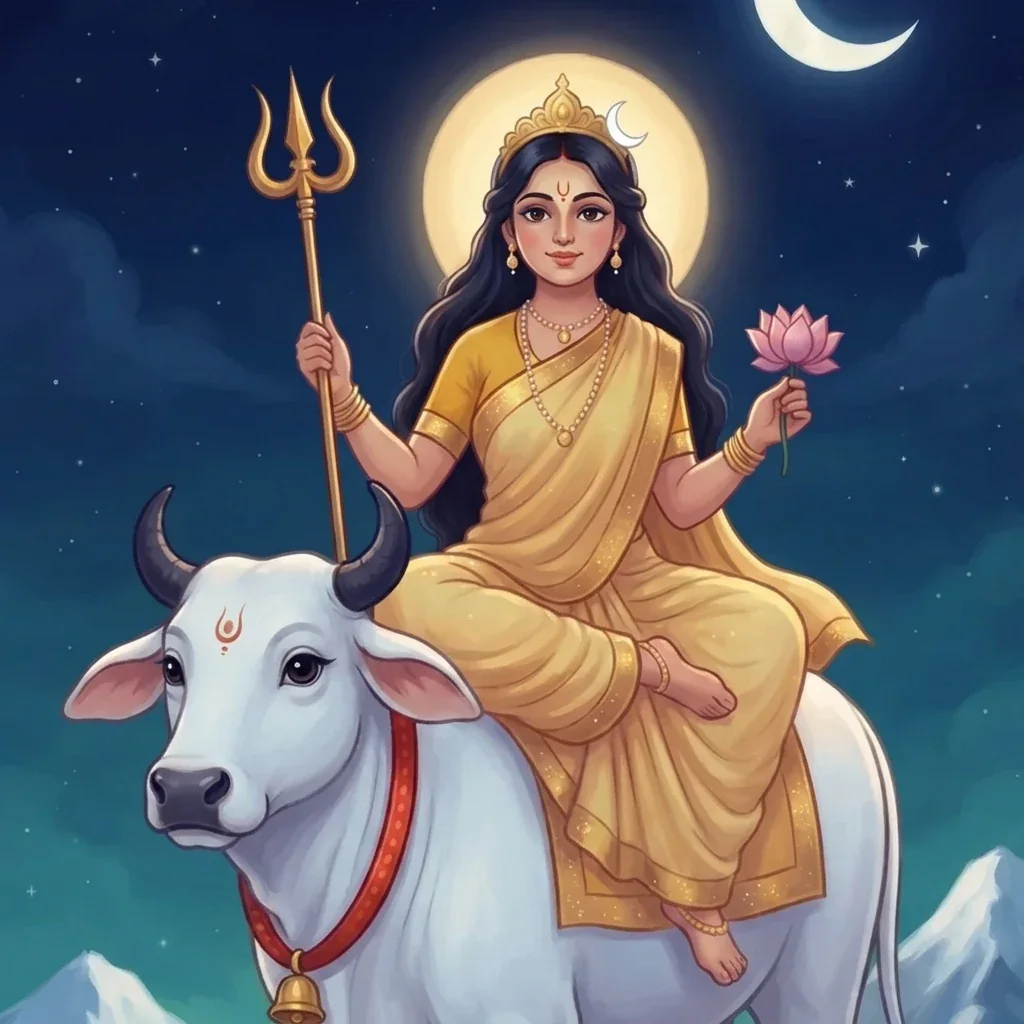
Navratri Night 1 — Maa Shailputri
The first Devi of Navratri, told so your child learns that the strongest hands can still be gentle.
More stories that teach gratitude
Saying thank you — to people, to food, to the morning.
 Gratitude
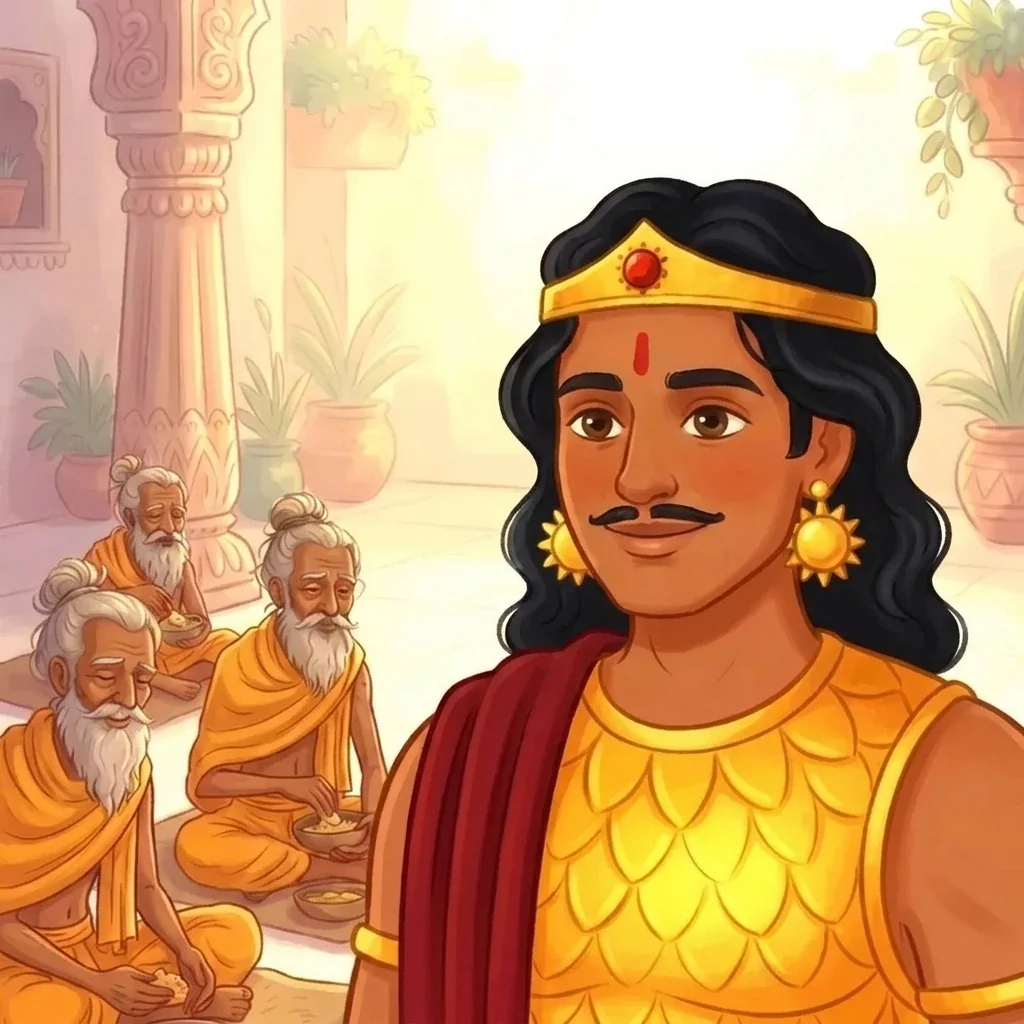
Shraddh — Karna and the Golden Plate
A Shraddh story that teaches your child to thank the family who came before — and that food for the hungry beats gold.
 Gratitude
Rangon wala Shukriya
A bedtime story that turns 'say thank you' from a rule into something your child wants to do.