Diwali Ka Chhota Diya — a little diya story for kids, in Hindi
A short Diwali story that tells your child being small doesn't matter — what matters is to keep shining, and share your light.
दिवाली का छोटा दिया — एक नन्ही लौ, पूरा घर रोशन

Hear Naani tell it
The story
Small children are told "you're too little" a dozen times a day, and some begin to believe it. This short Diwali story, made for the youngest listeners, answers that feeling with a clay lamp. A parent will notice their child take away something simple and sturdy: being small doesn't matter, keeping your light burning does — and one little light, shared, can light up a whole house. Naani's own line is "kabhi-kabhi sabse chhoti cheez bhi sabse bada kaam kar sakti hai."
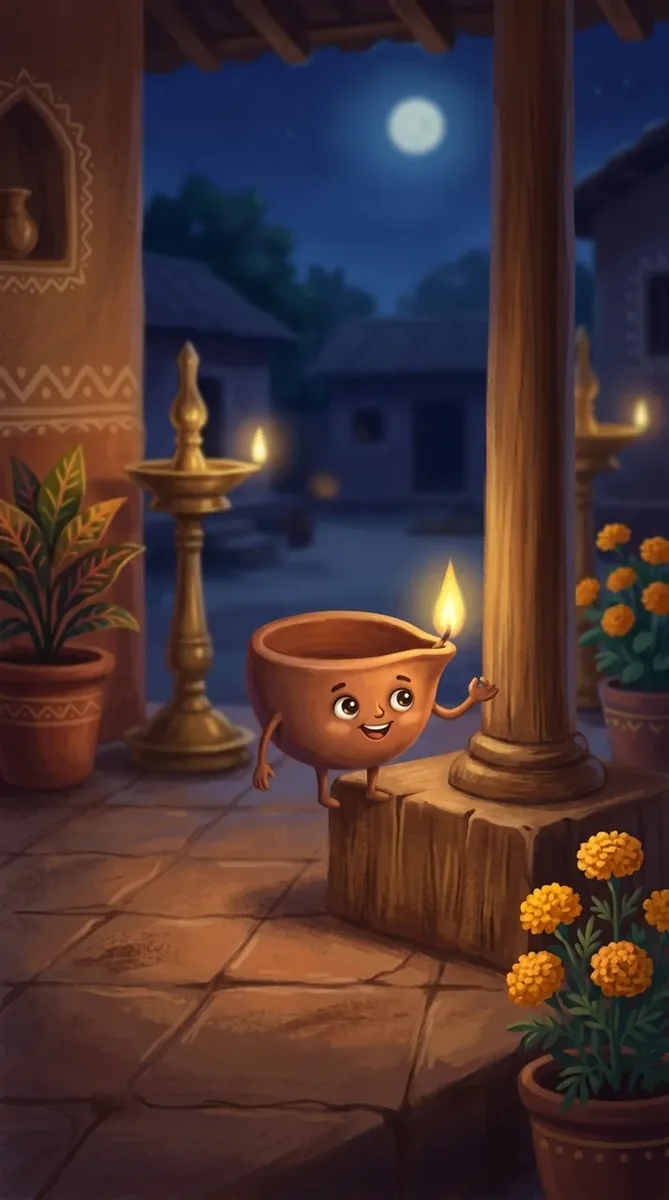
It is Diwali evening in a village, and every home is glowing. Dadi has decorated her veranda with lots of lamps, and in one corner sits a very small earthen diya named Chhotu, like a tiny star come down to the ground. Chhotu feels very small. Would anyone even see his little light? Beside him stand big brass lamps, tall and shining, and one of them boasts that his light fills the whole courtyard. Chhotu says nothing. He straightens his cotton wick and keeps his tiny flame burning with love, happy where he is. Naani pauses here and asks your child whether Chhotu will be able to give light too, and listens to the answer.
Naani saysक्या उसकी नन्हीं सी रोशनी किसी को दिखाई भी देगी?Would anyone even see his tiny little light?
Naani saysजैसे अंधेरी रात में एक छोटा सा तारा ज़मीन पर उतर आया हो।Like a tiny star that had come down to the ground on a dark night.
The story in pictures
Frames from Naani’s telling, in story order — the pictures your child sees while she speaks.

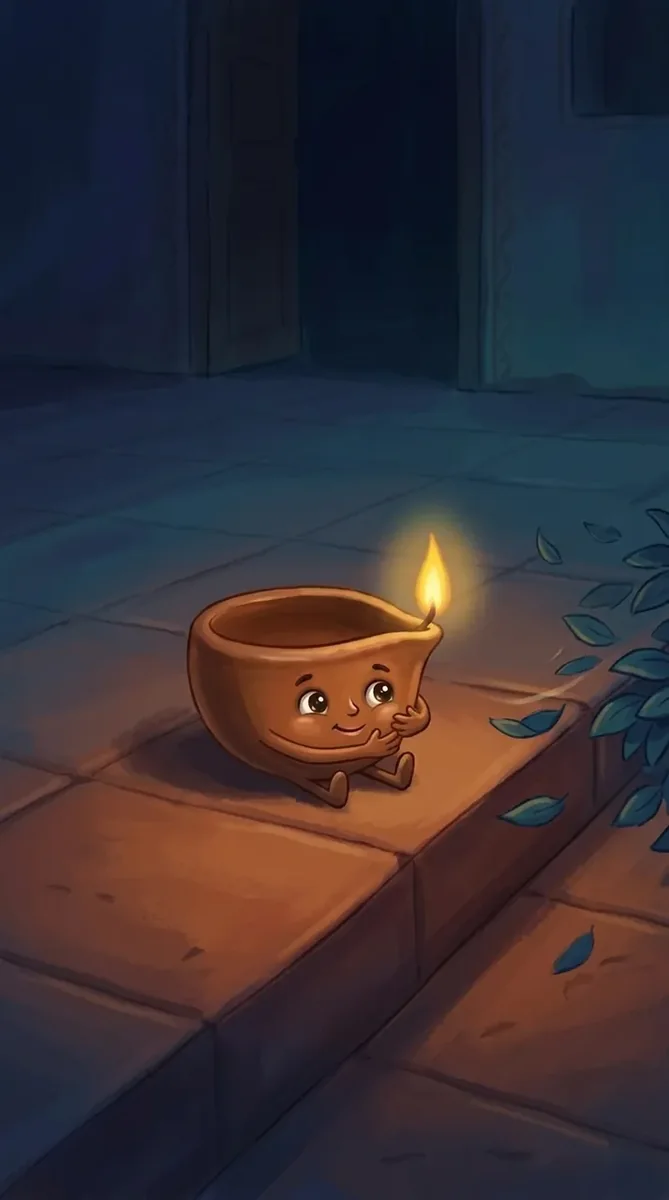


Then the leaves rustle and the cold evening wind begins to blow. It blows hard, and one by one the tall brass lamps go out. The veranda grows dark. But Chhotu is sitting low, close to the ground; he shields his flame with both hands and doesn't move at all. The wind passes over him, and his light keeps burning. Naani asks your child what Chhotu should do, and invites them to listen to the breeze going softly by.
Naani saysउसने अपनी लौ को दोनों हाथों से छिपा लिया और बिल्कुल नहीं हिला।He shielded his flame with both hands and didn't move at all.
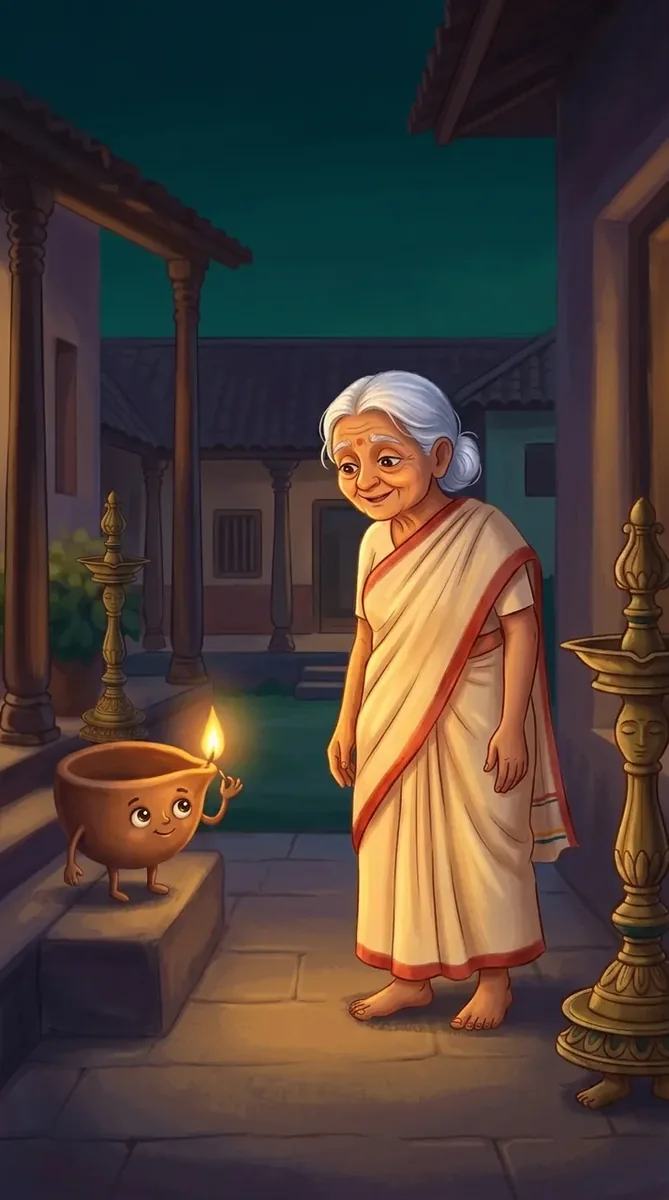
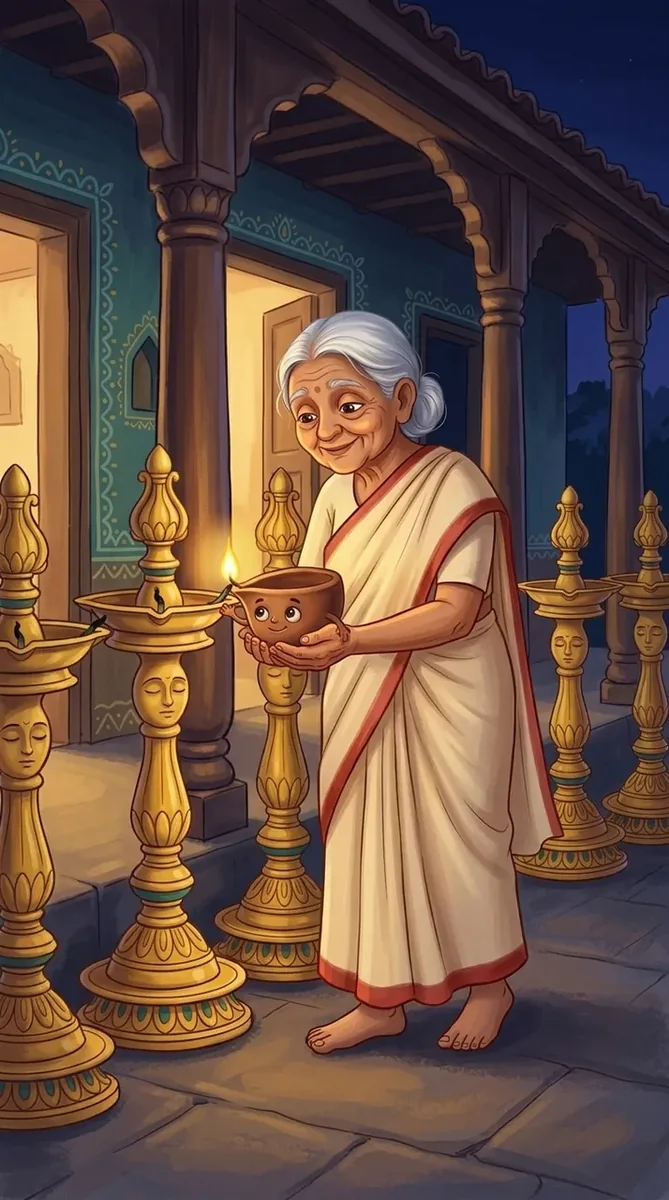
Now only one small golden dot shines on the whole veranda. When Dadi comes out, she sees the big lamps dark and the little diya still bravely burning in the corner. Smiling, she picks Chhotu up and carries his tiny flame to every lamp that went out — and one after another, they all light up again. Because of Chhotu, the whole house is full of light. The big lamps are quiet now, burning alongside him.
Naani saysऔर तब… एक के बाद एक, सारे दीये जलने लगे!And then… one after another, all the lamps began to glow!
The village falls asleep, the moon looks down, and Chhotu's light shines like a pearl in a pot of water. Naani ends gently, asking your child to imagine a small light glowing inside their own heart, keeping them safe — and good night.
The value this story teaches
At three to six, a child lives among people who are bigger, faster and better at nearly everything. Self-belief at this age is not about being the best; it is the quiet sense that "I matter, and what I do counts." Children who have it try things, and children who lack it often hang back and wait for the big ones.
Chhotu begins exactly where a small child does — next to tall, boastful lamps, wondering if anyone will notice him. He doesn't argue; he just keeps burning. When the wind comes, the very thing that made him feel small, sitting low to the ground, is what keeps his flame alive. And his light is not kept to himself: Dadi carries it from lamp to lamp until the house glows. Small, steady and shared is a picture of self-worth a young child can hold on to.
How to talk about it at bedtime
- Ask your child: when the wind blew, why did Chhotu's flame stay lit when the big lamps went out?
- Try: "Tumhari chhoti si muskaan ne aaj kiska din achha banaya?" — and help them remember one.
- Light one small diya together this Diwali and carry its flame to light the others, just like Dadi did with Chhotu.
When to pick this story
- Diwali week, so the clay diyas you light at home have a story of their own
- When your child says "I'm too small" or feels left out by older children
- As a first festival story for a three- or four-year-old who is not ready for a long one
Try asking your child
After the story, or the next morning on the way to school:
- What did Chhotu do when the cold wind started blowing?
- How did all the big lamps light up again?
- What small thing can you do that makes someone else happy?
Meet the characters
A very small clay diya in a corner of Dadi's veranda who worries no one will see his light, and keeps burning when the big lamps go out.
The grandmother who decorates her veranda with lamps and uses Chhotu's little flame to light all the others again.
Tall, shining lamps who boast about their light, go out in the wind, and end up burning quietly beside Chhotu.
From the app-store reviews
Two of the public reviews parents have left on Google Play and the App Store, quoted exactly as they wrote them.
“Maine to download kar liya hai aap sabhi log download karo aur yah story Apne bacchon Ko badon ko sunao bahut achcha lagega…”“Great stories and really interactive. My kid love it”
Give your child a story with a value every night
Naani tells Diwali Ka Chhota Diya in warm Hindi, shows the pictures, asks a question halfway and listens to your child's answer. One story, one seekh, then good night.
Try Naani tonight 👉 naani.live/app- A value in every story
- No ads
- Your child’s voice erased after 24 hours
- Made in India
About this story
- Language: Hindi — simple, in a grandmother’s voice
- Ages: 4–7
- Listen time: about 6 minutes
- Value: Self-belief, Sharing, Courage
- World: Festival Stories
- Theme: Ek chhoti si roshni bhi andhera door karti hai — sharing light
Also plays in the browser: app.naani.live/stream/diwali-ka-chhota-diya (sign-in required).
Parents also ask
Is Diwali Ka Chhota Diya short enough for a three-year-old?
Yes. It is one of Naani's shortest stories and was written for the youngest listeners, with simple sentences, one small hero and no frightening moments — even the wind only blows the lamps out. Naani pauses a few times to ask your child an easy question, and the story ends with the village asleep and a soft good night.
What is the moral of the little diya story?
Being small doesn't matter; what matters is to keep shining. A tiny clay diya keeps his flame burning when the wind puts out the big brass lamps, and his one light is used to relight them all. Naani also links it to everyday life: a child's small smile can make someone's whole day better.
Does this story tell why we celebrate Diwali?
No — it is a gentle Diwali-evening story about a clay lamp, not the festival's origin, and no gods appear in it. If your child wants to know why diyas are lit, pair it with Naani's story of Ram coming home to Ayodhya on a moonless night, when the whole city lit lamps to show him the way.
Next story
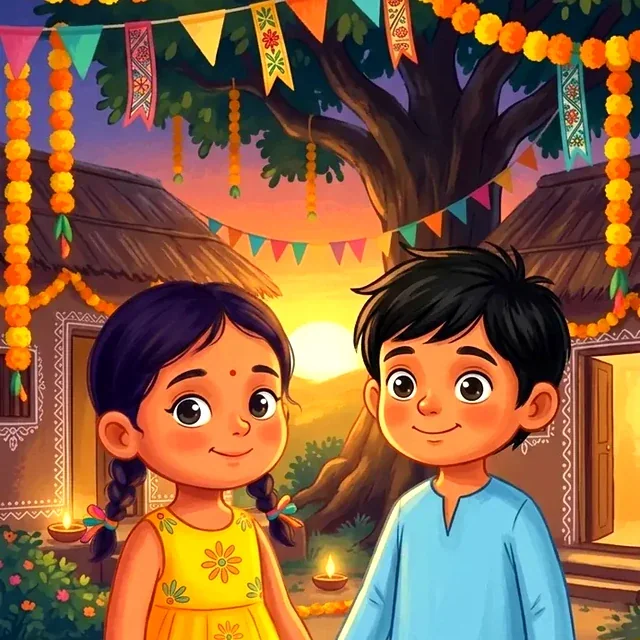
Easter: Khali Kabr Ka Savera
The Easter story, told so a five-year-old takes away that every long night ends in morning — hope, not sadness.
More Festival Stories
All Festival Stories → Faith
Diwali: Jab Ayodhya Jagmagayi
The Diwali story told so your child takes away hope, togetherness, and a prince who did his duty with a smile.
 Humility
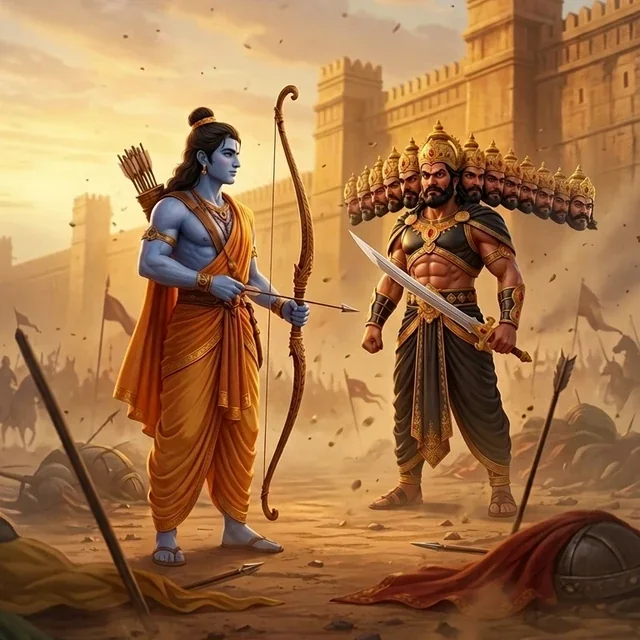
Dussehra: Rama Aur Ravana Ka Antim Yudh
The Dussehra story, told so a five-year-old learns that ghamand loses and a calm, kind heart wins.
 Anger
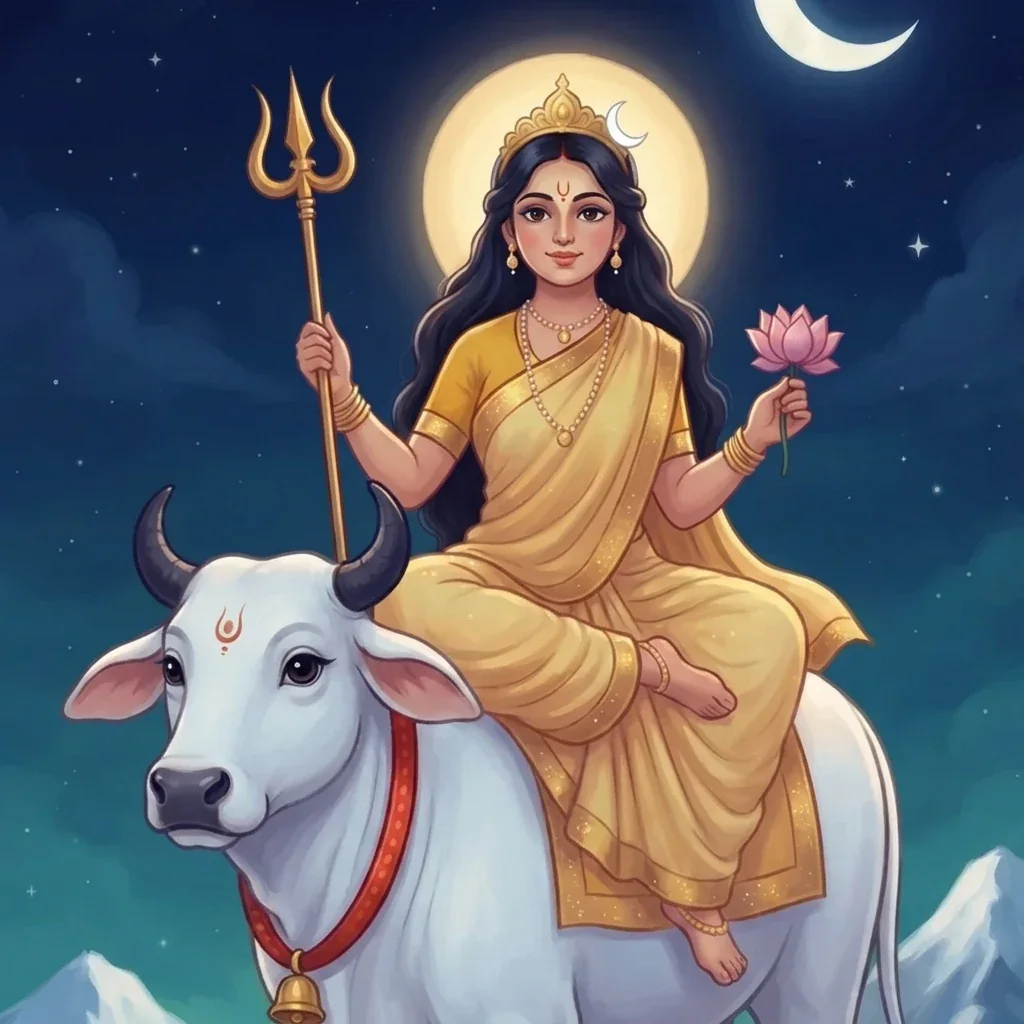
Navratri Night 1 — Maa Shailputri
The first Devi of Navratri, told so your child learns that the strongest hands can still be gentle.
More stories that teach self-belief
Your light does not go out when nobody is looking at it.
 Self-belief
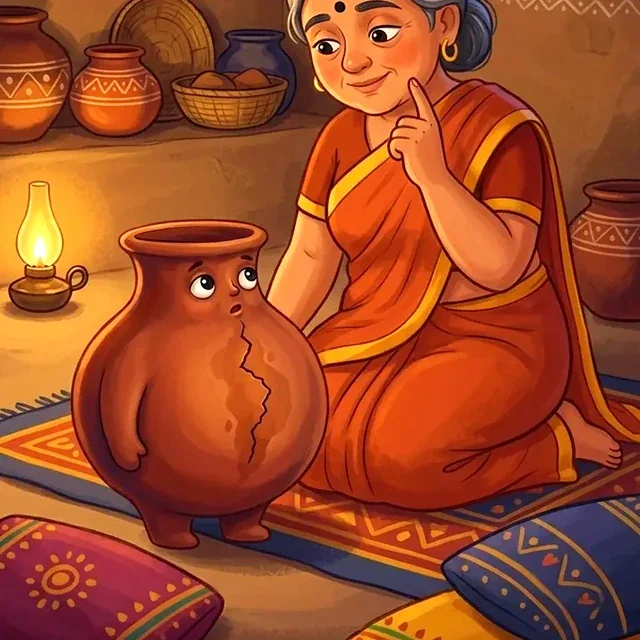
Toota Hua Matka
A moral story about self-worth — the crack your child thinks is a flaw may be quietly growing flowers.
 Self-belief
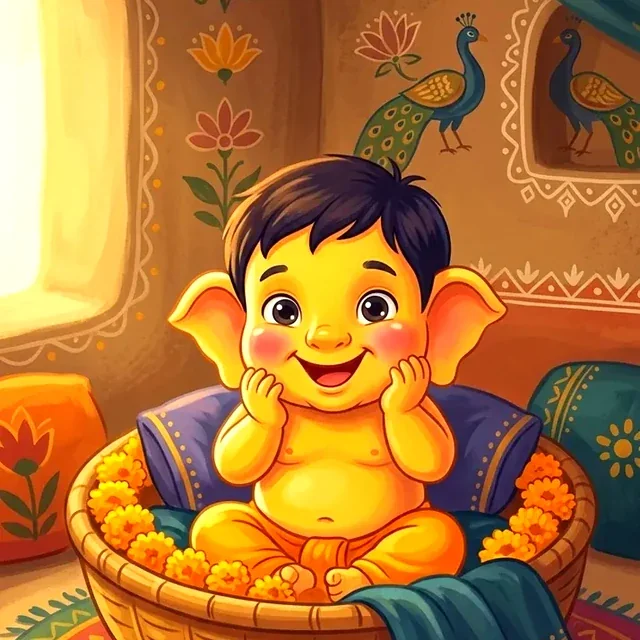
Ganesh Chaturthi: Ganesha ka Naya Roop
The Ganesh Chaturthi story, told so your child learns that looking different is a gift, not a flaw.
 Self-belief
Naani Ki Ramayan 3: Shivji ka Dhanush aur Sita ki Varmala
Ram and Sita's swayamvar, told so your child learns to try calmly with a whole heart — and that asking for help is fine too.