Easter: Khali Kabr Ka Savera — the Easter story for kids, in Hindi
The Easter story, told so a five-year-old takes away that every long night ends in morning — hope, not sadness.
ईस्टर की कहानी — खाली कब्र का सवेरा
Hear Naani tell it
The story
If your child takes one thing from this Easter story, it will be a quiet certainty that a sad night ends and morning comes — a kind of resilience a five-year-old can actually use. Naani tells it as the story of the longest night and the sunrise that followed, in about nine minutes of soft Hindi.
Naani saysएक बहुत प्यारे गुरु थे, जिनका नाम था ईसा।There was a very dear teacher, and his name was Isa.
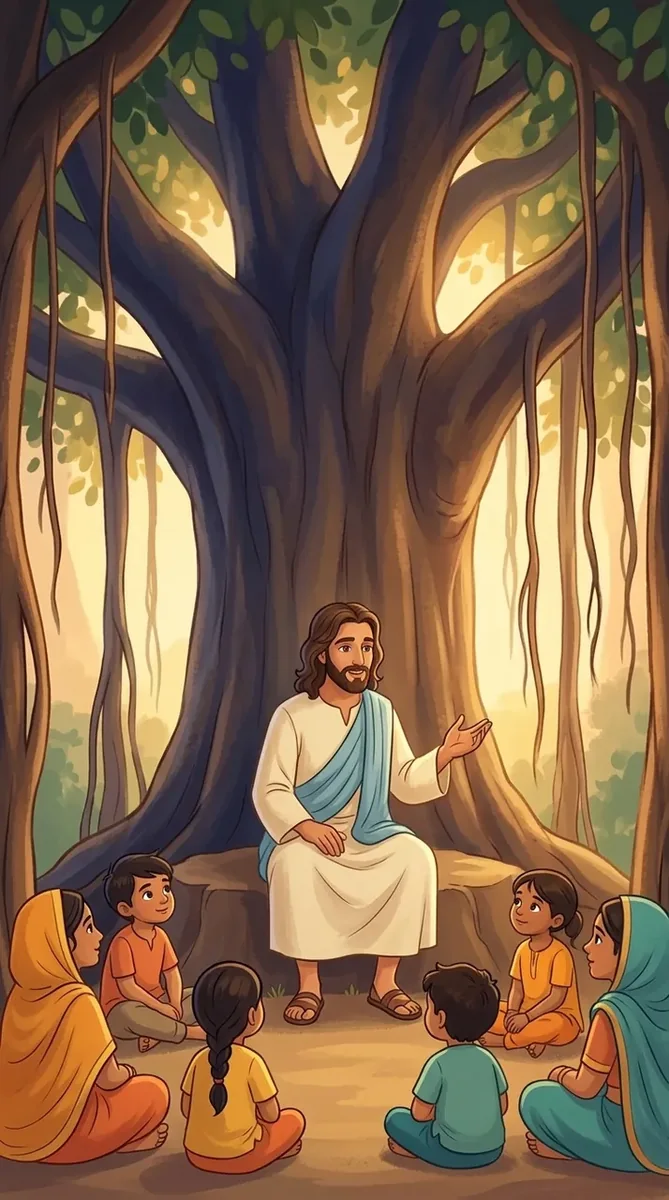
It begins under an enormous shady tree, where a kind teacher named Isa sits with children gathered around him. He loves children, and he teaches everyone who comes — people walk from far away to listen — about love and about forgiving one another. Naani asks your child to close their eyes and feel how cool that shade must have been. Then she says, gently, that a long and sad night came. Some men took Isa away, and one night he died. His friends laid him in a cave-like tomb cut into rock and rolled a huge, heavy stone across its mouth. The whole world seemed to fall quiet. Even the stars, Naani says, kept a sad and silent watch. Two nights passed.
Naani saysपूरी दुनिया जैसे शांत हो गई। आसमान के तारे भी दुखी होकर चुपचाप कब्र की रखवाली कर रहे थे।The whole world seemed to fall silent. Even the stars in the sky, sad, kept a quiet watch over the tomb.
The story in pictures
Frames from Naani’s telling, in story order — the pictures your child sees while she speaks.




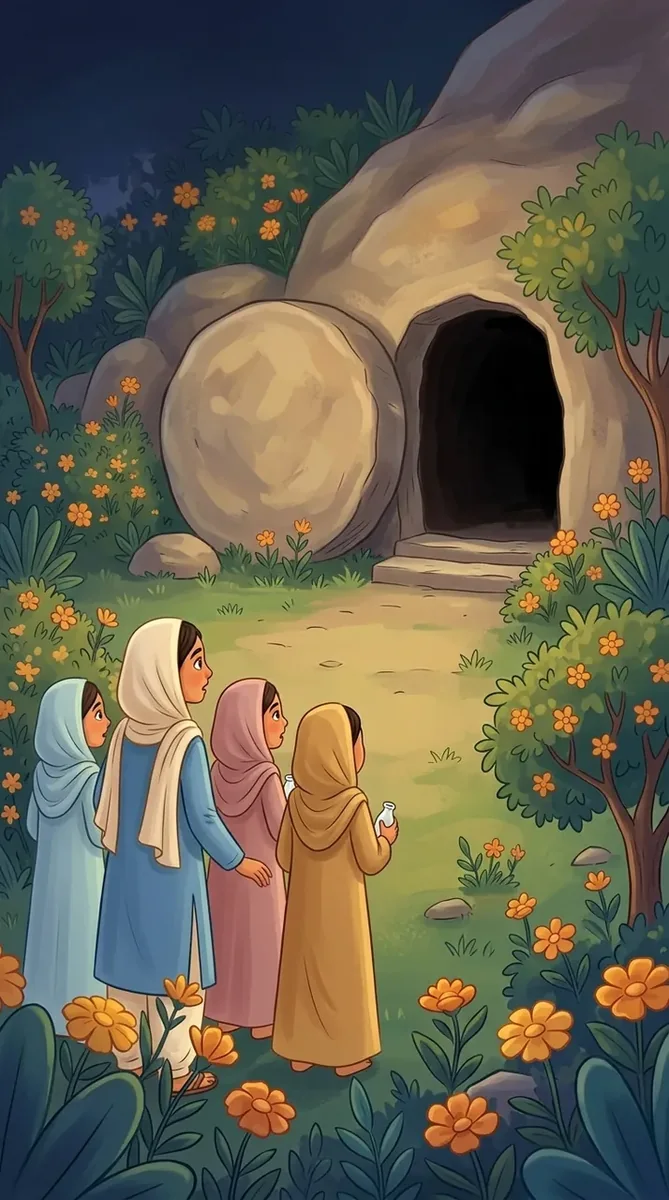
This is where Naani stops and asks your child a question — was that stone across the tomb very heavy, or light? — and listens before going on. The telling never dwells on the sad part; it is a night that has to be got through.
Naani saysसूरज अभी निकला नहीं था और आसमान में हल्की नीली रोशनी थी।The sun had not yet risen, and there was a faint blue light in the sky.
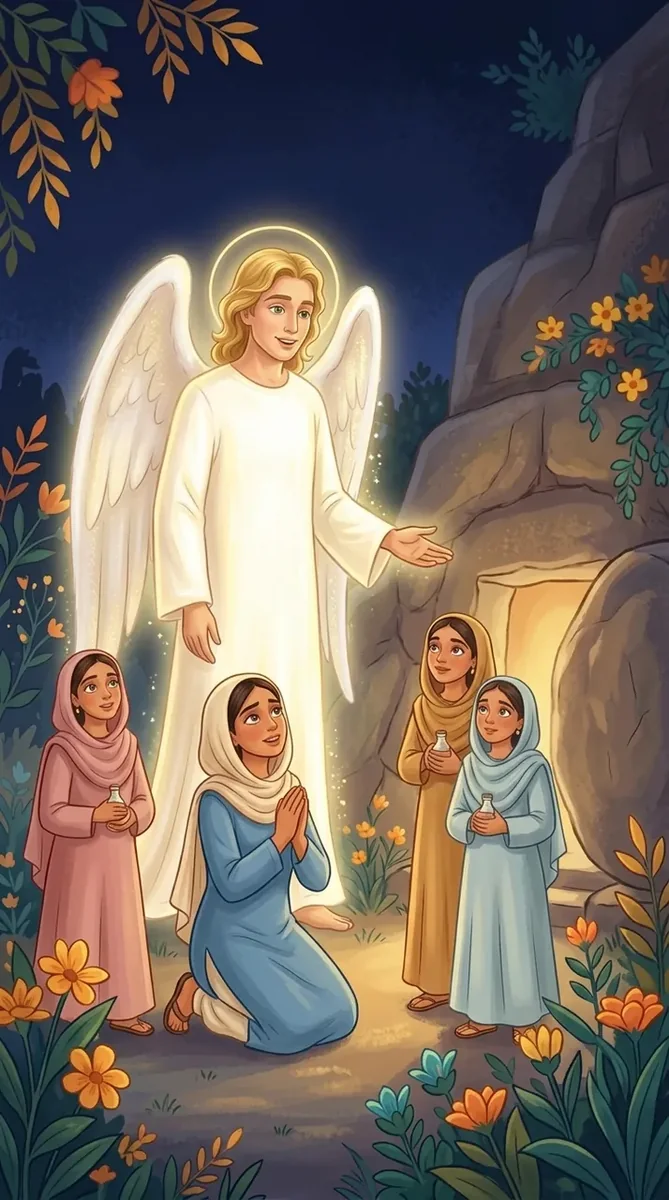
On the third morning, before the sun is up and the sky is still a faint blue, Mariyam and her friends walk towards the tomb carrying little bottles of sweet-smelling oil and spices. Dew on the grass, cold air, the sound of their own footsteps. When they reach the garden they stop in astonishment: the stone has been rolled aside and the kabr is empty. A shining angel, his robe bright as the first ray of sun, tells them not to be afraid. Isa is not here. He has risen.
Naani saysस्वर्गदूत ने प्यार से कहा, डरो मत! ईसा यहाँ नहीं हैं। वह जी उठे हैं!The angel said lovingly: do not be afraid. Isa is not here. He has risen!
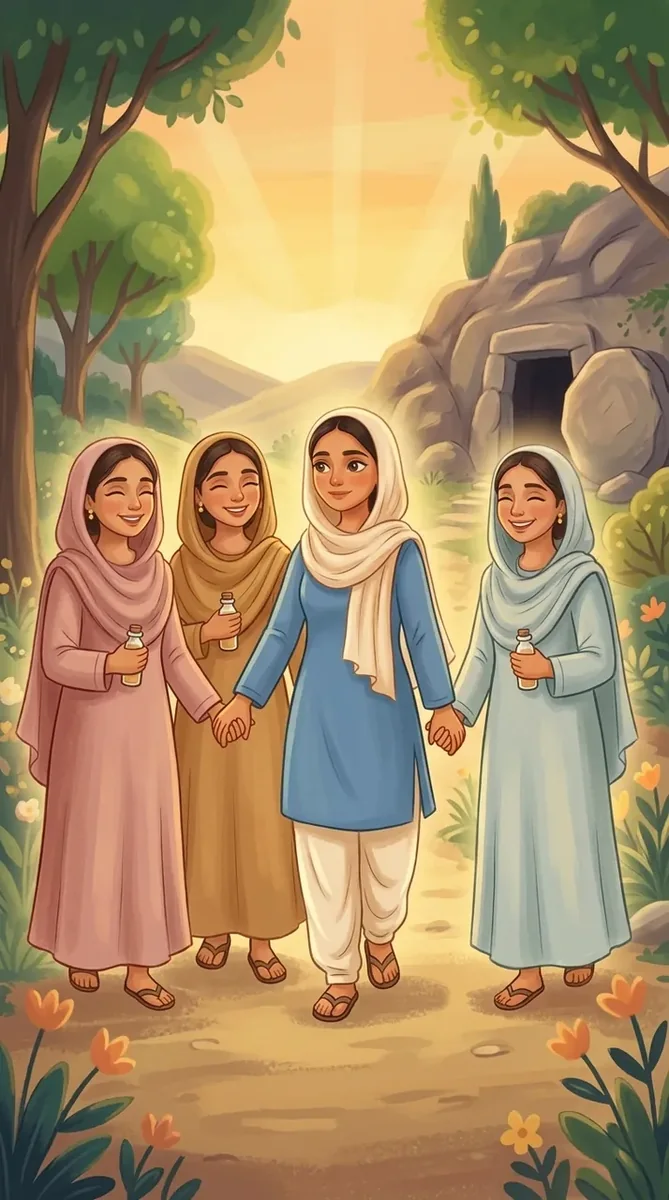
The women run to tell everyone — and on the path they meet Isa himself, his voice as warm as a hug. Fear disappears and joy spreads everywhere, the way sunlight spreads after a long night. That, Naani explains, is why Easter is celebrated every year. She ends by asking your child to feel the first morning sun touching their cheeks, and to carry that warmth into sleep.
The value this story teaches
Between four and seven, children meet their first real disappointments — a lost pet, a friend who moves away, a night when nothing feels right — and they have no way yet of knowing that the feeling passes. Resilience at this age is simply the trust that morning comes.
The story gives that trust a shape. Naani lets the sad night be sad: a heavy stone, a silent world, stars keeping watch, two nights of nothing. Then the women walk out before dawn, the sky turns faint blue, and the stone is gone. Your child feels the turn happen rather than being told about it, and Naani ends by placing the morning sun on their cheeks.
How to talk about it at bedtime
- Ask your child: what was the longest, saddest night you remember — and what happened the next morning?
- Try: tomorrow at breakfast, point at the sunlight on the table and say "dekho, savera aa gaya" — the story's line, in your own kitchen.
- Ask: why did the women walk to the garden so early, even though they were sad?
When to pick this story
- Easter week, or the night before church
- After a sad day — a lost toy, a friend moving away
- When your child is afraid the dark will not end
Try asking your child
After the story, or the next morning on the way to school:
- Why did Mariyam and her friends go to the garden so early in the morning, and what did they find there?
- The angel said "daro mat" — don't be afraid. Have you ever been scared in the dark and then felt better when the sun came up?
- Isa taught people to love and forgive. Is there someone you could forgive tomorrow, or someone you want to be extra kind to?
Meet the characters
The kind teacher who sat under a great tree and taught love and forgiveness
Isa's friend, who walks to the tomb before dawn with her companions and finds it empty
The shining messenger at the empty tomb who tells the women not to be afraid
From the app-store reviews
Two of the public reviews parents have left on Google Play and the App Store, quoted exactly as they wrote them.
“an intellectual way to describe the old stories for kids .”
Nice“Really cute idea for bedtime! I love how Naani actually listens when kids interrupt and responds as part of the story. The mix of Hindi and English feels really natural, and the gentle lessons are a nice touch. Such a lovely way to wind down before sleep!”
Give your child a story with a value every night
Naani tells Easter: Khali Kabr Ka Savera in warm Hindi, shows the pictures, asks a question halfway and listens to your child's answer. One story, one seekh, then good night.
Listen tonight — free- Free stories every night
- No ads
- Your child’s voice erased after 24 hours
- Made in India
About this story
- Language: Hindi — simple, in a grandmother’s voice
- Ages: 4–7
- Listen time: about 6 minutes
- Value: Emotional resilience, Faith & devotion, Kindness & empathy
- World: Festival Stories
- Theme: Morning comes, even after the longest night.
Also plays in the browser: app.naani.live/stream/easter-khali-kabr-ka-savera (sign-in required).
Parents also ask
Is the Easter story too sad for a 4-year-old?
Naani keeps the sad part to a few calm sentences — Isa is taken away, and his friends lay him in a tomb — with no detail of how he died. Most of the nine minutes is spent on the quiet pre-dawn walk, the empty tomb, the angel and the happy meeting on the path. It ends in warmth and sunlight.
What does Easter celebrate, and when is it in 2027?
Easter is the Christian festival that celebrates Jesus (Isa) rising from the dead on the third morning after his death. It always falls on a Sunday in March or April; Easter Sunday 2027 is on 28 March. In India families mark it with church, a special lunch and decorated eggs for the children.
Why does the story call Jesus 'Isa'?
Isa is the name by which Jesus is widely known in Hindi and Urdu speech — as in 'Isa Masih' — so it is the name a child is most likely to hear in Hindi. Naani uses it throughout, and uses the familiar English word Easter for the festival itself.
Next story

Eid ki Pyari Eidi
An Eid story that shows your child what sharing really costs — and why it still feels like the sweetest thing.
More Festival Stories
All Festival Stories → Faith
Diwali: Jab Ayodhya Jagmagayi
The Diwali story told so your child takes away hope, togetherness, and a prince who did his duty with a smile.
 Humility
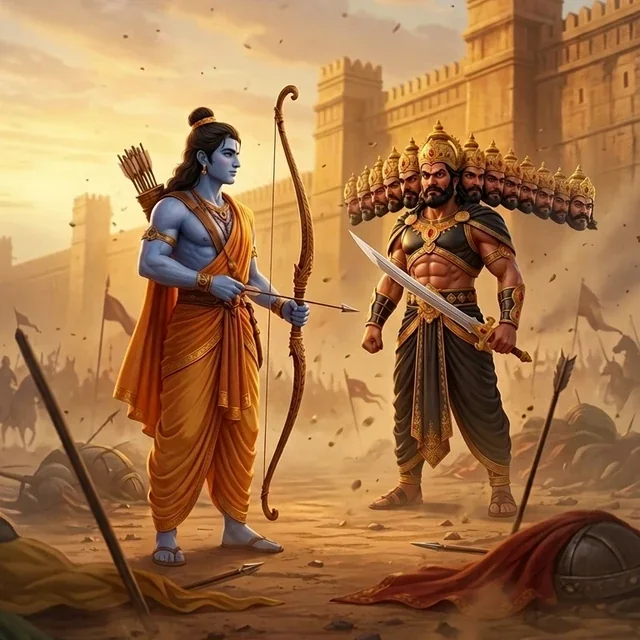
Dussehra: Rama Aur Ravana Ka Antim Yudh
The Dussehra story, told so a five-year-old learns that ghamand loses and a calm, kind heart wins.
 Anger
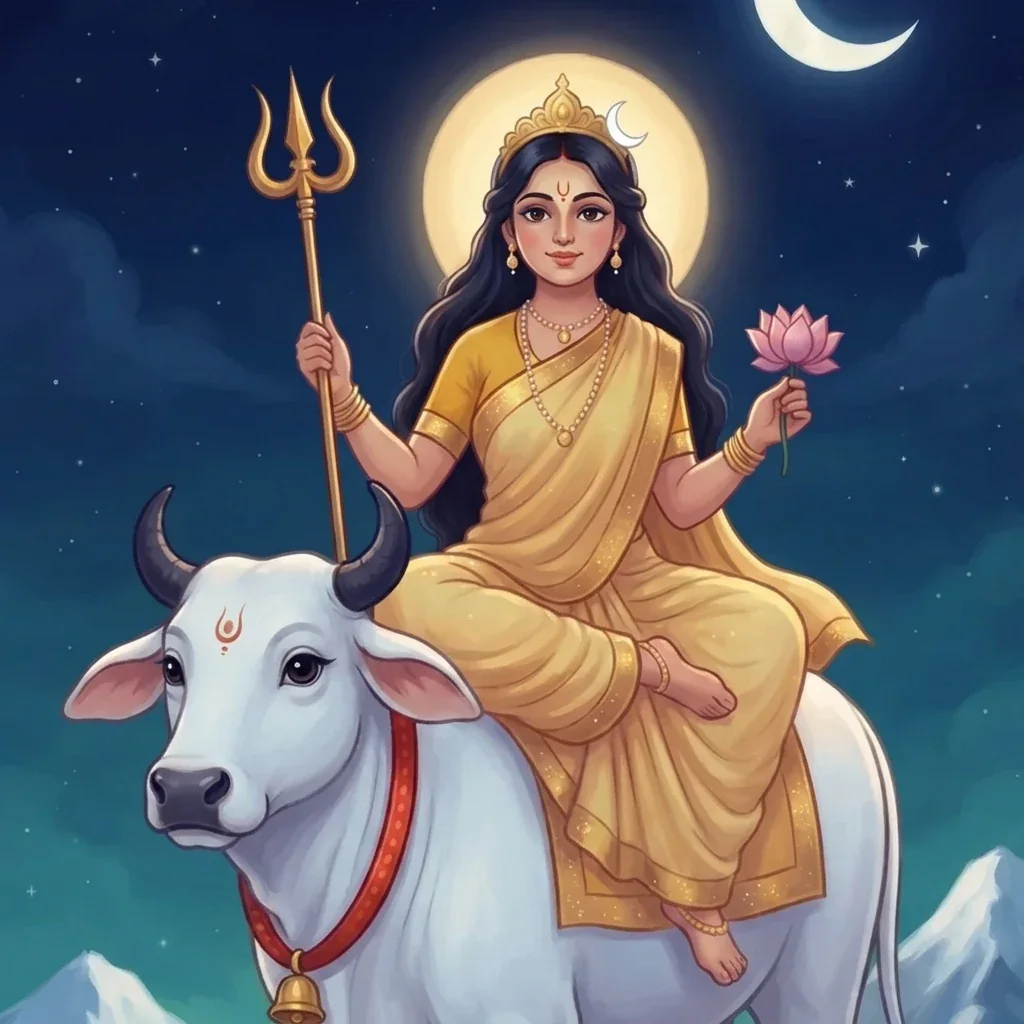
Navratri Night 1 — Maa Shailputri
The first Devi of Navratri, told so your child learns that the strongest hands can still be gentle.
More stories that teach emotional resilience
Getting up after a mistake, a bad day or a lost game.
 Resilience
Krishna aur Jungle ki Aag
A Krishna story that gives your child a plan for being scared: stay close, hold a hand, say it out loud.
 Resilience
Navratri Night 2 — Maa Brahmacharini
The Devi of tapasya, told so your child learns that falling isn't losing — giving up is.
 Resilience
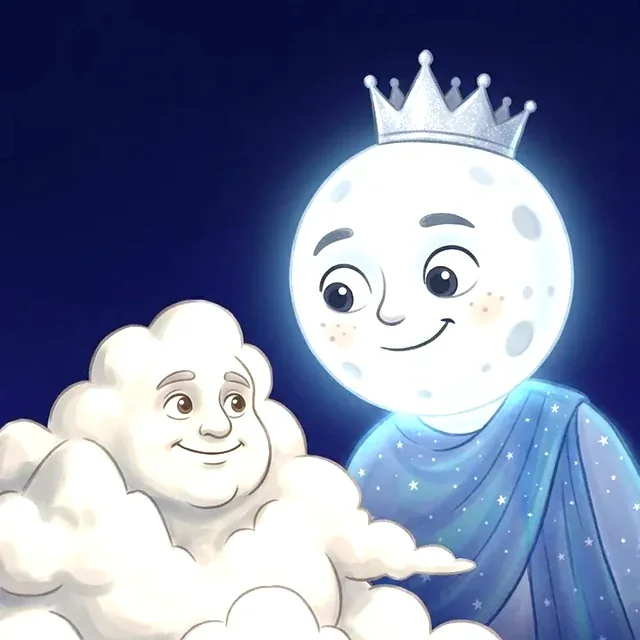
Chanda Mama ki Chamak
A gentle bedtime story for the child who feels overlooked — about a shine that stays even when no one says thank you.