Naani ki Teen Chhalniyan — the three sieves story for kids, in Hindi
A moral story about honesty and kind words — three simple questions your child can ask before repeating anything.
नानी की तीन छलनियाँ — बोलने से पहले सोचने की कहानी

Hear Naani tell it
The story
If you want your child to think before repeating what they hear, this is the story — and it is the one in which Naani talks about her own childhood. When she was small — just your child's age — she spent her summer holidays in her Naani Maa's village, in a house with a big neem tree in the courtyard. Naani Maa owned three chhalniyan, the round mesh sieves used to sift flour, and she looked after them with great care. Why three? That is the story.
Naani saysनानी माँ अपनी तीनों छलनियों को बड़े जतन से रखती थीं।Naani Maa looked after her three sieves with great care.
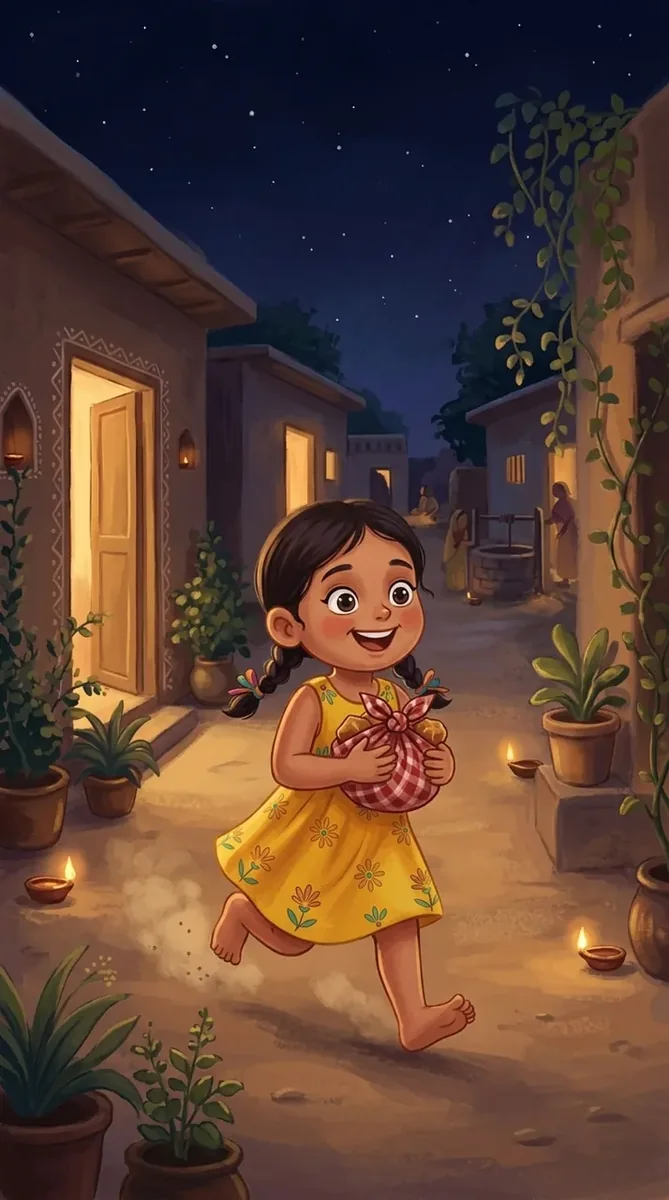
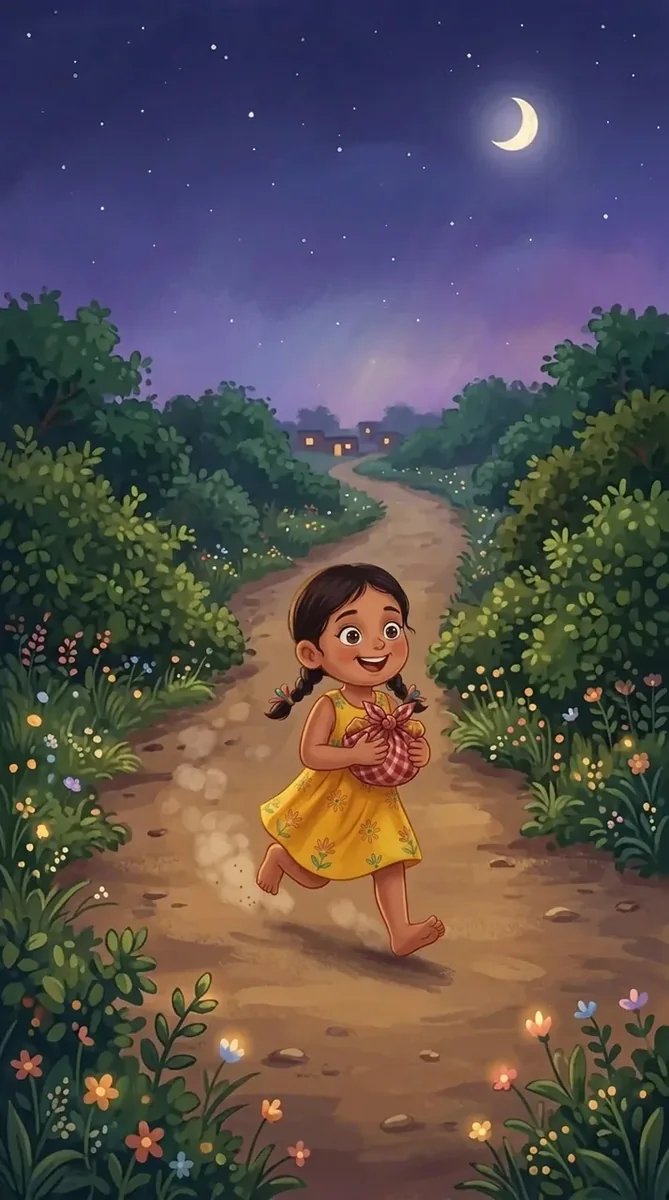
One market day Naani Maa sends the little girl to buy gur. While she waits at the jaggery stall, two older girls behind her whisper something she was never meant to hear: all the guavas in Ramu Kaka's orchard vanished overnight, and everyone is saying Chhutki took them. Chhutki is her best friend. The words sit hot in her mouth, jumping to get out, and she runs home along the dirt path bursting to tell.
Naani saysमैंने सुनना नहीं चाहा था, सच में… पर कान तो कान हैं। और तभी…I didn't mean to listen, honestly… but ears are ears. And just then…
The story in pictures
Frames from Naani’s telling, in story order — the pictures your child sees while she speaks.
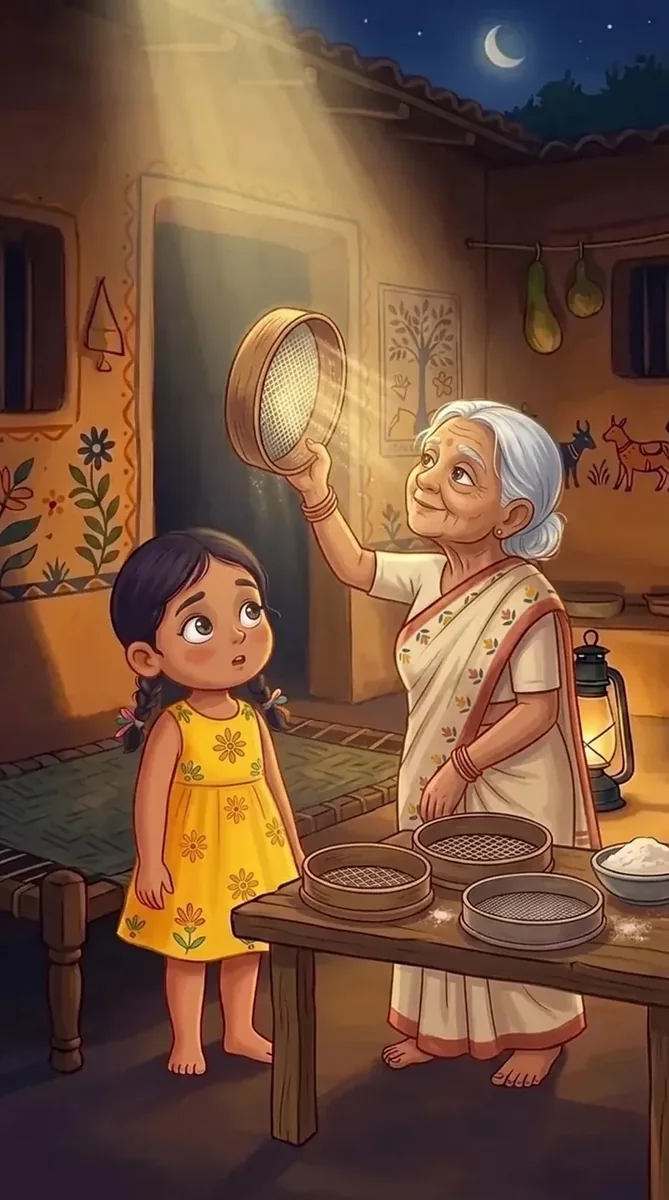
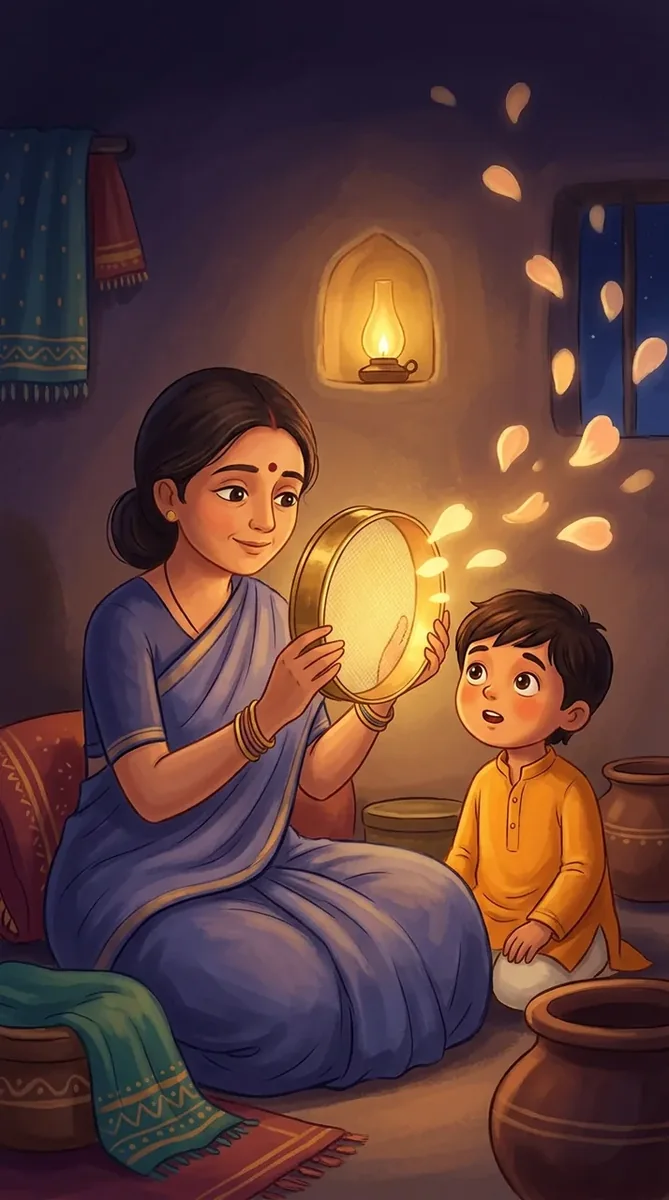
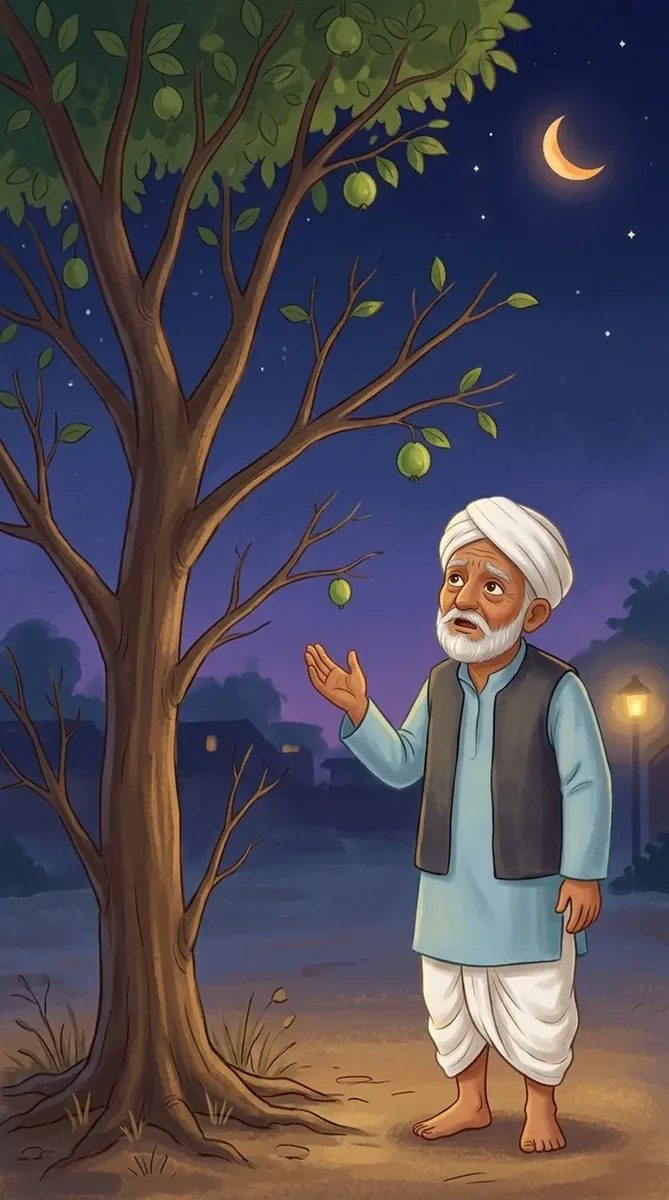
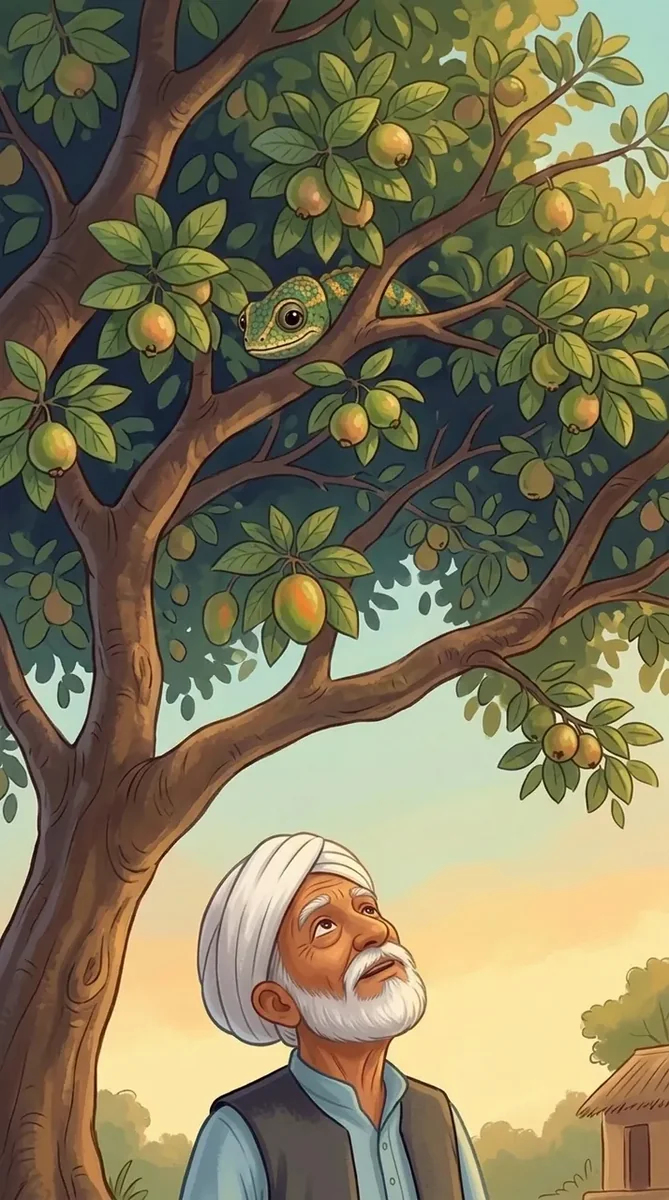
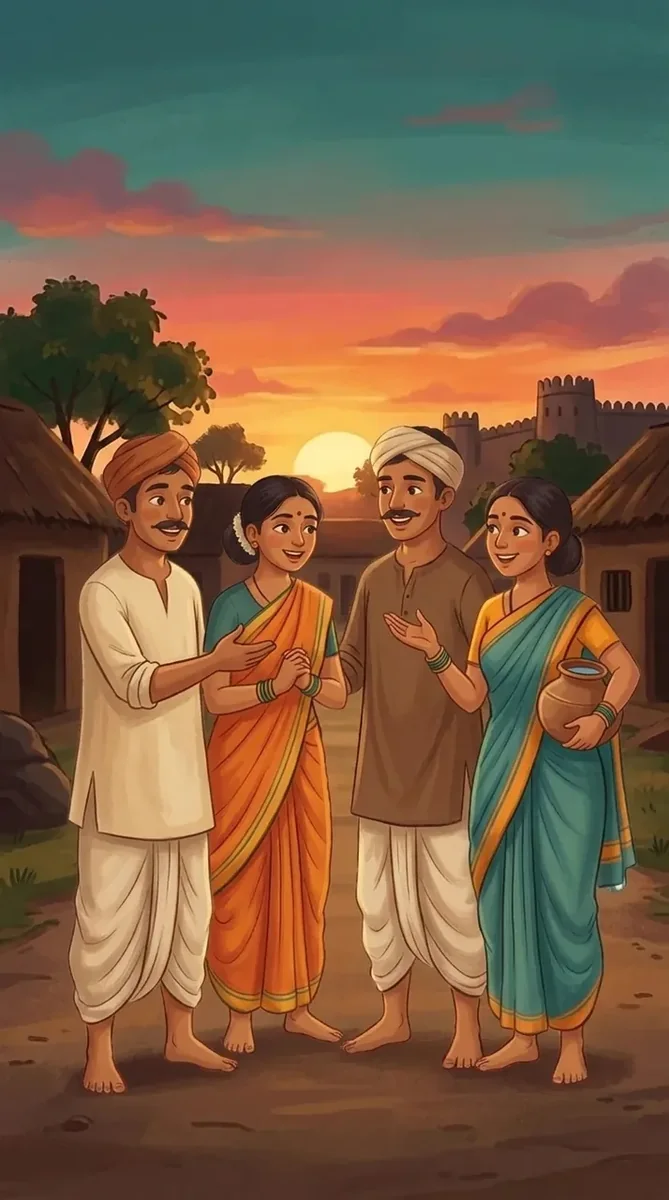
Naani Maa, sifting flour in the courtyard, raises one hand. Wait. Will this news pass through my sieves? She lifts the first: the sieve of sach, truth. Did you see Chhutki pick the guavas with your own eyes? No — she only heard it. The news sticks. The second is the sieve of pyaar, love: if Chhutki heard what you are about to say, how would she feel? Naani stops the story right here and asks your child that same question, and waits. The third is the sieve of kaam, usefulness: would repeating this help anyone at all? By now the hot news has gone small and cold.
Naani saysनानी माँ ने पहली छलनी उठाई। यह सच की छलनी है। जो बात इसमें से निकले, वो पक्की सच होनी चाहिए।Naani Maa lifted the first sieve. This is the sieve of truth. Whatever passes through it must be absolutely true.
But Naani Maa does not leave it there. Let us go and see with our own eyes, she says. At the orchard the tree really is almost bare — and up on a branch sits a fat monkey with a guava stuffed in its mouth, shaking the branches as if to say these are mine now. Ramu Kaka bursts out laughing. So that is our guava thief.
Naani saysएक मोटा सा बंदर, मुँह में अमरूद दबाए!A fat monkey, with a guava stuffed in its mouth!
By evening the whole village knows the truth, Ramu Kaka hands the last guavas to Chhutki and her friend, and the two girls eat them under the neem tree as the crickets start up. Naani Maa washes her three sieves and puts them away. Everything, as Naani says, back in its place.
The value this story teaches
Around five or six, children discover that words have power: a whispered 'did you know' can make them the centre of the circle. Honesty at this age is not only about not lying. It is about not passing on what you have not seen, and noticing that a careless sentence can hurt a friend.
Naani Maa does not say 'don't gossip'. She lifts three sieves, one at a time, and asks: did you see it yourself? would Chhutki cry if she heard? does telling help anyone? The hot rumour shrinks and cools in the little girl's mouth — and then they walk to the orchard and find a monkey eating the guavas.
How to talk about it at bedtime
- Ask your child: which sieve did the news get stuck in first — sach, pyaar or kaam?
- Try: the next time a 'did you know' comes home from school, ask gently which sieve it would pass through, instead of saying 'don't say that'.
- Ask your child: how do you think Chhutki felt when the whole village heard the truth?
When to pick this story
- When your child comes home with a rumour about a classmate
- After an unkind thing was said — by them or to them
- When a sibling has been blamed for something nobody actually saw
Try asking your child
After the story, or the next morning on the way to school:
- Which of the three sieves stopped the news first, and why did it get stuck there?
- Who really took Ramu Kaka's guavas? How did Naani Maa find out for sure?
- Think of something you heard about a friend at school. Would it pass through all three sieves — true, kind and useful?
Meet the characters
Naani as a girl, bursting to repeat what she overheard at the market
Her grandmother, keeper of the three sieves of truth, love and usefulness
Her best friend, wrongly blamed for the missing guavas
The orchard owner who laughs when he finds the real thief
From the app-store reviews
Two of the public reviews parents have left on Google Play and the App Store, quoted exactly as they wrote them.
“Maine to download kar liya hai aap sabhi log download karo aur yah story Apne bacchon Ko badon ko sunao bahut achcha lagega…”“Great stories and really interactive. My kid love it”
Give your child a story with a value every night
Naani tells Naani ki Teen Chhalniyan in warm Hindi, shows the pictures, asks a question halfway and listens to your child's answer. One story, one seekh, then good night.
Listen tonight — free- Free stories every night
- No ads
- Your child’s voice erased after 24 hours
- Made in India
About this story
- Language: Hindi — simple, in a grandmother’s voice
- Ages: 4–7
- Listen time: about 12 minutes
- Value: Honesty, Kindness & empathy, Wisdom & thinking
- World: Naani's Lessons
- Theme: Not everything we hear needs to be repeated.
Also plays in the browser: app.naani.live/stream/naani-s-three-sieves (sign-in required).
Parents also ask
What are the three sieves in the story?
Truth, love and usefulness — sach, pyaar and kaam. Naani Maa asks whether the news is definitely true, whether it would hurt the person it is about, and whether telling it helps anyone. A rumour that fails any one sieve is left where it is. The idea comes from an old teaching tale often attributed to Socrates, retold here in an Indian village courtyard.
Is a story about gossip too grown-up for a 5-year-old?
Not in this form. Nothing bad actually happens to Chhutki, the guava thief turns out to be a monkey, and the whole thing ends with two friends eating fruit under a tree. Younger children enjoy the monkey; older ones take away the three questions and start using them.
Why does Naani tell a story about her own grandmother?
Because the seekh came to her the same way it comes to your child — from a grandmother in a courtyard. Telling it as a memory lets Naani admit she was once tempted to repeat a rumour too, which makes the lesson far easier for a child to accept.
Next story
Nanhi Cheenti aur Kabootar
A moral story about kindness — a small good turn comes back in a way nobody expected.
More Naani's Lessons
All Naani's Lessons → Wisdom
Pyaasa Kauwa
A moral story about persistence and clever thinking — small efforts, one pebble at a time, solve a big problem.
 Wisdom
Topiwala aur Natkhat Bandar
A moral story about thinking before reacting — the answer is often right in front of you, if you stop and look.
 Honesty
Imaandaar Lakarhara
A moral story that teaches honesty without a lecture — a poor man says no to gold because it is not his.
More stories that teach honesty
Telling the truth even when a small lie would be easier.
 Honesty
Makhan Chor
A Krishna story that teaches a four-year-old to ask openly instead of sneaking — honesty, without a lecture.
 Honesty
Neela Siyaar
A Panchatantra story that makes telling the truth feel like relief, not punishment.