Pyaasa Kauwa — the thirsty crow story for kids, in Hindi
A moral story about persistence and clever thinking — small efforts, one pebble at a time, solve a big problem.
प्यासा कौआ — कंकड़ डालकर पानी पीने की कहानी
Hear Naani tell it
Watch a glimpse
The story
If your child gives up after the first try — at a button, a letter, a puzzle — the thirsty crow is the patient little hero they need. Every parent in India knows how this one ends, and that is rather the point: it is the first story most of us were ever told, and hearing it in Naani's slow, warm Hindi is a little like being handed it back. It is a hot summer day. A crow has been flying since morning, the sun is now high, and his throat is bone dry. He wants one thing only: a little water.
Naani saysउसका गला एकदम सूख गया था। उसे बस एक ही चीज़ चाहिए थी — थोड़ा-सा पानी।His throat was completely dry. He wanted just one thing — a little water.
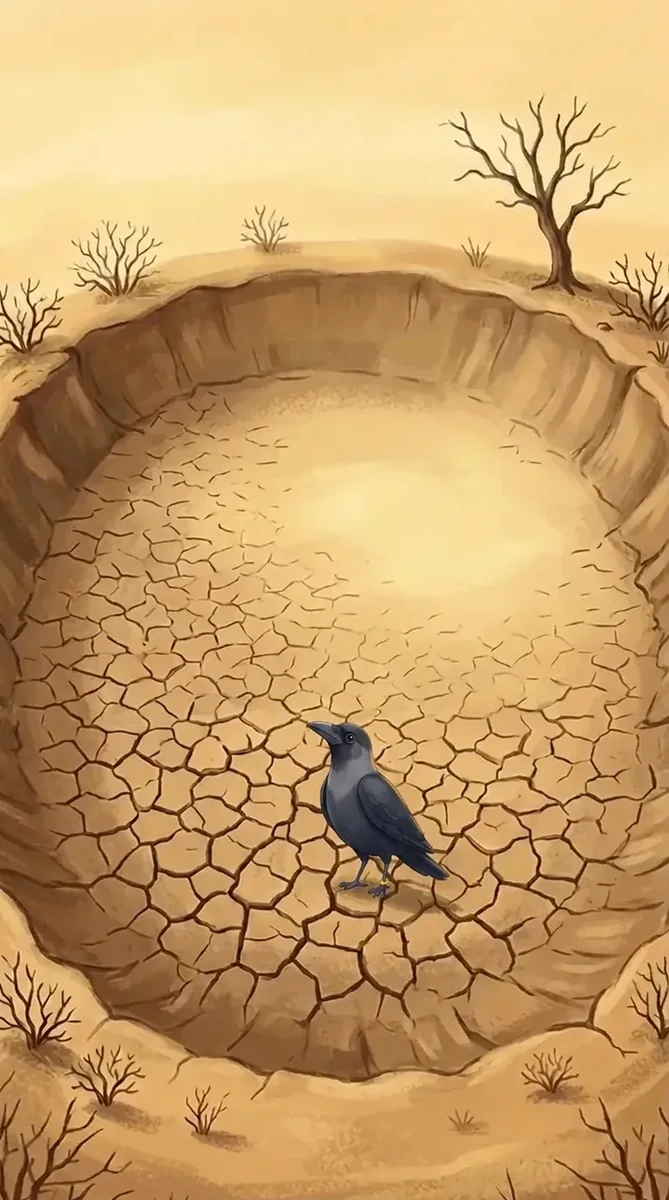
He sets off to look. The village pond is cracked mud. The naand in the fields — the big trough the animals drink from — is empty, and a thirsty cow stands beside it, lowing. His wings are tiring. Just a little further, he thinks, and as he crosses over a house he spots it in the courtyard below: a clay ghada.
Naani saysनीचे आँगन में उसे मिट्टी का एक घड़ा दिखा!Down in the courtyard he spotted a clay pot!
The story in pictures
Frames from Naani’s telling, in story order — the pictures your child sees while she speaks.
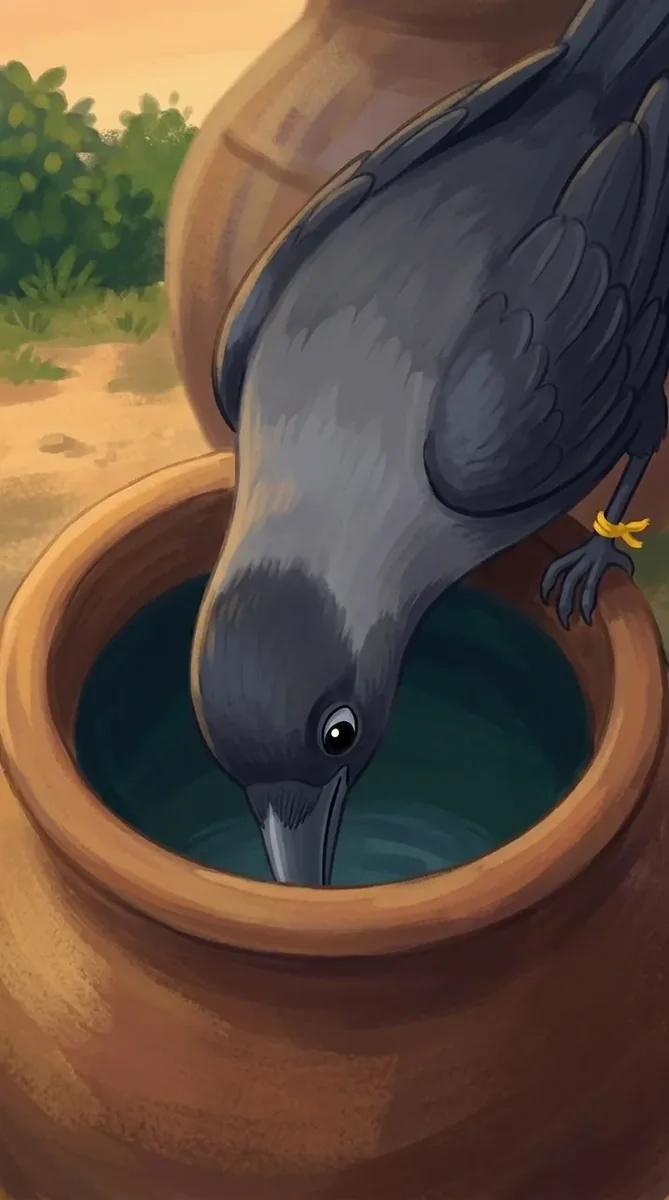


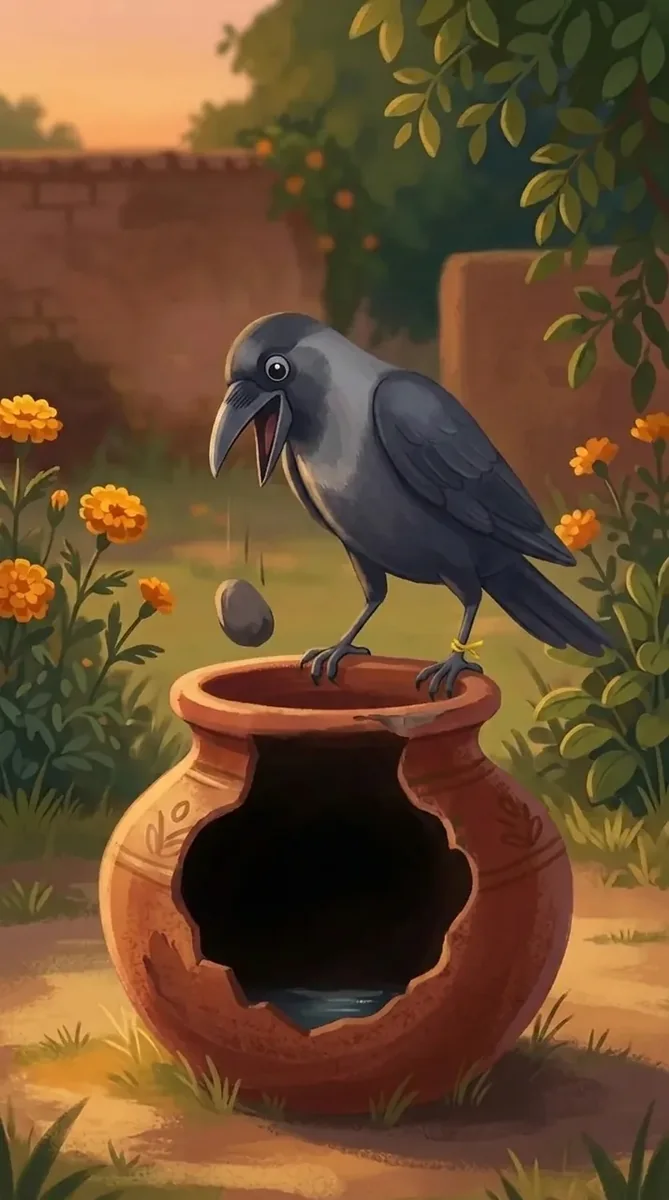
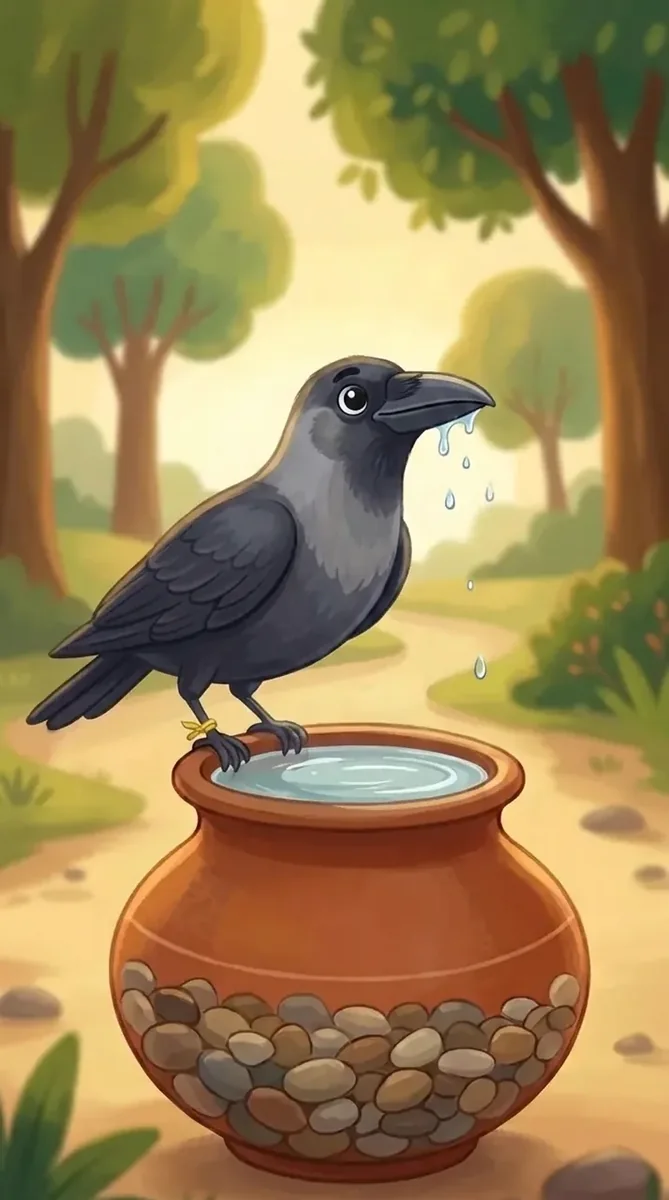
He lands on the rim and peers in. There is water — right at the bottom. His beak goes in and comes up dry; the water is too far down. He pushes at the pot with all his weight, hoping it will tip. It is far too heavy. A temple bell sounds in the distance and the crow sits on the rim, tired and thirsty, water so close and still out of reach. Then his eye falls on the ground, where little kankad — pebbles — lie scattered. He looks at them, and looks, and a tarkeeb arrives. Naani pauses here and asks your child what the crow could possibly do with those little stones, and listens before she lets him begin.
Naani saysइतने पास पानी, और फिर भी पी नहीं सकता।Water so close, and still he could not drink.
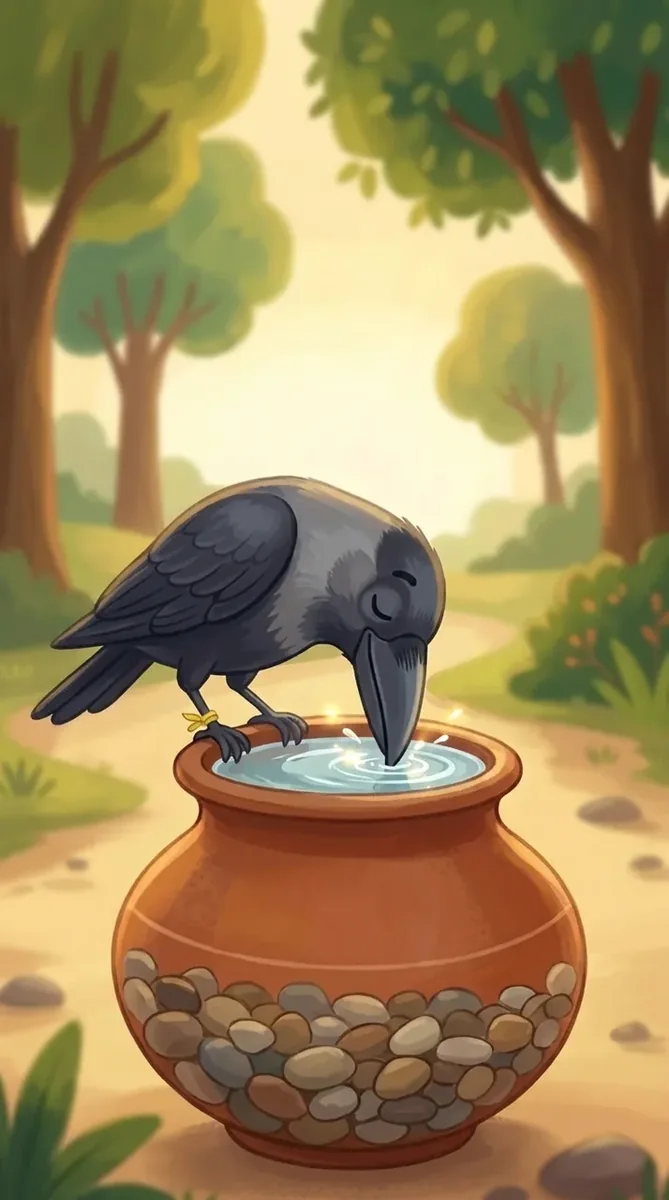
He picks up one pebble in his beak, flies to the pot and drops it in. The water rises — barely. A second pebble. A third. A fourth. One after another, without stopping, his wings aching, he does not give up. The water creeps up, and up, and up. One last pebble... and it is at his beak. He drinks slowly, cool water sliding down a parched throat, and feels wonderful.
Naani saysकौआ फिर गया, दूसरा कंकड़ लाया। फिर तीसरा। फिर चौथा। एक-एक करके, बिना रुके।The crow went again and brought a second pebble. Then a third. Then a fourth. One by one, without stopping.
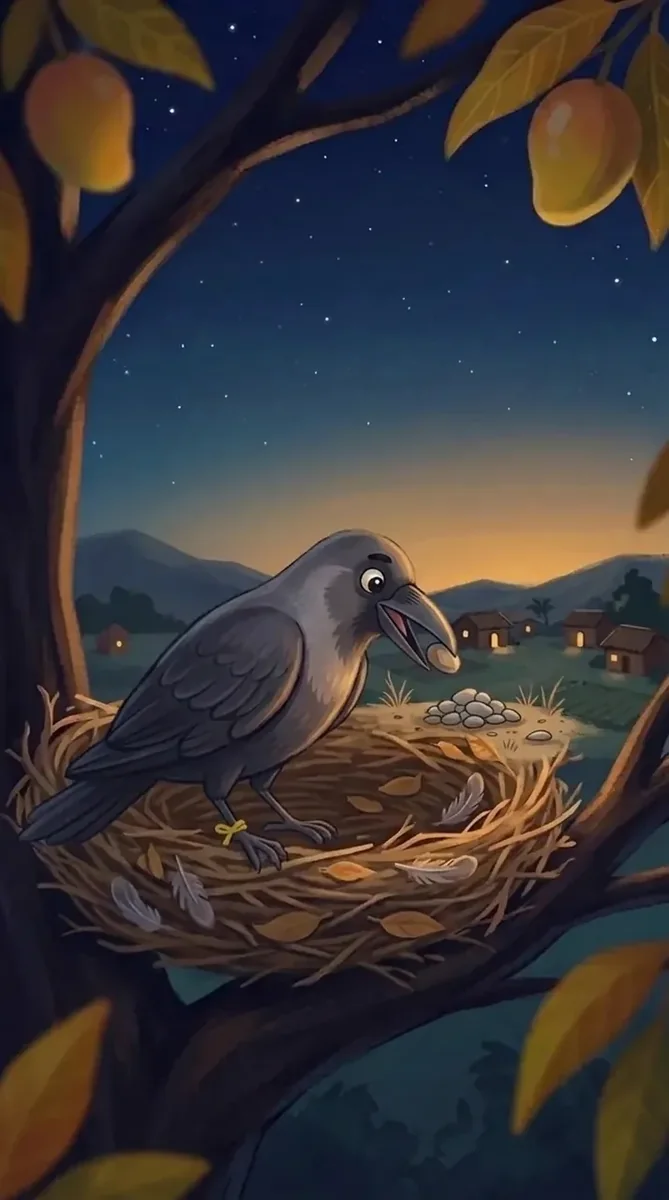
As the sky turns orange he flies home light-winged, settles into his nest and tucks his head under his wing. The crickets begin their night song. He has done nothing grand today, Naani says — just dropped small stones, one after another. But that is what quenched his thirst. The tree is quiet, the village is quiet, and the crow sleeps.
The value this story teaches
Four-year-olds want results now. The gap between trying once and trying ten times is where most early frustration lives — the tower that falls, the shoe that will not go on. Patience and problem-solving grow together, and both need a picture a child can hold in their head when they want to quit.
Naani gives them one. The crow cannot reach the water and cannot tip the pot, so he sits, looks at the pebbles, and begins: one stone, and the water rises barely; a second, a third, a fourth, wings aching. She lingers on 'ek-ek karke, bina ruke' — one by one, without stopping — until the water touches his beak.
How to talk about it at bedtime
- Ask your child: what did the crow try before the pebbles, and why didn't it work?
- Try: the next time your child wants to give up, say 'one more kankad' — it becomes a shared code word for one more try.
- Ask your child: what are you learning right now that is taking lots of small tries?
When to pick this story
- After a frustrated 'I can't do it' at homework, laces or a puzzle
- When your child is learning something slow — swimming, cycling, writing their name
- As a first Hindi bedtime story for a very young listener
Try asking your child
After the story, or the next morning on the way to school:
- Why couldn't the crow drink the water when he first looked into the pot? What did he try before the pebbles?
- What happened to the water each time a pebble went in? How many do you think he dropped?
- What is something you are learning right now that takes lots of small tries — like the crow's pebbles?
Meet the characters
A thirsty black bird who finds water he cannot reach and refuses to give up
Lowing beside an empty trough — a reminder that the whole village is dry
From the app-store reviews
Two of the public reviews parents have left on Google Play and the App Store, quoted exactly as they wrote them.
“Great stories and really interactive. My kid love it”
“an intellectual way to describe the old stories for kids .”
Give your child a story with a value every night
Naani tells Pyaasa Kauwa in warm Hindi, shows the pictures, asks a question halfway and listens to your child's answer. One story, one seekh, then good night.
Listen tonight — free- Free stories every night
- No ads
- Your child’s voice erased after 24 hours
- Made in India
About this story
- Language: Hindi — simple, in a grandmother’s voice
- Ages: 4–7
- Listen time: about 9 minutes
- Value: Wisdom & thinking, Patience, Self-belief
- World: Naani's Lessons
- Theme: Persistence, observation and small actions can solve difficult problems.
Also plays in the browser: app.naani.live/stream/the-thirsty-crow (sign-in required).
Parents also ask
What is the moral of the thirsty crow story?
Persistence and a bit of thinking solve problems that strength alone cannot. The crow cannot tip the heavy pot, but by dropping pebbles one at a time he raises the water to his beak. Naani's seekh: small efforts, one after another, make even a big task easy.
Is Pyaasa Kauwa good for a 3- or 4-year-old?
It is one of the gentlest stories on Naani's shelf — no villain, no scare, a single clear problem and a satisfying fix. The nine minutes are unhurried, with pictures for every step and three short questions the child answers out loud. Many parents use it as a first Hindi bedtime story.
Why does Naani explain words like ghada and kankad?
Children who hear English all day may not know the Hindi for a clay pot or a pebble. Naani gives the meaning inside the story — kankad, yaani nanhe-nanhe patthar — so the tale never stops for a vocabulary lesson, but the words stay with the child.
Next story
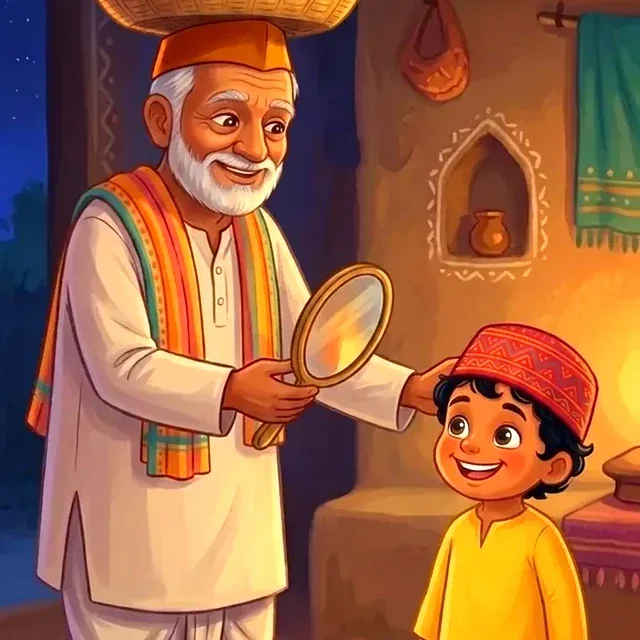
Topiwala aur Natkhat Bandar
A moral story about thinking before reacting — the answer is often right in front of you, if you stop and look.
More Naani's Lessons
All Naani's Lessons →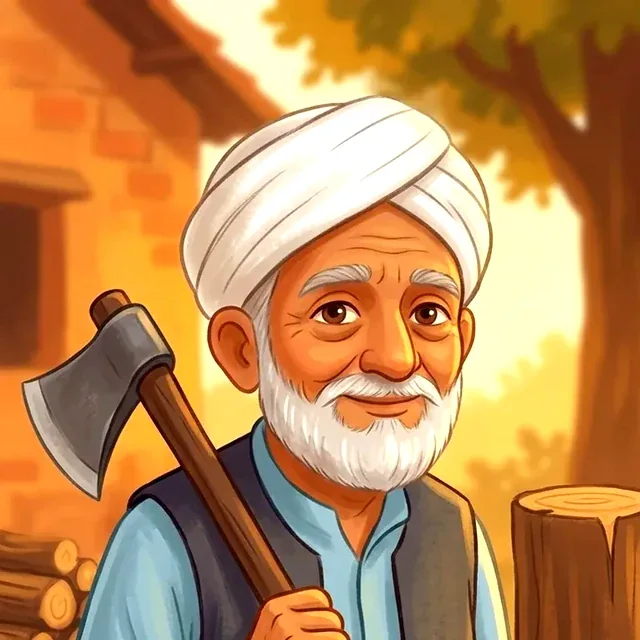 Honesty
Imaandaar Lakarhara
A moral story that teaches honesty without a lecture — a poor man says no to gold because it is not his.
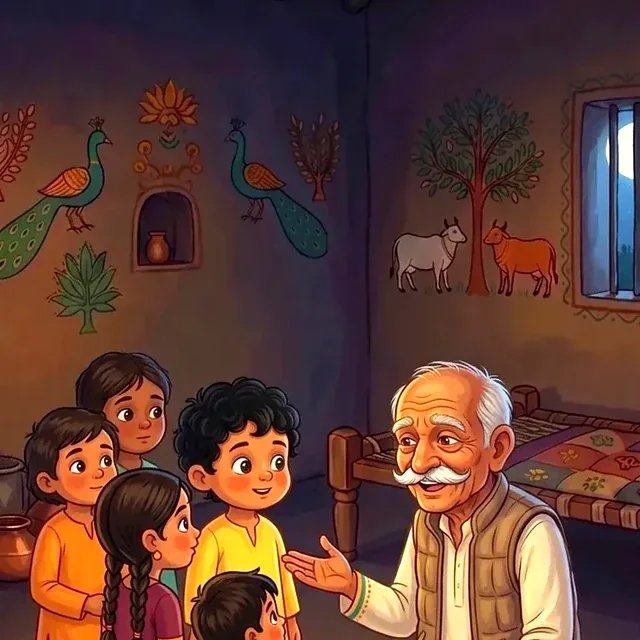 Teamwork
Lakdiyon Ka Gattha
A moral story that teaches teamwork — three squabbling siblings discover it for themselves, with no lecture.
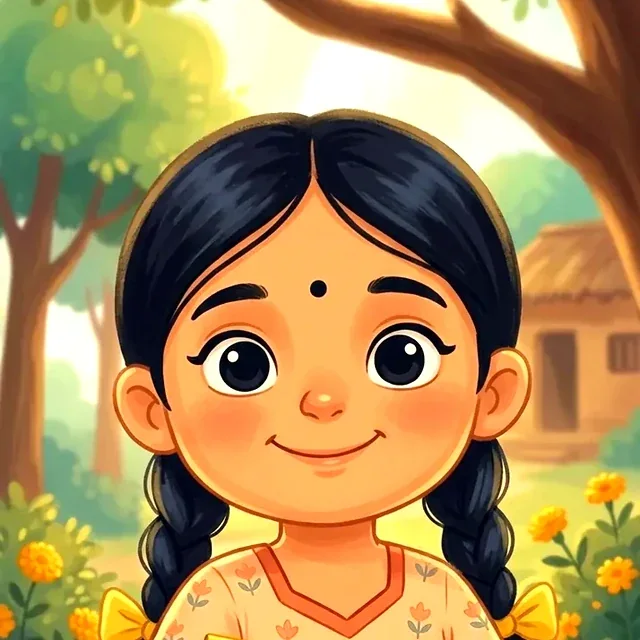 Honesty
Naani ki Teen Chhalniyan
A moral story about honesty and kind words — three simple questions your child can ask before repeating anything.
More stories that teach wisdom & thinking
Stopping to think before acting; a cool head beats a strong arm.
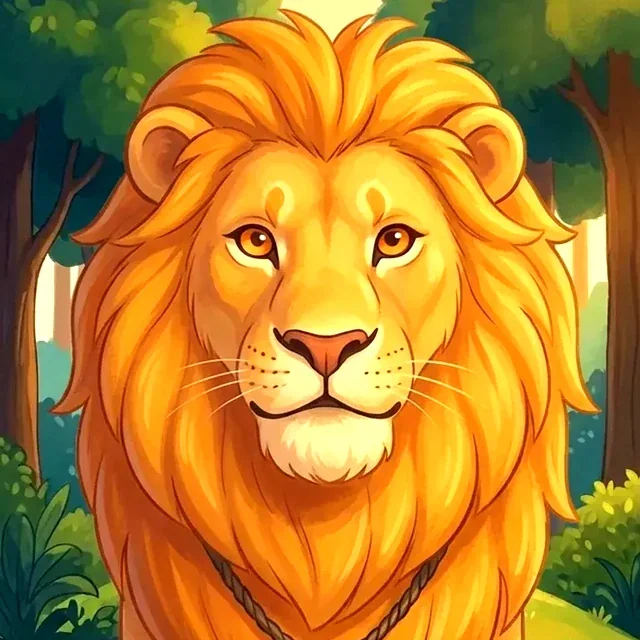 Wisdom
Sher aur Chalaak Khargosh
A Panchatantra story that shows your child how a calm, thinking mind beats a loud, strong one.
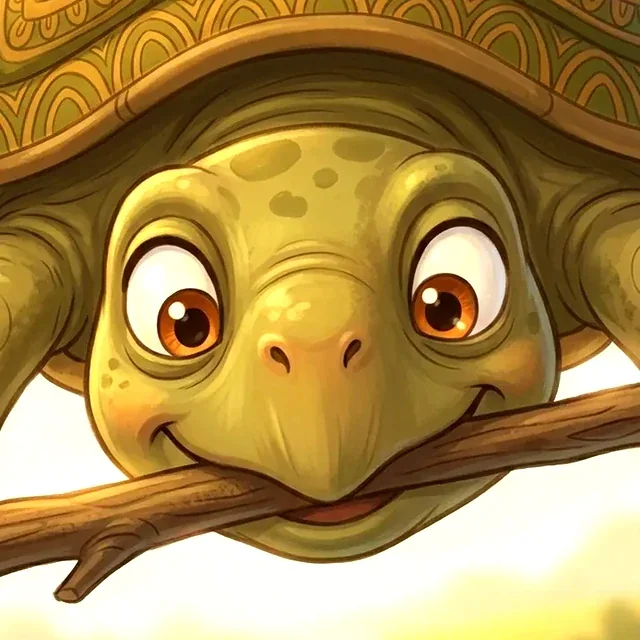 Wisdom
Baatuni Kachhua
A Panchatantra story that helps a chatty child learn when to speak and when to simply listen.
 Wisdom
Navratri Night 7 — Maa Kalaratri
The seventh Devi of Navratri, told so your child learns that when force does not work, you stop, look carefully and think of a new way.