Topiwala aur Natkhat Bandar — the cap seller and the monkeys story for kids, in Hindi
A moral story about thinking before reacting — the answer is often right in front of you, if you stop and look.
टोपीवाला और नटखट बंदर — माधव काका की तरकीब
Hear Naani tell it
Watch a glimpse
The story
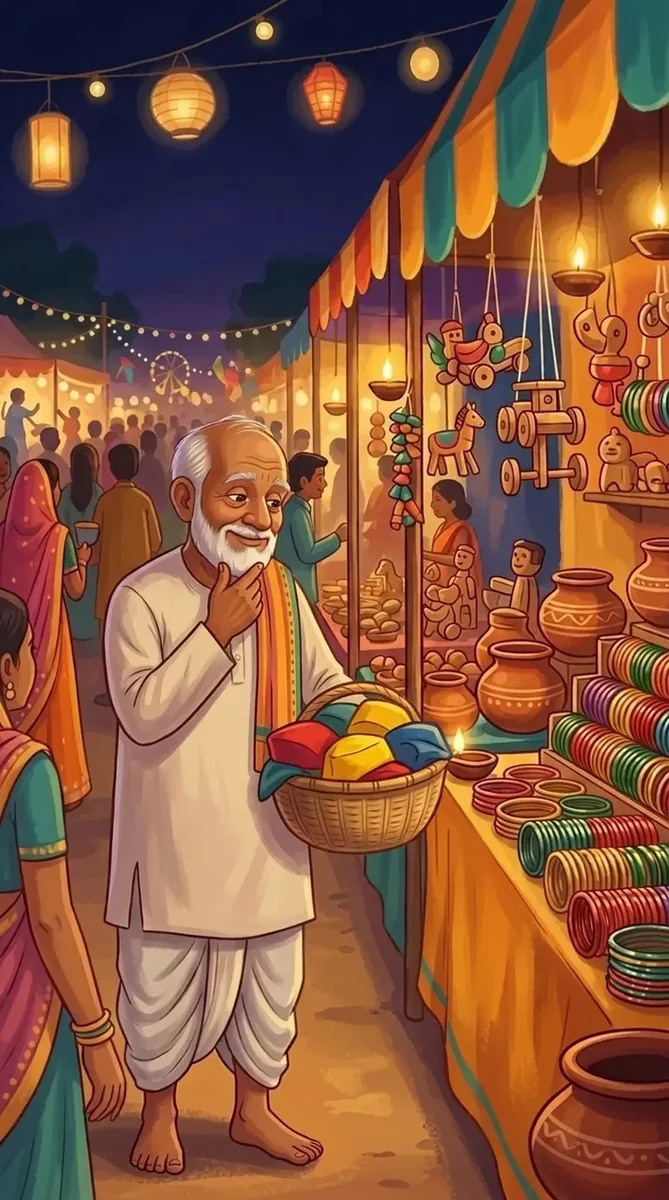
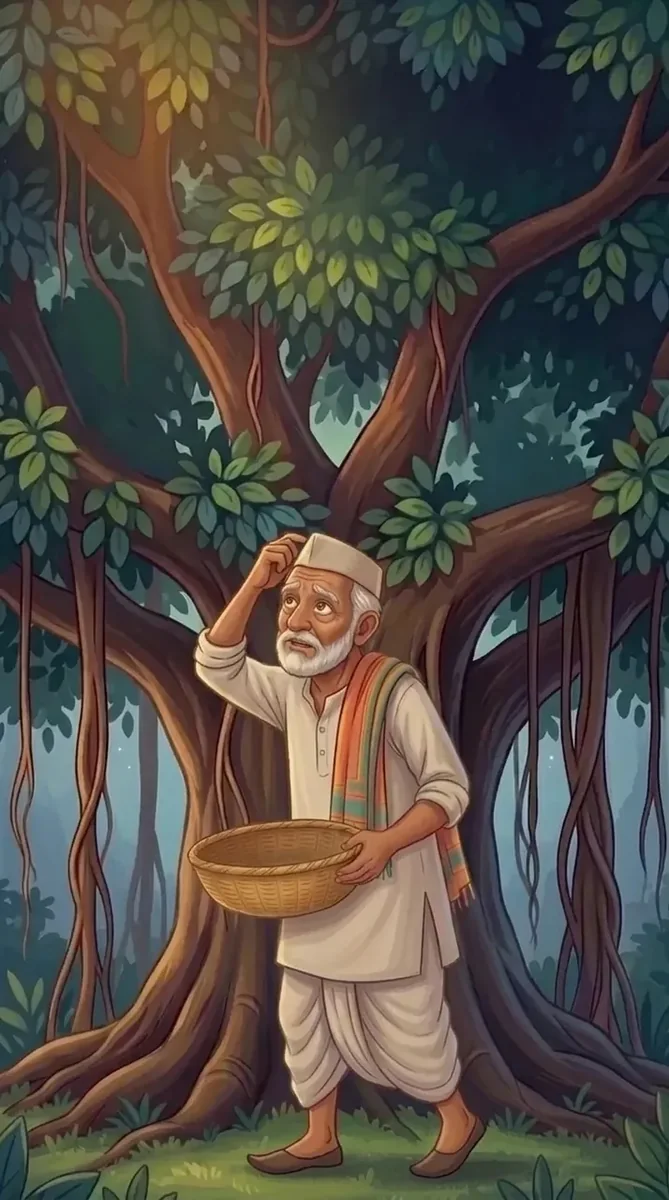
If your child's first response to a problem is to shout or cry, Madhav Kaka is the calm, watchful grown-up you want them to meet. Red, yellow, green, blue — his basket is a tower of colour, and every morning he balances it on his head and walks to the bazaar, where anyone who tries on one of his caps ends up buying it. Today is a bigger day than usual: there is a mela in a faraway village, and Kaka reckons that if he sells everything he can bring mithai home for the family.
Naani saysमाधव काका टोपियाँ बेचते थे — लाल, पीली, हरी, नीली — तरह-तरह की टोपियाँ।Madhav Kaka sold caps — red, yellow, green, blue — caps of every kind.
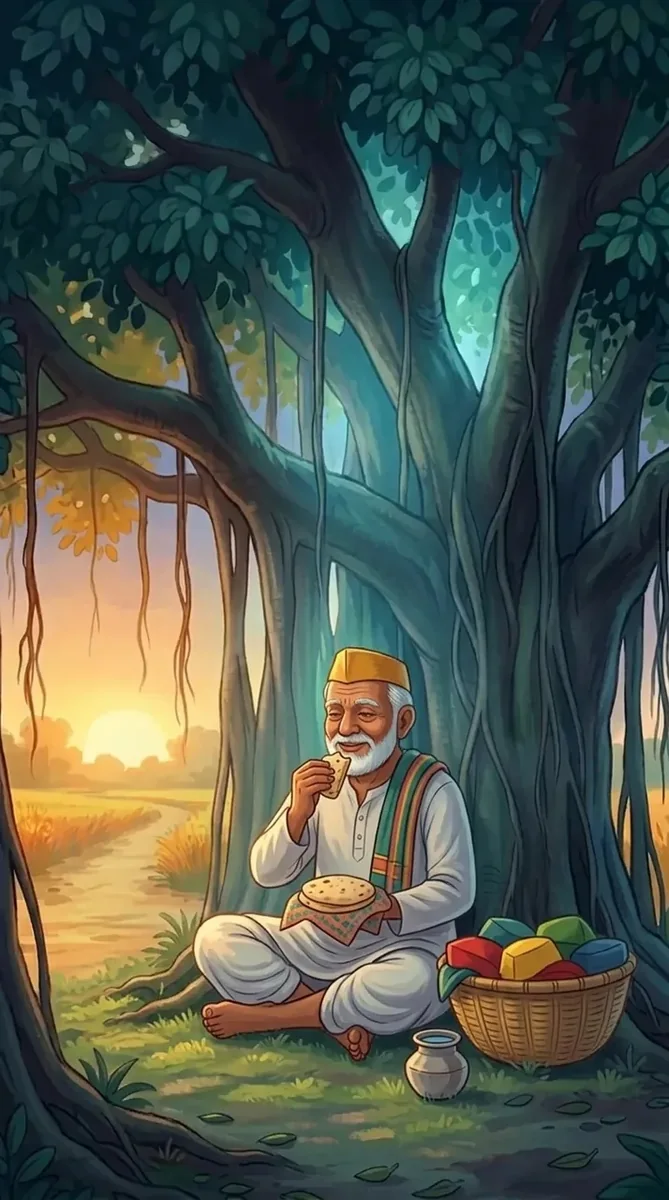
The road to the fair runs through a forest — tall trees, a thin river, cool shade. By midday the sun is fierce and Kaka's feet ache, so when he spots an enormous bargad, a banyan, he sets the basket down beside him, eats his roti, leans against the trunk and falls fast asleep. Naani pauses here to ask your child whether they ever nod off in the afternoon like Kaka does, and chats about the answer before carrying on.
Naani saysहल्की हवा चल रही थी, पत्ते हिल रहे थे… और लेटते ही… काका को गहरी नींद आ गई!A light breeze was blowing, the leaves were rustling… and the moment he lay down, Kaka fell fast asleep.
The story in pictures
Frames from Naani’s telling, in story order — the pictures your child sees while she speaks.
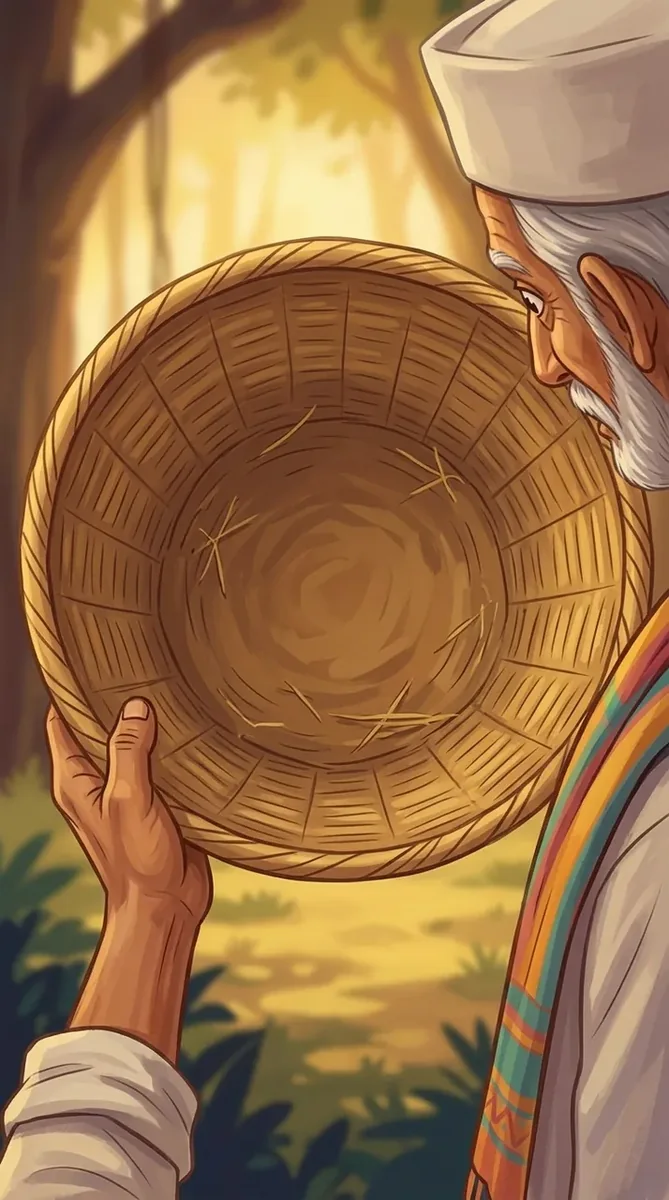
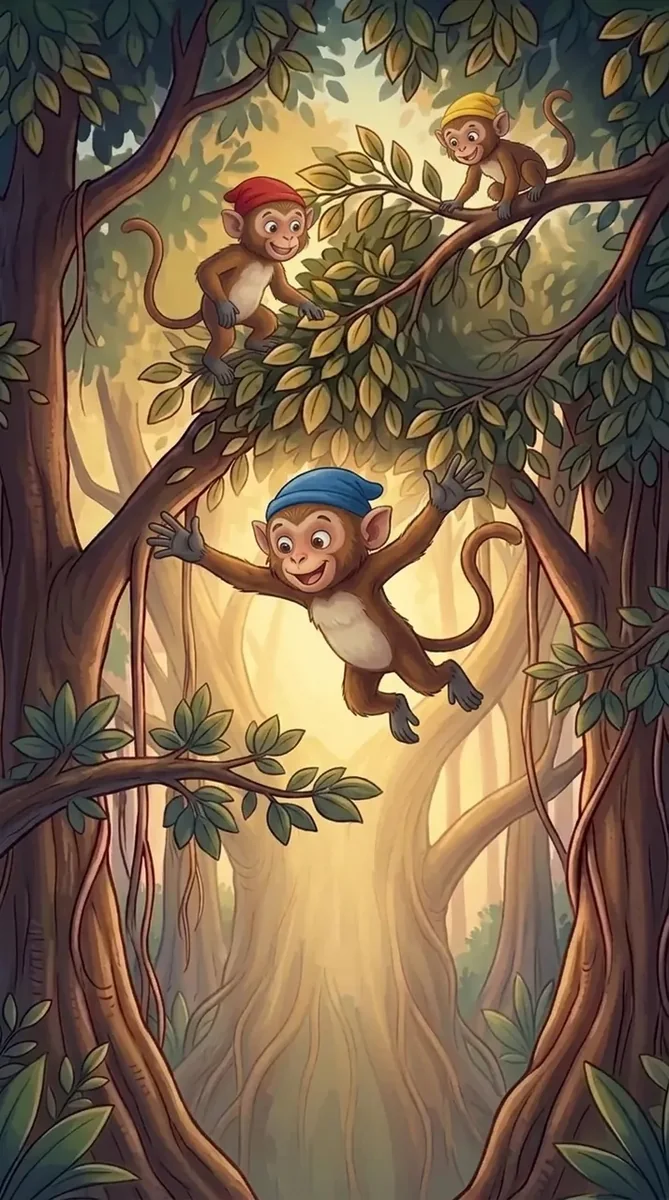

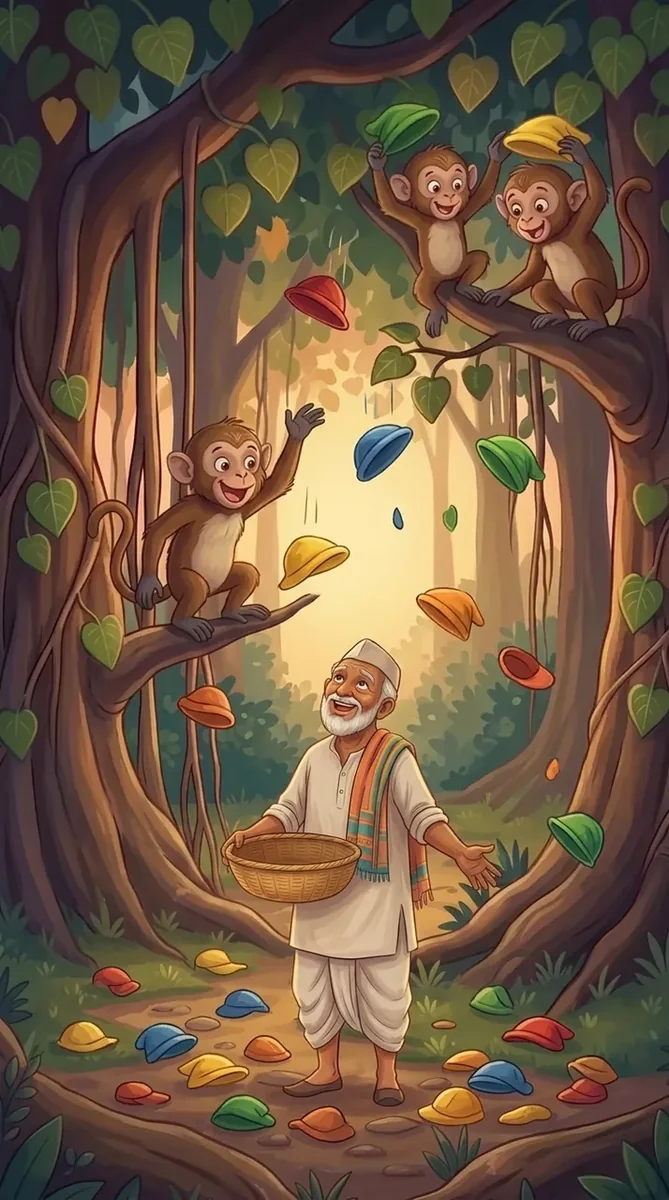

When Kaka wakes and reaches for the basket, his heart drops. Empty. Not one cap. Then comes a rustle from above, and he looks up to find the branches full of monkeys — and on every monkey's head, one of his caps. He folds his hands: O bandar bhaiya, give them back. The monkeys fold their hands. He waves. They wave. Kaka is baffled.
Naani saysऔर जानते हो सबसे मज़े की बात क्या थी? हर बंदर के सिर पर काका की एक टोपी थी!And do you know the funniest part? On every monkey's head sat one of Kaka's caps.
Then he does what the wisest people do: he stops and watches. He strolls under the tree and scratches his head — every monkey scratches its head. He rubs his eyes — every monkey rubs its eyes. Nakal. They copy. Kaka's eyes light up. He takes off his own cap, holds it high so all of them are watching, lets a moment of silence stretch... and tosses it to the ground. Down they come — red, yellow, green, blue — raining out of the banyan one after another.
Naani saysकाका ने आँखें मलीं… बंदरों ने भी आँखें मलीं। अच्छा… तो बंदर नकल करते हैं।Kaka rubbed his eyes… the monkeys rubbed theirs. Aha… so monkeys copy.
He dusts each cap, stacks the basket, calls a thank you up into the leaves, and the monkeys go bounding off into the forest. He reaches the mela, sells every last cap by sunset, and walks home at dusk with birds heading to their nests and a packet of sweets in his hand.
The value this story teaches
A four-year-old meets a problem with their whole body: tears, a stamp, a shout for help. Learning to pause and observe first is one of the quiet skills of early childhood, and it is nearly impossible to teach by telling. Children need to watch someone do it and see that it works.
Kaka tries the obvious things — he pleads, he waves — and nothing happens. Then, Naani says, he does what the wisest people do: he stops and watches. He scratches his head; every monkey scratches. He rubs his eyes; every monkey rubs. The moment he understands nakal, he knows exactly what to do, and the caps rain down.
How to talk about it at bedtime
- Ask your child: what did Kaka notice about the monkeys that gave him his idea?
- Try: the next time something is lost or stuck, say 'let's do what Kaka did' and look together for one quiet minute before anyone gets upset.
- Ask your child: if you were a monkey in that tree, would you have thrown your cap down?
When to pick this story
- After a meltdown over a lost toy or a jammed zip
- When your child keeps asking you to fix things they could work out
- For a night that needs a funny story with no sad part
Try asking your child
After the story, or the next morning on the way to school:
- Why did the monkeys throw their caps down when Kaka threw his? What word did Naani use for copying?
- Kaka asked nicely and waved first, and it did not work. What did he do next that did work?
- Have you ever lost something and found it by looking very carefully? Where was it hiding?
Meet the characters
The cap seller on his way to the mela, who stops to think instead of shouting
A tree full of mischief-makers who copy everything they see
From the app-store reviews
Two of the public reviews parents have left on Google Play and the App Store, quoted exactly as they wrote them.
“Maine to download kar liya hai aap sabhi log download karo aur yah story Apne bacchon Ko badon ko sunao bahut achcha lagega…”“Great stories and really interactive. My kid love it”
Give your child a story with a value every night
Naani tells Topiwala aur Natkhat Bandar in warm Hindi, shows the pictures, asks a question halfway and listens to your child's answer. One story, one seekh, then good night.
Listen tonight — free- Free stories every night
- No ads
- Your child’s voice erased after 24 hours
- Made in India
About this story
- Language: Hindi — simple, in a grandmother’s voice
- Ages: 4–7
- Listen time: about 12 minutes
- Value: Wisdom & thinking, Patience
- World: Naani's Lessons
- Theme: Study a problem before reacting blindly.
Also plays in the browser: app.naani.live/stream/the-cap-seller-and-the-monkeys (sign-in required).
Parents also ask
What is the moral of the cap seller and the monkeys?
Think before you react. Madhav Kaka cannot shout his caps down from the tree; he gets them back only when he pauses, notices that the monkeys imitate everything he does, and uses that. Naani's seekh puts it simply: when things get tangled, stop and look — the answer is in front of you.
Is this the same tale as the picture book Caps for Sale?
It is the same old folk tale, which exists in many versions across India and beyond. Naani's telling is set on the way to a village mela, with a named cap seller, a banyan tree and a bag of sweets to bring home, and it is told in Hindi with the tricky words explained as she goes.
Will my 4-year-old follow a nine-minute Hindi story?
This one is built for it. The action is visual and repetitive in the way small children love — he scratches, they scratch; he rubs, they rub — and the pictures show each step. Naani stops three times to ask a short question and answers what your child says, which keeps them inside the story.
Next story
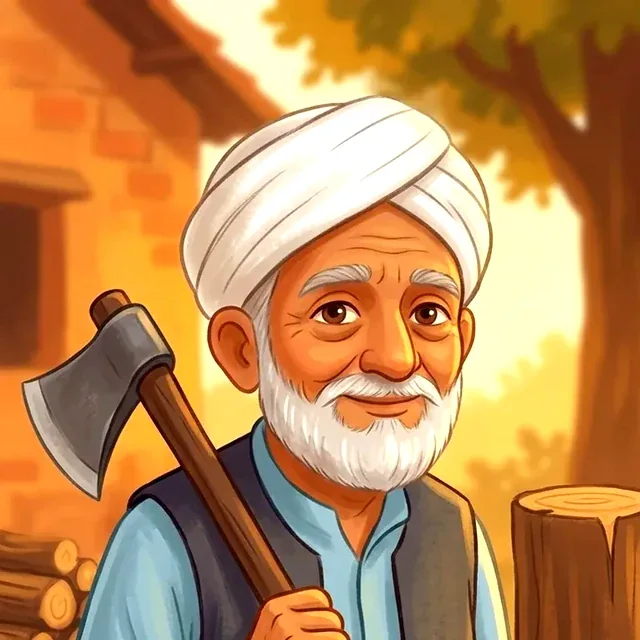
Imaandaar Lakarhara
A moral story that teaches honesty without a lecture — a poor man says no to gold because it is not his.
More Naani's Lessons
All Naani's Lessons →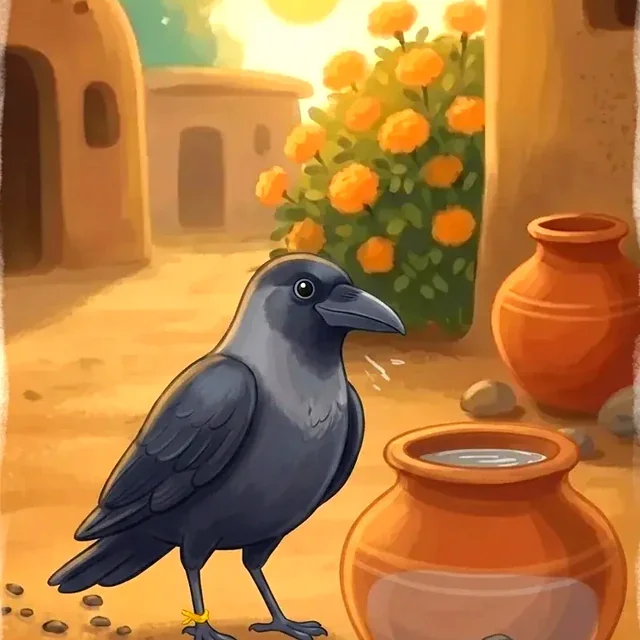 Wisdom
Pyaasa Kauwa
A moral story about persistence and clever thinking — small efforts, one pebble at a time, solve a big problem.
 Teamwork
Lakdiyon Ka Gattha
A moral story that teaches teamwork — three squabbling siblings discover it for themselves, with no lecture.
 Honesty
Naani ki Teen Chhalniyan
A moral story about honesty and kind words — three simple questions your child can ask before repeating anything.
More stories that teach wisdom & thinking
Stopping to think before acting; a cool head beats a strong arm.
 Wisdom
Sher aur Chalaak Khargosh
A Panchatantra story that shows your child how a calm, thinking mind beats a loud, strong one.
 Wisdom
Baatuni Kachhua
A Panchatantra story that helps a chatty child learn when to speak and when to simply listen.
 Wisdom
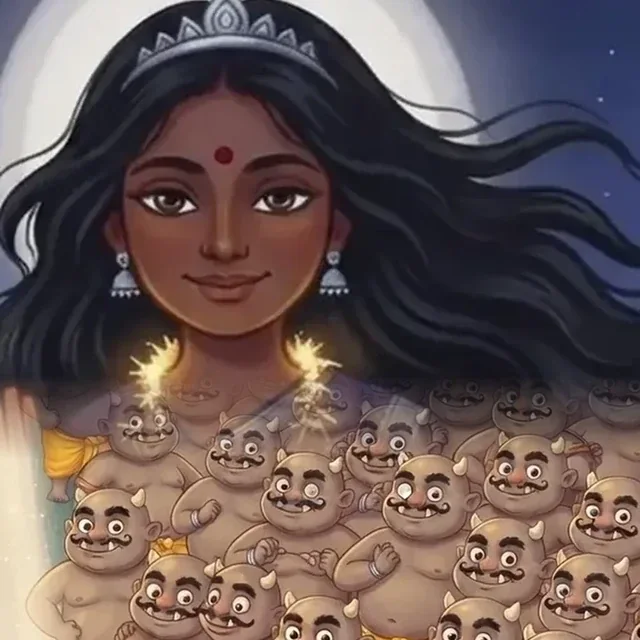
Navratri Night 7 — Maa Kalaratri
The seventh Devi of Navratri, told so your child learns that when force does not work, you stop, look carefully and think of a new way.