Maa Katyayani — the Navratri Day 6 story for kids, in Hindi
The sixth Devi of Navratri, told so your child learns that a thing need not be costly to be special — what they make with love is the best gift.
माँ कात्यायनी — पूरे मन की पूजा, नवरात्रि की छठी रात
Hear Naani tell it
Watch a glimpse
The story
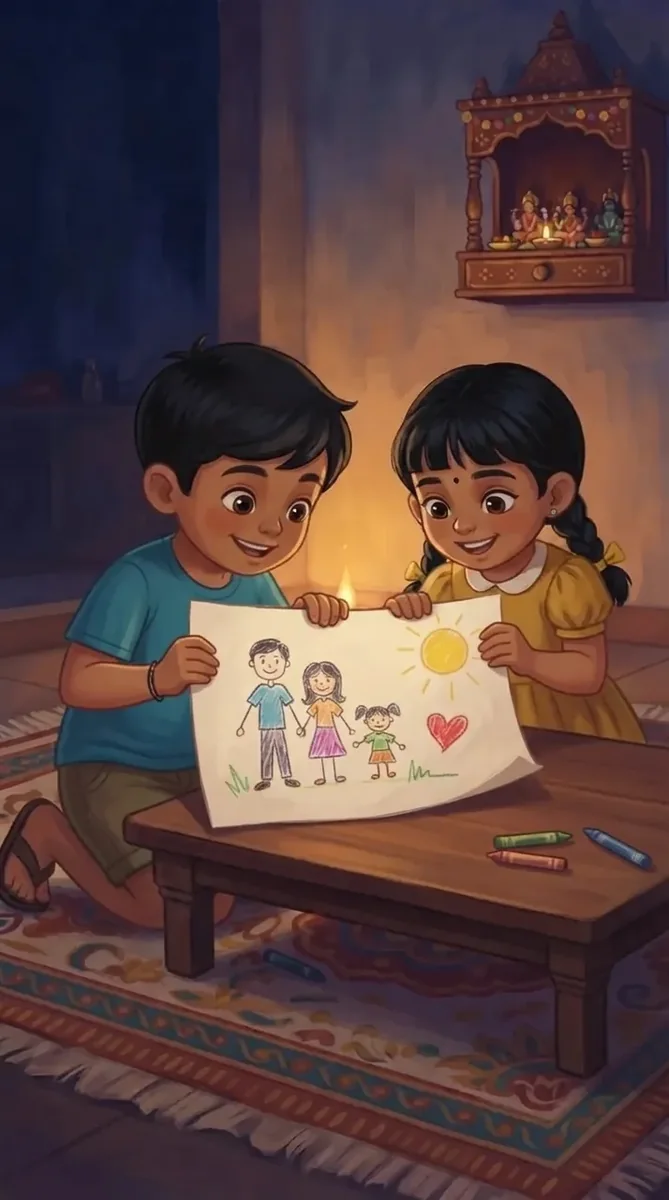
A child sits at the table with crayons and makes a drawing for Mummy and Papa. It is a little wobbly, a little crooked — and Naani says it is worth more than any costly gift, because their love is in it. That small scene is where this story is heading, and it is the part parents tend to remember. Night 6 of Navratri teaches your child that a thing does not have to be expensive to be special; what is made with the whole heart is.
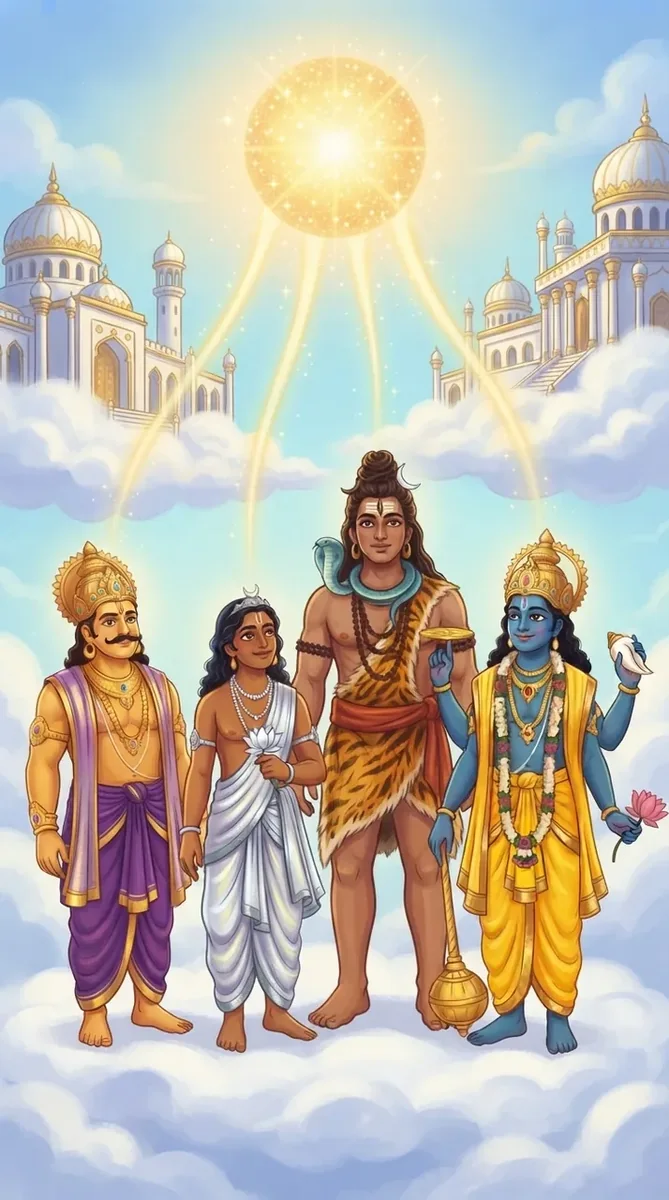
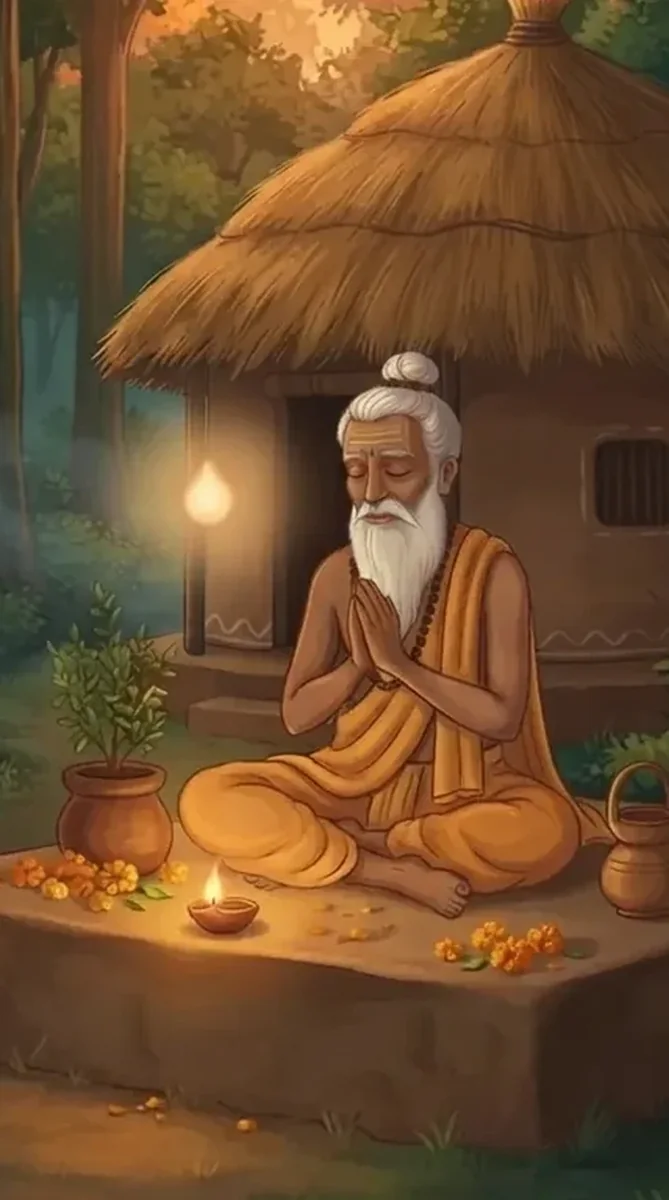
Naani begins in a thick forest, at a small hut where Rishi Katyayan worships the Devi every morning. Then evening, night, rain, winter, one year, another, many years — and one wish still unanswered: "Maa, come to my home as my daughter." Meanwhile, up in heaven — dhadaam! — a big demon named Mahishasura arrives and drives even the gods away. The gods gather, and a bright light comes out of Shiv Ji, then Vishnu Ji, then every other god, until all of it joins into one great, dazzling light.
Naani saysपर उनकी एक इच्छा अब तक अधूरी थी— “माँ… मेरे घर मेरी बेटी बनकर आओ।”But one wish was still unanswered: "Maa… come to my home as my daughter."
The story in pictures
Frames from Naani’s telling, in story order — the pictures your child sees while she speaks.
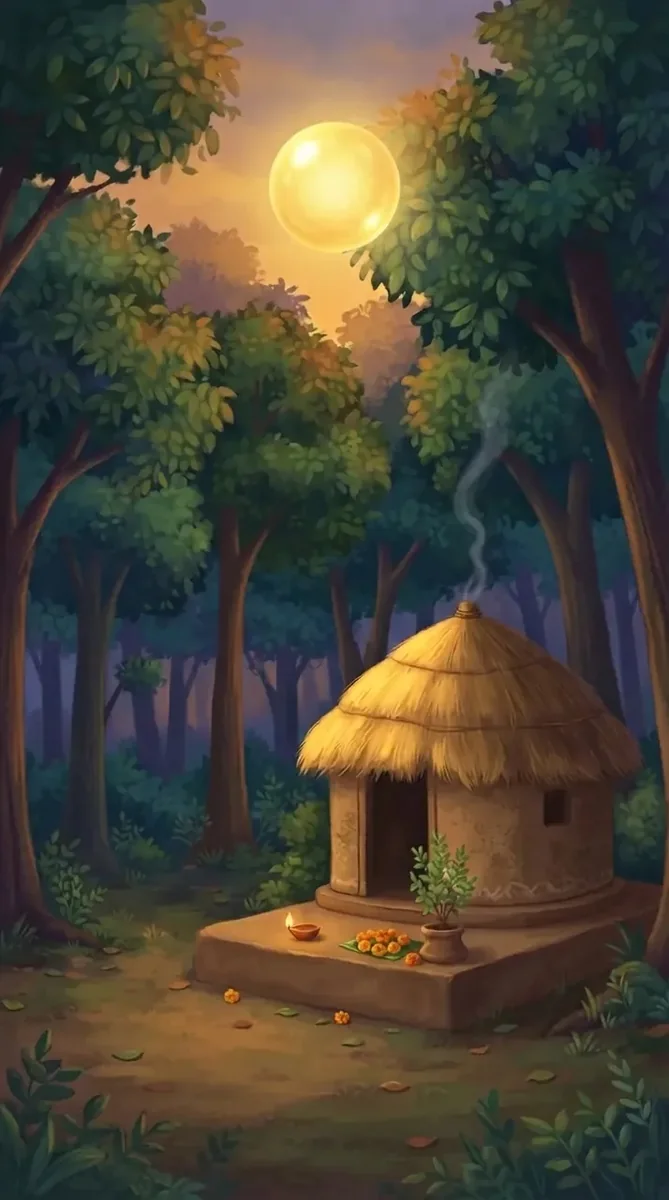
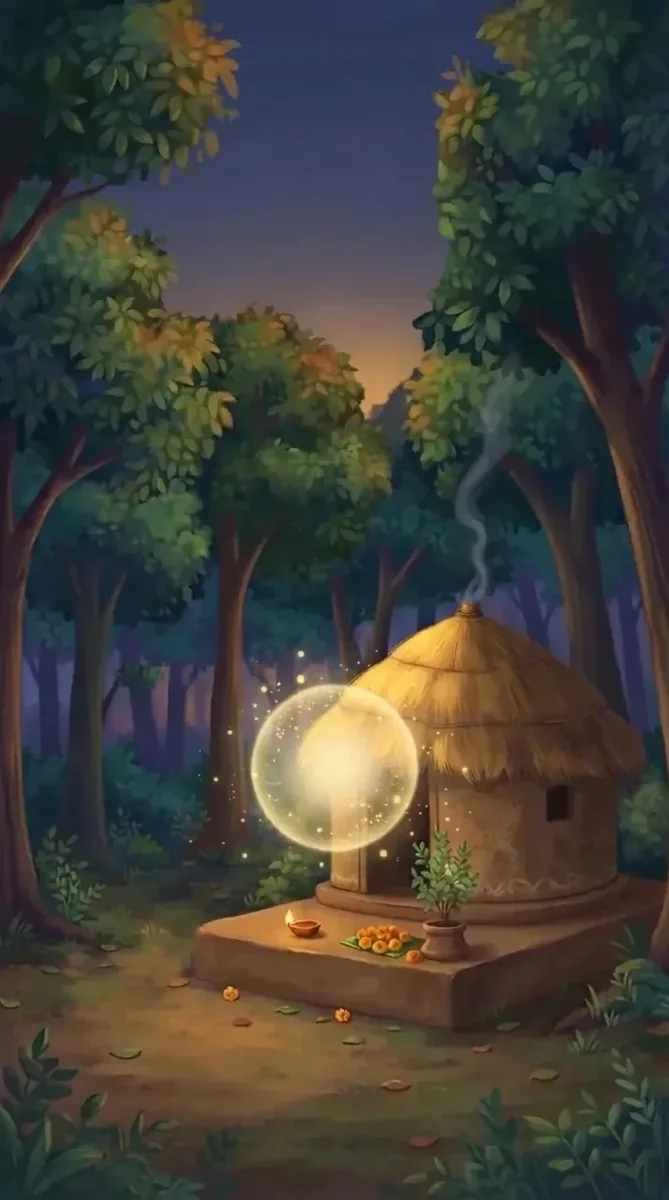
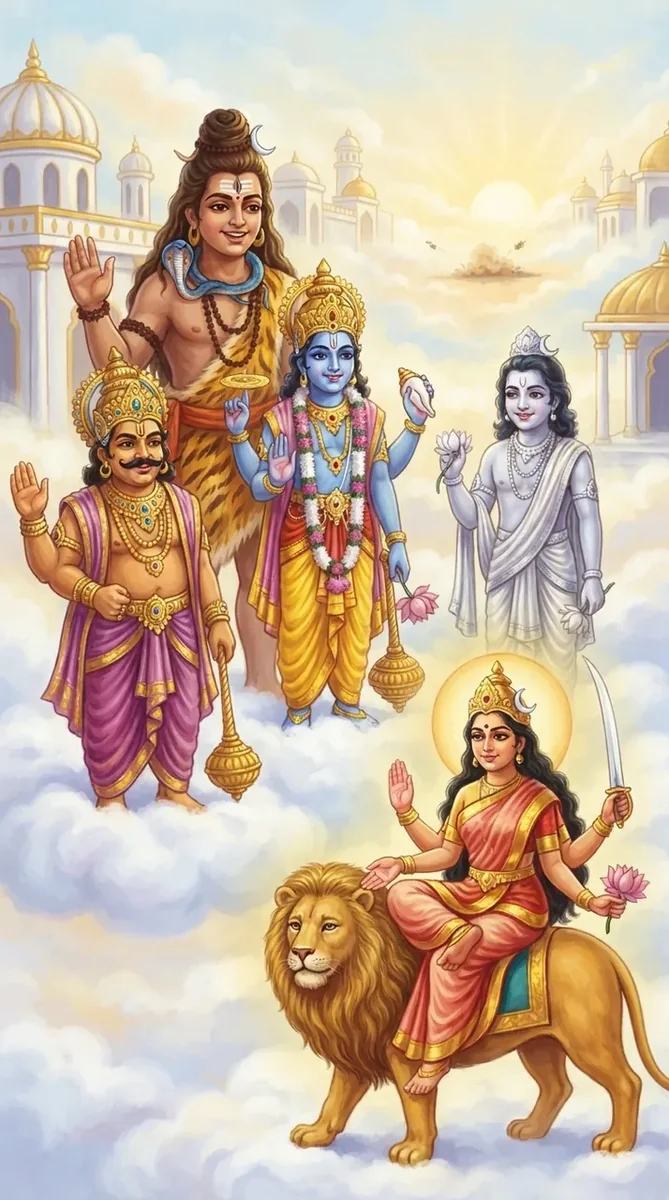
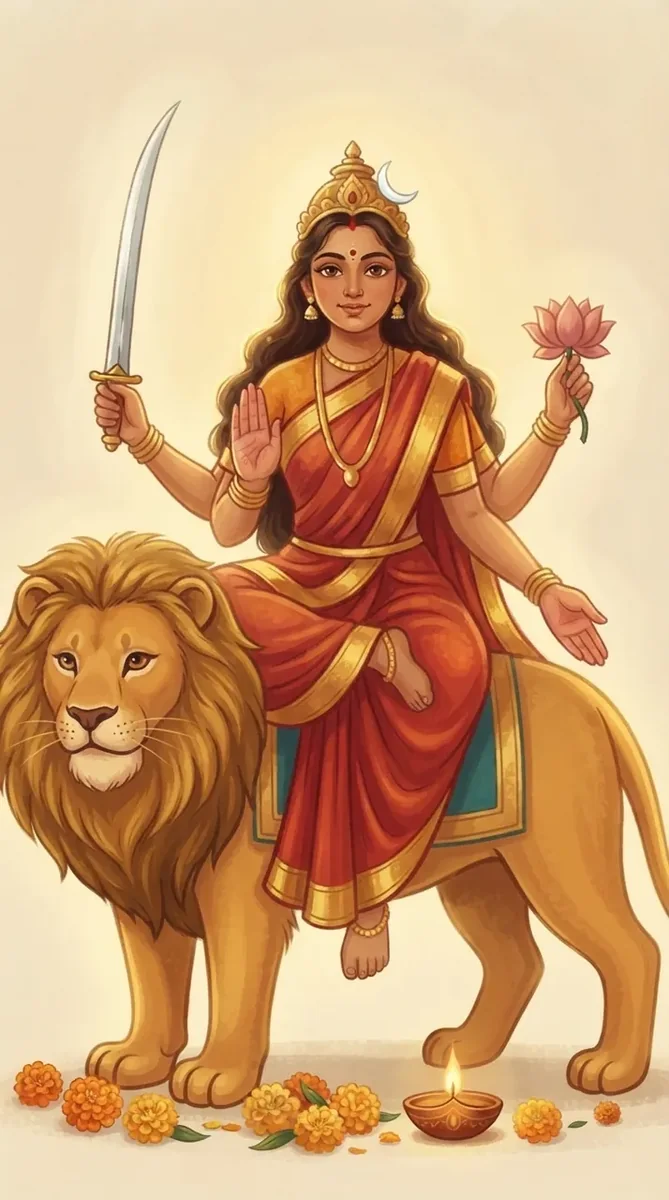
Where does it go? Not to a palace, not to a golden throne — to a little hut in the forest, the very same hut. Out of the light, slowly, come a golden glow, then a lotus, a sword, and a lion. The rishi opens his eyes, and before him stands Maa Bhagavati herself. It is said the Devi accepted the form of his daughter, and that is why she is called Maa Katyayani. Mahishasura is still troubling everyone, so she rides out on her lion; it is said there was a big battle, and in the end she defeated him.
Naani saysवो रोशनी एक जगह इकट्ठा हुई। न किसी महल में… न सोने के सिंहासन पर…The light gathered in one place. Not in a palace… not on a golden throne…
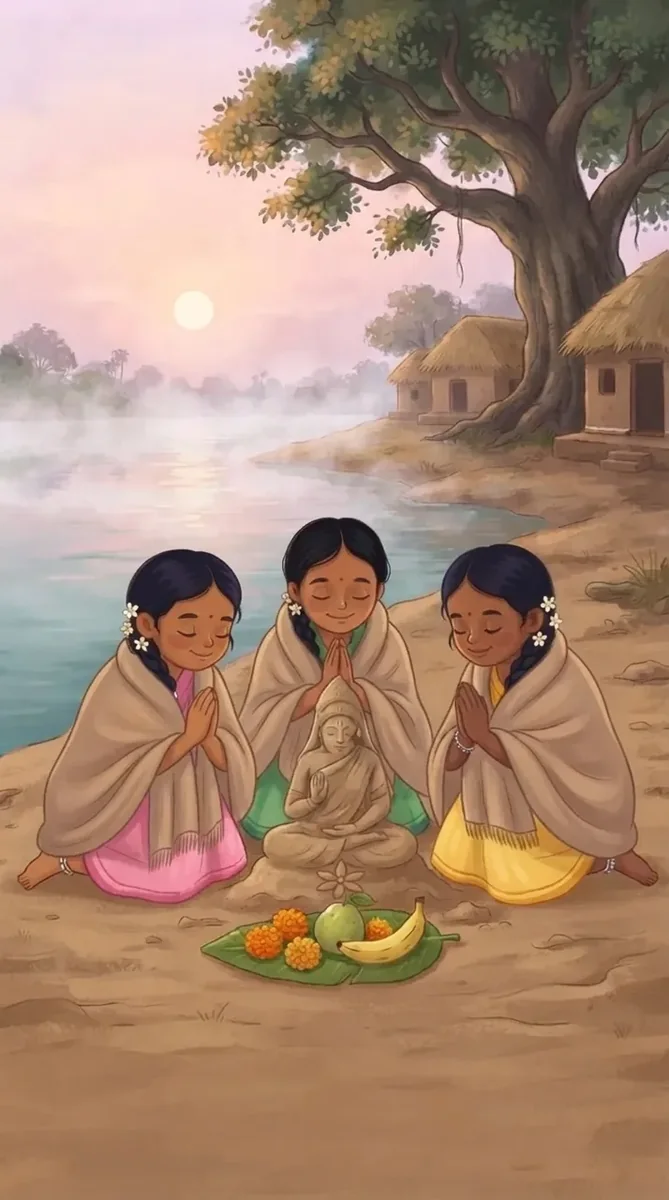
Then a short visit to Braj, where Krishna's friends also worshipped her. On winter mornings by the Yamuna they made not a gold image, not a silver one, but a little Devi of wet sand, with flowers, fruit, leaves and one special wish. Naani pauses and asks your child: if you could make anything out of sand — a little house, an animal, your favourite toy? Every answer is right, and she replies to whatever your child says. The friends' wish, Naani adds, was that Krishna would be their life-companion when they grew up — as the Shrimad Bhagavatam tells it. And a recognise-her game: a lion, four hands, a sword and a lotus, and two open hands that seem to say, "Don't be scared, I'm with you."
Naani saysगीली रेत से एक छोटी-सी देवी! उस पर फूल… फल… पत्ते… और एक खास इच्छा।A little Devi made of wet sand! On it, flowers… fruit… leaves… and one special wish.
The story ends with the thing Naani loved most: a sage's tiny hut, a sand image by the river — and worship from the whole heart. Then a hint of tomorrow's Devi, dark as night, who rides a donkey, and good night.
Naani saysवो किसी महँगे तोहफे से कम नहीं— क्योंकि उसमें तुम्हारा प्यार है।It's worth no less than a costly gift — because your love is in it.
The value this story teaches
Children between four and seven are learning what things cost, and it is easy for them to conclude that the best gift is the biggest or the most expensive one. The same thought makes them shy about their own efforts: the drawing is crooked, the card is messy, so why give it? Showing them that care counts for more than cost gives them back the confidence to make and give.
The story builds that idea twice before it says it. The light of every god lands not in a palace but at a humble hut where one sage prayed every morning for years; a group of girls makes the Devi out of river sand, and that is enough. Then Naani says it plainly — a thing need not be costly to be special — and hands your child a crayon: make something for Mummy and Papa, wobbles and all.
How to talk about it at bedtime
- Ask your child: the great light passed a palace and a golden throne. Where did it stop — and why there, do you think?
- Try: "Agar tumhe ret se kuchh bhi banaane ko mile, toh kya banaoge?" — and promise a trip to some sand, or a tray of it at home.
- Make a drawing together for someone in the family tomorrow, and let your child give it — however wobbly it turns out.
When to pick this story
- The sixth night of Navratri, so the puja at home has a story behind it
- Before a birthday or festival, when your child worries their gift is too small
- When your child says their drawing or craft is 'not good enough'
Try asking your child
After the story, or the next morning on the way to school:
- The great light passed palaces and golden thrones. Where did it finally stop?
- What did Krishna's friends make their little Devi out of?
- What could you make for Mummy and Papa tomorrow, with your own hands?
Meet the characters
The sixth Devi of Navratri, who rides a lion with a sword and a lotus in two of her four hands — and who came to a sage's little hut.
A sage in a forest hut who worshipped the Devi every morning for years, holding on to one wish.
A big bully of a demon who drove the gods out of heaven — drawn as a comic, round-bellied troublemaker, and defeated in a single line.
The girls who made a little Devi of wet sand by the Yamuna on winter mornings and worshipped her with flowers, fruit and leaves.
From the app-store reviews
Two of the public reviews parents have left on Google Play and the App Store, quoted exactly as they wrote them.
“Great stories and really interactive. My kid love it”
“an intellectual way to describe the old stories for kids .”
Give your child a story with a value every night
Naani tells Navratri Night 6 — Maa Katyayani in warm Hindi, shows the pictures, asks a question halfway and listens to your child's answer. One story, one seekh, then good night.
Try Naani tonight 👉 naani.live/app- A value in every story
- No ads
- Your child’s voice erased after 24 hours
- Made in India
About this story
- Language: Hindi — simple, in a grandmother’s voice
- Ages: 4–7
- Listen time: about 6 minutes
- Value: Faith & devotion, Humility, Kindness & empathy
- World: Festival Stories
- Theme: Something small, made or done with your whole heart, is the biggest thing — a gift need not be costly to be special.
Also plays in the browser: app.naani.live/stream/navratri-6-maa-katyayani (sign-in required).
Parents also ask
Why is Navratri day 6 for Maa Katyayani?
The Devi Kavacham, recited with the Durga Saptashati, lists the nine forms of Durga in order — 'shashtham Katyayaniti cha', Katyayani sixth — so she is worshipped on Shashthi, the sixth day of Navratri, after Skandamata and before Kalaratri. She rides a lion and has four arms: a lotus and a sword in her left hands, and her right hands in the gestures of 'fear not' and blessing.
Does the story describe the battle with Mahishasura?
No. Mahishasura appears as a big, comic bully who drives the gods away, and the battle is a single line — 'it is said there was a big battle' — with no weapon in use, nothing frightening described, and no one hurt on screen. The story runs about five minutes and ends with a soft good night.
Why is she called Katyayani?
She is the daughter of Rishi Katyayan. Navratri tradition says the sage worshipped the Devi for many years with one wish — that she be born in his home as his daughter — and the Devi accepted. The Vamana Purana adds that when the gods poured out their light against Mahishasura, it gathered in Katyayan's hermitage and took form there. Naani tells it as the light passing palaces and golden thrones to land at his little hut.
Next story
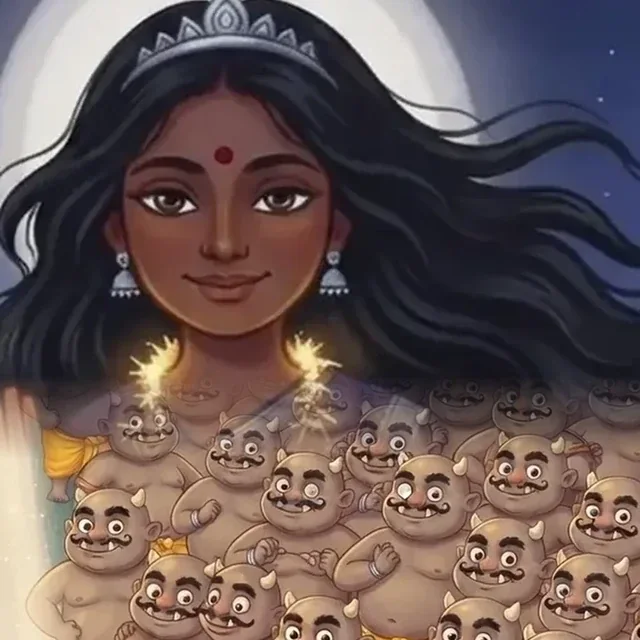
Navratri Night 7 — Maa Kalaratri
The seventh Devi of Navratri, told so your child learns that when force does not work, you stop, look carefully and think of a new way.
More Festival Stories
All Festival Stories →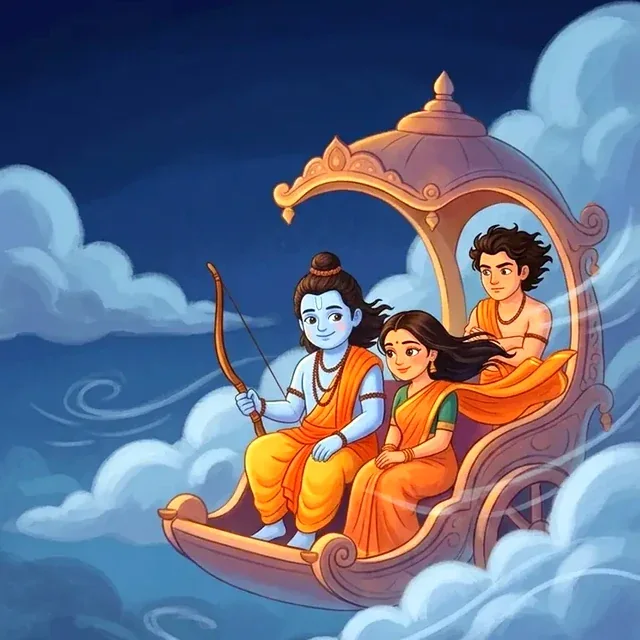 Faith
Diwali: Jab Ayodhya Jagmagayi
The Diwali story told so your child takes away hope, togetherness, and a prince who did his duty with a smile.
 Humility
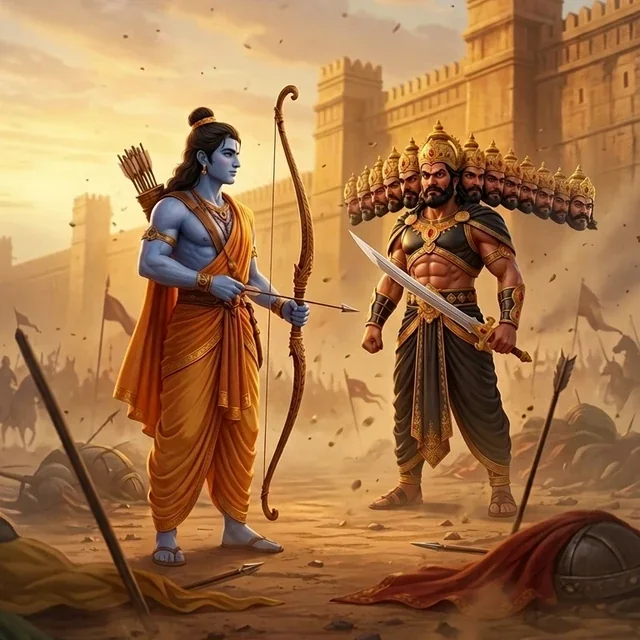
Dussehra: Rama Aur Ravana Ka Antim Yudh
The Dussehra story, told so a five-year-old learns that ghamand loses and a calm, kind heart wins.
 Anger
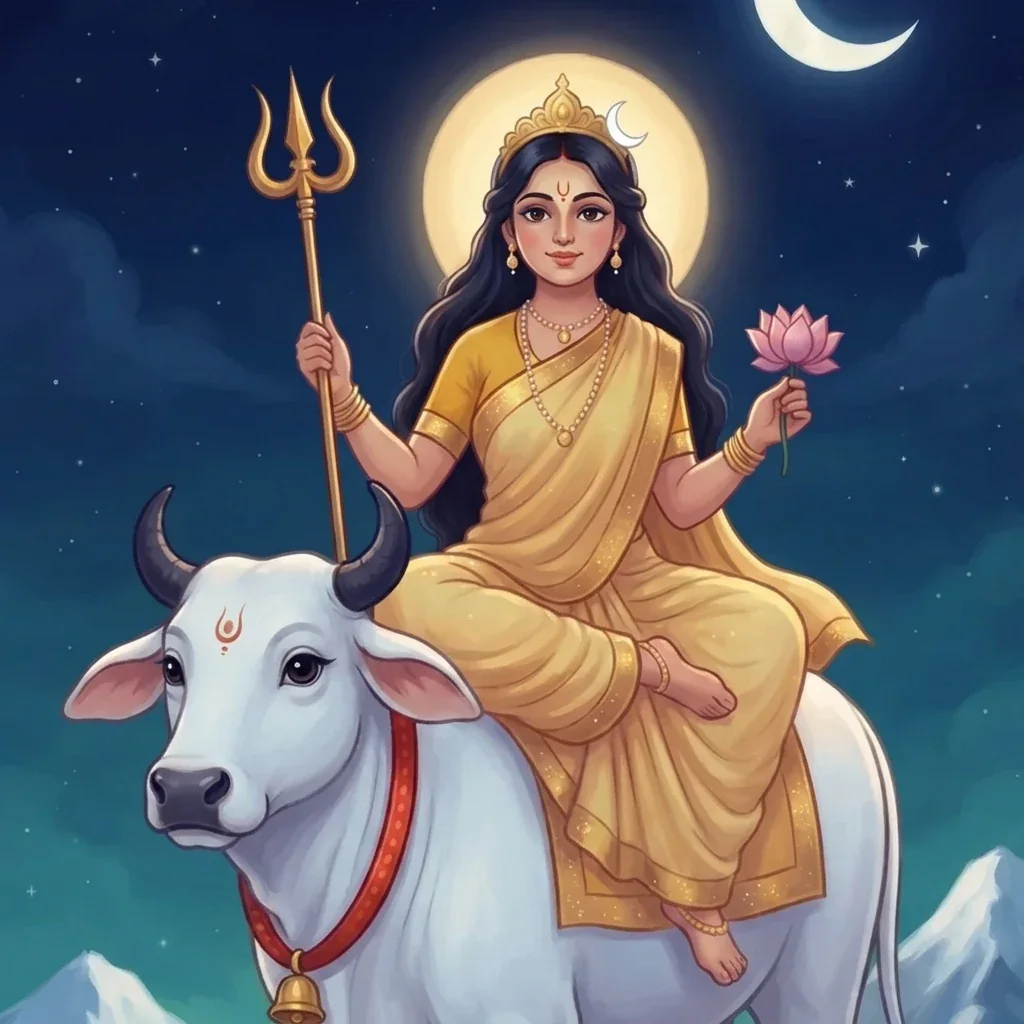
Navratri Night 1 — Maa Shailputri
The first Devi of Navratri, told so your child learns that the strongest hands can still be gentle.
More stories that teach faith & devotion
Bhakti, trust and hope — the quiet confidence that good wins.
 Faith
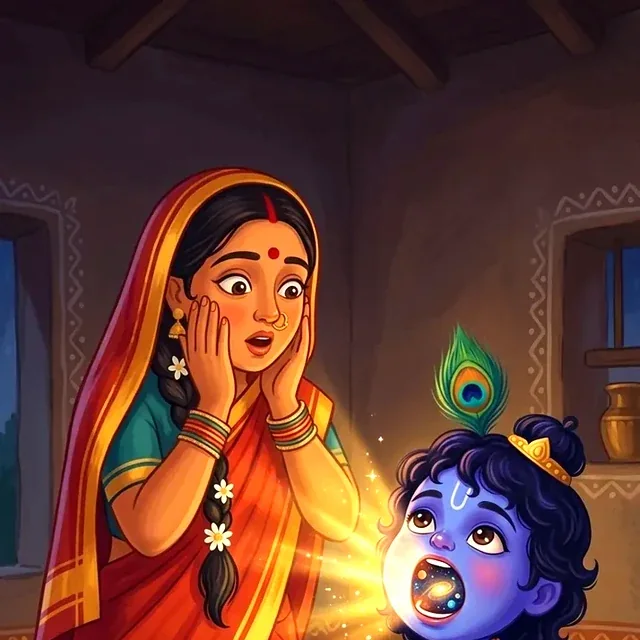
Kanha ke Munh mein Duniya
A Krishna story that teaches your child to look closely at the people they love — there is a whole world inside.
 Faith
Janmashtami: Aadhi Raat Krishna Ka Janm
The Janmashtami story, told so your child feels how faith and hope carry you through the darkest night.
 Faith
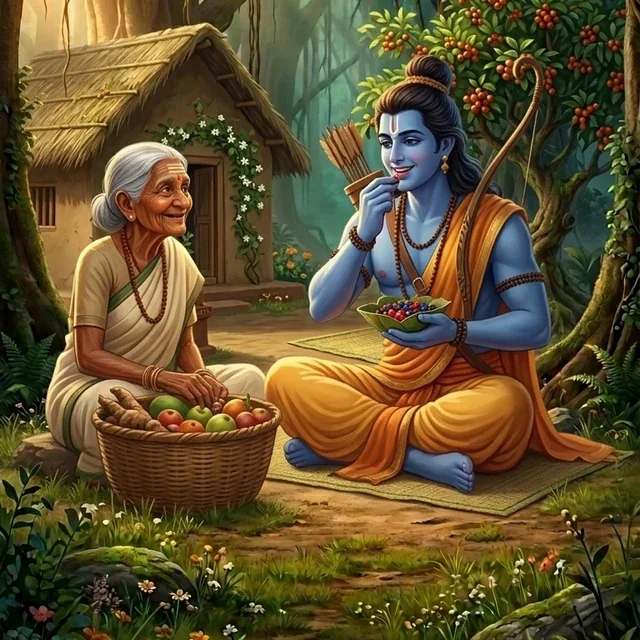
Naani Ki Ramayan 9: Jatayu Ki Bahaduri Aur Shabari
Shabari's berries, told so your child learns that a small thing given with love is the biggest gift of all.