Maa Kalaratri — the Navratri Day 7 story for kids, in Hindi
The seventh Devi of Navratri, told so your child learns that when force does not work, you stop, look carefully and think of a new way.
माँ कालरात्रि — बूँदों का राज़, नवरात्रि की सातवीं रात
Hear Naani tell it
Watch a glimpse
The story
A child is building something, and the pieces just will not fit. The easy thing is to get angry and push harder. Naani suggests something else: stop, look carefully, and think — because sometimes a problem is solved by cleverness, not strength. That small scene is where this story is heading, and it is the part parents tend to remember. Night 7 of Navratri gives your child a habit worth a lifetime: when trying harder makes things worse, try something new.
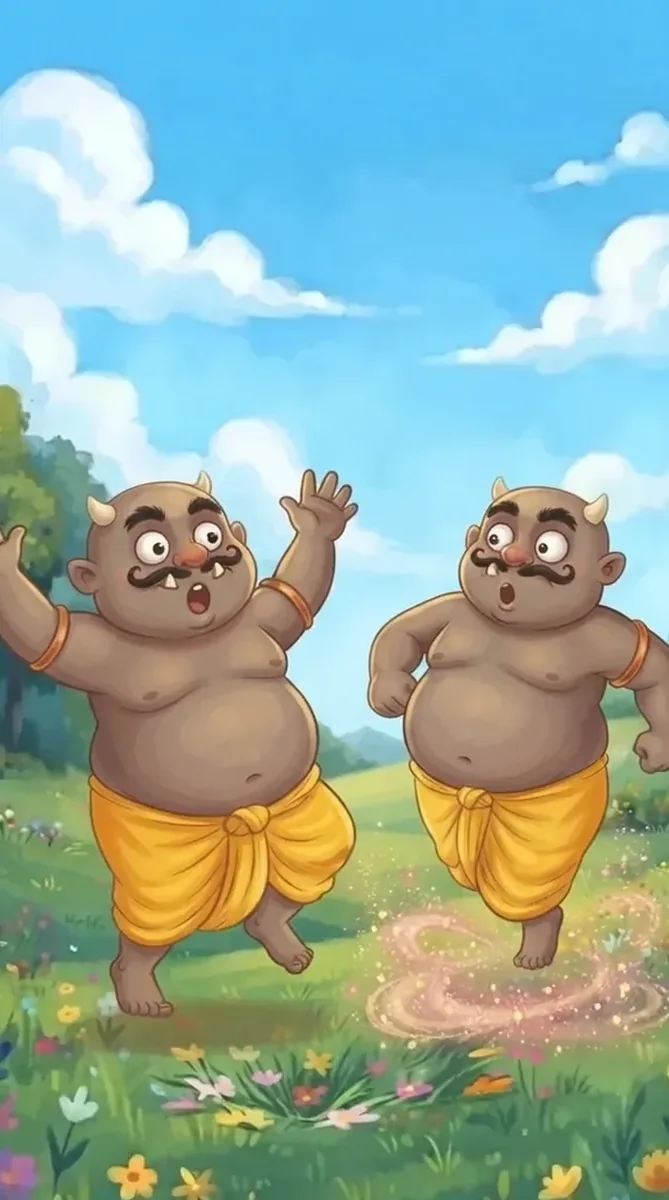
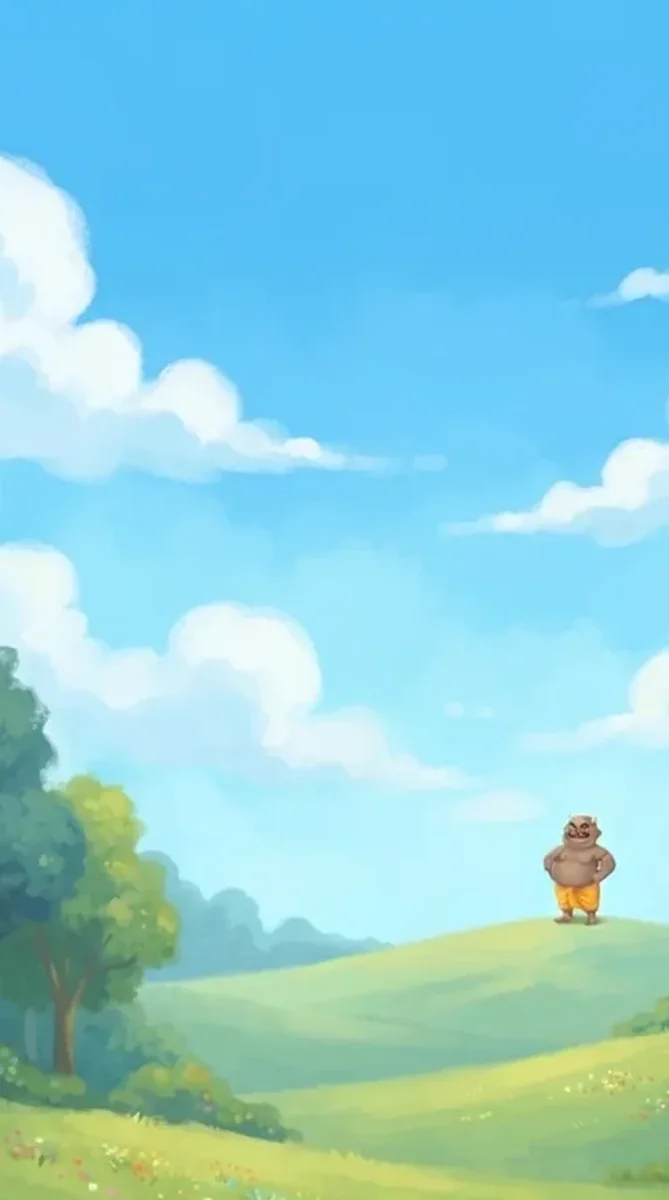
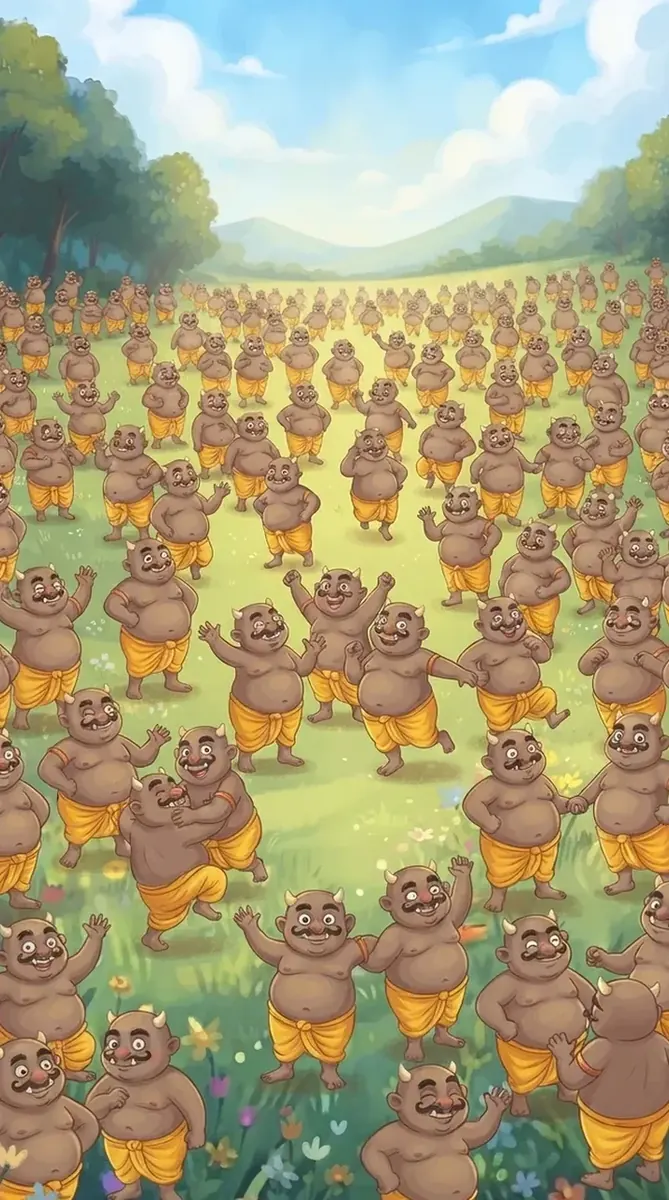
Naani picks up last night's mystery: a Devi dark as night, hair loose, who rides a donkey — and whose name is Shubhankari, the one who does good to all. Why would a Devi who looks so fierce have such a sweet name? The answer lies in the story of a strange demon. Raktabeej is very proud and struts about saying, "Nobody can beat me!" — because he has a strange power. Maa Durga comes to stop him. One blow — tap! — a drop falls to the ground, and — dhapp! — there stands another Raktabeej, exactly like him. The two look at each other and laugh. Another drop: now four. Then a hundred. The whole meadow fills with look-alikes, and every blow makes more.
Naani saysऔर… धप्प! वहाँ खड़ा था एक और रक्तबीज! बिल्कुल उसी जैसा!And… dhapp! There stood another Raktabeej! Exactly like him!
The story in pictures
Frames from Naani’s telling, in story order — the pictures your child sees while she speaks.
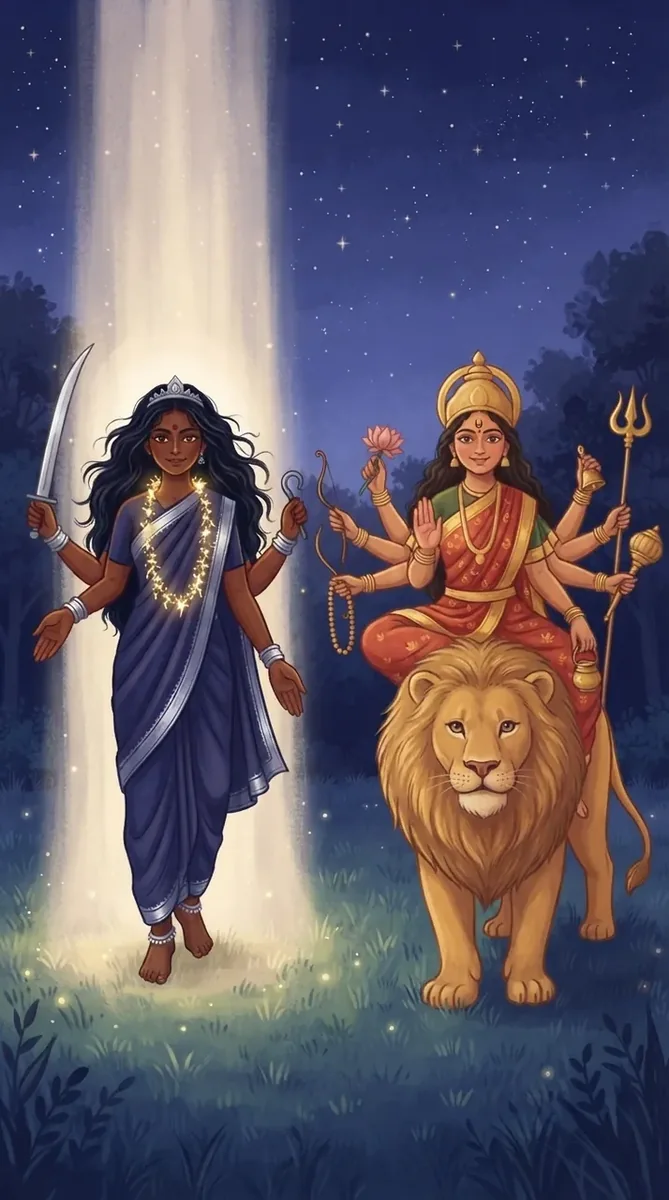

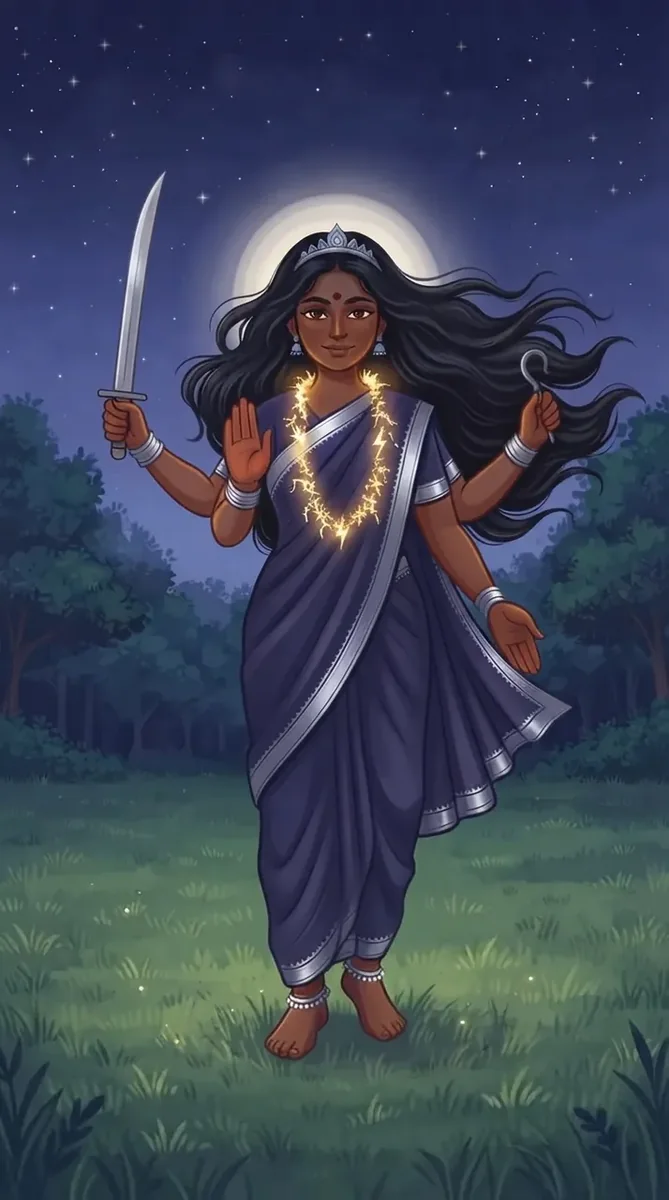
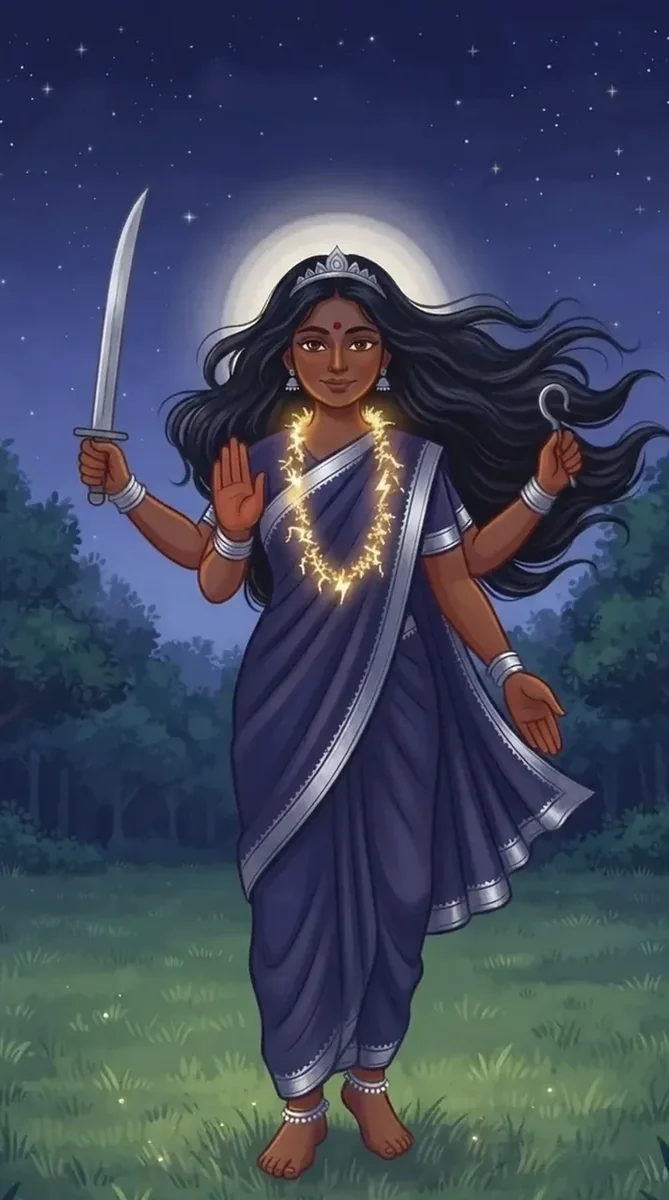
Then a wonderful Devi appears: dark as deep night, hair streaming, a garland shining like lightning at her neck. All hundred Raktabeejs tremble. But instead of running at them, she looks down at the ground, then up — and smiles. She has understood the secret. Here Naani pauses and asks your child: if a magic drop made a new demon the moment it touched the ground, how would you stop it reaching the ground? A bowl, a hand, an umbrella — every idea is a clever trick, and she replies to whatever your child says.
Naani saysलेकिन देवी ने उनकी तरफ दौड़ने के बजाय… नीचे ज़मीन की तरफ देखा। फिर ऊपर देखा। फिर मुस्कुराईं।But instead of running at them, the Devi… looked down at the ground. Then she looked up. Then she smiled.
Then the answer. Another drop falls — tap — and this time nothing happens, because the Devi stopped it before it reached the ground. The second, the third: not one drop falls. No new Raktabeej appears, and together with Maa Durga the Devi stops all the rest, until Raktabeej's swagger is gone. She is Maa Kalaratri, also called Shubhankari: she may look fierce, but she protects everyone. A recognise-her game follows — four hands, a sword and an iron hook in two, and two open hands that seem to say, "Don't be scared, I'm here!" — and her ride, that sweet donkey.
Naani saysक्यों? क्योंकि देवी ने बूँद को नीचे पहुँचने से पहले रोक लिया!Why? Because the Devi stopped the drop before it reached the ground!
The story ends with what Naani liked best: there were a hundred demons, but the Devi did not try the same thing a hundred times. She looked carefully and found a new way. Then a hint of tomorrow's Devi, and good night.
Naani saysकभी-कभी ताकत से नहीं, समझदारी से मुश्किल हल होती है।Sometimes a problem is solved not by strength, but by cleverness.
The value this story teaches
Frustration at four to seven usually looks like doing the same thing again, only harder: pushing the puzzle piece, pulling the zip, shouting the same demand. Children are not short of effort; what they lack is the habit of stepping back and asking why it is not working. That pause — look, notice, try something different — is the beginning of problem-solving, and it can be practised.
The story makes the pause the hero. Hitting Raktabeej only multiplies him, which a child grasps instantly and finds very funny; the Devi wins by looking down, looking up and spotting the rule. Your child is even invited to solve it first, before Naani reveals the trick. Then she brings it home to the toy box: when the pieces won't fit, think instead of getting angry. Cleverness, not force, becomes something your child has already done once tonight.
How to talk about it at bedtime
- Ask your child: every time Raktabeej was hit, what happened? Why didn't hitting him harder work?
- Try: "Tum us boond ko zameen tak pahunchne se kaise rokoge?" — and enjoy every answer, however silly.
- Next time something won't fit or won't work, say the line together — taakat se nahin, samajhdaari se — and look at the problem afresh.
When to pick this story
- The seventh night of Navratri, so the puja at home has a story behind it
- After a meltdown over a puzzle, a building set or homework that wouldn't work
- When your child is wary of fierce-looking images of the Devi in a pandal
Try asking your child
After the story, or the next morning on the way to school:
- What happened every time a drop from Raktabeej touched the ground?
- What did the Devi do before she stopped the drops — where did she look?
- When something won't work, what can you do instead of getting angry?
Meet the characters
The seventh Devi of Navratri — dark as night, with loose hair, a garland like lightning and a donkey to ride — who is also called Shubhankari, the one who does good to all.
A proud, boastful demon with a strange power: every drop that falls from him becomes another Raktabeej — drawn as a comic, round-bellied bully.
The Devi who first comes to stop Raktabeej, and who, together with Maa Kalaratri, stops the rest.
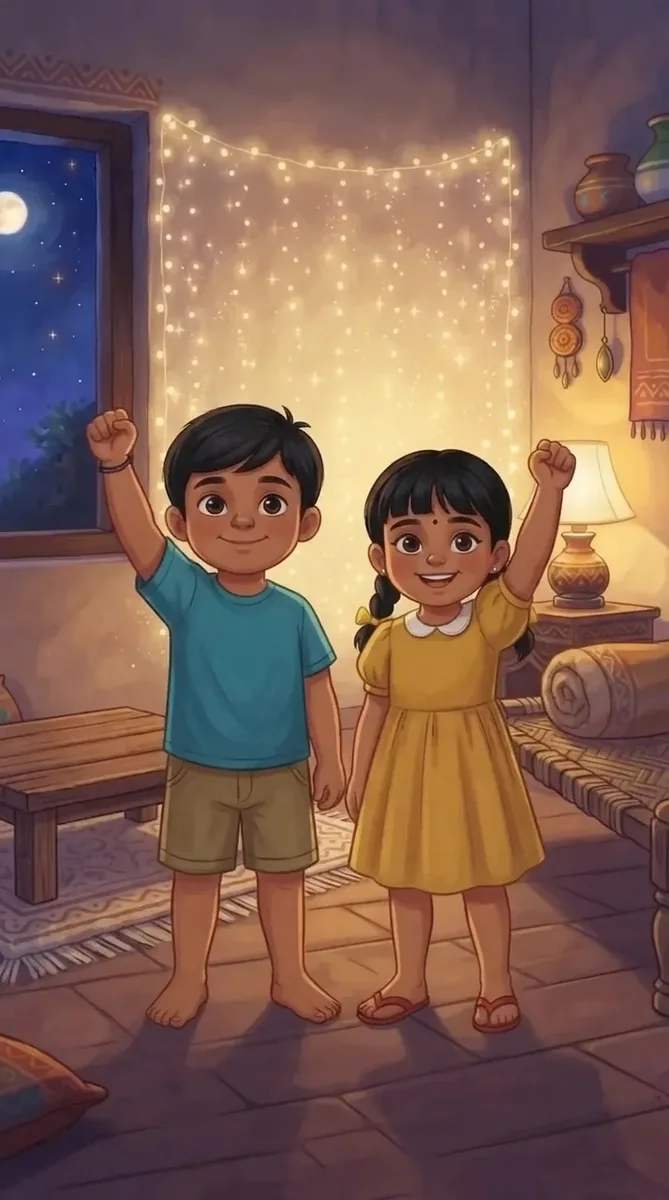
The two children who show your child the Kalaratri superpower: when the pieces won't fit, stop and think instead of getting angry.
From the app-store reviews
Two of the public reviews parents have left on Google Play and the App Store, quoted exactly as they wrote them.
“Maine to download kar liya hai aap sabhi log download karo aur yah story Apne bacchon Ko badon ko sunao bahut achcha lagega…”“Great stories and really interactive. My kid love it”
Give your child a story with a value every night
Naani tells Navratri Night 7 — Maa Kalaratri in warm Hindi, shows the pictures, asks a question halfway and listens to your child's answer. One story, one seekh, then good night.
Try Naani tonight 👉 naani.live/app- A value in every story
- No ads
- Your child’s voice erased after 24 hours
- Made in India
About this story
- Language: Hindi — simple, in a grandmother’s voice
- Ages: 4–7
- Listen time: about 6 minutes
- Value: Wisdom & thinking, Managing anger, Courage
- World: Festival Stories
- Theme: Cleverness beats force — when trying harder only makes a problem bigger, stop, look carefully and find a new way; and what looks fierce can be the one who protects you.
Also plays in the browser: app.naani.live/stream/navratri-7-maa-kalaratri (sign-in required).
Parents also ask
Why is Navratri day 7 for Maa Kalaratri?
The Devi Kavacham, recited with the Durga Saptashati, lists the nine forms of Durga in order — 'saptamam Kalaratriti', Kalaratri seventh — so she is worshipped on Saptami, the seventh day of Navratri, after Katyayani and before Mahagauri. She is described as dark as deep night, with loose hair, a garland that shines like lightning, four arms and a donkey as her mount.
Maa Kalaratri looks fierce. Will the story frighten my child?
No. Naani introduces her by her other name, Shubhankari — the one who does good to all — and the whole story explains why a Devi who looks fierce is the one who protects everyone. Raktabeej and his look-alikes are comic, round-bellied bullies; a blow is named once and never described; and the story runs about five minutes and ends with a soft good night.
How does the Devi defeat Raktabeej?
In the Devi Mahatmya (chapter 8), every drop from Raktabeej that touched the ground became a new demon, so striking him only made more. The Devi asked Kali, as Chamunda, to take in the drops before they could fall, and the demon was defeated; popular Navratri kathas tell this of Maa Kalaratri. Naani tells it gently for small children: the Devi stops each drop before it reaches the ground, and together with Maa Durga stops the rest.
Next story
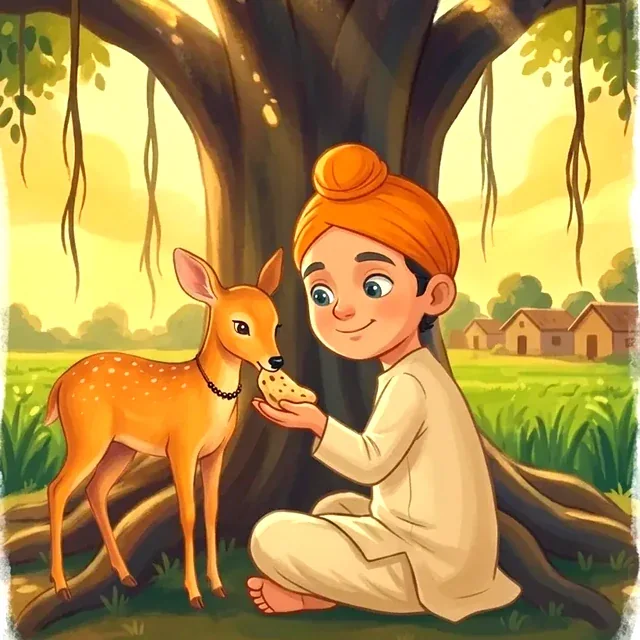
Gurpurab: Guru Nanak Ka Sachcha Sauda
Guru Nanak's sachcha sauda, told so a five-year-old understands that feeding the hungry is the best bargain there is.
More Festival Stories
All Festival Stories → Faith
Diwali: Jab Ayodhya Jagmagayi
The Diwali story told so your child takes away hope, togetherness, and a prince who did his duty with a smile.
 Humility
Dussehra: Rama Aur Ravana Ka Antim Yudh
The Dussehra story, told so a five-year-old learns that ghamand loses and a calm, kind heart wins.
 Anger
Navratri Night 1 — Maa Shailputri
The first Devi of Navratri, told so your child learns that the strongest hands can still be gentle.
More stories that teach wisdom & thinking
Stopping to think before acting; a cool head beats a strong arm.
 Wisdom
Sher aur Chalaak Khargosh
A Panchatantra story that shows your child how a calm, thinking mind beats a loud, strong one.
 Wisdom
Baatuni Kachhua
A Panchatantra story that helps a chatty child learn when to speak and when to simply listen.
 Wisdom
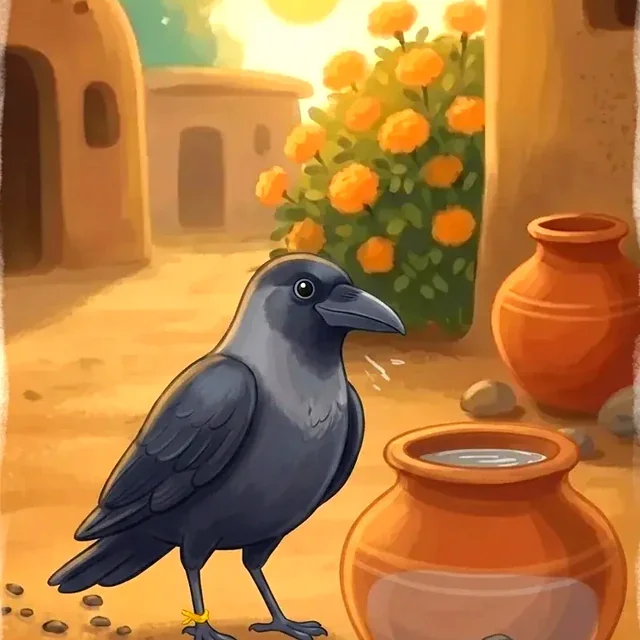
Pyaasa Kauwa
A moral story about persistence and clever thinking — small efforts, one pebble at a time, solve a big problem.