Maa Siddhidatri — the Navratri Day 9 story for kids, in Hindi
The ninth Devi of Navratri, told so your child learns the greatest power is valuing each other's strengths and making things together.
माँ सिद्धिदात्री — बर्फ पर खिला कमल, नवरात्रि की नौवीं रात

Hear Naani tell it
The story
Every child knows the pull of "I'll do it myself." The Navratri finale offers a gentler idea: each of us has our own special strength, and the most wonderful things happen when those strengths come together. Naani says it in a child's terms — you draw a picture, your friend writes a funny story on it, and together you have a whole storybook. Parents tend to hear the next morning's invitation, "Chalo, aaj kuch milkar banaate hain!"
High on a mountain, snow keeps falling, and in the middle of it someone sits without moving — snow on his shoulders, snow on his jata. It is Shiv Ji, mighty beyond measure, yet sitting with his eyes closed, meditating with his whole heart on Maa Adi Shakti, who is everywhere but not always seen. Days pass, months, years; the moon comes and goes, and still he stays. Then one day the wind stops, the snow stops, and everything falls silent.
Naani saysकंधों पर बर्फ… जटाओं पर बर्फ… पर वो हिले नहीं। कौन था ये? शिव जी!Snow on his shoulders… snow on his jata… but he did not move. Who was it? Shiv Ji!
The story in pictures
Frames from Naani’s telling, in story order — the pictures your child sees while she speaks.



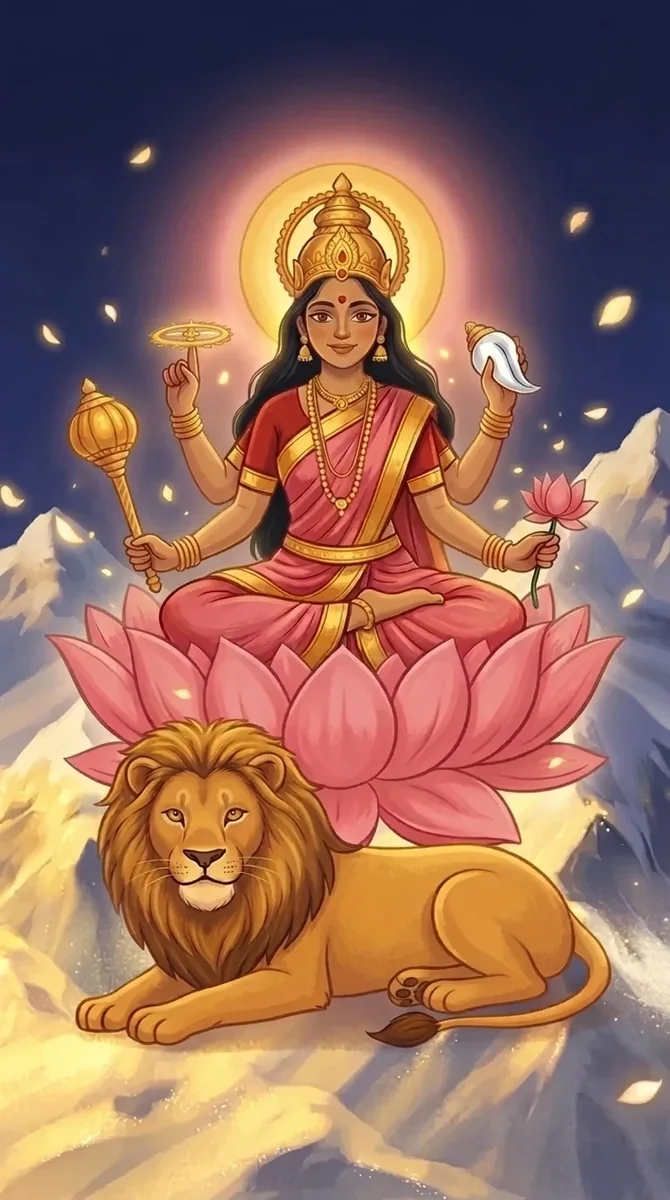


A golden ray falls on the snow, then another, then a third, until the whole hill shines. Out of the snow, slowly, a lotus blooms — pink, golden, glowing — and on it appears Maa Adi Shakti, with four hands holding a conch, a discus, a mace and a lotus, and her lion beside her. Shiv Ji opens his eyes, Maa smiles, and she gives him eight wonderful siddhis: to become smaller than an ant, as big as a mountain, lighter than a feather, and five more. The Maa who gives them is Maa Siddhidatri. Here Naani pauses and asks your child which power they would choose — small, big or light as a feather — and replies to their pick. Naani, she admits, would have asked for all three.
Naani saysसोचो ज़रा! चींटी से भी छोटा हो जाना! पहाड़ जितना बड़ा हो जाना!Just think! Becoming smaller than an ant! Becoming as big as a mountain!
Naani saysऔर उस रोशनी के बीच… बर्फ से धीरे-धीरे एक कमल खिला! गुलाबी… सुनहरा… चमचमाता हुआ!And in the middle of that light… slowly, out of the snow, a lotus bloomed! Pink… golden… shining!
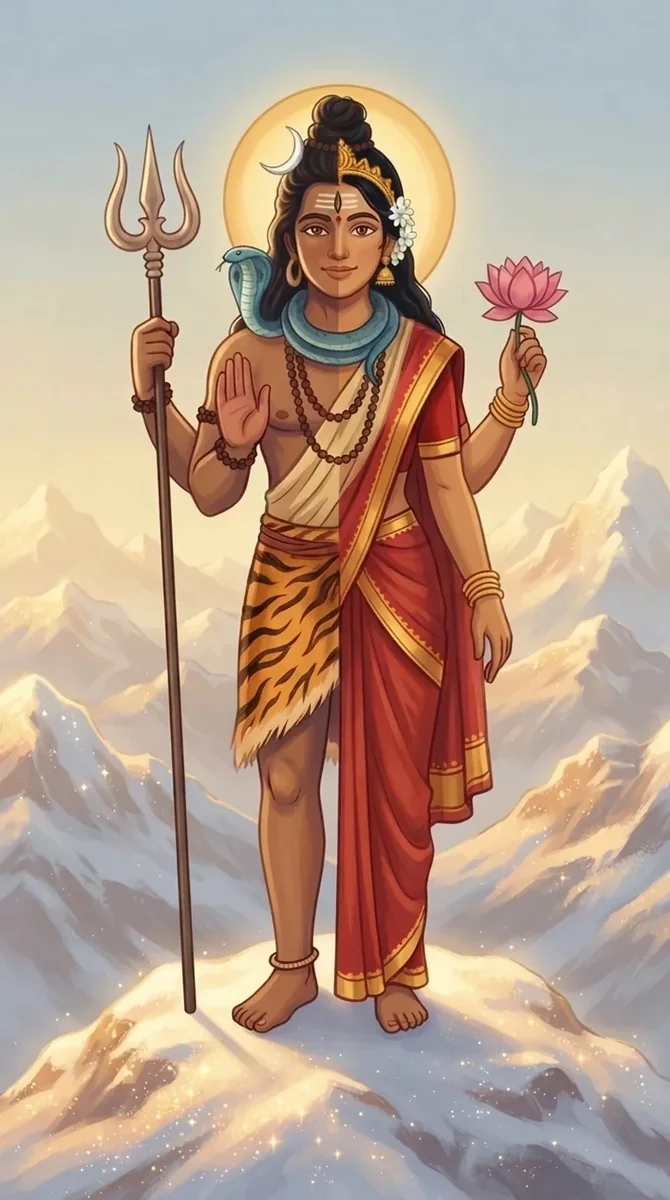
But the greatest wonder is still to come. Something shines in Shiv Ji's left ear — an earring? Slowly his divine form begins to change. On one side, his jata with the moon and the serpent at his neck; on the other, flowers in the hair, a red saree, lovely earrings. It is Maa Parvati. Half Shiv Ji and half Maa Parvati, in one divine form: Ardhanarishvara. Shiva and Shakti, Naani explains, are not apart, but two forms of one divine power.
Naani saysशिव जी के बाएँ कान में अचानक कुछ चमका। अरे… ये क्या? एक झुमका?Suddenly something shone in Shiv Ji's left ear. Oh… what's this? An earring?
Then a warm recap of all nine Devis, one bright detail each, from the mountain's daughter Shailputri to the lotus on the snow tonight, and a peek at tomorrow's Dussehra story of a king with ten heads.
The value this story teaches
Between four and seven, children move from playing beside each other to playing with each other, and it is not always smooth. Sharing a project means accepting that someone else can do a part better than you can — and that is a grown-up idea. It is easier to grasp when it is framed not as giving something up but as two good things adding up to something bigger.
The story shows it in the most striking picture a child could see: the earring that appears in Shiv Ji's ear, and then half Shiv Ji, half Maa Parvati, one divine form. Naani does not explain it as a puzzle; she simply says each had their own strength, and together they became something wonderful. Then she shrinks it to a picture and a story becoming a book — something your child can actually try with a friend the next day.
How to talk about it at bedtime
- Ask your child: which of the powers would you choose — smaller than an ant, bigger than a mountain, or lighter than a feather? What would you do with it?
- Try: "Tumhari khoobi kya hai, aur tumhare dost ki khoobi kya hai?" — then imagine what the two of you could make together.
- Before school or playtime tomorrow, practise the line together: "Chalo, aaj kuch milkar banaate hain!"
When to pick this story
- The ninth night of Navratri, Navami, to close the nine Devis with a recap of them all
- After a quarrel with a sibling or friend over who gets to do the whole thing
- Before a group project, a class activity or a play date where children must work together
Try asking your child
After the story, or the next morning on the way to school:
- What grew out of the snow, and who appeared on it?
- What shone in Shiv Ji's ear, and what happened to his form after that?
- What could you and a friend make together that neither of you could make alone?
Meet the characters
The ninth Devi of Navratri — Maa Adi Shakti appearing on a lotus in the snow, with conch, discus, mace and lotus and her lion beside her — who gives the eight siddhis.
The mighty one who sits in the snow for years, meditating on Maa Adi Shakti with all his heart, and receives the eight siddhis from her.
The divine form that appears by Maa's grace: half Shiv Ji and half Maa Parvati — Shiva and Shakti as one.
The two children who show the Siddhidatri superpower: one draws a picture, the other writes the story, and together they make a book.
From the app-store reviews
Two of the public reviews parents have left on Google Play and the App Store, quoted exactly as they wrote them.
“Great stories and really interactive. My kid love it”
“an intellectual way to describe the old stories for kids .”
Give your child a story with a value every night
Naani tells Navratri Night 9 — Maa Siddhidatri in warm Hindi, shows the pictures, asks a question halfway and listens to your child's answer. One story, one seekh, then good night.
Try Naani tonight 👉 naani.live/app- A value in every story
- No ads
- Your child’s voice erased after 24 hours
- Made in India
About this story
- Language: Hindi — simple, in a grandmother’s voice
- Ages: 4–7
- Listen time: about 8 minutes
- Value: Teamwork, Friendship, Faith & devotion
- World: Festival Stories
- Theme: The greatest power is valuing each other's special strengths and moving together — Shiva and Shakti, not apart but one (Naani's view, not a ninth siddhi).
Also plays in the browser: app.naani.live/stream/navratri-9-maa-siddhidatri (sign-in required).
Parents also ask
Why is Navratri day 9 for Maa Siddhidatri?
The Devi Kavacham lists the nine forms of Durga in order and names Siddhidatri ninth, so she is worshipped on Navami, the last day of Navratri, after Mahagauri. Her name means the giver of siddhis, or divine powers. She is usually shown seated on a lotus with four arms holding a conch, a discus, a mace and a lotus, with a lion as her mount.
What are the eight siddhis Naani mentions?
The eight siddhis traditionally listed are anima (becoming very small), mahima (becoming very large), garima (becoming very heavy), laghima (becoming very light), prapti, prakamya, ishitva and vashitva. Naani names only the three a child can picture — smaller than an ant, as big as a mountain, lighter than a feather — and says there are five more.
How do I explain Ardhanarishvara to a young child?
Popular Navratri tradition says that by Maa Siddhidatri's grace, half of Shiva's body became the Devi, and he was known as Ardhanarishvara. Naani keeps it simple and reverent: Shiva and Shakti are not apart but two forms of one divine power. For a child, the easiest way in is the picture itself — one side with the moon in the jata, the other with flowers and a red saree.
Next story
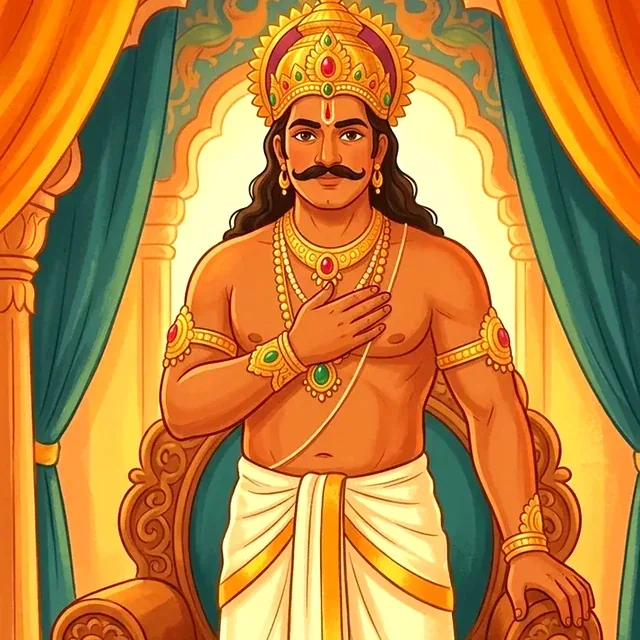
Onam: Raja Mahabali ki Vaapsi
The Onam story, told so your child sees a king keep his word and bow his head — and be loved for it for ever.
More Festival Stories
All Festival Stories →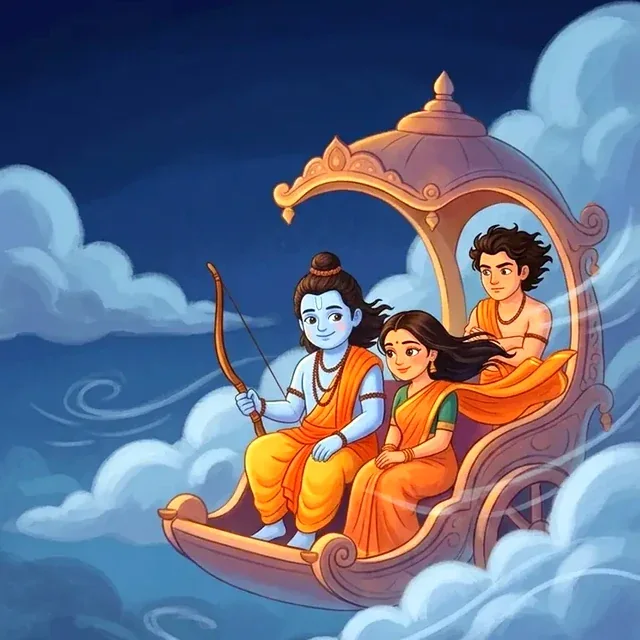 Faith
Diwali: Jab Ayodhya Jagmagayi
The Diwali story told so your child takes away hope, togetherness, and a prince who did his duty with a smile.
 Humility
Dussehra: Rama Aur Ravana Ka Antim Yudh
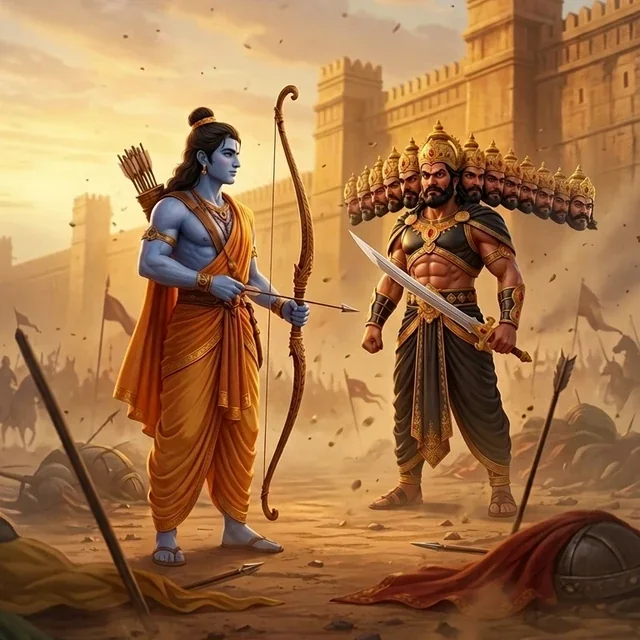
The Dussehra story, told so a five-year-old learns that ghamand loses and a calm, kind heart wins.
 Anger
Navratri Night 1 — Maa Shailputri
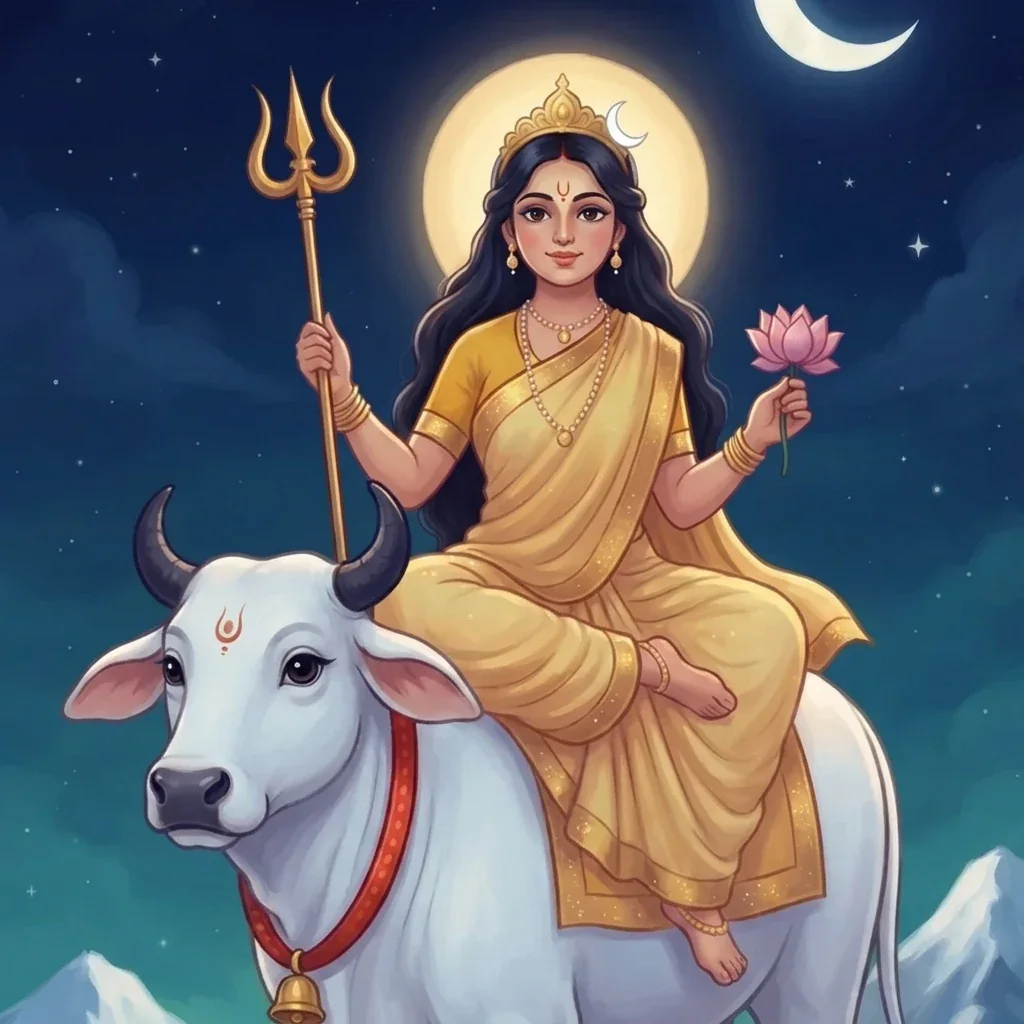
The first Devi of Navratri, told so your child learns that the strongest hands can still be gentle.
More stories that teach teamwork
Different strengths, one bundle of sticks nobody can break.
 Teamwork
Char Dost aur Shikari
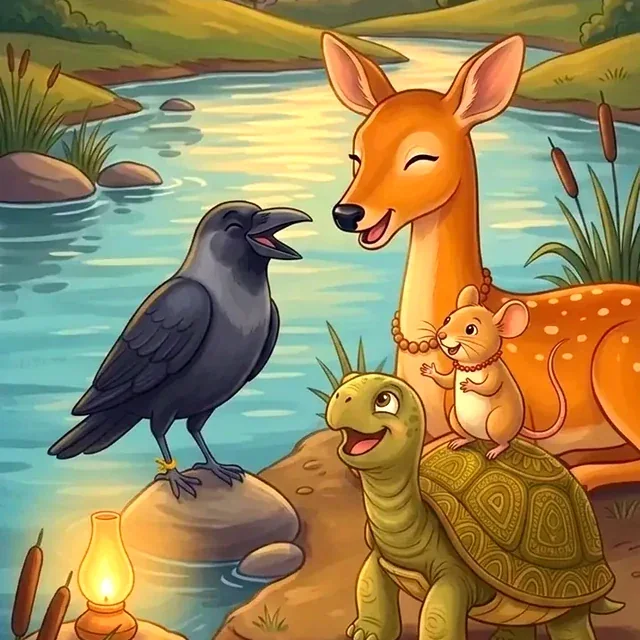
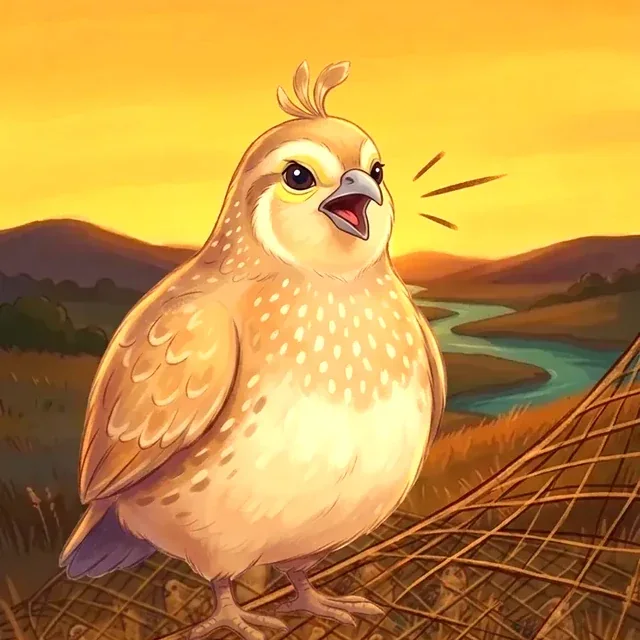
A Panchatantra story that shows your child why a good team is made of very different friends.
 Teamwork
Bateron ki Ladayi
A Jataka story that shows your child how a small quarrel can make a shared load impossible — and how to lift it again.
 Teamwork
Lakdiyon Ka Gattha
A moral story that teaches teamwork — three squabbling siblings discover it for themselves, with no lecture.