Maa Kushmanda — the Navratri Day 4 story for kids, in Hindi
The fourth Devi of Navratri, told so your child learns that one small smile can chase away someone else's fear.
माँ कूष्मांडा — एक मुस्कान से रोशनी, नवरात्रि की चौथी रात
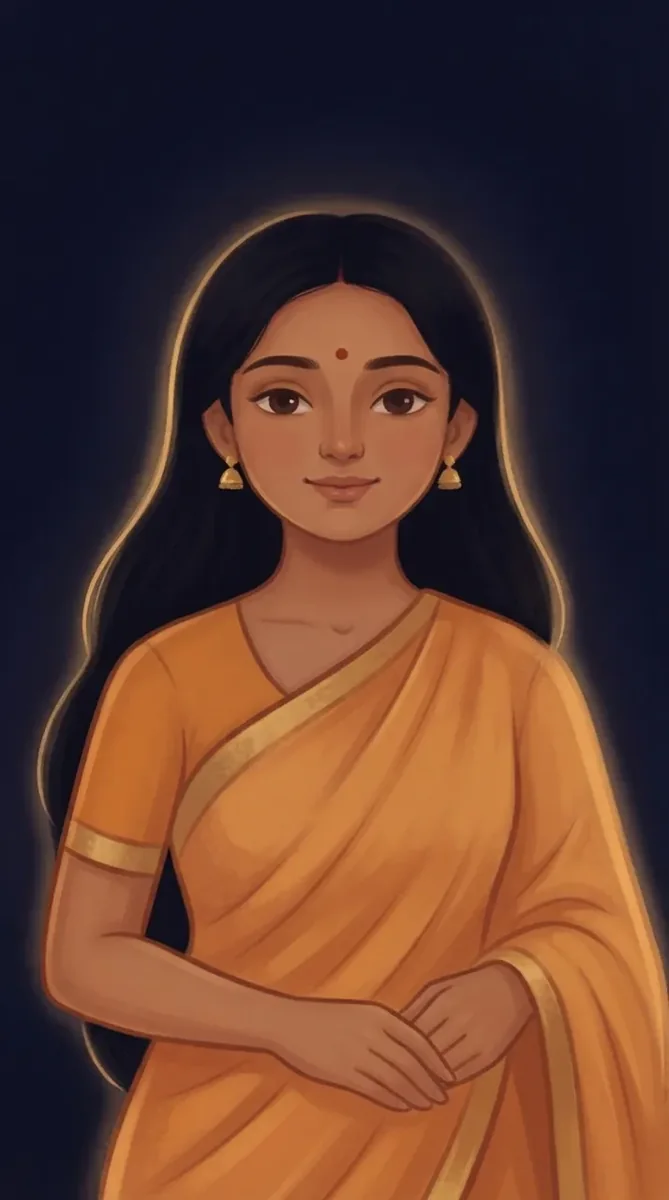
Hear Naani tell it
Watch a glimpse
The story
A big brother sits down beside a little sister who is scared of the dark, smiles, and says "daro mat, main hoon na." That small scene is where this story is heading, and it is the part parents tend to remember. Night 4 of Navratri gives your child a quiet kind of power: you do not need eight arms to help someone. A smile, and sitting close, will do.
Naani saysचारों तरफ बस— अँधेरा। और उस अँधेरे में थीं… एक देवी।All around, only darkness. And in that darkness… there was one Devi.
Naani begins at the very beginning, when there was no sun, no moon, not a single star — only darkness, and in that darkness, one Devi. No lamp, no matchstick: so where will the light come from? The Devi lifts no weapon and uses no force. She simply smiles, gently. From that small smile, light begins to spread — a little, then more — until the whole universe glows: sun, moon, stars, earth, everything. That, it is said, is why she is Maa Kushmanda, the Devi who made creation.
Naani saysदेवी ने न कोई हथियार उठाया… न ज़ोर लगाया… बस… हल्के से मुस्कुरा दिया।The Devi lifted no weapon… used no force… she simply smiled, gently.
Naani saysऔर उस छोटी-सी मुस्कान से— अँधेरे में रोशनी फैलने लगी। थोड़ी… फिर और…And from that small smile, light began to spread through the dark — a little… then more…
The story in pictures
Frames from Naani’s telling, in story order — the pictures your child sees while she speaks.
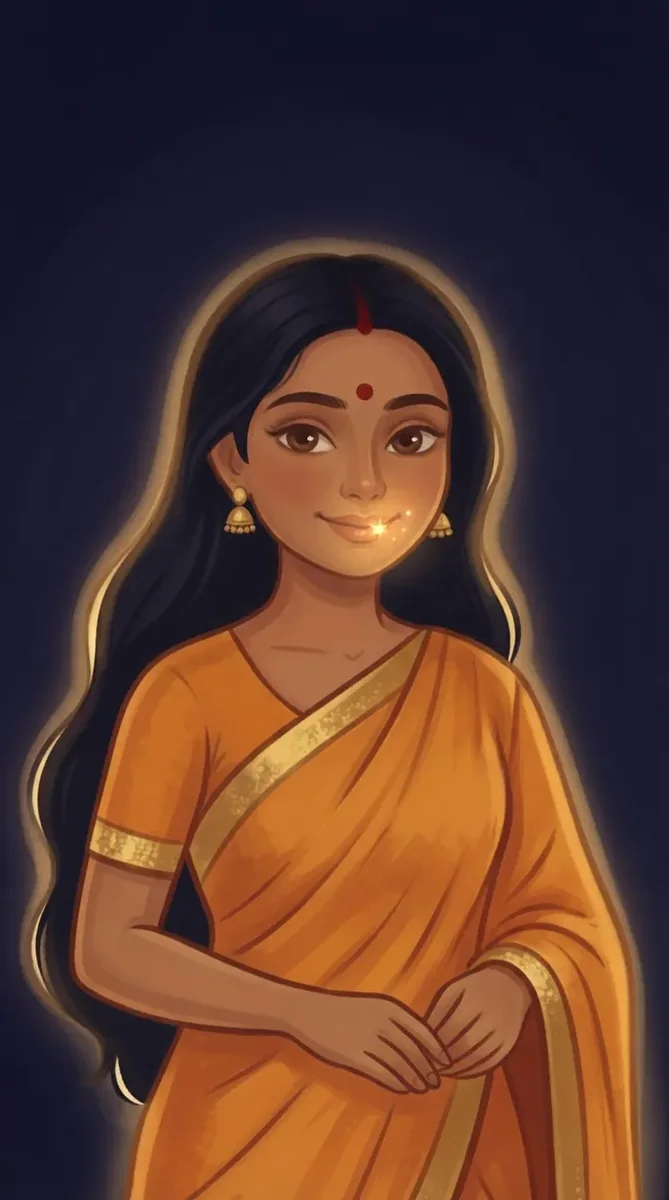
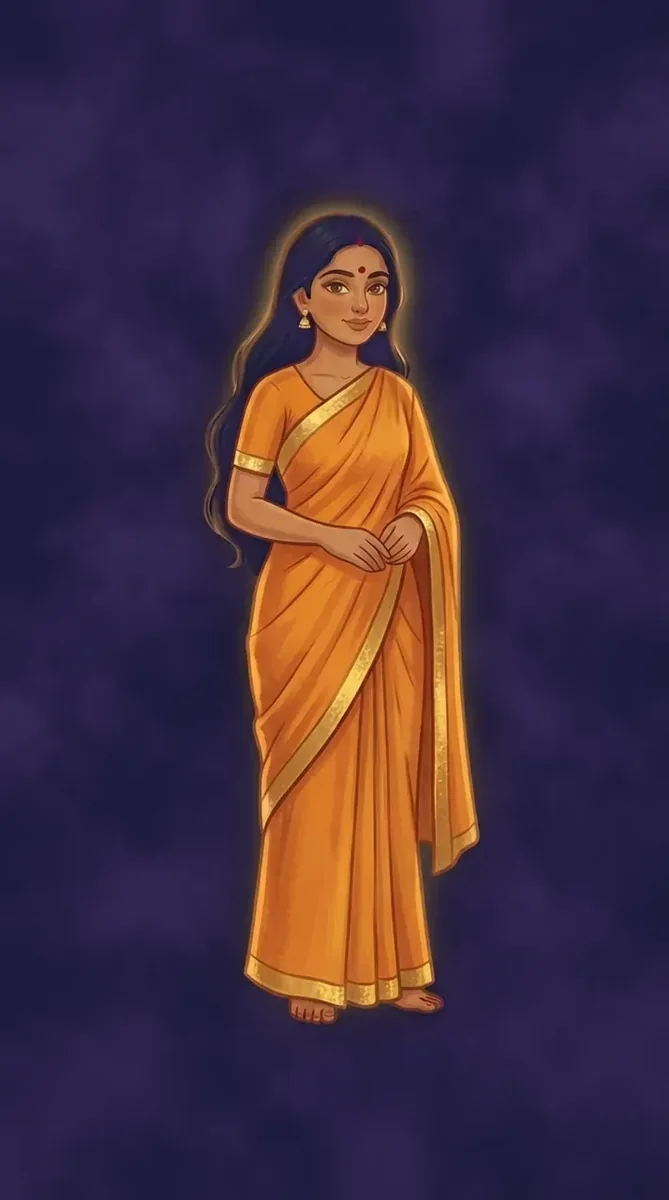
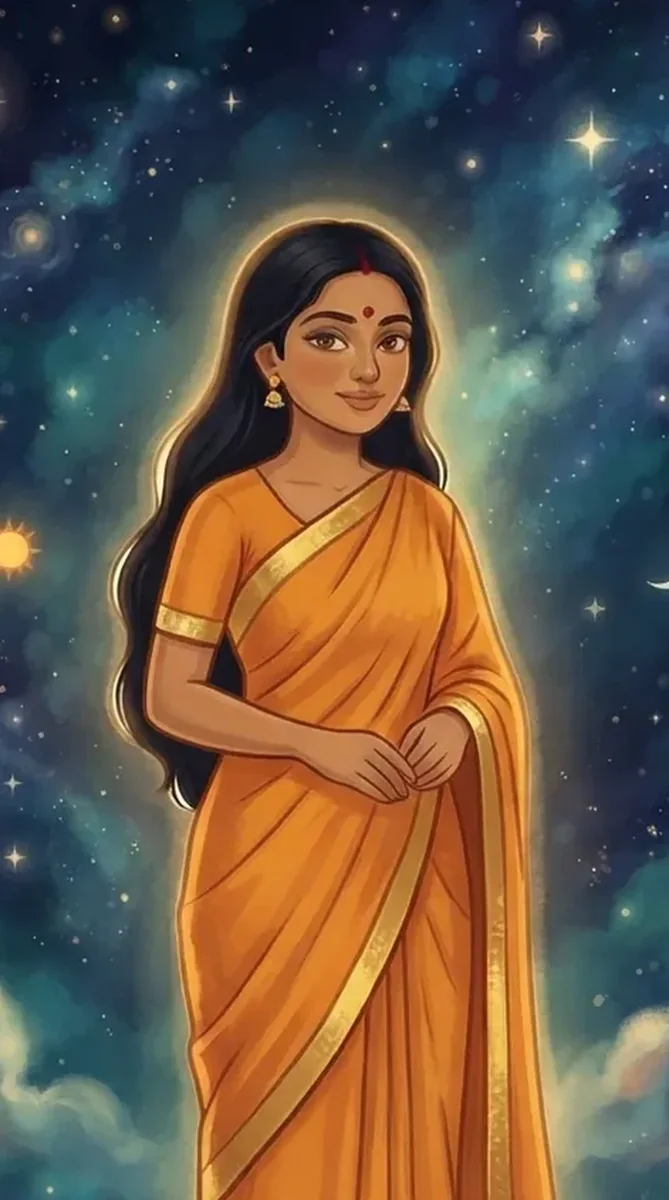
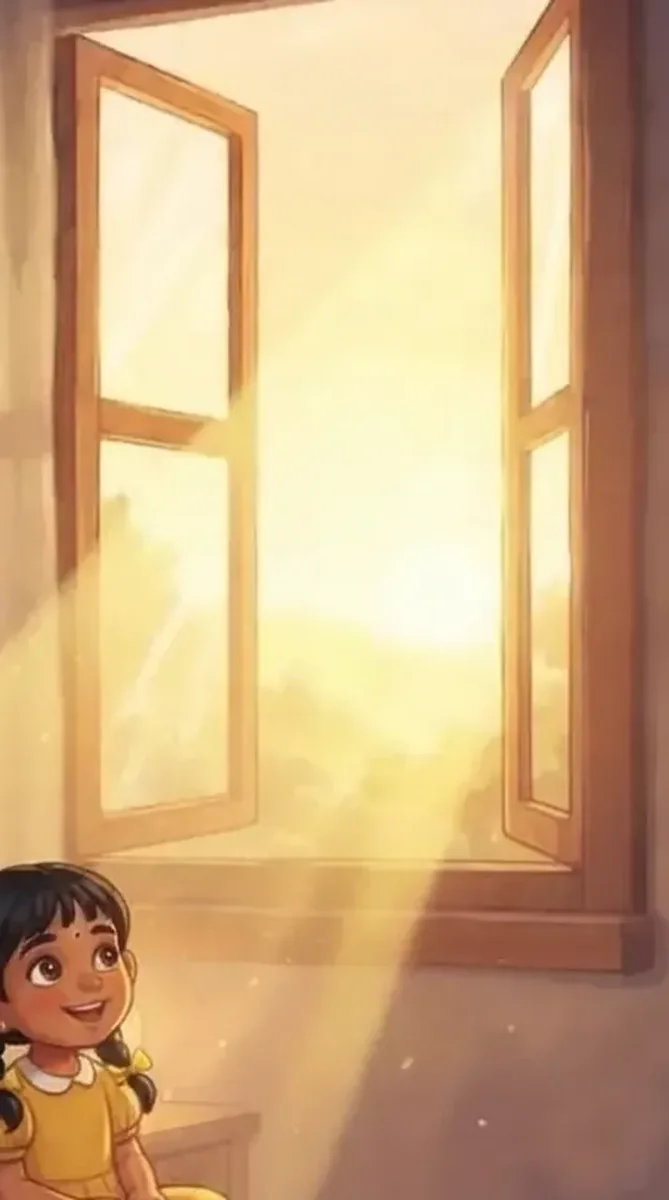
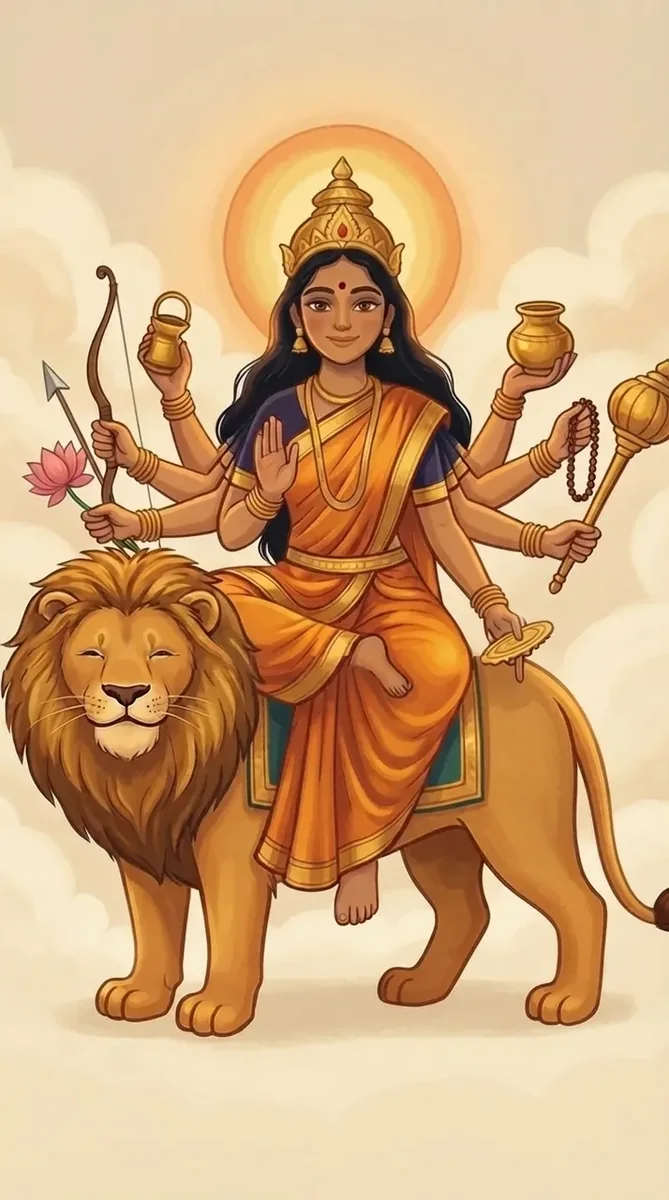
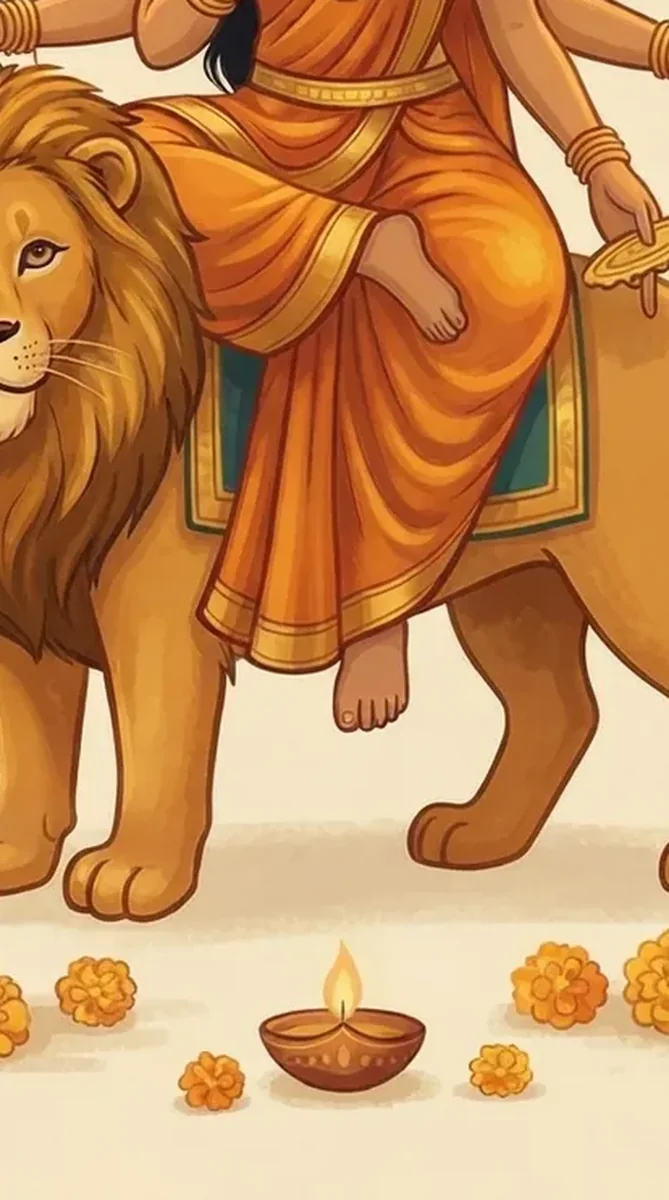
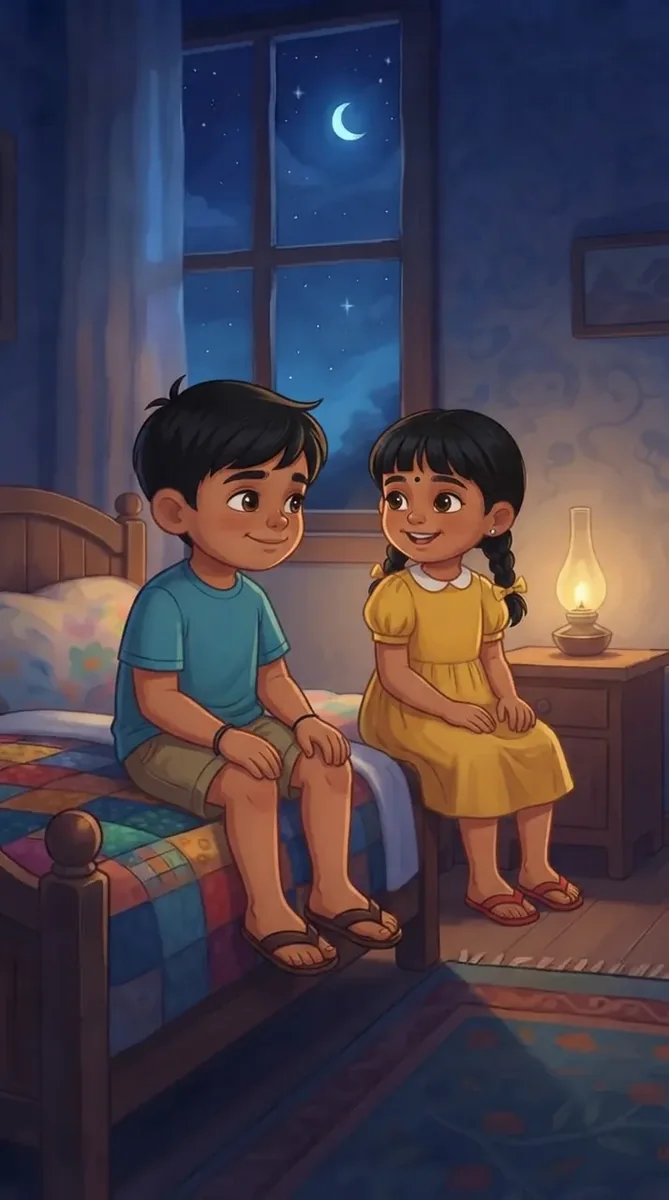
Here Naani pauses and asks your child a real question: if your smile could light up one thing, what would it be — your room, the whole house, or the whole sky? Every answer is right, and she replies to whatever your child says. Then she adds a morning promise. It is said Maa Kushmanda's radiance lives in the sun, so when tomorrow's first sunbeam reaches the window, your child can remember that after darkness, light always comes.
Next comes a recognise-her game — Maa Kushmanda rides a lion and has not two, not four, but eight arms, which is why she is called Ashtabhuja — and a riddle children love: a vegetable is hiding in her name. A potato? No. A tomato? No. Kushmand is the white pumpkin, kumhda, the very one petha is made from, and it is offered to her on this day.
Naani saysऔर उनके हाथ? दो? चार? नहीं! पूरे आठ! इसीलिए— अष्टभुजा।And her hands? Two? Four? No — a whole eight! That's why she's called Ashtabhuja.
The story ends with the secret Naani sees in that smile. When someone is sad, or a little brother or sister gets scared, sit beside them, smile, and say: don't be scared, I'm here. Even a small smile makes someone's darkness a little lighter. Then a hint of tomorrow's Devi, and good night.
The value this story teaches
Empathy at four to seven is less about understanding feelings and more about knowing what to do with them. Children notice when a sibling is crying or a friend is quiet, but often go still, laugh nervously or walk away, because nobody has shown them a simple next step. Giving them one — sit close, smile, say a few warm words — turns noticing into kindness, and it is a step even the smallest child can take.
The story makes that step feel powerful. Maa Kushmanda does not fight the darkness; she smiles, and the whole universe fills with light. Naani then shrinks the idea down to a bedroom: a scared little brother, a sister sitting beside him, "daro mat, main hoon na." Your child hears that their own small smile is the same kind of light — and that being kind is something they can do, not just something they are told to be.
How to talk about it at bedtime
- Ask your child: before Maa Kushmanda smiled, what was there? No sun, no moon… what else was missing?
- Try: "Agar tumhari muskaan se ek cheez roshan ho sakti, toh kya?" — then ask whose face they would most like to light up with a smile tomorrow.
- Practise the line together, the way Naani says it: sit close, smile, and say "daro mat, main hoon na."
When to pick this story
- The fourth night of Navratri, so the puja at home has a story behind it
- When a younger sibling is scared of the dark or wakes from a bad dream
- After your child mentions a friend who seemed sad at school
Try asking your child
After the story, or the next morning on the way to school:
- Before Maa Kushmanda smiled, what was there? What came after her smile?
- Which vegetable hides in Maa Kushmanda's name? Have you ever eaten petha?
- Who could you sit beside and smile at, if they felt sad or scared?
Meet the characters
The fourth Devi of Navratri, who rides a lion and has eight arms — and who answered the darkness with one gentle smile.
Maa Kushmanda's mount, the first clue for spotting her in any picture.
The two children who show your child the Kushmanda superpower: sit beside someone scared, smile, and say "I'm here."
From the app-store reviews
Two of the public reviews parents have left on Google Play and the App Store, quoted exactly as they wrote them.
“Great stories and really interactive. My kid love it”
“an intellectual way to describe the old stories for kids .”
Give your child a story with a value every night
Naani tells Navratri Night 4 — Maa Kushmanda in warm Hindi, shows the pictures, asks a question halfway and listens to your child's answer. One story, one seekh, then good night.
Try Naani tonight 👉 naani.live/app- A value in every story
- No ads
- Your child’s voice erased after 24 hours
- Made in India
About this story
- Language: Hindi — simple, in a grandmother’s voice
- Ages: 4–7
- Listen time: about 5 minutes
- Value: Kindness & empathy, Faith & devotion, Emotional resilience
- World: Festival Stories
- Theme: A small smile can lessen someone's darkness — sit beside a sad friend or a scared sibling, smile, and say 'don't be scared, I'm here'.
Also plays in the browser: app.naani.live/stream/navratri-4-maa-kushmanda (sign-in required).
Parents also ask
Why is Navratri day 4 for Maa Kushmanda?
The Devi Kavacham, recited with the Durga Saptashati, lists the nine forms of Durga in order — 'Kushmandeti chaturthakam', Kushmanda fourth — so she is worshipped on Chaturthi, the fourth day of Navratri, after Chandraghanta and before Skandamata. She is shown riding a lion with eight arms, which is why she is also called Ashtabhuja.
Will a story that starts in darkness frighten my child?
No. The darkness is described as what you see when you close your eyes at night, and it lasts only a few lines. There is no monster, no battle and nothing that bursts or breaks; the whole story is gentle, about four minutes long, and ends with a soft good night.
What does the name Kushmanda mean?
Kushmand (कूष्मांड) is the white pumpkin or ash gourd — kumhda in Hindi, the vegetable petha is made from — and it is a favourite offering to her on the fourth day. Navratri tradition also says that when nothing existed but darkness, she created the universe with one gentle smile. Naani tells both, simply.
Next story
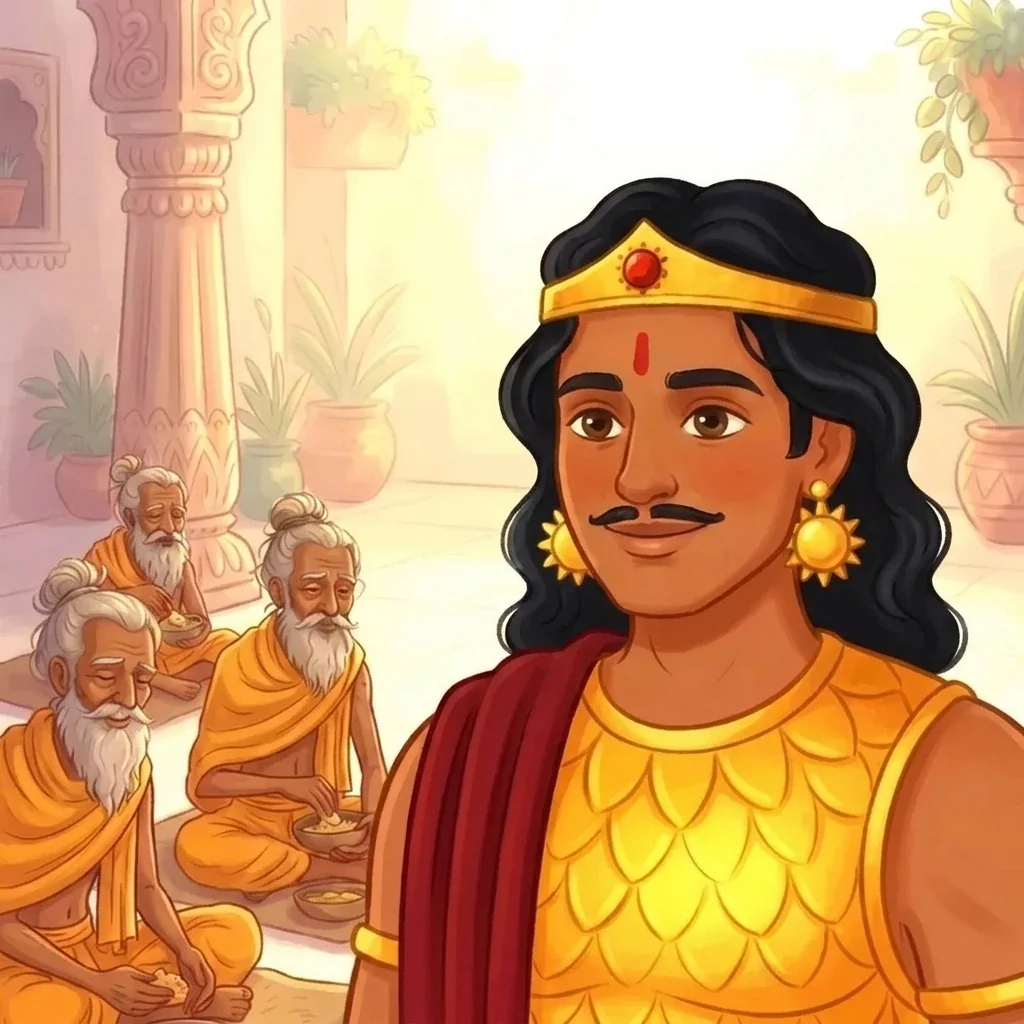
Shraddh — Karna and the Golden Plate
A Shraddh story that teaches your child to thank the family who came before — and that food for the hungry beats gold.
More Festival Stories
All Festival Stories → Faith
Diwali: Jab Ayodhya Jagmagayi
The Diwali story told so your child takes away hope, togetherness, and a prince who did his duty with a smile.
 Humility
Dussehra: Rama Aur Ravana Ka Antim Yudh
The Dussehra story, told so a five-year-old learns that ghamand loses and a calm, kind heart wins.
 Anger
Navratri Night 1 — Maa Shailputri
The first Devi of Navratri, told so your child learns that the strongest hands can still be gentle.
More stories that teach kindness & empathy
Noticing how someone else feels, and doing something about it.
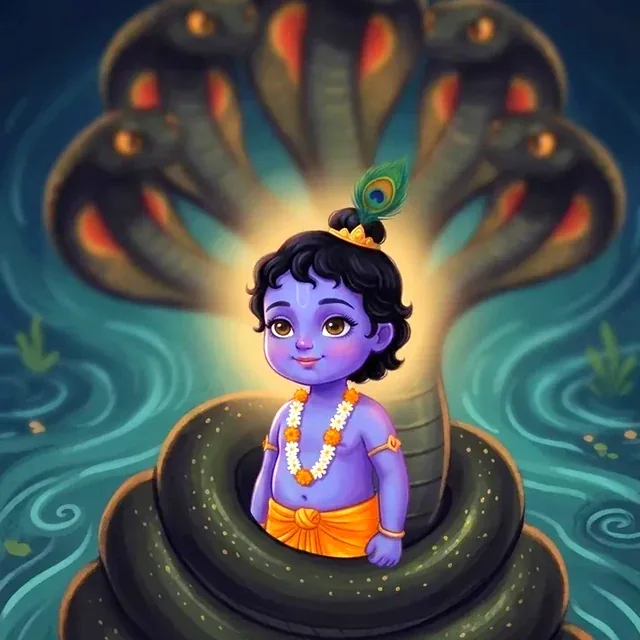 Kindness
Krishna aur Kaliya Naag
A Krishna story about using strength to protect others, and forgiving the one who did wrong.
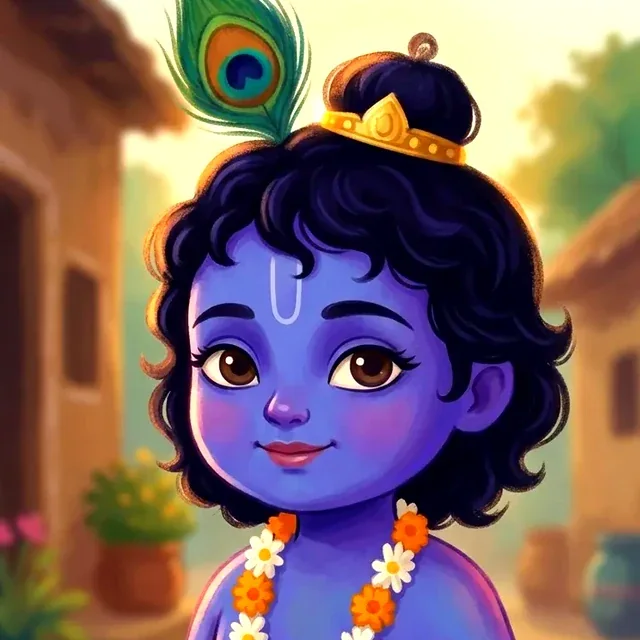 Kindness
Krishna aur Phalwali
A Krishna story that shows how a small thing given with love comes back many times bigger.
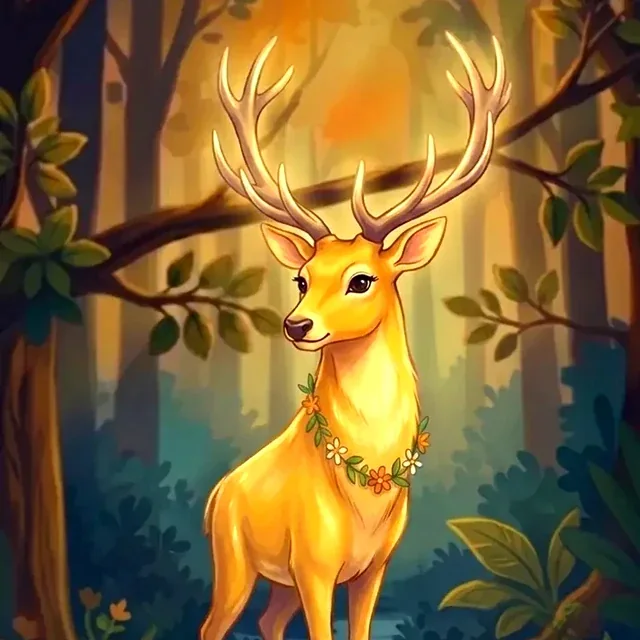 Kindness
Dayalu Raja Hiran
A Jataka story that shows your child what it looks like to stand up for someone smaller — and what it does to the people watching.